Legislative Activity
Track Burgess's sponsored bills, co-sponsored legislation, and voting record
This bill officially renames the United States Postal Service facility in Glendale, Utah, as the "Deputy Sheriff Brian Harris Post Office."

Celeste Maloy
Representative
UT
Celeste Maloy
Representative
UT
This bill officially renames the United States Post Office facility located at 35 South Main Street in Glendale, Utah. The facility will now be known as the "Deputy Sheriff Brian Harris Post Office."
This bill establishes a federal grant program to provide transportation assistance to state, local, Tribal, and territorial governments hosting major international sporting events like the Olympics and World Cup.
Rick Larsen
Representative
WA
Rick Larsen
Representative
WA
This bill establishes the Transportation Assistance for Olympic and World Cup Cities Act of 2025 to create a new federal grant program supporting transportation needs for hosting major international sporting events. The program provides funding to state, local, Tribal, and territorial governments for eligible transportation projects within 100 miles of the event site. It also authorizes the Secretary of Transportation to provide technical and planning assistance to ensure smooth movement of people and goods during these covered events.
This act mandates stuttering screening for children aged two and older in Medicaid and CHIP, and requires coverage for stuttering treatment services under both programs with parity to other speech disorders.
Addison McDowell
Representative
NC
Addison McDowell
Representative
NC
The Kidd's Stuttering Act aims to address childhood stuttering by expanding screening and coverage under Medicaid and CHIP. This legislation mandates the inclusion of stuttering screening in child health quality measures and requires its inclusion in Medicaid well-child visits starting in 2027. Furthermore, the Act ensures that treatment for stuttering is a mandatory Medicaid and CHIP benefit, requiring parity in treatment limitations compared to other speech disorders.
The Mikaela Naylon Give Kids a Chance Act primarily focuses on enhancing pediatric drug research, ensuring completion of pediatric study requirements, extending incentives for rare pediatric disease treatments, and making targeted updates to FDA and organ transplant network operations.
Michael McCaul
Representative
TX
Michael McCaul
Representative
TX
The Mikaela Naylon Give Kids a Chance Act focuses primarily on improving pediatric drug development and ensuring patient access to necessary treatments. This legislation mandates new research requirements for molecularly targeted pediatric cancer drugs, strengthens FDA enforcement of pediatric study completion, and extends incentives for developing drugs for rare pediatric diseases. Additionally, the bill updates organ transplant network functions and establishes an Abraham Accords Office within the FDA to enhance international regulatory cooperation.
This bill denies immigration benefits and makes inadmissible to the U.S. any alien who participated in, financed, or facilitated Hamas attacks against Israel beginning October 7, 2023.

Tom McClintock
Representative
CA
Tom McClintock
Representative
CA
This bill, the "No Immigration Benefits for Hamas Terrorists Act of 2025," makes any alien who participated in or supported the Hamas attacks against Israel on or after October 7, 2023, inadmissible to the United States. This legislation bars such individuals from receiving any form of U.S. immigration relief, including asylum or withholding of removal. Furthermore, it establishes grounds for their deportation and requires an annual report to Congress on enforcement actions taken under this new law.
This act bans anticompetitive contract terms in health plan and provider agreements that restrict patient choice or prevent lower-cost care options.
Jodey Arrington
Representative
TX
Jodey Arrington
Representative
TX
The Healthy Competition for Better Care Act aims to promote lower costs and higher quality healthcare by banning anticompetitive contract terms between health plans and providers. Specifically, it prohibits agreements that restrict plans from steering patients toward better value care or that mandate favorable terms for provider affiliates. This legislation ensures health plans retain the flexibility to design networks and quality initiatives while fostering greater competition in the healthcare market.
This Act prohibits foreign states and sovereign wealth funds from funding U.S. litigation unless they are a party, and mandates disclosure of all foreign third-party litigation funding in civil actions.

Ben Cline
Representative
VA
Ben Cline
Representative
VA
This Act prohibits foreign states and sovereign wealth funds from funding U.S. civil litigation where they are not a party. It mandates strict disclosure requirements for any foreign third-party litigation funding in federal cases. Failure to comply can result in the dismissal of the case and other sanctions. The Attorney General must also report annually to Congress on the use of such foreign funding.
This bill establishes the Semiquincentennial Congressional Time Capsule to be sealed in 2026 and opened in 2276.
Bonnie Watson Coleman
Representative
NJ
Bonnie Watson Coleman
Representative
NJ
This bill establishes the Semiquincentennial Congressional Time Capsule to commemorate the 250th anniversary of the United States. The capsule, created by the Architect of the Capitol and filled with items chosen by the four congressional leadership offices, will be sealed in the Capitol Visitor Center. It is mandated to remain sealed until July 4, 2276, when it will be presented to the 244th Congress.
This bill mandates the regular publication of evidence-based physical activity recommendations by the Secretary of Health and Human Services for the American public.
Blake Moore
Representative
UT
Blake Moore
Representative
UT
The Promoting Physical Activity for Americans Act mandates the Secretary of Health and Human Services to regularly publish evidence-based physical activity recommendations for the public. These reports must include specific guidance for various population subgroups and be updated at least every ten years. The legislation ensures federal health programs consider these national guidelines while protecting existing research authority and preventing the establishment of binding federal fitness standards.
This act mandates Medicare coverage for FDA-approved early detection screening tests for Alzheimer's disease and related dementias beginning in 2028.
Vern Buchanan
Representative
FL
Vern Buchanan
Representative
FL
The Alzheimer’s Screening and Prevention Act of 2025 (ASAP Act) amends Medicare to cover early detection screening tests for Alzheimer's disease and related dementias starting in 2028. This coverage applies to FDA-cleared tests, including genomic sequencing and other equivalent diagnostic methods, designed to detect pre-symptomatic or early-stage conditions. The bill ensures these screenings are added to the list of covered medical services under Medicare.
The Safer Supervision Act of 2025 aims to reform federal supervised release by requiring individualized assessments, establishing a presumption for early termination, addressing officer pay, and studying post-release supervision practices.
Laurel Lee
Representative
FL
Laurel Lee
Representative
FL
The Safer Supervision Act of 2025 aims to reform federal supervised release by requiring individualized assessments for imposing supervision and establishing a presumption for early termination when defendants meet certain compliance and public safety criteria. The bill also addresses workload concerns by mandating a proposal for law enforcement availability pay for probation officers and allowing prisoners without imposed supervision to apply earned time credits for early release. Finally, it directs the GAO to study the federal supervision and reentry system.
This bill ensures that essential firearm-related government operations, such as background checks and export license processing, continue during a government shutdown.
Ben Cline
Representative
VA
Ben Cline
Representative
VA
The Firearm Access During Shutdowns Act ensures that essential firearm-related government operations continue without interruption during a federal shutdown. This legislation specifically mandates the continuation of the FBI's NICS background check system and related processing at the ATF, Department of Commerce, and Department of State. By deeming these functions essential for protecting life and property, the bill prevents delays in firearm transfers and export licensing during lapses in appropriations.
This Act delays the effective date of any scheduled adjustment to the passenger rail liability cap until 90 days after public notice is given during the calendar year 2026.
Troy Nehls
Representative
TX
Troy Nehls
Representative
TX
The Passenger Rail Liability Adjustment Act of 2025 modifies the effective date for scheduled adjustments to the liability cap for passenger rail services. Specifically, any liability cap change set to occur during calendar year 2026 will be delayed. The new cap amount will only take effect 90 days after the required public notice of the adjustment is officially issued.
This bill adds eyeglass lens fittings to the list of medical services veterans can receive through the Veterans Community Care Program.
Celeste Maloy
Representative
UT
Celeste Maloy
Representative
UT
This bill amends the Veterans Community Care Program to officially include eyeglass lens fittings as a covered medical service provided by non-VA providers. It mandates that the VA quickly establish procedures to ensure veterans eligible for community care can easily access local providers for these fittings. The VA Secretary must report to Congress within 180 days on the implementation and impact of this new coverage.
The Patients Deserve Price Tags Act mandates comprehensive price transparency for hospitals, labs, and ambulatory surgical centers, strengthens cost disclosure for health plans, and requires itemized billing and detailed Explanation of Benefits for patients.
John James
Representative
MI
John James
Representative
MI
The Patients Deserve Price Tags Act aims to significantly increase healthcare price transparency across the board. It mandates that hospitals, clinical diagnostic laboratories, and ambulatory surgical centers must publicly post detailed, consumer-friendly pricing information, including negotiated rates and cash prices. Furthermore, the bill strengthens requirements for health plans to provide real-time cost-sharing estimates and mandates itemized Explanation of Benefits (EOBs) and itemized bills to consumers after receiving care. Finally, it increases fiduciary oversight by requiring group health plans to gain greater access to claims and payment data from their service providers.
This resolution honors the life and legacy of Charles "Charlie" James Kirk, condemns his assassination as political violence, and calls for a renewed commitment to civil discourse and American founding principles.

Mike Johnson
Representative
LA
Mike Johnson
Representative
LA
This resolution honors the life and legacy of Charles "Charlie" James Kirk, founder of Turning Point USA. It strongly condemns his assassination as an act of political violence. The bill calls for a renewed national commitment to civil discourse and the founding principles of the United States.
This Act prohibits U.S. courts and arbitrators from enforcing any foreign law, including Sharia law, if doing so would violate fundamental rights guaranteed by the U.S. or State Constitutions.
Randall Fine
Representative
FL
Randall Fine
Representative
FL
The No Shari’a Act ensures that U.S. courts rely exclusively on Federal and State laws when making decisions. This legislation prohibits courts and arbitrators from enforcing any foreign law, including Sharia law, if doing so would violate fundamental constitutional rights. The Act is designed to prevent foreign legal codes from undermining the established constitutional protections guaranteed to all Americans.
This Act streamlines the regulatory pathway for biosimilar biological products by clarifying interchangeability standards and updating related federal drug laws.
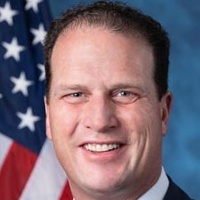
August Pfluger
Representative
TX
August Pfluger
Representative
TX
The Biosimilar Red Tape Elimination Act streamlines the regulatory pathway for biosimilar biological products by making technical and structural updates to existing law. This legislation clarifies when a biosimilar is automatically deemed "interchangeable" with its reference product, protecting existing exclusivity periods. Furthermore, it updates conforming language across federal drug laws and clarifies pediatric testing requirements for biosimilar applications.
This bill posthumously awards a Congressional Gold Medal to Welles Remy Crowther for his heroic actions during the September 11, 2001, attacks.
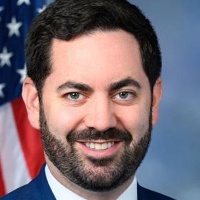
Michael Lawler
Representative
NY
Michael Lawler
Representative
NY
This bill, the Welles Remy Crowther Congressional Gold Medal Act, authorizes the posthumous presentation of a Congressional Gold Medal to Welles Remy Crowther for his extraordinary heroism and sacrifice during the September 11, 2001, attacks. The medal will be presented to his mother, Alison Crowther, on behalf of Congress. The Act also permits the creation and sale of bronze duplicates to cover production costs.
The Safe Step Act mandates that group health plans using medication step therapy establish clear, timely exception processes for patients and doctors when required drugs are medically inappropriate or ineffective.
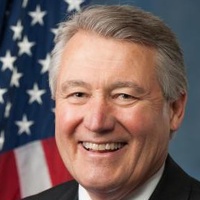
Rick Allen
Representative
GA
Rick Allen
Representative
GA
The Safe Step Act establishes mandatory, transparent exception processes for health plans that use "step therapy" protocols for prescription drugs. This ensures patients or their doctors can quickly request coverage for a prescribed medication when specific clinical criteria are met, such as previous treatment failure or risk of harm. Plans must decide on standard requests within 72 hours and urgent requests within 24 hours, and approved exceptions must last for at least one year. Furthermore, insurers must report detailed data annually on exception requests, approvals, and denials to the Secretary of Health and Human Services.