Legislative Activity
Track Burgess's sponsored bills, co-sponsored legislation, and voting record
To award a Congressional Gold Medal to the 761st Tank Battalion, the first Black soldiers to serve in an American armored unit, for their valor and crucial contributions to the Allied victory in Europe.
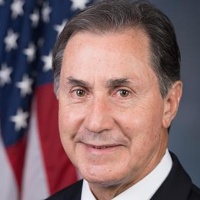
Gary Palmer
Representative
AL
Gary Palmer
Representative
AL
This bill authorizes the Speaker of the House and the President pro tempore of the Senate to award a Congressional Gold Medal to the 761st Tank Battalion, also known as the "Black Panthers," in recognition of their courageous service and crucial contributions during World War II. The medal will be given to the National Museum of African American History and Culture for display, honoring the 761st as the first Black soldiers to serve in an American armored unit and their significant role in the Allied victory in Europe. The bill also allows for the creation and sale of bronze duplicates of the medal to support the United States Mint Public Enterprise Fund.
The "Workforce Reentry Act" establishes grants and pay-for-performance contracts to improve workforce reentry programs for ex-offenders, prioritizing partnerships that lead to credentials in high-demand occupations.
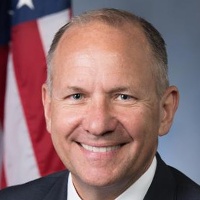
Lloyd Smucker
Representative
PA
Lloyd Smucker
Representative
PA
The "Workforce Reentry Act" aims to improve workforce reentry for ex-offenders by establishing the "ex-offenders Reentry Program Start-up Grants." These grants will be awarded to various entities, including nonprofits, local boards, and educational institutions, to provide skills development, job placement, and mentoring services to individuals recently released from prison or jail. The program prioritizes partnerships with businesses and educational institutions to offer training in high-demand occupations. Grantees must report on performance indicators, including recidivism rates, to ensure accountability and program effectiveness.
This bill expands the types of healthcare providers eligible to offer telehealth services under Medicare.
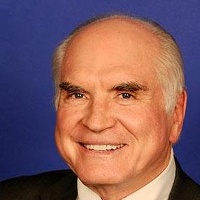
Mike Kelly
Representative
PA
Mike Kelly
Representative
PA
This bill amends Title XVIII of the Social Security Act to broaden access to telehealth services under Medicare. It expands the types of healthcare practitioners eligible to provide these services. This change aims to increase convenience and access to healthcare for Medicare beneficiaries.
The SCREEN Act requires online platforms that host or provide pornographic content to implement technology to verify users' ages and prevent minors from accessing harmful material.
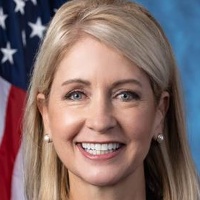
Mary Miller
Representative
IL
Mary Miller
Representative
IL
The SCREEN Act requires online platforms that host or provide pornographic content to implement technology verification measures to prevent minors from accessing harmful material. It mandates that these platforms use reliable age verification methods, undergo regular audits by the Federal Trade Commission (FTC) to ensure compliance, and protect user data collected during the verification process. The FTC is responsible for enforcing the Act, and the Government Accountability Office (GAO) must report to Congress on the effectiveness and impact of these measures. This act aims to protect children from the harmful effects of online pornography.
The "PAR Act" removes restrictions on using bond proceeds for private or commercial golf courses and country clubs.
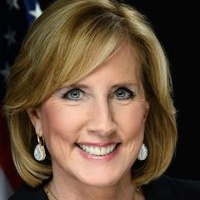
Claudia Tenney
Representative
NY
Claudia Tenney
Representative
NY
The "Parity for Athletic Recreation Act" or "PAR Act" removes the restriction that prohibits bond proceeds from being used for private or commercial golf courses and country clubs. This change applies to bonds issued after the enactment of this Act. Additionally, it affects the empowerment zone employment credit and applies to empowerment zone businesses and opportunity zones.
The "Access Technology Affordability Act of 2025" creates a tax credit of up to $2,000 every three years for blind individuals who purchase qualified access technology.
Mike Kelly
Representative
PA
Mike Kelly
Representative
PA
The "Access Technology Affordability Act of 2025" introduces a tax credit for blind individuals who purchase qualified access technology, such as hardware or software that converts visual information into accessible formats. The credit is capped at $2,000 per blind individual over any three consecutive tax years and will be adjusted for inflation after 2026. This credit is effective for tax years starting after December 31, 2025, and expires after December 31, 2030. It ensures that individuals cannot claim double benefits for the same expenses.
The "DOC Access Act of 2025" aims to improve dental and vision care coverage by ensuring fair payment practices, protecting providers' choices, and upholding state regulatory authority.
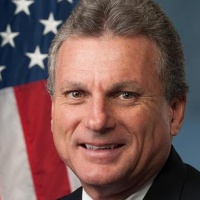
Earl Carter
Representative
GA
Earl Carter
Representative
GA
The "DOC Access Act of 2025" aims to enhance health care coverage under vision and dental plans by ensuring fair payment practices, protecting doctors' choices in labs and suppliers, and respecting state laws. It allows optometrists and dentists to charge their standard rate for non-covered services if the plan's payment is unreasonable, while ensuring they can only charge the contracted rate for dental cleanings. The bill also gives doctors more control over agreement extensions with limited benefit plans and allows them to opt out of certain provisions. Ultimately, this act seeks to balance federal guidelines with state oversight in regulating health insurance issuers and dental or vision benefit plans.
The DEFUND Act of 2025 terminates U.S. membership in the United Nations and affiliated organizations, prohibits funding and participation in UN activities, and revokes diplomatic immunity for UN personnel.

Chip Roy
Representative
TX
Chip Roy
Representative
TX
The DEFUND Act of 2025 terminates U.S. membership in the United Nations and all affiliated organizations, repeals existing acts that enable U.S. participation, and prohibits future funding or involvement in UN activities, including peacekeeping operations and conventions. It also revokes diplomatic immunity for UN personnel within the U.S. and requires the Secretary of State to notify the UN of these changes. The bill further prevents the U.S. from reentering the UN without Senate approval and a guaranteed right to withdraw.
This bill authorizes the creation of a Congressional Gold Medal to honor the volunteers and communities involved with the North Platte Canteen during World War II.

Adrian Smith
Representative
NE
Adrian Smith
Representative
NE
The North Platte Canteen Congressional Gold Medal Act recognizes and honors the volunteers and donors of the North Platte Canteen in Nebraska during World War II with a Congressional Gold Medal. This medal will be presented by the Speaker of the House and the President pro tempore of the Senate, and then displayed at the Lincoln County Historical Museum. The Act also authorizes the creation and sale of bronze duplicates of the gold medal to cover production costs, with proceeds deposited into the Mint's Public Enterprise Fund.
This bill expands Post-9/11 GI Bill eligibility to National Guard members performing specific full-time duties.
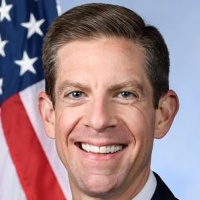
Mike Levin
Representative
CA
Mike Levin
Representative
CA
The Guard and Reserve GI Bill Parity Act of 2025 expands Post-9/11 GI Bill eligibility to National Guard members performing specific full-time duties. This expansion applies to service performed on or after September 11, 2001. The changes will take effect one year after the enactment of this Act, with the time limitation for using educational assistance applied as if enacted immediately after the Post-9/11 Veterans Educational Assistance Act of 2008.
The "Downwinders Parity Act of 2025" amends the Radiation Exposure Compensation Act to expand coverage areas and extends the trust fund until December 31, 2030.

Paul Gosar
Representative
AZ
Paul Gosar
Representative
AZ
The "Downwinders Parity Act of 2025" amends the Radiation Exposure Compensation Act to expand coverage areas to include all acreage in counties partially within the covered area, while removing specific townships. It extends the trust fund supporting the Act until December 31, 2030. Additionally, it requires the Attorney General to report on outreach efforts to newly eligible individuals.
This resolution expresses Congressional opposition to imposing new performance fees or royalties on local radio stations and businesses for broadcasting or playing music.
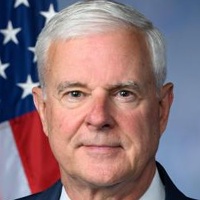
Steve Womack
Representative
AR
Steve Womack
Representative
AR
The Local Radio Freedom Act expresses Congressional opposition to imposing new performance fees, taxes, or royalties on local radio stations and businesses for playing music. It argues that the current system of free airplay provides essential promotional value to artists and that new fees would threaten the financial viability of local broadcasters and the vital community services they provide.
This bill mandates payment and performance security for construction projects receiving federal water infrastructure funding, ensuring subcontractors are paid and projects are completed.
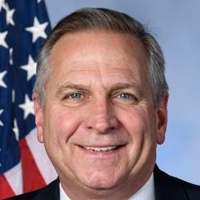
Mike Bost
Representative
IL
Mike Bost
Representative
IL
The Water Infrastructure Subcontractor and Taxpayer Protection Act of 2025 amends the Water Infrastructure Finance and Innovation Act of 2014 to ensure payment and performance security for construction projects receiving federal assistance. It allows the Secretary of Transportation or the Administrator to consider state or local laws mandating payment and performance security as fulfilling this requirement if they cover at least 50% of the construction contract. If state or local laws don't apply or meet the 50% threshold, adherence to federal bond requirements under 40 U.S.C. 3131(b)(1) and (2) is required.
This Act establishes a three-year pilot program to offer donated-fund supported hyperbaric oxygen therapy for veterans with TBI or PTSD and extends certain pension payment limits.
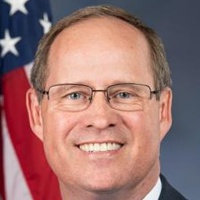
Gregory Murphy
Representative
NC
Gregory Murphy
Representative
NC
This Act establishes a three-year pilot program to provide hyperbaric oxygen therapy (HBOT) to veterans suffering from traumatic brain injury (TBI) or PTSD, funded solely through donations. It also mandates an updated Government Accountability Office (GAO) report assessing recent clinical trials on HBOT for these conditions. Finally, the bill extends the expiration date for certain limitations on veteran pension payments.
The "Collision Avoidance Systems Act of 2025" mandates the Department of Transportation to update safety standards to allow and set performance standards for pulsating brake lights on vehicles to help prevent rear-end collisions.

Daniel Webster
Representative
FL
Daniel Webster
Representative
FL
The "Collision Avoidance Systems Act of 2025" permits and sets performance standards for pulsating light systems on vehicles to help prevent rear-end collisions. It mandates the Secretary of Transportation to update Federal Motor Vehicle Safety Standard Number 108 within 180 days to include these systems. The bill defines a pulsating light system as a high-mounted stop lamp that pulses rapidly up to 4 times within 1.2 seconds upon braking before converting to a continuous light.
This act authorizes the creation of the Smithsonian National Museum of the American Latino on the National Mall, ensuring diverse representation in its exhibits and programs.
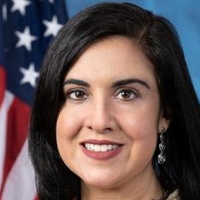
Nicole Malliotakis
Representative
NY
Nicole Malliotakis
Representative
NY
The Smithsonian National Museum of the American Latino Act authorizes the creation of the Smithsonian National Museum of the American Latino on the National Mall. It ensures the museum's exhibits and programs accurately represent the diverse cultures, histories, events, and values of Hispanic and Latino communities, seeking guidance from diverse sources. The Act also mandates regular reports to Congress on the museum's efforts to meet these diversity requirements.
The EAGLES Act of 2025 codifies and expands the National Threat Assessment Center to prevent targeted violence through research, training, and multidisciplinary collaboration, particularly in schools.
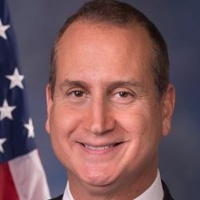
Mario Diaz-Balart
Representative
FL
Mario Diaz-Balart
Representative
FL
The EAGLES Act of 2025 codifies and expands the National Threat Assessment Center within the Secret Service to focus on preventing targeted violence through research, training, and information sharing. It establishes a national program on targeted school violence prevention, mandating research, training courses, and coordination among various departments and agencies. The Act authorizes \$10 million annually from 2026 to 2030 for these activities, emphasizing early intervention and support for individuals exhibiting concerning behavior, while explicitly prohibiting the use of funds for firearms training. This act aims to standardize threat assessment and prevention practices at all levels, ensuring a proactive and comprehensive approach to school safety.
The Officer John Barnes Act requires the Bureau to inform claimants of their benefit eligibility determination within 270 days of receiving a claim.
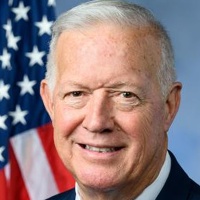
Randy Weber
Representative
TX
Randy Weber
Representative
TX
The Officer John Barnes Act requires the Bureau to inform claimants of their benefit eligibility determination within 270 days of receiving a claim.
The "Alternatives to PAIN Act" aims to improve Medicare Part D coverage for non-opioid pain management drugs by reducing cost-sharing and removing barriers like step therapy and prior authorization, starting in 2026.
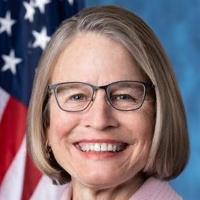
Mariannette Miller-Meeks
Representative
IA
Mariannette Miller-Meeks
Representative
IA
The "Alternatives to PAIN Act" amends Medicare Part D to improve access to non-opioid pain management drugs by waiving deductibles and ensuring they are placed on the lowest cost-sharing tier starting in 2026. The Act also prohibits the use of step therapy and prior authorization requirements for these drugs, further easing access for patients. These changes aim to provide more accessible alternatives for pain management, reducing reliance on opioids.
This Act prohibits federal agencies from imposing water use restrictions or demanding water rights transfers as conditions for land use agreements, reinforcing state authority over water allocation.
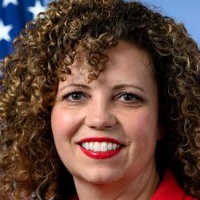
Celeste Maloy
Representative
UT
Celeste Maloy
Representative
UT
The Water Rights Protection Act affirms the long-standing authority of states in evaluating, regulating, and allocating water use. It prohibits federal agencies from imposing restrictions on water rights that exceed those established under state law when issuing land use agreements. Furthermore, the Act explicitly forbids federal agencies from conditioning permits on the transfer of state-recognized water rights to the United States. This legislation ensures federal actions remain consistent with state water law without altering existing reserved water rights or certain federal environmental laws.