Legislative Activity
Track Burgess's sponsored bills, co-sponsored legislation, and voting record
The Federal Working Animal Protection Act makes non-citizens who harm law enforcement animals inadmissible to the United States and subject to deportation.
Ken Calvert
Representative
CA
Ken Calvert
Representative
CA
The Federal Working Animal Protection Act amends the Immigration and Nationality Act to make individuals who harm law enforcement animals inadmissible to the United States. Additionally, the bill establishes that such individuals are subject to deportation if they have been convicted of or admit to committing these offenses.
This bill prohibits federal agencies from banning the use of lead ammunition and tackle on federal lands and waters unless specific, evidence-based criteria and state-level coordination requirements are met.
Robert Wittman
Representative
VA
Robert Wittman
Representative
VA
The Protecting Access for Hunters and Anglers Act prevents federal agencies from banning the use of lead ammunition and tackle on federal lands and waters open to hunting and fishing. Exceptions to this rule are only permitted if specific, site-based field data proves lead is causing a wildlife population decline and the action is approved by or consistent with state wildlife policies.
This Act mandates federal agencies to establish clear guidelines for recognizing special districts as eligible recipients for federal financial assistance.
Patrick Fallon
Representative
TX
Patrick Fallon
Representative
TX
The Special District Fairness and Accessibility Act ensures that specialized local government entities, known as special districts, are explicitly recognized as eligible recipients for federal financial assistance. This legislation mandates the Office of Management and Budget (OMB) to issue clear guidance on recognizing these districts for grants and loans. The goal is to standardize how federal agencies distribute financial aid to these essential local service providers.
This bill directs the USPS to assign a single, unique ZIP Code specifically for Highland City, Utah.
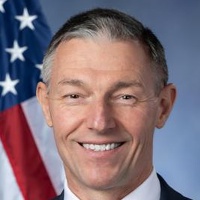
Mike Kennedy
Representative
UT
Mike Kennedy
Representative
UT
This bill directs the United States Postal Service (USPS) to assign a single, unique ZIP Code specifically for Highland City, Utah. The USPS is required to establish this new code within 270 days of the law's enactment. This designation will apply exclusively to the area covered by Highland City.
This act prohibits the use of federal education funds to develop or promote programs or materials for minors that contain sexually oriented material, with specific exceptions for standard science, religious texts, classic literature, and classic art.
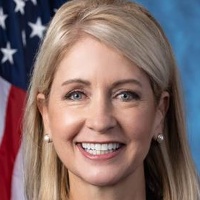
Mary Miller
Representative
IL
Mary Miller
Representative
IL
The Stop the Sexualization of Children Act prohibits the use of federal education funds to develop or promote programs, activities, or materials for minors that include sexually oriented material. This restriction specifically targets content exposing children to nudity, stripping, or lewd dancing. The bill carves out exceptions for standard science coursework, classic literature, classic art, and major world religious texts.
This Act clarifies the civil and federal jurisdictional authority regarding the Shivwits Band of Paiutes' lands and contracts while explicitly preserving the Tribe's sovereign immunity.
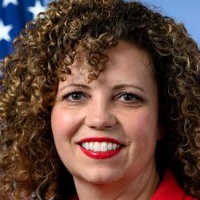
Celeste Maloy
Representative
UT
Celeste Maloy
Representative
UT
The Shivwits Band of Paiutes Jurisdictional Clarity Act clarifies legal authority over the Tribe’s lands by granting the State of Utah jurisdiction over specific civil lawsuits while establishing federal court jurisdiction for related contracts and leases. The Act explicitly preserves the Tribe’s sovereign immunity and expands the Band's authority to lease its trust lands.
The Enhanced Iran Sanctions Act of 2025 mandates broad economic and immigration sanctions on foreign individuals, entities, and financial institutions that support Iran’s nuclear, missile, drone, or terrorist activities, while specifically targeting the country's petroleum and petrochemical sectors.
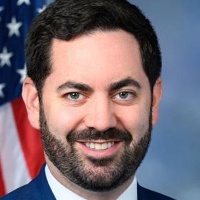
Michael Lawler
Representative
NY
Michael Lawler
Representative
NY
The Enhanced Iran Sanctions Act of 2025 strengthens U.S. policy by imposing mandatory sanctions on foreign persons and financial institutions that support Iran’s nuclear, ballistic missile, drone, and terrorist activities. The bill specifically targets Iran’s petroleum and petrochemical sectors to cut off funding for these malign programs. Additionally, it expands the State Department’s "Rewards for Justice" program to incentivize the reporting of individuals who evade these sanctions.
This bill seeks to disapprove the Bureau of Land Management's rule regarding the Grand Staircase-Escalante National Monument Resource Management Plan.
Celeste Maloy
Representative
UT
Celeste Maloy
Representative
UT
This bill seeks to disapprove the Bureau of Land Management's recent rule regarding the Grand Staircase-Escalante National Monument Record of Decision and Approved Resource Management Plan. If enacted, this disapproval would nullify the BLM's rule, preventing it from taking effect.
This act streamlines the oversight of State Veterans Homes by allowing VA-certified facilities to automatically meet Medicare and Medicaid participation requirements while ensuring consistent public reporting of quality and safety data.
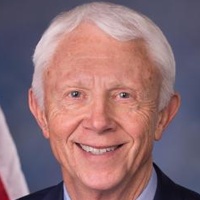
Jack Bergman
Representative
MI
Jack Bergman
Representative
MI
The State Veterans Homes Inspection Simplification Act streamlines the regulatory process by allowing State Veterans Homes certified by the Department of Veterans Affairs (VA) to be automatically deemed compliant with Medicare and Medicaid participation requirements. The bill ensures continued oversight and accountability by mandating that VA inspection standards align with federal protocols and requiring that all quality and compliance data be publicly reported. Additionally, it tasks the Government Accountability Office with reviewing the effectiveness and impact of this new authority within three years.
This bill provides overtime pay exemptions for emergency medical technicians and paramedics working in rural areas with populations under 100,000.
Celeste Maloy
Representative
UT
Celeste Maloy
Representative
UT
The Rural Emergency Response Support Act provides targeted relief for emergency medical services in small communities by creating exceptions to standard overtime pay requirements. This legislation applies to public agencies and private contractors serving rural areas with fewer than 100,000 residents. Its goal is to help these organizations manage staffing and operational costs within the Fair Labor Standards Act framework.
The Representing our Seniors at VA Act of 2026 updates the membership requirements of the VA Geriatrics and Gerontology Advisory Committee to include representatives from veterans service organizations, State homes, and nursing home administration.
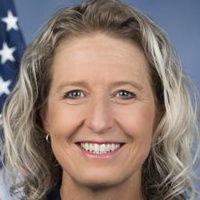
Jennifer Kiggans
Representative
VA
Jennifer Kiggans
Representative
VA
The Representing our Seniors at VA Act of 2026 updates the membership requirements for the Department of Veterans Affairs Geriatrics and Gerontology Advisory Committee. This legislation ensures the committee includes diverse representation from veterans service organizations, State homes, and licensed nursing home administrators to better support aging veterans.
This bill mandates that national sports governing bodies require athletes to compete in events corresponding to their biological sex as defined at conception for the Olympics and other sanctioned competitions.
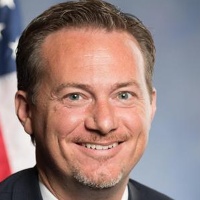
Michael Cloud
Representative
TX
Michael Cloud
Representative
TX
The SAFE Olympic Sports Act mandates that national governing bodies for sports require athletes to participate in competitions corresponding to their biological sex, defined as male or female determined at conception. This requirement applies to the Olympic Games, Paralympic Games, and other sanctioned events. Furthermore, the bill protects the sanctioning of previously established, single-sex amateur athletic competitions.
The SELF DRIVE Act of 2026 establishes federal safety requirements, testing rules, and data reporting standards for the safe deployment and research of automated driving systems in vehicles.
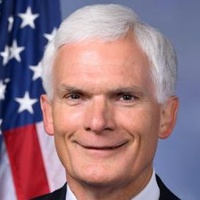
Robert Latta
Representative
OH
Robert Latta
Representative
OH
The SELF DRIVE Act of 2026 establishes a federal framework for the safe testing and deployment of automated driving systems (ADS) across the United States. It mandates that manufacturers submit a comprehensive "safety case" demonstrating their ADS will not pose an unreasonable risk before vehicles can be sold. Furthermore, the bill creates a national repository for automated vehicle crash data and clarifies federal preemption over state laws regarding ADS sales and reporting.
This bill mandates that unspent federal agency funds be split, with most going to debt reduction, some rolled over for one year, and a small portion used for employee retention bonuses, while also limiting future budget requests.
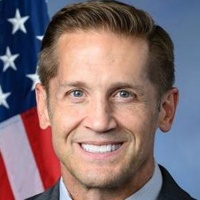
Rich McCormick
Representative
GA
Rich McCormick
Representative
GA
The Incentivize Savings Act mandates how federal agencies must handle unspent appropriations by dedicating the majority to debt reduction and allowing a portion for employee retention bonuses. This legislation also restricts future budget requests to only account for inflation unless the agency fully spends its prior allocation. Ultimately, the bill aims to encourage fiscal responsibility by linking unspent funds to debt reduction and limiting budget growth.
This bill establishes eligibility requirements for amateur athletic organizations based on biological sex, prohibiting individuals whose sex is male from competing in female-designated amateur athletic competitions.
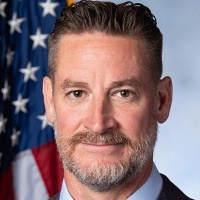
W. Steube
Representative
FL
W. Steube
Representative
FL
This Act establishes specific definitions for "female," "male," and "sex" based on biological reproductive systems for amateur athletics. It mandates that organizations recognized by the U.S. Olympic & Paralympic Committee must prohibit individuals identified as male from competing in competitions designated for females. This aims to protect competitive opportunities specifically for biological females in amateur sports.
This bill mandates proof of U.S. citizenship for federal voter registration and requires photo identification showing citizenship status for voting in federal elections.
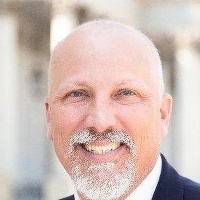
Chip Roy
Representative
TX
Chip Roy
Representative
TX
The Safeguard American Voter Eligibility Act (SAVE America Act) mandates that individuals must provide documentary proof of U.S. citizenship to register to vote in federal elections. It also establishes a federal requirement for voters to present a photo ID indicating U.S. citizenship when casting a ballot in federal elections. The bill outlines specific acceptable forms of proof and requires states to implement verification programs to ensure only citizens are registered and voting.
This bill imposes a 30 percent import duty on all sheep and lamb products originating from Australia or New Zealand.
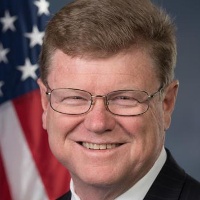
Mark Amodei
Representative
NV
Mark Amodei
Representative
NV
This bill proposes imposing a 30 percent import duty on all sheep and lamb products originating from Australia or New Zealand. This new duty would take effect 30 days after the law is enacted and would be applied in addition to any existing import taxes.
This resolution expresses support for designating the week of January 25 through January 31, 2026, as "National School Choice Week" to highlight the importance of parental choice in K-12 education.
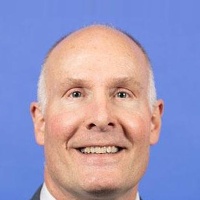
John Moolenaar
Representative
MI
John Moolenaar
Representative
MI
This resolution expresses support for designating the week of January 25 through January 31, 2026, as "National School Choice Week." It emphasizes the importance of parental choice in selecting diverse K-12 educational options that best suit their children's needs. The bill also recognizes the contributions of students, parents, teachers, and school leaders across all educational environments.
This Act establishes a process for trafficking survivors to seek expungement of federal criminal records resulting from their victimization and creates a new duress defense based on trafficking status for certain federal offenses.
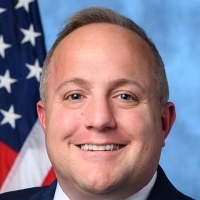
Russell Fry
Representative
SC
Russell Fry
Representative
SC
The Trafficking Survivors Relief Act establishes a process for victims of human trafficking to seek the expungement of federal arrests and the vacatur of certain federal criminal convictions resulting from their victimization. It also creates a new duress defense in federal criminal trials for individuals who committed offenses while being trafficked. Furthermore, the bill allows courts to reduce the sentences of current prisoners who committed offenses as a direct result of trafficking.
This resolution commemorates the Dalai Lama's 90th birthday as a "Day of Compassion" while reaffirming U.S. support for Tibetan human rights, religious freedom, and the Tibetan people's right to choose their own religious leaders without interference from China.
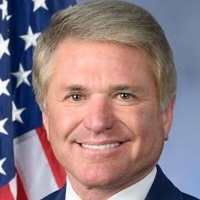
Michael McCaul
Representative
TX
Michael McCaul
Representative
TX
This resolution commemorates the 90th birthday of the Dalai Lama by designating July 6, 2025, as a "Day of Compassion." It strongly reaffirms U.S. support for the human rights, religious freedom, and cultural preservation of the Tibetan people. Furthermore, the resolution asserts that the selection of the next Dalai Lama is solely the right of the Tibetan Buddhist community, rejecting any interference by the People's Republic of China.