Legislative Activity
Track Burgess's sponsored bills, co-sponsored legislation, and voting record
This bill amends the Rehabilitation Act of 1973 to change the rules surrounding subminimum wage employment for adults with disabilities, including lowering the minimum age for eligibility and altering employer documentation requirements.
Glenn Grothman
Representative
WI
Glenn Grothman
Representative
WI
The Restoration of Employment Choice for Adults with Disabilities Act amends the Rehabilitation Act of 1973 regarding subminimum wage employment for individuals with disabilities. This bill changes the applicable age for subminimum wage employment from 24 and under to 18 and older. It also modifies employer requirements for providing counseling and documentation related to this employment status.
This bill requires parental consent for public schools to alter a minor student's gender marker, pronouns, or preferred name on school forms or change sex-based accommodations, and prohibits using federal education funds to teach gender ideology.
Tim Walberg
Representative
MI
Tim Walberg
Representative
MI
The Stopping Indoctrination and Protecting Kids Act requires public schools to obtain parental consent before changing a minor student's gender marker, pronouns, or preferred name, or altering sex-based accommodations. Additionally, the bill prohibits the use of federal education funding to teach or advance concepts related to gender ideology. This legislation aims to ensure parental involvement in significant decisions regarding their children's records and school environment.
This bill mandates the prominent display of the national motto, "In God We Trust," on every federal public building within one year of enactment.
Mary Miller
Representative
IL
Mary Miller
Representative
IL
The "In God We Trust Act" mandates the prominent display of the national motto, "In God We Trust," on every federal public building. This requirement applies to all buildings owned or leased by the federal government within one year of the bill's enactment.
The GUARD Act expands federal grant funding for state, local, and tribal law enforcement to investigate elder financial fraud, "pig butchering" scams, and general financial fraud, while also mandating comprehensive federal reports on scam trends and enforcement efforts.
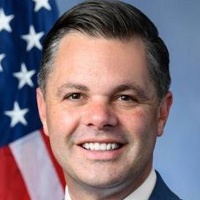
Zachary (Zach) Nunn
Representative
IA
Zachary (Zach) Nunn
Representative
IA
The GUARD Act expands the use of federal grant funds to help state, local, and tribal law enforcement investigate elder financial fraud, "pig butchering" scams, and general financial fraud. This legislation allows agencies to hire specialized staff, receive advanced training on emerging technologies, and acquire necessary investigative tools. Furthermore, the Act mandates comprehensive federal reports to Congress detailing the scope of these scams and the effectiveness of current enforcement efforts.
This bill expands the advanced manufacturing production tax credit to include more critical minerals, allows extraction costs to qualify for the credit, and removes the credit reduction for metallurgical coal.
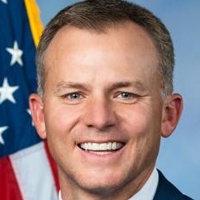
Blake Moore
Representative
UT
Blake Moore
Representative
UT
The Critical Mineral and Extraction Tax Parity Act expands the advanced manufacturing production tax credit to include several new critical minerals, such as copper, silicon, and uranium. The bill also allows extraction costs for domestically sourced ore to qualify for the credit when refined into these minerals. Finally, it repeals the existing credit reduction previously applied to metallurgical coal.
This bill establishes the Combating Organized Retail Crime Act of 2025 to enhance federal prosecution tools against organized retail and supply chain crime and create a DHS-led coordination center to align law enforcement efforts.
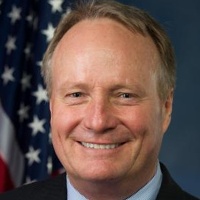
David Joyce
Representative
OH
David Joyce
Representative
OH
The Combating Organized Retail Crime Act of 2025 aims to combat sophisticated, cross-jurisdictional organized retail and supply chain theft. It achieves this by strengthening federal laws regarding money laundering and stolen property offenses, including lowering monetary thresholds for prosecution. Furthermore, the bill establishes a dedicated Center within the Department of Homeland Security to coordinate federal, state, and local enforcement efforts against these criminal organizations.
This resolution expresses support for America's law enforcement professionals by recognizing their service, acknowledging the dangers they face, and calling for necessary equipment, training, and funding to ensure their safety and effectiveness.
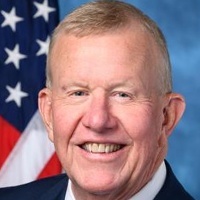
Mike Ezell
Representative
MS
Mike Ezell
Representative
MS
This resolution expresses strong support and appreciation for America's law enforcement professionals, recognizing their daily service and sacrifice. It honors officers who have been injured or killed in the line of duty and highlights recent crime reduction successes attributed to their efforts. The bill calls for increased support, including better equipment, training, mental health resources, and tougher penalties for assaulting officers, to ensure their safety and effectiveness.
This Act authorizes the National Guard, upon a governor's request, to protect critical facilities and assets from unmanned aircraft threats.
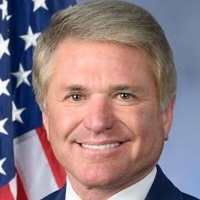
Michael McCaul
Representative
TX
Michael McCaul
Representative
TX
The Guard the Skies Act authorizes the National Guard to protect critical facilities and assets from threats posed by unmanned aircraft (drones). This authority is established at the request of a state's governor and requires consultation with the Secretary of Defense. The bill outlines specific conditions under which National Guard members can be activated and take action against threatening drones.
The GUARD Act establishes federal requirements for age verification, criminal prohibitions against soliciting minors or promoting violence via AI chatbots, and specific obligations for covered entities regarding data security and user disclosure.
Blake Moore
Representative
UT
Blake Moore
Representative
UT
The GUARD Act establishes federal guidelines for artificial intelligence chatbots, focusing on protecting minors. It mandates that companies implement reasonable age verification processes for all users and strictly prohibits minors from accessing "AI companions" designed for emotional interaction. The bill also creates criminal penalties for designing chatbots that solicit minors for explicit conduct or promote self-harm and violence, alongside imposing strict data security and disclosure requirements on covered entities.
This bill designates the United States Postal Service facility located at 111 South Tremont Street in Tremonton, Utah, as the "Sorensen-Estrada Post Office."
Blake Moore
Representative
UT
Blake Moore
Representative
UT
This bill officially designates the United States Postal Service facility located at 111 South Tremont Street in Tremonton, Utah, as the "Sorensen-Estrada Post Office." It further mandates that all future federal references to this location must use the new name.
The DATA Act of 2026 establishes and exempts from federal regulation a new type of physically isolated electric utility called a Consumer-Regulated Electric Utility (CREU) designed to serve only new, previously unserved electric loads.
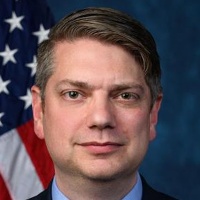
Nicholas Begich
Representative
AK
Nicholas Begich
Representative
AK
The DATA Act of 2026 establishes a new type of utility called a Consumer-Regulated Electric Utility (CREU) designed to serve new, isolated electric loads independently of the existing grid. CREUs are fully exempt from regulation under the Federal Power Act, FERC, DOE, and PURPA, provided they remain physically islanded from the bulk-power system. This legislation also allows CREUs to utilize existing public rights-of-way under limited review criteria.
This Act repeals the federal beneficial ownership information reporting requirements for domestic persons and entities, limiting them only to foreign individuals and foreign-connected companies, and mandates the deletion of existing domestic data.
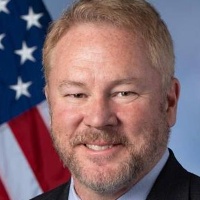
Warren Davidson
Representative
OH
Warren Davidson
Representative
OH
The Repealing Big Brother Overreach Act significantly narrows the federal beneficial ownership information reporting requirements. This legislation limits reporting obligations exclusively to foreign individuals and foreign-connected companies. Furthermore, it mandates the deletion of all previously collected data pertaining to domestic persons and entities.
The CREATES Act mandates that states establish and maintain accessible online repositories detailing all professional and occupational credentials, supported by federal grants to aid in their development and quality assessment.
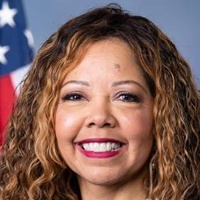
Lucy McBath
Representative
GA
Lucy McBath
Representative
GA
The CREATES Act mandates that states establish and maintain centralized, publicly accessible online repositories detailing all professional and occupational credentials. This legislation also authorizes a federal grant program to assist states in cataloging, assessing, and mapping these credentials to career pathways. The goal is to provide individuals with transparent, comparable information to make informed decisions about education and careers.
This bill mandates comprehensive safety upgrades for civilian and military aviation, focusing on collision avoidance technology, air traffic control training, and enhanced airspace transparency, particularly around high-traffic airports.
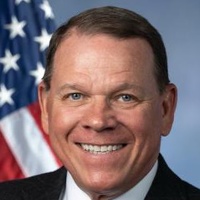
Sam Graves
Representative
MO
Sam Graves
Representative
MO
The Airspace Location and Enhanced Risk Transparency Act of 2026 mandates significant safety upgrades across both civilian and military aviation to prevent midair collisions. It requires the FAA to implement advanced collision avoidance systems and new air traffic controller training, while also compelling the Department of Defense to equip most military helicopters with transponders for increased visibility. The bill establishes new transparency measures, including public tracking of safety rule implementation and enhanced reporting on near-miss incidents, particularly around major airports like Reagan National.
This bill establishes the HBCU Research Capacity Act to coordinate a government-wide strategy, create a federal grant clearinghouse, and mandate agency reviews to increase research funding and infrastructure at Historically Black Colleges and Universities.
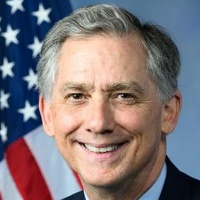
J. Hill
Representative
AR
J. Hill
Representative
AR
The HBCU Research Capacity Act aims to significantly increase federal research funding and infrastructure at Historically Black Colleges and Universities (HBCUs). It mandates the creation of a centralized Federal Clearinghouse to connect HBCUs with grant opportunities and best practices. The bill also requires federal agencies to develop strategies and report annually on concrete actions taken to boost HBCU participation in research and development.
The GRACIE Act of 2026 establishes a federal grant program to assist states in implementing and maintaining the electronic recording and secure storage of all child welfare interviews.
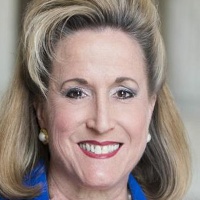
Ann Wagner
Representative
MO
Ann Wagner
Representative
MO
The GRACIE Act of 2026 establishes a federal grant program to assist states in implementing and maintaining systems to record and securely store all child welfare interviews. By providing funding for these technological upgrades, the bill aims to ensure greater accountability and transparency in child protective investigations. Participating states must adopt policies requiring the retention of these recordings for at least five years while maintaining strict privacy and access controls.
This bill clarifies that, under Title VII of the Civil Rights Act of 1964, discrimination based on sex does not include discrimination based on gender identity.
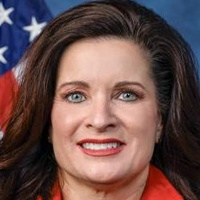
Sheri Biggs
Representative
SC
Sheri Biggs
Representative
SC
The Defending Women in the Workplace Act clarifies the interpretation of Title VII of the Civil Rights Act of 1964. It establishes that, for the purposes of federal anti-discrimination law, the terms "because of sex" or "on the basis of sex" do not include gender identity.
This bill directs the Secretary of the Interior to conduct a feasibility study on installing a selective water withdrawal system at Glen Canyon Dam to improve hydropower generation and control invasive species.
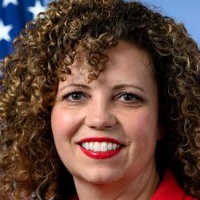
Celeste Maloy
Representative
UT
Celeste Maloy
Representative
UT
This bill directs the Secretary of the Interior to conduct an 18-month feasibility study on installing a selective water withdrawal system at Glen Canyon Dam. The proposed system aims to improve hydropower generation and mitigate the spread of invasive species. If deemed feasible and supported by project contractors, the Secretary is authorized to proceed with the compliance and construction process.
This bill protects the tax-exempt status of religious organizations and prohibits federal discrimination against religious employers who make hiring decisions based on their faith-based standards.
Blake Moore
Representative
UT
Blake Moore
Representative
UT
The Fair Treatment of Religious Organizations Act of 2026 prevents the IRS from considering an organization's beliefs on marriage, sexuality, or gender identity when determining its tax-exempt status. Additionally, the bill prohibits federal agencies from discriminating against religious employers who receive federal financial assistance and make hiring decisions based on their religious standards.
The TECH Act expands federal grant eligibility to qualified technical schools, ensuring they have the same access to funding as traditional 2-year and 4-year higher education institutions.
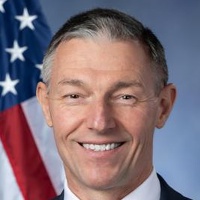
Mike Kennedy
Representative
UT
Mike Kennedy
Representative
UT
The TECH Act aims to expand educational equity by granting qualified technical schools the same access to federal grants as 2-year and 4-year colleges. By modernizing eligibility requirements, this legislation ensures that essential career and job training programs receive the support necessary to strengthen the national workforce.