Legislative Activity
Track Joe's sponsored bills, co-sponsored legislation, and voting record
The Integrity in Government Act of 2025 establishes an Inspector General for the Executive Office of the President and strengthens job protections for most Inspectors General against removal without cause.
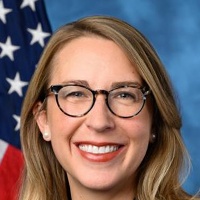
Hillary Scholten
Representative
MI
Hillary Scholten
Representative
MI
The Integrity in Government Act of 2025 aims to strengthen government oversight by establishing an Inspector General for the Executive Office of the President. This bill significantly reforms the system by implementing new protections to ensure Inspectors General can perform their duties without undue political interference. Specifically, it restricts the removal of most presidential appointees to instances of inefficiency, misconduct, or neglect of duty.
This bill mandates that certain high-level executive branch officials must recuse themselves from decisions that could financially benefit any organization they worked for or competed against within the four years prior to their government service.
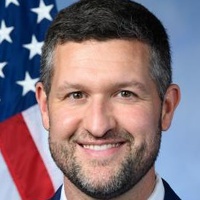
Patrick Ryan
Representative
NY
Patrick Ryan
Representative
NY
The Stop Millionaires Using Service for Kickbacks (Stop MUSK) Act aims to prevent conflicts of interest among high-level executive branch officials. It mandates that these officials must recuse themselves from decisions that could financially benefit organizations where they were employed or worked as a competitor within the four years prior to taking their current government role. This expands the look-back period to ensure greater impartiality in government decision-making.
This Act mandates coordination between the NSF and USDA to conduct joint research and development focused on agriculture, food security, rural revitalization, and related STEM education and infrastructure.
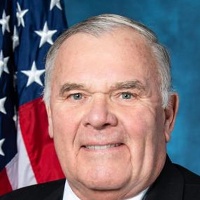
James Baird
Representative
IN
James Baird
Representative
IN
The NSF and USDA Interagency Research Act mandates that the National Science Foundation and the Department of Agriculture coordinate and conduct joint research and development activities. This collaboration will focus on critical areas such as agricultural biology, food security, rural revitalization, and the application of advanced technologies like AI and robotics in farming. The Act also supports related infrastructure, workforce development, and educational initiatives, requiring a report to Congress detailing coordination efforts within two years.
This act mandates that FHA loan disclosures include comparable VA loan information and requires lenders to ask about military service on standard loan applications.
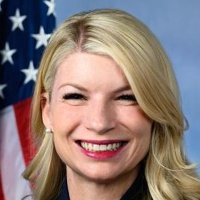
Brittany Pettersen
Representative
CO
Brittany Pettersen
Representative
CO
The VA Loan Informed Disclosure Act of 2025 (VALID Act) aims to increase awareness of VA loan options among homebuyers. It requires lenders to include comparative information about potential VA loan terms on standard FHA disclosure forms. Furthermore, the Act mandates that the Uniform Residential Loan Application include a prominent question regarding the applicant's military service.
The Save America’s Rural Hospitals Act stabilizes rural healthcare by enhancing Medicare payments, reducing beneficiary costs, easing regulatory burdens, and funding new transformation grants for essential providers.
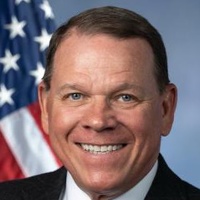
Sam Graves
Representative
MO
Sam Graves
Representative
MO
The Save America’s Rural Hospitals Act is a comprehensive bill designed to stabilize and strengthen rural healthcare infrastructure across the nation. It achieves this by permanently enhancing Medicare payment structures for rural hospitals, reducing regulatory burdens, and establishing new grant programs to foster innovative care delivery models. Ultimately, the legislation seeks to ensure the financial viability of these essential providers and improve access to care for rural beneficiaries.
This bill directs the FDA to establish modern, science-based standards for evaluating the safety and effectiveness of sunscreen active ingredients, including alternatives to animal testing, and mandates transparency regarding this process.
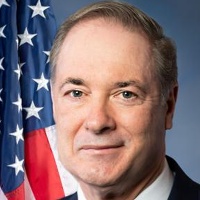
John Joyce
Representative
PA
John Joyce
Representative
PA
The SAFE Sunscreen Standards Act aims to modernize how the FDA evaluates sunscreen active ingredients by prioritizing consumer safety through scientifically sound evidence, including real-world data and alternatives to animal testing. This legislation directs the FDA to finalize long-pending rules for over-the-counter sunscreen ingredients, emphasizing their role in skin cancer prevention. Furthermore, it mandates annual public reporting to Congress on the progress of implementing these new testing standards and reviewing ingredient applications.
This act prohibits individuals convicted of specific financial and corruption-related crimes as a CEO from serving in the executive branch of the government.
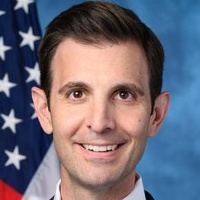
Chris Deluzio
Representative
PA
Chris Deluzio
Representative
PA
The No Corporate Crooks Act prohibits individuals convicted of specific financial and white-collar crimes (such as fraud, embezzlement, and tax evasion) while serving as a CEO from being appointed to positions within the executive branch. This legislation aims to prevent corporate executives convicted of serious offenses from holding government roles. Any individual found in violation of this restriction must be immediately removed from their executive branch service.
This resolution expresses strong support for designating June 6, 2025, as National Gun Violence Awareness Day and June 2025 as National Gun Violence Awareness Month to honor victims and promote awareness.
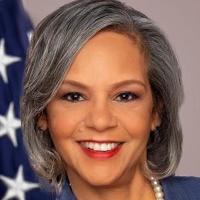
Robin Kelly
Representative
IL
Robin Kelly
Representative
IL
This resolution expresses strong support for designating June 6, 2025, as "National Gun Violence Awareness Day" and June 2025 as "National Gun Violence Awareness Month." It highlights the devastating scale of gun violence in the U.S., recognizing the thousands of annual deaths and injuries across all demographics. The bill encourages Americans to wear orange on the designated day to honor victims and promote increased awareness and community action regarding gun safety.
The TERRA Act establishes a framework for federally recognized Indian Tribes to consolidate multiple federal environmental resiliency funds into a single, flexible plan, streamlining administration and increasing self-determination.
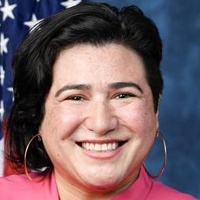
Emily Randall
Representative
WA
Emily Randall
Representative
WA
The TERRA Act establishes a framework allowing federally recognized Indian Tribes to consolidate funding from multiple eligible federal programs into a single, flexible plan for environmental resiliency and community needs. This grants Tribes significant self-determination by streamlining bureaucratic requirements, simplifying reporting, and providing strong authority to waive federal regulations that impede their plans. The legislation mandates federal agencies to coordinate their reviews and accelerate the transfer of funds to participating Tribes. Ultimately, the Act aims to increase efficiency and local control over federal resources while protecting sensitive Traditional Ecological Knowledge.
This act mandates the Department of Veterans Affairs to submit an annual report detailing the causes of death for veterans, specifically noting service-connected disabilities and suicide links.
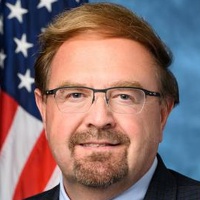
Charles (Chuck) Edwards
Representative
NC
Charles (Chuck) Edwards
Representative
NC
The Justice for America’s Veterans and Survivors Act of 2025 mandates that the Department of Veterans Affairs (VA) submit an annual report detailing the causes of death among veterans. This report must specifically identify veterans with totally disabling service-connected disabilities and note any deaths by suicide linked to those conditions. The goal is to provide Congress with comprehensive data on veteran mortality trends.
This bill establishes a 25% tax credit for purchasing U.S.-made circuit boards and substrates while also creating a $3 billion federal incentive program to boost domestic manufacturing and research in these critical electronic components.
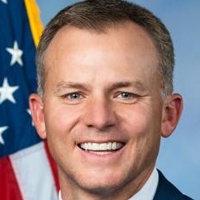
Blake Moore
Representative
UT
Blake Moore
Representative
UT
The Protecting Circuit Boards and Substrates Act establishes a 25% tax credit for purchasing U.S.-made printed circuit boards and integrated circuit substrates starting in 2026. It also creates a federal incentive program, managed by the Commerce Department, to provide up to $3 billion in funding to boost domestic manufacturing and research and development in these critical electronic components. The program prioritizes national security needs, workforce development, and supports for small and diverse-owned businesses.
The MARSHALS Act restructures the U.S. Marshals Service, moving its organization and leadership entirely under the judicial branch, overseen by the Chief Justice and a new Board.
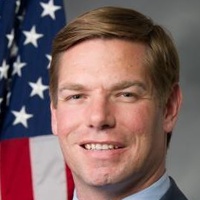
Eric Swalwell
Representative
CA
Eric Swalwell
Representative
CA
The MARSHALS Act fundamentally restructures the United States Marshals Service (USMS), moving its organization entirely into the judicial branch. This bill establishes that the Director and all U.S. Marshals will be appointed by the Chief Justice, subject to oversight from a new Board. The legislation also clarifies the USMS's authority to protect federal judicial personnel and outlines specific conditions under which the Service can assist the Department of Justice.
The Fit to Serve Act prohibits discrimination against service members and recruits in the Armed Forces based on their gender identity.
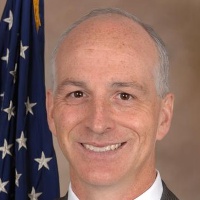
Adam Smith
Representative
WA
Adam Smith
Representative
WA
The Fit to Serve Act prohibits the U.S. Armed Forces from discriminating against service members based on their gender identity. This means military branches cannot set different standards, involuntarily discharge personnel, or deny medically necessary healthcare due to a service member's gender identity. The bill ensures equal opportunity for joining, serving, and receiving care regardless of one's internal sense of self.
The Mental Health in Schools Excellence Program Act of 2025 establishes a matching-funds program to help graduate schools reduce the cost of attendance for students who commit to working as school-based mental health service providers.
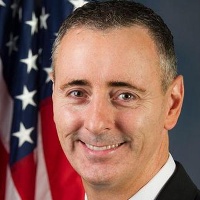
Brian Fitzpatrick
Representative
PA
Brian Fitzpatrick
Representative
PA
The Mental Health in Schools Excellence Program Act of 2025 establishes a new federal program designed to increase the number of mental health professionals working in schools. This program creates matching grants where the government helps cover graduate students' educational costs if their institutions agree to match the funding dollar-for-dollar. The goal is to incentivize graduate schools to support students who commit to careers in school-based mental health services, with specific outreach targeting low-income students.
This act modifies federal securities laws to establish specific fiduciary and investment approval requirements for certain 403(b) retirement plans offered by charities and educational institutions to maintain their exemptions from registration.

Frank Lucas
Representative
OK
Frank Lucas
Representative
OK
The Retirement Fairness for Charities and Educational Institutions Act of 2025 modifies federal securities laws to update exemptions for 403(b) retirement plans. This legislation clarifies requirements under the Investment Company Act, the Securities Act, and the Securities Exchange Act. The changes generally condition these exemptions on the employer taking on specific fiduciary responsibilities regarding the selection and approval of investment options offered to participants.
This Act establishes mandatory ethics codes, recusal standards, and enhanced financial disclosure requirements for Supreme Court Justices and federal judges.
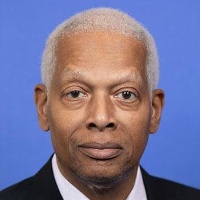
Henry Johnson
Representative
GA
Henry Johnson
Representative
GA
The Supreme Court Ethics, Recusal, and Transparency Act of 2025 establishes a mandatory, public code of conduct and a formal complaint process for Supreme Court Justices, modeled after procedures for lower federal judges. The bill also institutes stricter disclosure requirements for gifts and financial ties, and mandates judicial disqualification in cases involving recent lobbying contact or significant financial relationships with involved parties. Furthermore, it creates new review panels for disqualification motions and requires parties and *amici* to disclose financial supporters connected to the case.
This act increases the penalty-free withdrawal limit from retirement accounts for first-time homebuyers from $\$10,000$ to $\$50,000$.
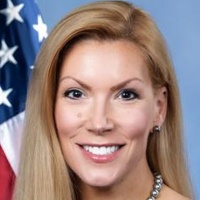
Beth Van Duyne
Representative
TX
Beth Van Duyne
Representative
TX
The Uplifting First-Time Homebuyers Act of 2025 significantly increases the penalty-free withdrawal limit from retirement accounts for first-time homebuyers. This legislation raises the maximum allowable distribution from $\$10,000$ to $\$50,000$. This change is designed to provide greater financial flexibility for individuals purchasing their first home, taking effect for tax years beginning after December 31, 2024.
This bill establishes numerous protected areas, including Special Management Areas, Wildlife Conservation Areas, Protection Areas, and Wilderness additions, across Gunnison County, Colorado, while setting specific restrictions on vehicle use and resource development.
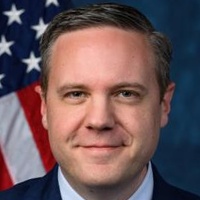
Jeff Hurd
Representative
CO
Jeff Hurd
Representative
CO
The Gunnison Outdoor Resources Protection Act of 2025 establishes numerous new protected zones, including Special Management Areas, Wildlife Conservation Areas, Protection Areas, and Recreation Management Areas, across federal lands in Gunnison County, Colorado. The bill mandates conservation and protection for the natural, scenic, and wildlife resources within these designated areas. It also significantly restricts off-highway vehicle and bicycle use to pre-existing trails, while simultaneously expanding certain Wilderness Areas. Finally, the Act addresses specific land management issues, including oil and gas restrictions in the North Fork Valley and the transfer of certain tribal lands into federal trust status.
This resolution expresses support for designating May 17, 2025, as "DIPG Awareness Day" to promote awareness and increased federal research funding for the devastating childhood brain cancer, diffuse intrinsic pontine glioma (DIPG).
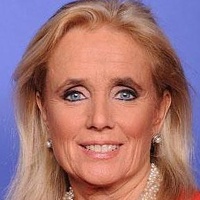
Debbie Dingell
Representative
MI
Debbie Dingell
Representative
MI
This resolution expresses strong support for designating May 17, 2025, as "DIPG Awareness Day" to highlight the urgent need for action against diffuse intrinsic pontine glioma (DIPG). It calls for increased federal funding and focused research into this devastating pediatric brain cancer, which has seen no significant treatment advances in over 40 years. Furthermore, the bill encourages research grant organizations to prioritize funding based on cancer lethality and potential life-years lost.
This Act mandates the creation of Tribal Co-Management Plans across federal land agencies and authorizes the Secretary of Agriculture to enter into agreements with Tribes to carry out specific Forest Service activities.
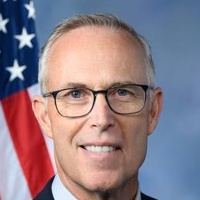
Jared Huffman
Representative
CA
Jared Huffman
Representative
CA
The Tribal Self-Determination and Co-Management in Forestry Act of 2025 mandates that federal land management agencies, including the DOI and the Forest Service, develop formal co-management plans with federally recognized Tribes for activities on historically or culturally connected lands. This legislation establishes a framework for Tribes to partner directly with federal agencies on planning, operations, and restoration work. Furthermore, it requires specialized training for federal employees on integrating Indigenous knowledge and ensures streamlined processes for Tribal participation in land management.