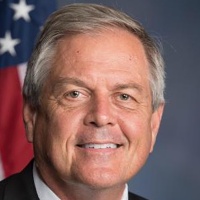
Legislative Activity
Track Ralph's sponsored bills, co-sponsored legislation, and voting record
This bill establishes specific discretionary spending limits for the federal government for fiscal years 2026 through 2029.
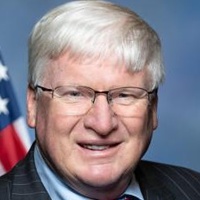
Glenn Grothman
Representative
WI
Glenn Grothman
Representative
WI
The Enforce the Caps Act establishes specific, increasing discretionary spending limits for the federal government for fiscal years 2026 through 2029. This legislation amends existing law to set firm budget authority caps for non-mandatory government programs over the next four years.
The Employee Rights Act mandates secret ballot elections for union representation, restricts voting eligibility to lawfully present workers, tightens rules on employer-employee data sharing during elections, limits union spending of member dues, clarifies independent contractor and joint employer standards, extends NLRA coverage to tribal entities, allows for independent negotiation in certain states, bans non-job-related DEI clauses in contracts, and limits federal prosecution for minor acts of violence during labor disputes.
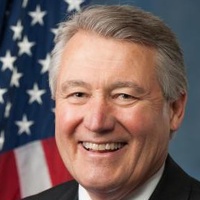
Rick Allen
Representative
GA
Rick Allen
Representative
GA
The Employee Rights Act fundamentally reforms U.S. labor law by mandating secret ballot elections for union representation and restricting union access to employee contact information. It also clarifies definitions for independent contractors and joint employers under federal wage and labor relations statutes. Furthermore, the bill prohibits Diversity, Equity, or Inclusion (DEI) clauses in collective bargaining agreements and establishes federal penalties for violence during labor disputes, while prioritizing state authority for minor incidents.
This bill mandates that any final World Health Organization pandemic preparedness agreement resulting from the International Negotiating Body must be treated as a treaty requiring two-thirds Senate approval before the U.S. can adopt it.
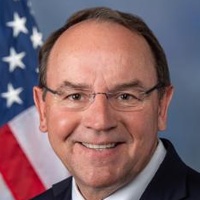
Thomas Tiffany
Representative
WI
Thomas Tiffany
Representative
WI
This bill, the No WHO Pandemic Preparedness Treaty Without Senate Approval Act, declares that any final pandemic agreement resulting from the World Health Organization's negotiations must be treated as a formal treaty. This ensures that the United States cannot implement such an agreement without receiving the advice and consent of two-thirds of the Senate. Furthermore, the policy of the United States is established to fully support Taiwan's participation in the WHO.
The Protect RAIL Act makes non-citizens inadmissible to the U.S. and deportable if they commit or conspire to commit crimes involving theft or tampering with goods shipped across state or international lines.

Paul Gosar
Representative
AZ
Paul Gosar
Representative
AZ
The Protect RAIL Act amends immigration law to prevent non-citizens convicted of or admitting to crimes involving the theft or tampering of goods shipped across state or international lines from entering the United States. Furthermore, this bill makes non-citizens already in the U.S. deportable if they have committed such offenses related to interstate or foreign shipments.
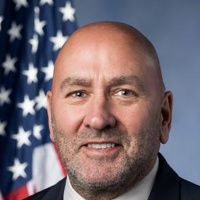
This resolution censures Representative LaMonica McIver and removes her from the Committee on Homeland Security following her alleged interference with federal officers at an immigration facility.
Clay Higgins
Representative
LA
Clay Higgins
Representative
LA
This resolution formally censures Representative LaMonica McIver following her indictment for allegedly interfering with federal officers at an immigration facility. As a result of her conduct, the House is officially expressing its strong disapproval and immediately removing her from the Committee on Homeland Security. This action is taken because her alleged actions are deemed not to reflect creditably upon the House.
This bill establishes a U.S. policy and reporting requirements to oppose foreign assistance to the Taliban and scrutinize U.S. cash assistance programs and the Afghan Fund.

Tim Burchett
Representative
TN
Tim Burchett
Representative
TN
The "No Tax Dollars for Terrorists Act" establishes a U.S. policy to oppose foreign assistance to the Taliban from other countries and NGOs, requiring the Secretary of State to develop a strategy to discourage such support. The bill mandates several reports detailing foreign aid given to the Taliban and oversight of U.S. cash assistance programs in Afghanistan. Furthermore, it requires recurring reports on the status and controls surrounding the Afghan Fund to prevent Taliban misuse of assets.
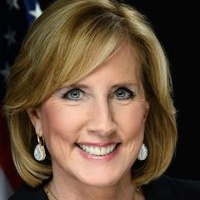
This resolution supports designating a week in June 2025 as "National Women's Sports Week" to celebrate Title IX's impact while asserting that protecting female-only sports is necessary to maintain fairness and opportunity for biological women.
Claudia Tenney
Representative
NY
Claudia Tenney
Representative
NY
This resolution supports designating the week including June 23, 2025, as "National Women's Sports Week" to celebrate the anniversary and growth of women's sports since Title IX. It strongly affirms the importance of Title IX in creating equal opportunities for female athletes. Furthermore, the resolution argues that protecting single-sex sports is necessary to maintain fairness and safety for biological women in athletics.
This act revises budget baseline calculations by excluding funds designated as emergency requirements or provided through supplemental appropriations.
Glenn Grothman
Representative
WI
Glenn Grothman
Representative
WI
The Stop the Baseline Bloat Act of 2025 aims to reform how federal budget baselines are calculated under existing deficit control laws. Specifically, this bill mandates that funding designated as "emergency requirements" or provided through supplemental appropriations must be excluded when determining the baseline spending level. This change seeks to prevent temporary, non-recurring spending from artificially inflating future budget caps.
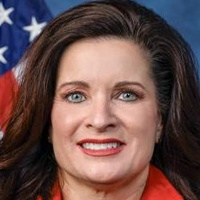
This bill mandates the denial or revocation of U.S. passports for individuals charged with or convicted of providing material support to foreign terrorist organizations.
Sheri Biggs
Representative
SC
Sheri Biggs
Representative
SC
The No Passports for Terrorists and Traffickers Act mandates the denial or revocation of U.S. passports for individuals charged with or convicted of providing material support to designated foreign terrorist organizations. This measure grants the Secretary of State the authority to restrict travel for those deemed affiliated with terrorism. Exceptions exist for urgent humanitarian needs or safe return to the United States, and affected individuals retain the right to appeal the decision.
This act strips federal funding from any state or local jurisdiction deemed non-compliant with federal immigration enforcement cooperation requests.
Sheri Biggs
Representative
SC
Sheri Biggs
Representative
SC
The Mobilizing Against Sanctuary Cities Act mandates that the Attorney General annually identify state and local jurisdictions that fail to cooperate with federal immigration enforcement requests, such as honoring detainers. Jurisdictions deemed non-compliant will immediately lose eligibility for all federal financial assistance for at least one year. Funding will only be restored after the Attorney General certifies that the area has corrected its non-compliance.
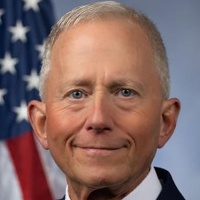
This resolution strongly condemns the rise in ideologically motivated attacks against Jewish individuals in the U.S., including the recent Boulder assault, and reaffirms the House's commitment to combating antisemitism and political violence.
Jefferson Van Drew
Representative
NJ
Jefferson Van Drew
Representative
NJ
This resolution strongly condemns the recent rise in ideologically motivated attacks targeting Jewish individuals and institutions across the United States, including the violent assault in Boulder, Colorado. The House of Representatives reaffirms its commitment to combating antisemitism and politically motivated violence in all its forms. It calls for thorough investigation and prosecution of such incidents and urges all sectors of society to speak out against hate.
This Act establishes an automatic sequestration process to offset future discretionary or direct emergency spending approved by Congress, with specific reporting requirements for designating spending as an emergency.
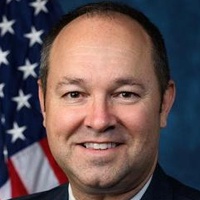
Marlin Stutzman
Representative
IN
Marlin Stutzman
Representative
IN
The Emergency Spending Accountability Act establishes automatic spending sequestration to offset future emergency appropriations approved by Congress. This system mandates multi-year spending cuts, applied only to the same category of spending (discretionary or direct) as the original emergency funds. The bill also requires detailed justifications from Congressional committees whenever emergency spending is included in legislation. Certain critical programs, including Social Security and VA benefits, are explicitly protected from these automatic cuts.
This bill establishes the Border Operations Service Medal to honor military personnel and federal employees involved in designated national security operations along the U.S.-Mexico border starting January 1, 2025.
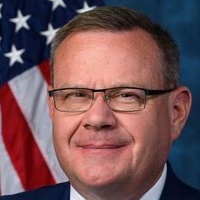
Tim Moore
Representative
NC
Tim Moore
Representative
NC
The Border Operations Service Medal Act establishes a new military decoration, the Border Operations Service Medal, to recognize service members and federal employees involved in designated national security operations along the U.S.-Mexico border starting January 2025. This medal will be awarded to active-duty, National Guard, and Reserve members who participated in these specific border security efforts. The Secretary of Defense is tasked with designing and implementing the medal within 60 days of the Act's enactment.
This resolution expresses support for designating the month of July as "American Patriotism Month" to honor the nation's history, values, and sacrifices.
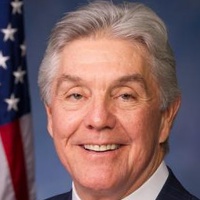
Roger Williams
Representative
TX
Roger Williams
Representative
TX
This resolution expresses support for officially designating the month of July as "American Patriotism Month." It recognizes the historical significance of American patriotism and encourages citizens and groups to observe the month with appropriate ceremonies celebrating U.S. history and values. The bill further asks the President to issue a yearly proclamation supporting this designation.
This bill restricts the Secretary of Homeland Security's authority to grant immigration parole to a case-by-case basis for urgent humanitarian reasons or significant public benefit, imposes annual caps, and allows states to sue over perceived abuses.
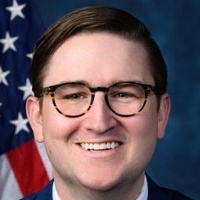
Addison McDowell
Representative
NC
Addison McDowell
Representative
NC
This bill, the Preventing the Abuse of Immigration Parole Act, aims to drastically restrict the Secretary of Homeland Security's authority to grant immigration parole. It mandates that parole decisions must be made strictly on a case-by-case basis for urgent humanitarian reasons or significant public benefit. Furthermore, the legislation imposes an annual cap on parole grants starting in FY 2029 and grants states the authority to sue the Secretary over perceived misuse of this authority.
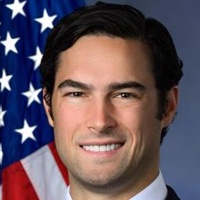
The New IDEA Act prohibits businesses from deducting wages paid to unauthorized workers unless they use the E-Verify program, while also making E-Verify permanent and voluntary with new employer protections.
Brandon Gill
Representative
TX
Brandon Gill
Representative
TX
The New IDEA Act prohibits businesses from deducting wages paid to unauthorized workers from their taxable income unless they use the E-Verify program. This legislation makes the E-Verify program permanent and voluntary, offering employers who comply with its rules a legal presumption of compliance regarding employee work authorization. Furthermore, the bill mandates increased information sharing between government agencies to help enforce these new wage deduction and employment verification rules.
This bill expands eligibility for veterans' life insurance to nearly all veterans under age 81 and establishes new protections against the VA voiding policies due to administrative errors after one year.
Sheri Biggs
Representative
SC
Sheri Biggs
Representative
SC
The Veterans’ Life Insurance Expansion and Integrity Act of 2025 significantly broadens eligibility for a key VA life insurance program, removing the service-connected disability requirement so that most veterans under 81 can enroll. This bill also establishes new integrity measures, preventing the VA from easily voiding policies due to administrative errors made more than one year after issuance, provided the veteran is given due process. Furthermore, the Secretary of Veterans Affairs must submit a comprehensive report to Congress on the program's enrollment, claims, and financial stability within two years of enactment.
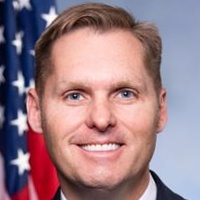
This resolution calls upon all Americans to observe Memorial Day 2025 by honoring the service members who died defending freedom and peace.
Michael Guest
Representative
MS
Michael Guest
Representative
MS
This resolution calls upon all Americans to observe Memorial Day, 2025, as a solemn occasion to honor the men and women of the Armed Forces who made the ultimate sacrifice in the pursuit of freedom and peace. Congress recognizes the profound debt owed to these patriots who have died defending American values globally. The bill encourages a national expression of respect, pride, and gratitude for their service and sacrifice.
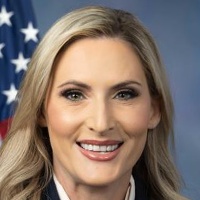
This resolution condemns former FBI Director James Comey for allegedly inciting violence against President Trump through a cryptic social media post and demands an investigation and his permanent barring from federal employment.
Laurel Lee
Representative
FL
Laurel Lee
Representative
FL
This resolution strongly condemns former FBI Director James Comey for a social media post interpreted as inciting violence against President Donald J. Trump during his overseas trip. Congress demands that federal authorities investigate Comey's actions and permanently bar him from any future federal employment. The measure asserts that political violence incitement by former high-ranking officials is unacceptable and threatens national security.
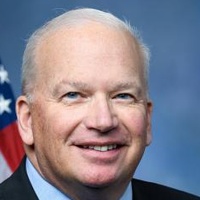
This Act restricts federal subpoena power over insurance data, enhances confidentiality protections for data shared by the Federal Insurance Office, and limits the Office of Financial Research's ability to subpoena insurance companies while imposing new requirements on financial regulators when collecting data from them.
Scott Fitzgerald
Representative
WI
Scott Fitzgerald
Representative
WI
The Insurance Data Protection Act aims to adjust federal regulatory authority over insurance data by limiting the subpoena power of the Office of Financial Research against insurance companies. It also strengthens confidentiality protections for data shared with and held by the Federal Insurance Office and other financial regulators. Furthermore, the bill mandates that financial regulators must seek existing data from other sources before directly collecting information from insurance companies, ensuring data privacy is maintained.