Legislative Activity
Track Ralph's sponsored bills, co-sponsored legislation, and voting record
This bill phases out the enhanced federal funding match for Medicaid coverage provided to low-income adults between 2027 and 2034, while establishing new rules for states that have not yet expanded Medicaid.

Chip Roy
Representative
TX
Chip Roy
Representative
TX
The Ending Medicaid Discrimination Against the Most Vulnerable Act modifies the enhanced federal funding structure for Medicaid coverage provided to low-income adults. This bill establishes a gradual phase-out of the enhanced Federal Medical Assistance Percentage (FMAP) between 2027 and 2034, with the extra funding ending entirely in 2035. Furthermore, the legislation alters the incentives for states that have not yet expanded Medicaid coverage, potentially limiting future enhanced funding for those states if they expand after 2024.
This bill establishes Pregnancy.gov as a centralized, federally managed website to connect pregnant women with verified, non-abortion-affiliated resources and supports, funded through state grants and existing appropriations.

Diana Harshbarger
Representative
TN
Diana Harshbarger
Representative
TN
The Pregnancy.Gov Act establishes a new national public website, Pregnancy.gov, to serve as a centralized hub connecting pregnant women with local resources. This site must offer tailored resource matching based on location and ensure listed providers have a consistent three-year service history. Crucially, the Act prohibits any organization that performs, refers for, or counsels in favor of abortion from being listed or receiving associated state grants.
This bill removes federal tax and registration requirements for firearm silencers, preempts certain state regulations, mandates the destruction of existing federal silencer owner records, and updates related definitions and marking requirements.
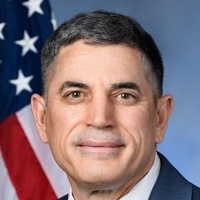
Andrew Clyde
Representative
GA
Andrew Clyde
Representative
GA
The Constitutional Hearing Protection Act aims to treat firearm silencers equally under federal tax law by updating definitions and removing certain registration requirements if existing firearm laws are followed. The bill also preempts state and local governments from imposing special taxes or registration burdens on silencers. Furthermore, it mandates the destruction of existing federal records identifying silencer owners within one year of enactment.
This Act repeals the federal ban on mailing concealable firearms and prohibits the U.S. Postal Service from creating rules that restrict the mailing of firearms or require the disclosure of customer records as a condition of mailing.
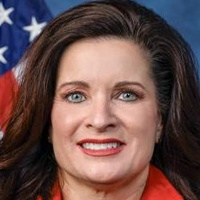
Sheri Biggs
Representative
SC
Sheri Biggs
Representative
SC
The Protecting the Mailing of Firearms Act repeals the federal ban on mailing certain concealable firearms. This legislation also prohibits the U.S. Postal Service from enacting rules that would block or unduly restrict the mailing of firearms, ammunition, or their components. Furthermore, the USPS cannot require sellers to disclose customer records or firearm serial numbers as a condition for mailing these items.
The USPS SERVES US Act reforms USPS rate-setting based on CPI, establishes penalties for service failures, improves service change oversight, creates a Customer Advocate office, and mandates changes to retiree health benefits fund investments.
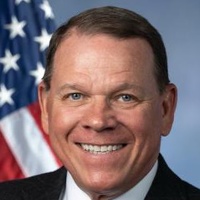
Sam Graves
Representative
MO
Sam Graves
Representative
MO
The USPS SERVES US Act aims to reform postal operations by linking annual rate increases to the Consumer Price Index (CPI) minus 0.5% and establishing penalties for service failures. The bill also creates an independent Office of the Customer Advocate within the Postal Regulatory Commission (PRC) to represent public interests. Furthermore, it mandates stricter procedures for service changes and overhauls how retiree health benefits funds are invested.
The Safeguard American Voter Eligibility (SAVE) Act mandates that individuals registering to vote in federal elections must present documentary proof of U.S. citizenship.
Chip Roy
Representative
TX
Chip Roy
Representative
TX
The Safeguard American Voter Eligibility Act (SAVE Act) significantly amends federal law to require individuals registering to vote in federal elections to present documentary proof of U.S. citizenship. This legislation mandates that states actively clean their voter rolls and cooperate with federal agencies to verify citizenship status. It establishes new criminal penalties for officials who fail to enforce these documentation requirements.
This bill mandates that tax-exempt organizations receiving any federal funding must publicly disclose their full contributor lists from IRS Form 990 Schedule B, or risk losing their tax-exempt status.

Paul Gosar
Representative
AZ
Paul Gosar
Representative
AZ
The Putting Trust in Transparency Act mandates that any tax-exempt organization receiving federal funding must publicly disclose the names, zip codes, and donation amounts of its major contributors listed on IRS Form 990 Schedule B. This is intended to increase oversight of organizations acting as government agents using taxpayer money. Failure to comply with this new public disclosure requirement can result in the revocation of the organization's tax-exempt status.
This Act redefines immediate relatives for immigration, caps family-sponsored visas, and creates a new, non-work, temporary visa for parents of adult U.S. citizens.
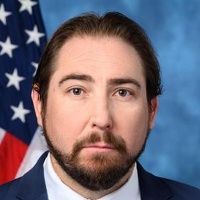
Eli Crane
Representative
AZ
Eli Crane
Representative
AZ
The Nuclear Family Priority Act significantly restructures U.S. family-based immigration by redefining "immediate relatives" to only include spouses and children of U.S. citizens, removing parents from that top category. It also establishes a new, temporary nonimmigrant visa for parents of adult U.S. citizens, which prohibits work and public benefits. Furthermore, the bill revises the annual cap for family-sponsored visas and makes numerous technical amendments across immigration law to align with these changes.
This bill expands mandatory detention for certain non-citizens by adding convictions for trespassing, vandalism, and arson to the list of triggering property crimes.
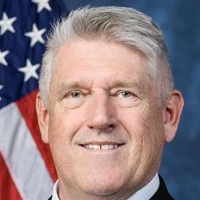
Troy Downing
Representative
MT
Troy Downing
Representative
MT
The Safeguarding American Property Act of 2025 expands mandatory detention requirements for certain non-citizens who commit specific property crimes. This legislation adds offenses like trespassing, vandalism, and arson to the list of crimes that require immigration authorities to detain an individual during removal proceedings. The bill also clarifies language related to violent offenses to ensure comprehensive grounds for detention.
This bill abolishes the Department of Education and redirects federal funding for K-12 education to states via block grants administered by the Secretary of the Treasury.
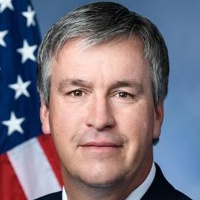
Barry Moore
Representative
AL
Barry Moore
Representative
AL
This bill proposes the immediate abolition of the Department of Education, transferring residual functions to the Secretary of the Treasury. It establishes a new block grant program, funding elementary and secondary education directly to states based on their residents' federal income tax contributions. The legislation emphasizes that states should use these funds to promote parental choice in K-12 schooling.
This bill repeals the requirement for financial institutions to collect and report specific data on small business loans to reduce compliance costs and improve small business access to credit.
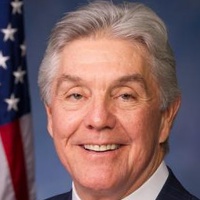
Roger Williams
Representative
TX
Roger Williams
Representative
TX
The 1071 Repeal to Protect Small Business Lending Act aims to eliminate the mandatory data collection and reporting requirements for small business loans previously established under Section 704B of the Equal Credit Opportunity Act. Proponents argue that these regulations impose unnecessary compliance costs on lenders, potentially hindering small business access to credit. This bill repeals those specific reporting mandates to reduce regulatory burdens on financial institutions.
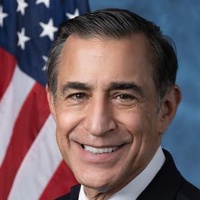
This Act prohibits state and local governments from imposing excise taxes on the sale of firearms, ammunition, or related parts in interstate or foreign commerce.
Darrell Issa
Representative
CA
Darrell Issa
Representative
CA
The Freedom from Unfair Gun Taxes Act of 2025 prohibits state and local governments from imposing excise taxes on the sale of firearms, ammunition, or firearm parts. This restriction specifically targets taxes levied on sales that involve interstate or foreign commerce. The Act explicitly preserves existing federal laws, such as the Pittman-Robertson Wildlife Restoration Act.
The SHORT Act redefines "firearm" to exclude certain collector's items, eliminates disparate federal treatment of short-barreled rifles and shotguns, preempts state and local registration/tax burdens on these items, and mandates the destruction of certain existing NFA records.
Andrew Clyde
Representative
GA
Andrew Clyde
Representative
GA
The SHORT Act aims to reform federal firearms regulations by redefining what constitutes a "firearm" for tax purposes, largely excluding antique or collector's items. It eliminates disparate federal treatment for short-barreled rifles and shotguns used lawfully and preempts state and local governments from imposing special taxes or registration requirements on these specific weapons. Furthermore, the bill mandates the destruction of certain existing federal registration and transfer records related to defined firearms.
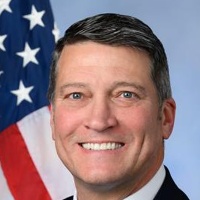
This act prohibits all federal funding for the National Public Radio (NPR) and the Public Broadcasting Service (PBS).
Ronny Jackson
Representative
TX
Ronny Jackson
Representative
TX
The No Partisan Radio and Partisan Broadcasting Services Act (NPR and PBS Act) prohibits all federal funding, direct or indirect, for the National Public Radio (NPR) and the Public Broadcasting Service (PBS). This measure immediately ends government financial support for these two national broadcasting entities. The restriction also applies to any successor organizations.
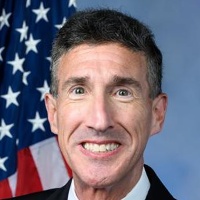
This Act limits the FCC's authority to prohibit state and federal correctional facilities from using authorized cellphone jamming systems within their premises under specific operational and funding conditions.
David Kustoff
Representative
TN
David Kustoff
Representative
TN
The Cellphone Jamming Reform Act of 2025 limits the FCC's authority to prohibit the use of cell phone jamming systems within jails and prisons. This legislation specifically permits state and federal correctional facilities to deploy jamming technology to block communications involving inmates or contraband devices. Any facility using these systems must adhere to strict operational limits, ensure state funding for state-run systems, and coordinate with local public safety officials beforehand.
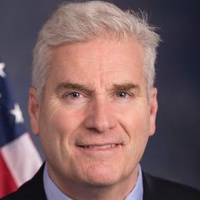
This act establishes expedited judicial review and shifts the burden of proof to the government when individuals challenge NICS denials, while also mandating annual reporting on record challenges.
Tom Emmer
Representative
MN
Tom Emmer
Representative
MN
The Firearm Due Process Protection Act of 2025 aims to strengthen due process rights for individuals challenging denials in the National Instant Criminal Background Check System (NICS). It mandates expedited court hearings for record correction lawsuits and shifts the burden of proof onto the government to demonstrate why a person should be ineligible to own a firearm. Additionally, the bill requires the FBI to submit annual reports detailing the outcomes and timelines of all NICS record challenges.
This bill establishes national reciprocity for concealed carry permits, allowing individuals legally permitted to carry in their home state to carry a handgun in any other state that allows concealed carry.
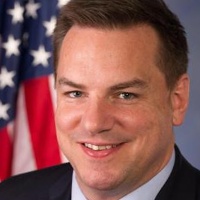
Richard Hudson
Representative
NC
Richard Hudson
Representative
NC
The Constitutional Concealed Carry Reciprocity Act of 2025 establishes a national standard for carrying concealed handguns across state lines. This act allows individuals legally permitted to carry in their home state to carry concealed in any other state that allows its residents to carry concealed firearms. The law does not override private property restrictions or prohibitions on government property, but it provides protections and legal recourse for those traveling in compliance with the new federal standard.
This act eliminates the Optional Practical Training (OPT) program, ending work authorization for F-1 visa students unless explicitly authorized by future Congressional action.
Paul Gosar
Representative
AZ
Paul Gosar
Representative
AZ
The Fairness for High-Skilled Americans Act of 2025 aims to eliminate the Optional Practical Training (OPT) program, which currently allows F-1 student visa holders to gain temporary work authorization after completing their studies. This bill removes the government's authority to grant such work permission unless explicitly authorized by a future Act of Congress.
The Fair and Open Competition Act of 2025 prohibits the federal government from requiring or penalizing bidders or contractors on federally funded construction projects based on their agreement or non-agreement with labor unions.
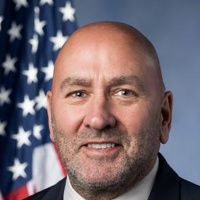
Clay Higgins
Representative
LA
Clay Higgins
Representative
LA
The Fair and Open Competition Act of 2025 ensures fair competition on federally funded construction projects by prohibiting the government from requiring or penalizing bidders based on union agreements. This legislation aims to keep federal agencies neutral in labor relations while promoting cost savings and opening opportunities for all businesses. Exceptions to this neutrality rule are strictly limited to specific public health, safety, or national security emergencies.
This bill prohibits nationals of the People's Republic of China from obtaining nonimmigrant student visas (F, J, or M) if their purpose is to conduct research or study in the United States.
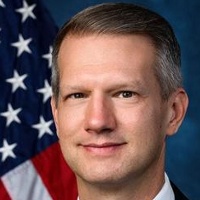
Riley Moore
Representative
WV
Riley Moore
Representative
WV
The Stop CCP VISAs Act of 2025 prohibits the issuance of F, J, and M nonimmigrant visas to nationals of the People's Republic of China if their primary purpose for entering the U.S. is to conduct research or study. This legislation aims to safeguard American intellectual property by restricting academic and student exchange visas for Chinese nationals.