Legislative Activity
Track Mark's sponsored bills, co-sponsored legislation, and voting record
This resolution honors the life, distinguished coaching career, and enduring legacy of Lou Holtz, recognizing his commitment to excellence, character, and mentorship in college football.
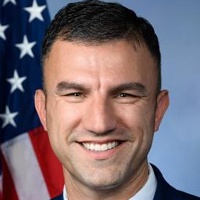
Rudy Yakym
Representative
IN
Rudy Yakym
Representative
IN
This resolution honors the life and legacy of legendary college football coach Lou Holtz. It recognizes his historic coaching career, his commitment to mentoring student-athletes, and his enduring impact on the sport through his dedication to character, faith, and excellence.
This Act establishes new federal standards and requirements for states issuing commercial driver's licenses (CDLs) to individuals who are not residents of that issuing state, particularly focusing on drivers from foreign countries and U.S. territories.
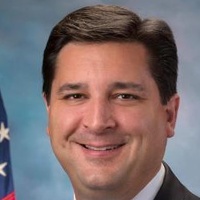
David Rouzer
Representative
NC
David Rouzer
Representative
NC
The Non-Domiciled CDL Integrity Act establishes new federal standards for states issuing Commercial Driver's Licenses (CDLs) to individuals who do not reside in that state. This bill sets specific, strict requirements for foreign nationals seeking a CDL, including proof of lawful status and job-related visas, while also outlining distinct procedures for applicants residing in U.S. territories. The legislation mandates enhanced record-keeping and reporting by states to the Secretary of Transportation regarding these non-domiciled licenses.
The Enhanced Iran Sanctions Act of 2025 mandates broad economic and immigration sanctions on foreign individuals, entities, and financial institutions that support Iran’s nuclear, missile, drone, or terrorist activities, while specifically targeting the country's petroleum and petrochemical sectors.
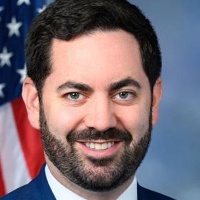
Michael Lawler
Representative
NY
Michael Lawler
Representative
NY
The Enhanced Iran Sanctions Act of 2025 strengthens U.S. policy by imposing mandatory sanctions on foreign persons and financial institutions that support Iran’s nuclear, ballistic missile, drone, and terrorist activities. The bill specifically targets Iran’s petroleum and petrochemical sectors to cut off funding for these malign programs. Additionally, it expands the State Department’s "Rewards for Justice" program to incentivize the reporting of individuals who evade these sanctions.
The No Tax on Drill Pay Act excludes compensation received for inactive-duty training from federal gross income.
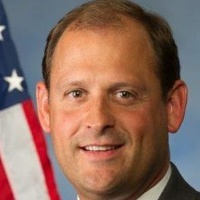
Garland Barr
Representative
KY
Garland Barr
Representative
KY
The "No Tax on Drill Pay Act" seeks to provide financial relief to members of the National Guard and Reserve by excluding their inactive-duty training compensation from federal gross income. By eliminating federal taxes on this pay, the bill aims to increase the take-home earnings of service members for their training efforts. This change would apply to all qualifying compensation received following the date of the bill's enactment.
This bill prohibits federal agencies from providing funding or support for the creation or maintenance of state-level firearm ownership databases, with exceptions for records of lost or stolen weapons.
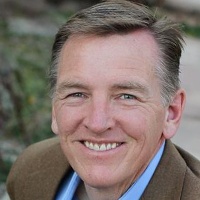
Paul Gosar
Representative
AZ
Paul Gosar
Representative
AZ
The Gun Owner Registration Information Protection Act prohibits federal agencies from providing funding or support for the creation and maintenance of state-level firearm ownership databases. This legislation ensures that federal resources cannot be used to track lawful gun owners, with a specific exception for databases tracking lost or stolen firearms.
This resolution recognizes the 10th anniversary of the first U.S. liquefied natural gas export shipment, celebrating its impact on American energy leadership and global security.
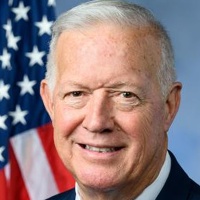
Randy Weber
Representative
TX
Randy Weber
Representative
TX
This resolution recognizes the 10th anniversary of the first liquefied natural gas (LNG) export shipment from the lower 48 states in February 2016. It celebrates this milestone as a turning point that established the U.S. as a leading global LNG supplier, significantly boosting economic growth and strengthening international energy security. The bill honors the innovation and hard work that supported this vital sector.
This bill establishes eligibility requirements for amateur athletic organizations based on biological sex, prohibiting individuals whose sex is male from competing in female-designated amateur athletic competitions.
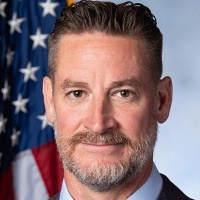
W. Steube
Representative
FL
W. Steube
Representative
FL
This Act establishes specific definitions for "female," "male," and "sex" based on biological reproductive systems for amateur athletics. It mandates that organizations recognized by the U.S. Olympic & Paralympic Committee must prohibit individuals identified as male from competing in competitions designated for females. This aims to protect competitive opportunities specifically for biological females in amateur sports.
This Act establishes the Defense Technology Hubs Program to designate and fund at least ten regional hubs across the U.S. to accelerate defense technology innovation through public-private partnerships.
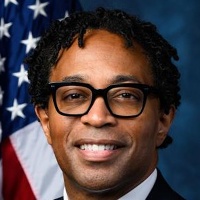
Wesley Bell
Representative
MO
Wesley Bell
Representative
MO
The Defense Technology Hubs Act of 2026 establishes a program to create at least 10 regional defense technology hubs across the U.S. These hubs will foster collaboration between universities, industry, and government to accelerate the development of critical defense technologies. The Secretary of Defense is authorized to provide funding and support to these consortia to enhance national security and strengthen the defense industrial base.
This bill mandates proof of U.S. citizenship for federal voter registration and requires photo identification showing citizenship status for voting in federal elections.
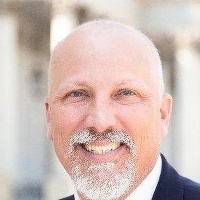
Chip Roy
Representative
TX
Chip Roy
Representative
TX
The Safeguard American Voter Eligibility Act (SAVE America Act) mandates that individuals must provide documentary proof of U.S. citizenship to register to vote in federal elections. It also establishes a federal requirement for voters to present a photo ID indicating U.S. citizenship when casting a ballot in federal elections. The bill outlines specific acceptable forms of proof and requires states to implement verification programs to ensure only citizens are registered and voting.
This bill revokes the tax-exempt status of organizations that provide or fund abortions, with exceptions for life-saving procedures or cases of rape or incest.
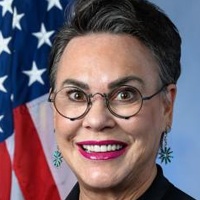
Harriet Hageman
Representative
WY
Harriet Hageman
Representative
WY
This bill proposes to amend the Internal Revenue Code to revoke the tax-exempt status of any organization that provides or funds abortions. This revocation would apply unless the abortion is necessary to save the life of the mother or results from rape or incest. Organizations that lose this status would also no longer be eligible for tax-deductible charitable contributions.
This bill establishes federal standards for voter identification, registration, election administration, and mail-in ballot procedures for federal elections.
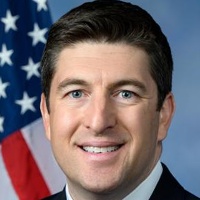
Bryan Steil
Representative
WI
Bryan Steil
Representative
WI
The Make Elections Great Again Act establishes new federal standards for voter identification, citizenship verification for registration, and statewide voter list maintenance for federal elections. It also standardizes election administration by mandating paper ballots, banning ranked-choice voting, and implementing strict new rules for requesting and returning mail-in ballots. The bill aims to increase election integrity through enhanced documentation and procedural uniformity across states.
This bill supports designating May 2025 as Renewable Fuels Month and establishes a council to develop legislative solutions for the renewable fuels industry, focusing on E15, refinery capacity, and the Renewable Fuel Standard.
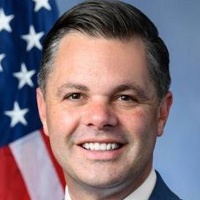
Zachary (Zach) Nunn
Representative
IA
Zachary (Zach) Nunn
Representative
IA
This bill expresses support for designating May 2025 as Renewable Fuels Month to highlight the benefits of renewable fuels, such as reducing carbon emissions and supporting rural economies. It also establishes the E15 Rural Domestic Energy Council to develop legislative solutions addressing challenges in the renewable fuels sector. The Council is tasked with investigating key areas like E15 sales and the Renewable Fuel Standard, with recommendations due to Congress by early 2026.
This Act supports Eastern Mediterranean nations as a strategic gateway for the India-Middle East-Europe Economic Corridor (IMEC) by prioritizing diplomacy, energy security, and defense cooperation.
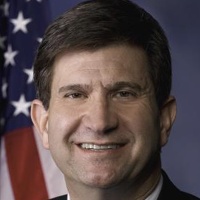
Bradley Schneider
Representative
IL
Bradley Schneider
Representative
IL
The Eastern Mediterranean Gateway Act supports key Eastern Mediterranean nations—Egypt, Greece, Cyprus, and Israel—as strategic partners for the India-Middle East-Europe Economic Corridor (IMEC). The bill directs the U.S. to prioritize diplomatic engagement, energy security, and defense cooperation in the region. It also mandates several reports to Congress detailing implementation, multilateral initiatives, and potential expansions of successful U.S.-Israel partnership models to other regional allies.
The FAST VETS Act mandates the Department of Veterans Affairs to annually review and redevelop a veteran's vocational rehabilitation plan if long-term goals become infeasible due to changes in their employment handicap.
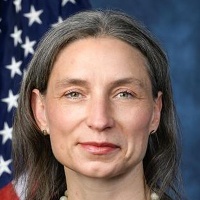
Maxine Dexter
Representative
OR
Maxine Dexter
Representative
OR
The FAST VETS Act requires the Department of Veterans Affairs to review each veteran's vocational rehabilitation plan annually. If a veteran's long-term goals are no longer feasible due to changes in their employment handicap, the VA must work with the veteran to redevelop a new plan. This ensures veterans receive the most effective path toward successful employment and transition.
This bill establishes the American Dream Act, which excludes capital gains from federal income tax for individuals aged 65 or older who sell their real property to a first-time homebuyer under specific conditions.
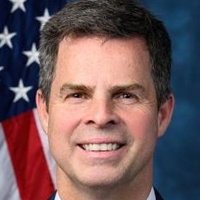
John McGuire
Representative
VA
John McGuire
Representative
VA
The American Dream Act establishes a temporary federal income tax exclusion for capital gains realized by individuals aged 65 or older when they sell their real property to a first-time homebuyer. This incentive is designed to encourage seniors to sell their homes to new buyers, provided the sale price does not exceed $500,000 and certain residency requirements are met. This exclusion is effective for sales occurring between 2027 and 2031.
This act amends the Fair Labor Standards Act to exclude certain voluntary training time and specific changing/washing time from the calculation of "hours worked" for minimum wage and overtime purposes.
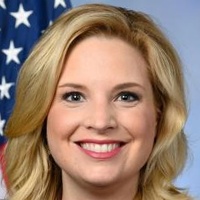
Ashley Hinson
Representative
IA
Ashley Hinson
Representative
IA
The Flexibility for Workers Education Act amends the Fair Labor Standards Act to clarify which time is excluded from "hours worked" for minimum wage and overtime calculations. Specifically, it excludes time spent changing clothes or washing if covered by a collective-bargaining agreement. The bill also excludes time spent attending voluntary, non-work-related educational or training activities that occur outside of regular hours.
This bill establishes a special base pay system that increases the salaries of Bureau of Prisons correctional officers and certain hourly employees by 35 percent for a five-year period, subject to review.

Dan Goldman
Representative
NY
Dan Goldman
Representative
NY
The Federal Correctional Officer Paycheck Protection Act of 2026 establishes a special pay system to increase the base pay for Bureau of Prisons (BOP) correctional officers by 35 percent. This legislation also provides a similar 35 percent wage increase for certain hourly BOP employees involved in inmate custody. The new pay authority is set to expire after five years, unless the Department of Justice Inspector General reports measurable progress in reducing the use of non-custodial staff for officer duties and excessive overtime.
This bill modifies deposits into the Crime Victims Fund by excluding certain False Claims Act recoveries and mandates an Inspector General audit of the Fund's sustainability.
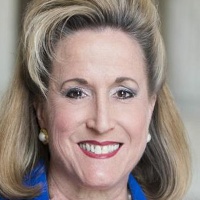
Ann Wagner
Representative
MO
Ann Wagner
Representative
MO
This bill amends the Victims of Crime Act of 1984 to temporarily exclude certain False Claims Act recoveries from being deposited into the Crime Victims Fund through fiscal year 2029. It also mandates a comprehensive audit by the Department of Justice Inspector General on the Fund's sustainability and the impact of recent legislative changes. The resulting report will provide recommendations for improving the Fund's effectiveness and oversight.
This bill amends federal law to significantly restrict non-citizen eligibility for federal public benefits, including cash assistance.
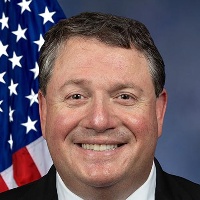
Randall Fine
Representative
FL
Randall Fine
Representative
FL
The "No Welfare for Non-Citizens Act" seeks to significantly restrict federal public benefit eligibility for non-citizens by eliminating existing exceptions and establishing a broad rule of ineligibility. The bill expands the definition of federal public benefits to explicitly include cash assistance while repealing previous provisions that allowed for limited access to federal programs.
This bill authorizes Congress to award Congressional Gold Medals to the 1980 U.S. Men's Olympic Ice Hockey team for their historic "Miracle on Ice" victory.
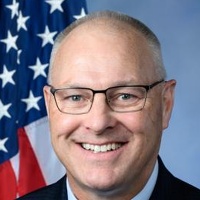
Pete Stauber
Representative
MN
Pete Stauber
Representative
MN
This bill, the Miracle on Ice Congressional Gold Medal Act, officially authorizes Congress to award Congressional Gold Medals to the 1980 U.S. Men's Olympic Ice Hockey Team for their historic "Miracle on Ice" victory. The medals will be struck by the Treasury and permanently displayed at specific national sports museums. The Act also permits the sale of duplicate bronze medals to cover production costs.