Legislative Activity
Track Mark's sponsored bills, co-sponsored legislation, and voting record
This bill exempts qualified charitable organizations from registration requirements under the Commodity Exchange Act when operating as commodity pool operators or commodity trading advisors for other charities.
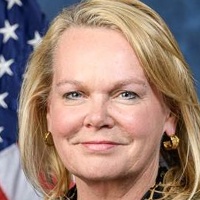
April McClain Delaney
Representative
MD
April McClain Delaney
Representative
MD
The CFTC Charitable Organization Exemption Act of 2025 amends the Commodity Exchange Act to exempt qualified charitable organizations from the requirement to register as commodity pool operators or commodity trading advisors. This exemption applies when their advisory or pool activities are conducted solely for other qualifying charitable entities. The bill maintains existing exemptions while adding a specific disclosure requirement for these newly exempt charitable organizations.
The SAFE Drugs Act of 2025 limits pharmacists and physicians from excessively copying commercial drugs through compounding, establishes new annual reporting for out-of-state compounding, increases FDA inspection frequency for large-scale facilities, and adjusts compounding facility fees.
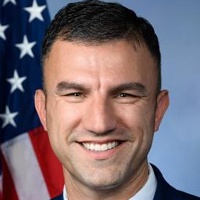
Rudy Yakym
Representative
IN
Rudy Yakym
Representative
IN
The SAFE Drugs Act of 2025 aims to enhance the safety and oversight of drug compounding by limiting the ability of pharmacists and physicians to copy commercially available drugs. It introduces new annual reporting requirements for pharmacies compounding drugs for out-of-state patients and imposes stricter FDA inspection schedules for large-scale compounding facilities. Furthermore, the bill mandates registration for all outsourcing facilities and adjusts the fee structure used to fund safety assurance activities.
This bill mandates that states provide SNAP recipient data to the Secretary of Agriculture upon request to enhance program oversight and enforcement.
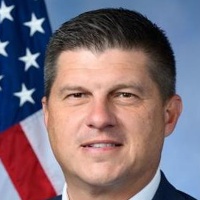
Brad Finstad
Representative
MN
Brad Finstad
Representative
MN
The SNAP Data Transparency and Oversight Act of 2025 mandates that states provide recipient-level SNAP data to the Secretary of Agriculture upon request as a condition of program participation. This ensures greater federal oversight and strengthens the ability to enforce program integrity and investigate potential fraud. Failure to comply may result in the withholding of federal administrative funds.
This resolution denounces six Members of Congress for allegedly using dangerous rhetoric that attempts to sow disallegiance and encourage insubordination within the U.S. military and intelligence community against the Commander in Chief.
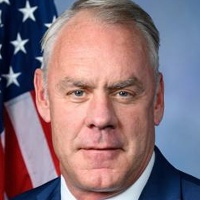
Ryan Zinke
Representative
MT
Ryan Zinke
Representative
MT
This resolution denounces the rhetoric of six specific Members of Congress for allegedly sowing disallegiance within the U.S. military and intelligence community. It condemns their actions for encouraging service members to potentially violate the Uniform Code of Military Justice by suggesting they defy orders without evidence of illegality. The bill asserts that this rhetoric undermines the President's role as Commander in Chief and compromises national security.
This Act establishes a multi-agency Task Force to develop and implement a comprehensive strategy to dismantle transnational criminal syndicates operating forced-labor scam centers, particularly those targeting Americans with cryptocurrency fraud.
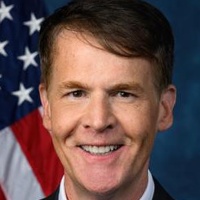
Jefferson Shreve
Representative
IN
Jefferson Shreve
Representative
IN
The Dismantle Foreign Scam Syndicates Act establishes a high-level Task Force, chaired by the Secretary of State, to develop and execute a comprehensive U.S. strategy against transnational criminal organizations running massive online scams, often utilizing victims of human trafficking in Southeast Asia. This strategy must focus on disrupting these operations, sanctioning responsible parties, and providing support for rescued victims. The bill authorizes $30 million over two years to fund these efforts and requires annual reporting to Congress on progress and impact.
This Act officially recognizes the installation of mechanical insulation in federal buildings as a qualifying energy or water efficiency measure.
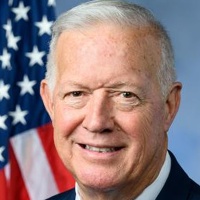
Randy Weber
Representative
TX
Randy Weber
Representative
TX
The Federal Mechanical Insulation Act officially recognizes the installation of mechanical insulation in federal buildings as a qualifying energy or water efficiency measure. This legislation defines compliant mechanical insulation as meeting or exceeding ASHRAE Standard 90.1 requirements and resulting in energy loss reduction. Furthermore, the Act mandates that comprehensive evaluations of federal buildings must identify these specific energy and water-saving insulation opportunities.
This bill repeals the Human Rights Sanctuary Amendment Act of 2022, restoring previous laws.
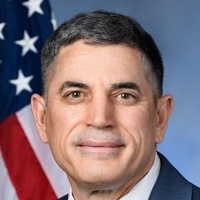
Andrew Clyde
Representative
GA
Andrew Clyde
Representative
GA
This bill, the D.C. Shield Law Repeal Act, seeks to repeal the Human Rights Sanctuary Amendment Act of 2022. By doing so, it will restore the laws and regulations that were in effect prior to the 2022 Act.
This act prohibits state and local governments from enacting regulations that restrict energy service based on the type or source of energy sold in interstate commerce.
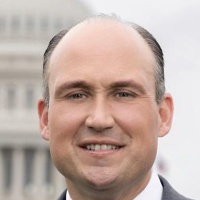
Nicholas Langworthy
Representative
NY
Nicholas Langworthy
Representative
NY
The Energy Choice Act places federal restrictions on state and local governments, preventing them from enacting regulations that prohibit or limit energy service based on its type or source. This means local governments cannot ban or restrict access to energy services sold in interstate commerce. The legislation aims to ensure consistent access to various energy sources across jurisdictions.
This act mandates the inclusion of a citizenship question on future decennial censuses and requires that only U.S. citizens be counted when apportioning congressional representation and electoral votes.
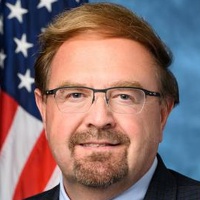
Charles (Chuck) Edwards
Representative
NC
Charles (Chuck) Edwards
Representative
NC
The Equal Representation Act of 2025 mandates the inclusion of a citizenship question on the decennial census starting in 2030. This legislation requires that the population counts used for apportioning seats in the House of Representatives and determining electoral votes exclude non-citizens. The bill ensures that representation is based solely on the count of U.S. citizens within each state.
The Mikaela Naylon Give Kids a Chance Act primarily focuses on enhancing pediatric drug research, ensuring completion of pediatric study requirements, extending incentives for rare pediatric disease treatments, and making targeted updates to FDA and organ transplant network operations.
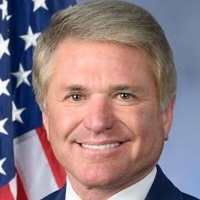
Michael McCaul
Representative
TX
Michael McCaul
Representative
TX
The Mikaela Naylon Give Kids a Chance Act focuses primarily on improving pediatric drug development and ensuring patient access to necessary treatments. This legislation mandates new research requirements for molecularly targeted pediatric cancer drugs, strengthens FDA enforcement of pediatric study completion, and extends incentives for developing drugs for rare pediatric diseases. Additionally, the bill updates organ transplant network functions and establishes an Abraham Accords Office within the FDA to enhance international regulatory cooperation.
The Ensuring Workers Get PAID Act of 2025 establishes a voluntary Payroll Audit Independent Determination (PAID) program allowing employers to self-audit and correct minimum wage or overtime violations under the FLSA in exchange for limited penalty relief and employee waiver of private suit rights.
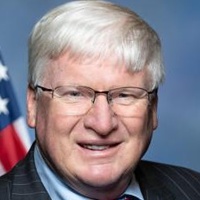
Glenn Grothman
Representative
WI
Glenn Grothman
Representative
WI
The Ensuring Workers Get PAID Act of 2025 establishes a voluntary Payroll Audit Independent Determination (PAID) program within the Department of Labor. This program allows employers in good faith to self-audit and correct unintentional minimum wage or overtime violations under the Fair Labor Standards Act. Upon full payment of back wages, employers receive limited liability protection, and employees who accept the payment waive their right to sue for those specific claims. The program is set to terminate after five years.
This act redefines a tipped employee based on the combined total of their tips and cash wages meeting the federal minimum wage over an employer-defined work period.
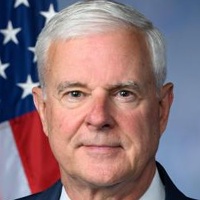
Steve Womack
Representative
AR
Steve Womack
Representative
AR
The Tipped Employee Protection Act updates the definition of a "tipped employee" under federal law. It requires that the combined total of an employee's tips and cash wages must meet the federal minimum wage over an employer-defined work period. This change removes the previous $30 monthly tip threshold and applies regardless of the employee's specific duties.
This act mandates that commercial motor vehicle operators must demonstrate English proficiency to pass licensing tests and communicate effectively with relevant personnel.
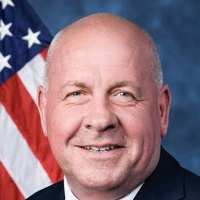
David Taylor
Representative
OH
David Taylor
Representative
OH
This bill, the Commercial Motor Vehicle English Proficiency Act, establishes new federal requirements for commercial driver's licenses. It mandates that all commercial motor vehicle knowledge tests must be administered only in English, effective two years after enactment. Furthermore, applicants must demonstrate the ability to read, understand, and communicate in English to pass testing and receive certification.
This resolution honors the service and sacrifice of America's veterans and reaffirms the nation's commitment to supporting them and their families.
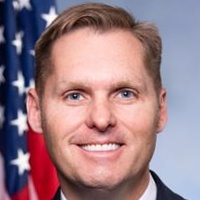
Michael Guest
Representative
MS
Michael Guest
Representative
MS
This resolution honors the service and sacrifice of America's veterans on Veterans Day, 2025, recognizing the history of the observance from Armistice Day. It affirms the nation's deep commitment to supporting the over 15 million veterans and their families. The resolution calls upon the public to observe Veterans Day and ensure veterans continue to receive the services they deserve.
This bill establishes the Ohio River Basin Restoration Program within the EPA to fund projects focused on the large-scale protection and restoration of the Ohio River Basin.
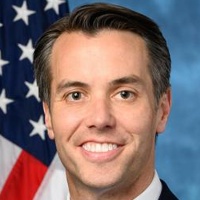
Morgan McGarvey
Representative
KY
Morgan McGarvey
Representative
KY
The Ohio River Restoration Program Act establishes a new program within the EPA dedicated to the large-scale protection and restoration of the Ohio River Basin. This program will be managed by a dedicated office and guided by an advisory council to develop and implement a comprehensive action plan. Funds will be authorized through 2030 to support eligible activities such as improving water quality, restoring habitats, and increasing community resilience.
This resolution condemns the persecution of Christians in Nigeria and supports decisive U.S. action to end the existential threat they face.
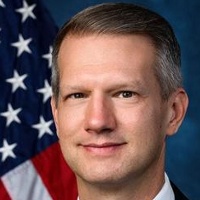
Riley Moore
Representative
WV
Riley Moore
Representative
WV
This resolution condemns the severe, ongoing persecution and mass killing of Christians in Nigeria by terrorist groups and militants. It criticizes the Nigerian government for failing to protect its Christian citizens and for enforcing blasphemy laws. Finally, Congress stands ready to support decisive action, including sanctions, to end this existential threat and calls for direct humanitarian aid to victims.
The Shutdown Fairness Act guarantees pay for essential federal employees and contractors required to work during a lapse in appropriations, effective retroactively to September 30, 2025.
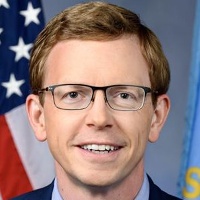
Dusty Johnson
Representative
SD
Dusty Johnson
Representative
SD
The Shutdown Fairness Act ensures that federal employees and contractors deemed essential are automatically paid for the work they perform during a lapse in appropriations, starting in fiscal year 2026. This automatic funding mechanism from the Treasury covers standard pay and benefits for excepted employees until Congress passes a full-year budget. Once regular funding is enacted, these payments are charged against the agency's final appropriation.
This resolution honors the life and legacy of Charles "Charlie" James Kirk, condemns his assassination as political violence, and calls for a renewed commitment to civil discourse and American founding principles.

Mike Johnson
Representative
LA
Mike Johnson
Representative
LA
This resolution honors the life and legacy of Charles "Charlie" James Kirk, founder of Turning Point USA. It strongly condemns his assassination as an act of political violence. The bill calls for a renewed national commitment to civil discourse and the founding principles of the United States.
This Act prohibits U.S. courts and arbitrators from enforcing any foreign law, including Sharia law, if doing so would violate fundamental rights guaranteed by the U.S. or State Constitutions.
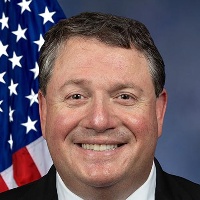
Randall Fine
Representative
FL
Randall Fine
Representative
FL
The No Shari’a Act ensures that U.S. courts rely exclusively on Federal and State laws when making decisions. This legislation prohibits courts and arbitrators from enforcing any foreign law, including Sharia law, if doing so would violate fundamental constitutional rights. The Act is designed to prevent foreign legal codes from undermining the established constitutional protections guaranteed to all Americans.
This Act mandates that abortion providers inform women about the possibility of reversing the effects of the first abortion pill and requires the Department of Health and Human Services to provide accessible online resources on the reversal process.
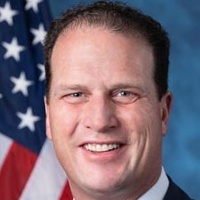
August Pfluger
Representative
TX
August Pfluger
Representative
TX
The Second Chance at Life Act of 2025 establishes new federal requirements for abortion providers offering chemical abortions involving two drugs. These rules mandate that doctors inform women about the possibility of reversing the effects of the first pill, mifepristone, at least 24 hours in advance. The law also requires specific signage in clinics and directs the Department of Health and Human Services to create an accessible, privacy-focused website detailing reversal information. Finally, it creates a pathway for civil lawsuits against providers who knowingly violate these new informed consent and disclosure mandates.