Legislative Activity
Track Ryan's sponsored bills, co-sponsored legislation, and voting record
This bill establishes a mandatory supply fee paid by Medicare drug plans to long-term care pharmacies for specific prescriptions in 2026 and 2027, while also mandating a GAO study on the financial sustainability of the current payment system.
Beth Van Duyne
Representative
TX
Beth Van Duyne
Representative
TX
This Act establishes a mandatory supply fee for Medicare drug plans to pay long-term care pharmacies for specific prescriptions dispensed in 2026 and 2027. The bill mandates a $30 fee per prescription in 2026, increasing in 2027, with penalties for non-payment. Additionally, the GAO is required to study the financial sustainability of the current payment structure for these essential pharmacies. This legislation aims to ensure continued access to medications for patients in long-term care settings.
This Act permanently classifies the entire class of highly potent synthetic opioids known as nitazenes as Schedule I controlled substances to combat rising overdose deaths.
Eugene Vindman
Representative
VA
Eugene Vindman
Representative
VA
The Nitazene Control Act permanently classifies the entire class of highly potent synthetic opioids known as nitazenes as Schedule I controlled substances. This action aims to proactively combat the rising threat of these dangerous analogues, which are often more potent than fentanyl. By scheduling the entire chemical class, the law seeks to simplify enforcement and enhance public health protection against fatal overdoses. The Act also includes provisions to ensure ongoing, approved medical research can continue temporarily under specific conditions.
This Act directs the U.S. Postal Service to issue a special semipostal stamp to raise funds for Lyme disease and tick-borne illness research at the National Institute of Allergy and Infectious Diseases.
Josh Gottheimer
Representative
NJ
Josh Gottheimer
Representative
NJ
The Stamp Out Lyme Disease Act directs the U.S. Postal Service to issue a special semipostal stamp to raise funds for Lyme disease research. All proceeds from the sale of this stamp will be directed to the National Institute of Allergy and Infectious Diseases (NIAID). This measure aims to support research into tick-borne illnesses, acknowledging the significant public health and financial burden of Lyme disease in the United States.
The BITE Act establishes a comprehensive national system utilizing AI, data tracking, and public education to prevent and predict vector-borne diseases like those transmitted by ticks.
Josh Gottheimer
Representative
NJ
Josh Gottheimer
Representative
NJ
The Battling Infections Transmitted by Ticks and Exposure (BITE) Act establishes a comprehensive national system to prevent vector-borne diseases like Lyme disease. This system will utilize AI-driven early warning alerts, expert identification services, and real-time monitoring of insurance claims and symptoms. A key goal of the Act is to support efforts to reduce Lyme disease cases by 25% by 2035.
This bill establishes a process for temporarily designating coal ash storage units as "beneficial use staging units" to facilitate the removal and reuse of coal ash in infrastructure projects, provided strict removal timelines and technical standards are met.
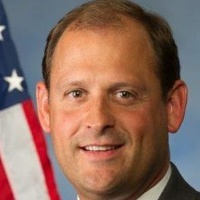
Garland Barr
Representative
KY
Garland Barr
Representative
KY
The Coal Ash for American Infrastructure Act allows owners of coal ash storage facilities to temporarily designate their sites as "beneficial use staging units" to set aside ash for reuse in infrastructure projects. To qualify, units must meet strict technical standards, including proper lining and groundwater monitoring. Operators must adhere to mandatory removal schedules for beneficial use, and compliant staging units are protected from conflicting state closure requirements. The EPA will track and report annually on the amount of coal ash stored and removed under this designation.
This Act establishes the "Local Farmers Feeding Our Communities" program to strengthen local food security by funding agreements that support local producers and distribute fresh food to communities.

Robert Bresnahan
Representative
PA
Robert Bresnahan
Representative
PA
The Local Farmers Feeding our Communities Act establishes a new program to support local food producers and strengthen regional food security. This initiative requires the Secretary of Agriculture to fund agreements that ensure nutritious, locally sourced food is purchased and distributed widely, prioritizing small and beginning farmers. Funds must be used to buy minimally processed local products and provide technical assistance to producers. The program is backed by mandatory funding starting in Fiscal Year 2026.
The Veterans’ ACCESS Act of 2025 improves veteran health care by establishing clear eligibility standards for community care, mandating timely mental health treatment, and streamlining administrative processes to ensure faster, more transparent access to services.
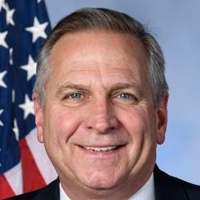
Mike Bost
Representative
IL
Mike Bost
Representative
IL
The Veterans’ ACCESS Act of 2025 strengthens the Veterans Community Care Program by establishing clear, enforceable standards for care eligibility and wait times while streamlining the referral process. The legislation also overhauls access to residential mental health and substance abuse treatment, ensuring veterans receive timely, localized care with robust oversight. Additionally, it mandates the development of digital tools and pilot programs to reduce bureaucratic hurdles and improve transparency across the VA healthcare system.
This Act prioritizes federal research and development funding for controlling the invasive Spotted Lanternfly and extends key agricultural research programs through 2030.
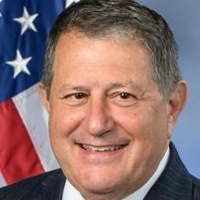
Joseph Morelle
Representative
NY
Joseph Morelle
Representative
NY
The Spotted Lanternfly Research and Development Act prioritizes federal funding for research and extension programs specifically aimed at controlling the invasive Spotted Lanternfly. This legislation ensures that developing effective tools and treatments against this pest becomes a high-priority initiative. Additionally, the Act extends the authorization for several existing high-priority agricultural research programs until 2030.
The Frederick Douglass Trafficking Victims Prevention and Protection Reauthorization Act of 2025 enhances efforts to combat human trafficking both domestically and internationally through prevention, survivor support, and strategic use of foreign assistance.
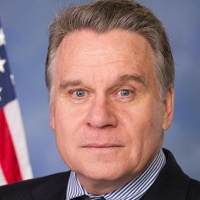
Christopher Smith
Representative
NJ
Christopher Smith
Representative
NJ
The Frederick Douglass Trafficking Victims Prevention and Protection Reauthorization Act of 2025 enhances efforts to combat human trafficking both within the United States and internationally. The act focuses on prevention education, survivor support, and international cooperation, while increasing funding authorizations for key anti-trafficking programs. It prioritizes resources for areas with high trafficking rates, improves data collection, and ensures that foreign assistance aligns with counter-trafficking goals. This legislation aims to protect vulnerable populations, empower survivors, and hold perpetrators accountable.
This bill amends the Family and Medical Leave Act to explicitly qualify time taken for an employee's own organ donation surgery as a serious health condition.
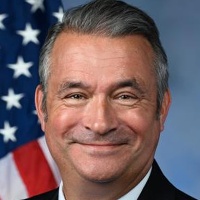
Don Bacon
Representative
NE
Don Bacon
Representative
NE
This bill amends the Family and Medical Leave Act (FMLA) to explicitly clarify that time taken off for an employee's own organ donation surgery qualifies as a serious health condition. This ensures both private and federal sector workers receive FMLA protection for recovery from organ donation. The legislation also specifies how federal employees must substitute existing paid leave when taking FMLA time for this purpose.
This Act prohibits insurance companies from discriminating against living organ donors when issuing life, disability, or long-term care policies and mandates the updating of educational materials regarding donation risks and insurance implications.
Don Bacon
Representative
NE
Don Bacon
Representative
NE
The Living Donor Protection Act of 2025 prohibits life, disability, and long-term care insurance companies from denying coverage or increasing premiums solely because an individual is a living organ donor. This legislation ensures that living donors are not financially penalized for their altruistic act. Additionally, the bill requires the Secretary of HHS to update educational materials to accurately reflect the insurance protections afforded to living donors.
This Act prohibits the Federal Reserve from directly or indirectly issuing a Central Bank Digital Currency (CBDC) and bars the Fed from developing or using one for monetary policy without explicit Congressional authorization.
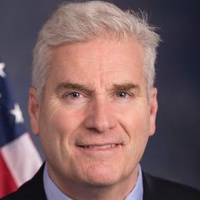
Tom Emmer
Representative
MN
Tom Emmer
Representative
MN
The Anti-CBDC Surveillance State Act strictly prohibits the Federal Reserve from directly or indirectly issuing a Central Bank Digital Currency (CBDC) to individuals. This legislation prevents the Fed from developing, testing, or implementing any digital currency that functions as a direct liability of the Federal Reserve. Furthermore, Congress asserts that any authority to create such a digital asset must explicitly come from Congress itself.
This act mandates the FDA to study the human health impacts of microplastic exposure through food and water and report recommendations to Congress.
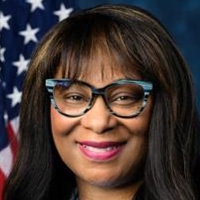
Janelle Bynum
Representative
OR
Janelle Bynum
Representative
OR
The Microplastics Safety Act mandates the FDA to conduct a comprehensive study on the human health impacts of microplastic exposure through food and water. This research must specifically investigate risks to children's health, endocrine function, cancer, and reproduction. Following the study, the FDA is required to report its findings and recommend necessary legislative or regulatory actions to Congress.
The NOPAIN for Veterans Act mandates the Department of Veterans Affairs to promptly add specific non-opioid pain medications to its National Formulary.
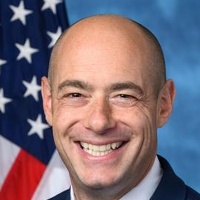
Greg Landsman
Representative
OH
Greg Landsman
Representative
OH
The NOPAIN for Veterans Act mandates that the Department of Veterans Affairs (VA) must promptly add specific, FDA-approved non-opioid pain medications to its National Formulary. This ensures veterans have access to alternative pain management options that do not rely on opioids. The VA is required to implement these changes within 90 days of the Act becoming law.
This Act mandates that VA medical staff promptly certify the deaths of veterans who died from natural causes within 48 hours to expedite burial and survivor benefits.
Tom Emmer
Representative
MN
Tom Emmer
Representative
MN
The Veteran Burial Timeliness and Death Certificate Accountability Act addresses significant delays in obtaining death certificates for veterans who die from natural causes, often due to VA medical staff delays. This bill mandates that VA medical providers must certify a veteran's death within 48 hours or allow the local medical examiner to step in. Furthermore, the VA must annually report on its compliance with this new timely certification requirement.
This bill authorizes the creation and sale of commemorative coins for the 2028 Los Angeles and 2034 Salt Lake City Olympic and Paralympic Games to help fund the events, with all surcharges going to the respective organizing committees after covering production costs.
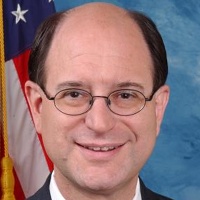
Brad Sherman
Representative
CA
Brad Sherman
Representative
CA
This Act authorizes the Secretary of the Treasury to mint and sell special commemorative coins for the 2028 Los Angeles Olympic and Paralympic Games and the 2034 Salt Lake City Winter Olympic and Paralympic Games. The coins will feature designs celebrating American athletes and the Games themselves. All surcharges collected from the sale of these coins will be directed to the respective organizing committees to help fund the events and related youth sports programs. The entire program must be conducted at no cost to the U.S. Government.
The PBM Reform Act of 2025 mandates sweeping changes to increase transparency, ensure fair pharmacy access in Medicare, and prohibit abusive spread pricing in Medicaid by holding Pharmacy Benefit Managers accountable for their financial dealings.
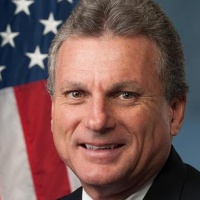
Earl Carter
Representative
GA
Earl Carter
Representative
GA
The Pharmacy Benefit Manager Reform Act of 2025 aims to increase transparency and accountability across the prescription drug supply chain. It mandates fairer pharmacy network access for Medicare beneficiaries and imposes strict new financial reporting and service fee requirements on Pharmacy Benefit Managers (PBMs) working with Medicare and private health plans. Furthermore, the bill establishes new federal mechanisms to accurately track drug acquisition costs in Medicaid and explicitly bans the practice of "spread pricing" in state Medicaid contracts.
This bill mandates a comprehensive report detailing the current and future state of the U.S.-Greece security cooperation, focusing on basing rights and strategic investments.

Grace Meng
Representative
NY
Grace Meng
Representative
NY
This bill mandates a comprehensive report from the Secretary of Defense detailing the current state and future potential of the U.S.-Greece security relationship. The report must specifically address basing rights, investments made under the 2021 Mutual Defense Cooperation Agreement, and analyze options for expanding U.S. military presence in Greece. This oversight ensures Congress is fully informed about strategic cooperation in the Eastern Mediterranean.
The Back the Blue Act of 2025 establishes new federal crimes and stiffer penalties for violence against law enforcement, clarifies firearm rights for officers, and creates a grant program to improve police-community relations.
Don Bacon
Representative
NE
Don Bacon
Representative
NE
The Back the Blue Act of 2025 establishes new federal crimes and enhanced penalties for violence against law enforcement and judicial personnel, including murder and assault. It also tightens federal habeas corpus review for state convictions involving the murder of officers and clarifies firearm-carrying rights for qualified officers in federal facilities. Finally, the bill creates a grant program to foster better community-police relationships through trust-building initiatives and policy improvements.
This resolution solemnly marks the one-year anniversary of the attempted assassination of President Trump, condemns ongoing political violence, and honors the victims and first responders.

Mike Kelly
Representative
PA
Mike Kelly
Representative
PA
This resolution solemnly marks the one-year anniversary of the attempted assassination of President Donald J. Trump, condemning the multiple violent attempts against the President's life. It honors the victims of the shooting, including the late Corey D. Comperatore, and recognizes the bravery of first responders. Furthermore, the resolution condemns all incitement of violence against elected officials and calls for national unity against political violence.