Legislative Activity
Track Ryan's sponsored bills, co-sponsored legislation, and voting record
This act modernizes the Fairness to Contact Lens Consumers Act by requiring online sellers to accept electronic prescription transfers, mandating encrypted email for health information, and updating required seller contact information.
H. Griffith
Representative
VA
H. Griffith
Representative
VA
The Contact Lens Prescription Verification Modernization Act updates existing law to ensure consumers can easily obtain and use their contact lens prescriptions. This bill specifically requires online sellers to provide a HIPAA-compliant method for electronically receiving prescriptions and mandates encryption for any protected health information sent via email. Additionally, it updates seller record-keeping requirements to include customer email addresses.
This resolution condemns Russia's forced deportation and Russification of Ukrainian children and demands their return before any final peace agreement is reached.
Michael McCaul
Representative
TX
Michael McCaul
Representative
TX
This resolution strongly condemns Russia for the abduction and forced "Russification" of Ukrainian children, highlighting these actions as grave violations of international law. It emphasizes that these children must be safely returned to Ukraine before any final peace agreement to end the war is considered. The document also underscores the heightened risks of trafficking, violence, and trauma faced by Ukrainian children due to the ongoing invasion.
The STRONG Act doubles the maximum loan amounts available for both SBA 7(a) small business loans and development company loans to support national growth.
Mark Alford
Representative
MO
Mark Alford
Representative
MO
The Supporting Trade and Rebuilding Opportunity for National Growth Act, or STRONG Act, significantly increases the maximum loan amounts available through key Small Business Administration (SBA) programs. Specifically, it doubles the maximum size for standard 7(a) loans from $\$3.75$ million to $\$7.5$ million. Additionally, the bill raises the maximum loan amount for development company loans from $\$5$ million to $\$10$ million. These changes aim to provide greater capital access for small business growth and development.
This bill extends the maximum holding period for certain real estate assets for Federal credit unions from 15 to 20 years and clarifies loan eligibility language.
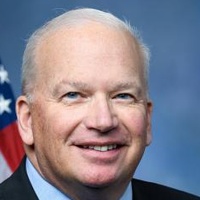
Scott Fitzgerald
Representative
WI
Scott Fitzgerald
Representative
WI
The Expanding Access to Lending Options Act directs the National Credit Union Administration (NCUA) to prioritize the safety and soundness of federally chartered credit unions. This legislation primarily amends the Federal Credit Union Act by extending the maximum holding period for certain real estate assets from 15 to 20 years. It also clarifies the eligibility language for property involved in these real estate loans.
The CONNECT for Health Act of 2025 permanently expands Medicare telehealth access by removing geographic restrictions, increasing practitioner flexibility, bolstering program integrity, and mandating supports for quality remote care delivery.
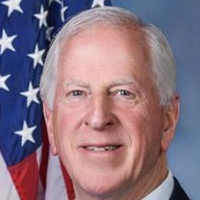
Mike Thompson
Representative
CA
Mike Thompson
Representative
CA
The CONNECT for Health Act of 2025 significantly expands and permanently secures access to Medicare telehealth services by eliminating outdated geographic restrictions and allowing more practitioners to offer remote care. The bill also strengthens program integrity by dedicating funds for telehealth oversight while clarifying rules around providing necessary technology to patients. Finally, it mandates the creation of tailored educational resources and public reporting to improve quality measurement and transparency in remote care delivery.
This bill allows associations of employers to sponsor group health plans, treating them as a single employer under ERISA, with specific requirements for plan structure and premium rating.
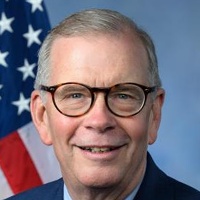
Tim Walberg
Representative
MI
Tim Walberg
Representative
MI
The Association Health Plans Act amends federal law to allow certain groups or associations of employers to sponsor a single group health plan, treating them as a single employer for coverage purposes. This aims to expand access to health coverage by enabling broader risk pooling across different industries. The bill establishes specific criteria these associations must meet to qualify, including minimum size and operational standards. Finally, it outlines rules for setting premium rates and prohibits discrimination based on health status for plans established under this Act.
This bill amends the Federal Employees Compensation Act to authorize physician assistants and nurse practitioners as recognized healthcare providers for federal workers' injury claims.
Tim Walberg
Representative
MI
Tim Walberg
Representative
MI
This Act amends the Federal Employees Compensation Act to expand the list of authorized healthcare providers for federal employees' work-related injury claims. Specifically, it includes physician assistants and nurse practitioners as eligible providers under the law. This change aims to improve access to care for injured federal workers by broadening their choice of medical professionals.
The Protect RAIL Act makes non-citizens inadmissible to the U.S. and deportable if they commit or conspire to commit crimes involving theft or tampering with goods shipped across state or international lines.

Paul Gosar
Representative
AZ
Paul Gosar
Representative
AZ
The Protect RAIL Act amends immigration law to prevent non-citizens convicted of or admitting to crimes involving the theft or tampering of goods shipped across state or international lines from entering the United States. Furthermore, this bill makes non-citizens already in the U.S. deportable if they have committed such offenses related to interstate or foreign shipments.
This bill establishes a pilot program to provide grants for training family caregivers of young children with autism or developmental disabilities in essential skills to improve child well-being and community involvement.
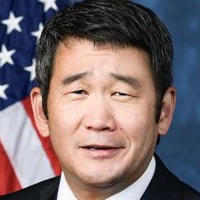
Dave Min
Representative
CA
Dave Min
Representative
CA
The Autism Family Caregivers Act of 2025 establishes a new pilot program to award grants for evidence-based skills training to family caregivers of children with autism or developmental disabilities. This training aims to improve child well-being and community engagement by focusing on communication, daily living skills, and caregiver self-care. The Secretary of Health and Human Services will oversee the program, which requires grantees to establish diverse advisory committees and report annually on program effectiveness. Funding is authorized through fiscal year 2030 to support at least 25 entities across multiple states.
This Act directs the Secretary of HHS to issue guidance on Medicaid/CHIP coverage for postpartum pelvic health services and establishes a national education campaign on the topic.
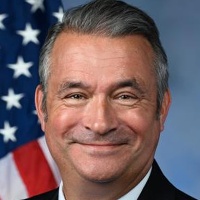
Don Bacon
Representative
NE
Don Bacon
Representative
NE
The Optimizing Postpartum Outcomes Act of 2025 aims to improve women's health after childbirth by clarifying Medicaid/CHIP coverage for essential pelvic health services. It mandates federal guidance for states on covering services like pelvic floor exams and physical therapy, alongside establishing a national education campaign for both providers and new mothers. The bill also directs the GAO to study existing coverage gaps for postpartum women under Medicaid.
The FIGHT Act of 2025 strengthens federal prohibitions against animal fighting, enhances enforcement mechanisms, and allows citizens to sue violators of animal fighting provisions.
Don Bacon
Representative
NE
Don Bacon
Representative
NE
The FIGHT Act of 2025 significantly strengthens federal prohibitions against animal fighting ventures, specifically targeting the sponsorship, exhibition, and gambling associated with these events. This legislation clarifies the definition of a rooster for legal purposes and bans the interstate transport of roosters for fighting. Furthermore, it empowers private citizens to file lawsuits against violators, allowing for civil penalties and the potential seizure of property used to facilitate illegal animal fighting.
This bill prohibits non-citizens from voting in District of Columbia elections and repeals the Local Resident Voting Rights Amendment Act of 2022.
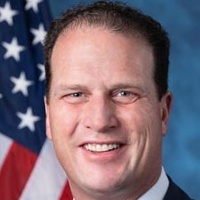
August Pfluger
Representative
TX
August Pfluger
Representative
TX
This bill prohibits non-U.S. citizens from voting in any election in the District of Columbia. It also repeals the Local Resident Voting Rights Amendment Act of 2022, effectively reverting D.C. voting eligibility rules to their pre-2022 status.
This act ensures and expands Medicare coverage for mental and behavioral health services provided through telehealth, effective retroactively to 2021.

Doris Matsui
Representative
CA
Doris Matsui
Representative
CA
The Telemental Health Care Access Act of 2025 updates Medicare rules to ensure comprehensive coverage for mental and behavioral health services delivered via telehealth. This legislation clarifies and expands the scope of telehealth coverage under Medicare for these essential services. Furthermore, it removes previous restrictions, making the expanded coverage effective retroactively to the Consolidated Appropriations Act of 2021.
This Act mandates comprehensive, no-cost-sharing coverage for prenatal, childbirth, neonatal, perinatal, and postpartum health care under the Affordable Care Act.
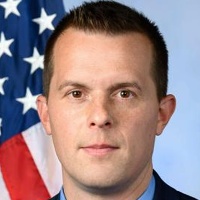
Jared Golden
Representative
ME
Jared Golden
Representative
ME
The Supporting Healthy Moms and Babies Act mandates that essential health benefits under the ACA must comprehensively cover prenatal, childbirth, neonatal, perinatal, and postpartum care for one full year. This legislation explicitly bans all cost-sharing, including copays and deductibles, for these essential maternity and newborn health services. The bill ensures robust coverage, including specific requirements like mandatory ultrasounds and mental health services for new parents.
The Do or Dye Act bans the use of specific artificial food color additives in food products starting in 2025 and 2026, deeming food containing them adulterated.
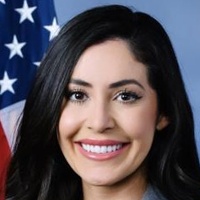
Anna Luna
Representative
FL
Anna Luna
Representative
FL
The Do or Dye Act mandates the removal of specific artificial color additives from the U.S. food supply. Starting in late 2025, "qualified color additives" will be banned from food, followed by a ban on "covered color additives" like Red No. 40 and Yellow No. 5 by the end of 2026. Foods containing these prohibited colors after the respective deadlines will be deemed adulterated under federal law.
This Act mandates that colleges and universities must print or post essential suicide prevention contact information, including the 988 Lifeline, on student IDs or websites.
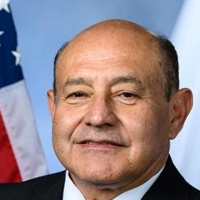
J. Correa
Representative
CA
J. Correa
Representative
CA
The Improving Mental Health Access for Students Act mandates that colleges and universities must prominently display essential mental health and suicide prevention contact information on student ID cards or official websites. This includes the 988 Suicide and Crisis Lifeline, the Crisis Text Line, and the campus mental health center. These requirements take effect one year after the Act is signed into law.
This Act establishes a grant program for installing suicide deterrents on public structures and clarifies funding eligibility for bridge safety barriers.
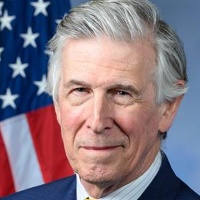
Donald Beyer
Representative
VA
Donald Beyer
Representative
VA
The Barriers to Suicide Act of 2025 establishes a new grant program through the Department of Transportation to fund the installation of suicide deterrents like nets and barriers at high-risk locations such as bridges and rail stations. The bill also amends existing law to explicitly allow National Highway System funds to be used for these safety barriers on bridges. Finally, it mandates a study on the effectiveness of suicide prevention measures for structures other than bridges.
This bill establishes a new excise tax on proceeds received by parties from third-party litigation financing agreements, effective after 2025.
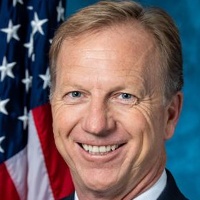
Kevin Hern
Representative
OK
Kevin Hern
Representative
OK
The Tackling Predatory Litigation Funding Act establishes a new federal excise tax on proceeds received from third-party litigation financing agreements. This tax is calculated at the highest income tax rate plus an additional 3.8 percentage points, applied annually to the proceeds received by a "covered party." The bill also institutes specific withholding requirements on payments made to financiers and reclassifies litigation funding proceeds to ensure this new tax structure is applied.
This Act establishes a demonstration project to supplement Medicare payments for EMS agencies stocking life-saving medications and blood products, while also mandating reports on EMS payment models and hospital EMS offload times.
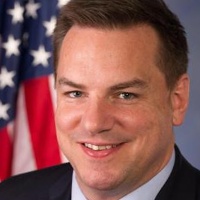
Richard Hudson
Representative
NC
Richard Hudson
Representative
NC
The When Minutes Count for Emergency Medical Patients Act establishes a demonstration project to provide supplemental Medicare payments to ambulance services for stocking and using critical life-saving medications and blood products during severe emergencies. The bill also mandates a comprehensive report from MedPAC analyzing Medicare payments for EMS professionals and medical directors, alongside requiring HHS to issue guidance aimed at reducing excessive wait times for EMS crews handing off patients at hospitals. Overall, the legislation seeks to improve emergency care quality and supply chain reliability for essential medical resources.
The FAIR Leave Act removes existing time limitations on the amount of combined leave spouses working for the same employer can take under the Family and Medical Leave Act (FMLA).
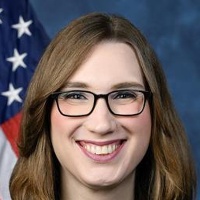
Sarah McBride
Representative
DE
Sarah McBride
Representative
DE
The FAIR Leave Act eliminates specific time limitations on the combined family and medical leave that spouses working for the same employer can take under the Family and Medical Leave Act (FMLA). This change removes restrictions on how much leave married couples can jointly use for purposes like caring for a new child or a seriously ill family member.