Legislative Activity
Track James's sponsored bills, co-sponsored legislation, and voting record
This bill ensures uninterrupted Supplemental Nutrition Assistance Program (SNAP) benefits for fiscal year 2026 by automatically appropriating necessary funds if Congress fails to pass the Department of Agriculture budget.
Joshua Hawley
Senator
MO
Joshua Hawley
Senator
MO
The Keep SNAP Funded Act of 2025 ensures that Supplemental Nutrition Assistance Program (SNAP) benefits continue without interruption, even if Congress fails to pass the Department of Agriculture's budget for fiscal year 2026. This legislation authorizes automatic funding from the Treasury to maintain payments and cover any retroactive benefits missed due to the delay. This temporary funding mechanism remains active until the regular fiscal year 2026 appropriations are officially enacted.
This resolution designates the week beginning October 19, 2025, as "National Character Counts Week" to promote the importance of teaching core ethical values to young people.
Charles Grassley
Senator
IA
Charles Grassley
Senator
IA
This resolution officially designates the week beginning October 19, 2025, as "National Character Counts Week." It emphasizes the critical role of families, schools, and communities in teaching foundational ethical values like trustworthiness and responsibility to young people. The designation encourages nationwide activities and programs focused on strengthening the character of America's youth.
This Act grants current and retired federal prosecutors and judges the authority to carry concealed firearms across state lines, provided they meet specific training and identification requirements.
Tom Cotton
Senator
AR
Tom Cotton
Senator
AR
The Protect Our Prosecutors and Judges Act of 2025 expands the federal authority for qualified current and retired prosecutors and Federal judges to carry concealed firearms across state lines. This authority mirrors that currently granted to law enforcement officers. To qualify, individuals must meet specific identification and ongoing firearms training certification requirements set by their former agency, state, or a certified instructor. The bill also provides definitions for who qualifies as a "qualified prosecutor" or "qualified Federal judge" under these new provisions.
This bill extends the authority for government and private sector cybersecurity information sharing for ten years, renaming the underlying act to the "Protecting America from Cyber Threats Act."
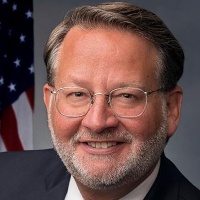
Gary Peters
Senator
MI
Gary Peters
Senator
MI
The Extending Expired Cybersecurity Authorities Act ensures the continuation of vital cybersecurity information sharing between the government and private industry. This bill extends the authority for sharing cyber threat information for an additional ten years, pushing the expiration date from 2025 to 2035. Furthermore, it retroactively applies this extension to prevent any lapse in coverage and officially renames the program to the "Protecting America from Cyber Threats Act."
This resolution condemns the October 7th Hamas terrorist attack, affirms Israel's right to self-defense, and supports an outcome ensuring Israel's survival, the elimination of Hamas, and the release of all hostages.
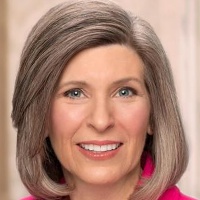
Joni Ernst
Senator
IA
Joni Ernst
Senator
IA
This resolution formally condemns the brutal Hamas-led terrorist attack on Israel of October 7, 2023, and supports Israel's right to self-defense. It further condemns antisemitic and destructive protests within the United States. Ultimately, the resolution calls for an outcome that ensures Israel's survival, eliminates Hamas's ability to operate, and secures the release of all remaining hostages.
This resolution designates September 30, 2025, as "Impact Aid Recognition Day" to celebrate the 75th anniversary of the federal program that financially supports school districts impacted by federal property or students.
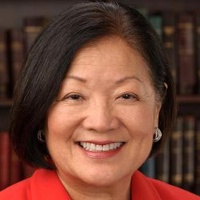
Mazie Hirono
Senator
HI
Mazie Hirono
Senator
HI
This resolution designates September 30, 2025, as "Impact Aid Recognition Day" to celebrate the 75th anniversary of the Impact Aid program. The program provides crucial financial assistance to local school districts that educate students living on or whose parents work on federal property. This recognition highlights the federal government's ongoing commitment to ensuring quality education in these uniquely impacted communities.
This resolution recognizes Polycystic Ovary Syndrome (PCOS) as a serious health condition affecting millions and supports designating September 2025 as PCOS Awareness Month to boost education and improve care.
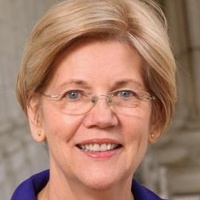
Elizabeth Warren
Senator
MA
Elizabeth Warren
Senator
MA
This resolution formally recognizes Polycystic Ovary Syndrome (PCOS) as a serious, widespread health condition affecting millions of women and girls. It expresses strong support for designating September 2025 as "PCOS Awareness Month" to promote education and improve diagnosis and treatment. The bill urges increased research and better care to address the significant physical and mental health risks associated with PCOS.
This resolution expresses support for designating October 5 through October 11, 2025, as National 4-H Week to celebrate the organization's impact on youth development.
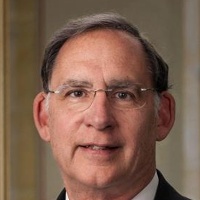
John Boozman
Senator
AR
John Boozman
Senator
AR
This resolution expresses support for designating October 5 through October 11, 2025, as National 4-H Week. It recognizes 4-H as a vital youth development program that empowers millions of young people through hands-on learning. The bill encourages citizens to celebrate the organization's significant impact on developing confident and compassionate leaders.
This resolution designates October 4, 2025, as "National Energy Appreciation Day" to celebrate the U.S. energy workforce and highlight the critical role of the nation's diverse energy sources in supporting the economy, security, and quality of life.
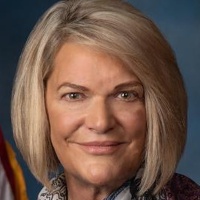
Cynthia Lummis
Senator
WY
Cynthia Lummis
Senator
WY
This resolution officially designates October 4, 2025, as "National Energy Appreciation Day." It celebrates the vital role of the U.S. energy sector in driving the economy, creating jobs, and improving quality of life globally. The bill emphasizes support for an "all-of-the-above" energy strategy, recognizing the contributions of fossil fuels, coal, nuclear, hydro, and renewables. It encourages public events to raise awareness about the importance of reliable and affordable energy.
The Pray Safe Act of 2025 establishes a Federal Clearinghouse within the Department of Homeland Security to share evidence-based safety and security best practices and grant information for nonprofit organizations, faith-based groups, and houses of worship.
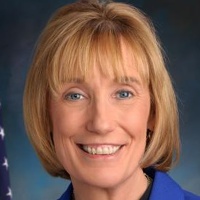
Margaret Hassan
Senator
NH
Margaret Hassan
Senator
NH
The Pray Safe Act of 2025 establishes a Federal Clearinghouse within the Department of Homeland Security to share evidence-based best practices for the safety and security of nonprofit organizations and houses of worship. This Clearinghouse will also serve as a central resource for identifying and accessing relevant federal security grant opportunities. The Act mandates that the Government Accountability Office (GAO) report to Congress on existing federal security funding for these organizations. This entire Act is set to expire four years after its enactment.
This resolution designates a week in October 2025 as "Religious Education Week" to affirm the importance of religious education for civic and moral development and encourages states to accommodate students seeking religious instruction.
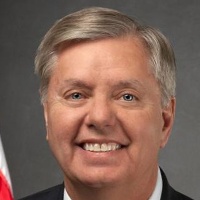
Lindsey Graham
Senator
SC
Lindsey Graham
Senator
SC
This resolution officially designates the week of October 5–11, 2025, as "Religious Education Week" to celebrate the importance of religious education in the United States. It affirms that religious instruction is vital for developing moral and civic citizens, citing historical precedent and Supreme Court rulings that protect parental rights in education. Furthermore, the resolution calls upon states and territories to accommodate students who wish to be released from public school for religious instruction.
This bill establishes a federal crime with severe penalties for knowingly forcing a woman to have an abortion using drugs, and allows victims to file civil lawsuits for damages.
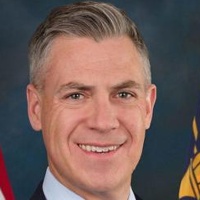
Jim Banks
Senator
IN
Jim Banks
Senator
IN
The Forced Abortion Prevention and Accountability Act establishes a new federal crime for knowingly forcing an abortion on a woman using drugs, carrying penalties up to 25 years in prison. This legislation also allows victims to file civil lawsuits seeking substantial damages, including compensation for physical and psychological injuries. The bill strictly defines terms like "abortion-inducing drug" and "informed consent" to ensure clear enforcement of these protections.
This resolution expresses support for designating September 2025 as Sickle Cell Disease Awareness Month to promote education, research, and improved care for those affected by this serious inherited blood disorder.

Tim Scott
Senator
SC
Tim Scott
Senator
SC
This resolution expresses support for designating September 2025 as "Sickle Cell Disease Awareness Month." The goal is to educate the public about sickle cell disease, an inherited blood disorder that significantly impacts thousands of Americans, particularly the Black community. This designation aims to promote awareness regarding the need for research, early detection, effective treatments, and preventative care programs.
The Chloe Cole Act prohibits medical professionals from engaging in the chemical or surgical alteration of minors' biological sex, and establishes a private right of action for victims to sue for damages.
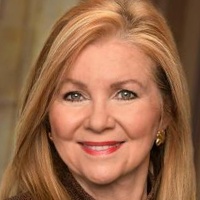
Marsha Blackburn
Senator
TN
Marsha Blackburn
Senator
TN
The Chloe Cole Act prohibits healthcare professionals from participating in the "chemical or surgical mutilation" of minors, broadly defined to include puberty blockers, cross-sex hormones, and surgeries intended to alter sex characteristics. This bill establishes a federal private right of action allowing individuals harmed by these procedures as minors to sue providers, regardless of when the procedure occurred. The Act also sets specific exceptions for treatments related to verifiable disorders of sexual development and establishes a long statute of limitations for filing lawsuits.
This resolution expresses support for designating October 14, 2025, as the "National Day of Remembrance for Charlie Kirk" to honor his advocacy for free speech, civic education, and individual liberty.
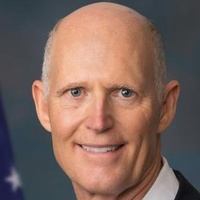
Rick Scott
Senator
FL
Rick Scott
Senator
FL
This resolution expresses support for designating October 14, 2025, as the "National Day of Remembrance for Charlie Kirk." It formally honors Kirk's legacy as a champion of free speech, civic education, and individual liberty through his work with Turning Point USA and his writing. The resolution encourages citizens and organizations nationwide to observe this day through activities promoting faith, liberty, and democracy.
The Lifting Local Communities Act ensures religious organizations compete equally for federal social service funding while protecting their religious identity and providing beneficiaries with choice and recourse.
Rick Scott
Senator
FL
Rick Scott
Senator
FL
The Lifting Local Communities Act ensures that religious organizations are treated equally with non-religious groups when applying for and receiving federal funding for social service programs. This legislation prohibits discrimination against faith-based providers while allowing them to maintain their religious identity and operations while delivering services. Ultimately, the Act aims to expand the capacity to serve those in need by increasing the number of available service providers.
The CIVICS Act of 2025 updates federal funding criteria for history and civics education programs to prioritize measurable student achievement, innovation, accountability, and hands-on civic engagement focused on the U.S. Constitution.
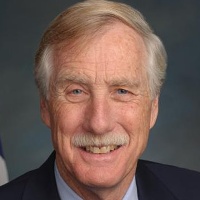
Angus King
Senator
ME
Angus King
Senator
ME
The CIVICS Act of 2025 updates federal funding criteria for national history and civics education programs. It mandates that any approved activity must demonstrate measurable improvements in student achievement across history, civics, and geography. Furthermore, funded programs must incorporate innovative, scalable methods, accountability measures, and practical, hands-on civic engagement focused on the U.S. Constitution and Bill of Rights.
This resolution condemns the assassination of Charlie Kirk while honoring his life, legacy, and commitment to civil discourse on college campuses.
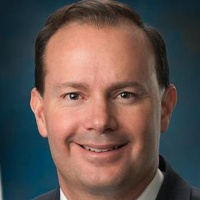
Mike Lee
Senator
UT
Mike Lee
Senator
UT
This resolution formally condemns the assassination of Charlie Kirk and honors his life and legacy as a devoted husband, father, and founder of Turning Point USA. It recognizes his commitment to encouraging civil discourse on college campuses across the nation. The Senate also extends its deepest sympathies to his surviving family.
This resolution designates September 2025 as National Literacy Month to raise awareness about the importance of reading and promote evidence-based literacy initiatives nationwide.
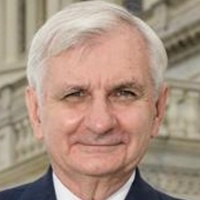
John Reed
Senator
RI
John Reed
Senator
RI
This resolution officially designates September 2025 as National Literacy Month to raise awareness about the critical importance of reading skills. It highlights the significant national challenges in literacy rates and the economic costs associated with low literacy. The measure calls upon all sectors of society to observe the month by promoting evidence-based reading programs and activities.
This bill terminates the Advisory Committee on the Records of Congress and establishes a new annual reporting and review process for the management and preservation of Congressional records.
Gary Peters
Senator
MI
Gary Peters
Senator
MI
The Advisory Committee on the Records of Congress Sunset Act officially terminates the Advisory Committee on the Records of Congress. It replaces the committee with a new annual reporting requirement for the Director of the Center for Legislative Archives regarding the management and preservation of Congressional records. Furthermore, the Act mandates regular review meetings between the Archivist of the United States, the Secretary of the Senate, and the Clerk of the House to oversee these records.