Legislative Activity
Track Ro's sponsored bills, co-sponsored legislation, and voting record
This resolution condemns Israeli settlement expansion and settler violence in the West Bank while calling for U.S. policy responses, including sanctions and changes to tax benefits, to protect a two-state solution.
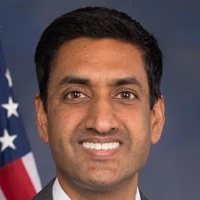
Ro Khanna
Representative
CA
Ro Khanna
Representative
CA
This resolution condemns Israeli settlement expansion, settler violence, and related human rights abuses in the West Bank. It calls upon Israel to immediately halt demolitions and settlement approvals, and urges the U.S. government to impose targeted sanctions and review tax policies that may subsidize settlement activity. The bill ultimately seeks to protect the viability of a negotiated two-State solution.
This resolution initiates significant reforms to Immigration and Customs Enforcement (ICE) by defunding the agency, establishing a new accountable body, ending qualified immunity, and mandating strict operational and detention standards following recent fatal incidents.
Ro Khanna
Representative
CA
Ro Khanna
Representative
CA
This resolution aims to end alleged abuse by U.S. Immigration and Customs Enforcement (ICE) following several high-profile incidents and deaths in custody. It proposes significant structural changes, including defunding and replacing ICE with a new agency under the Department of Justice with strict civilian oversight. The bill also mandates accountability measures, such as ending qualified immunity for agents and initiating impeachment proceedings against top officials.
This bill disallows certain tax deductions and imposes an excise tax on single-family home sales by large investors, while prohibiting federal mortgage assistance to these entities, with collected funds supporting low-income housing.
Ro Khanna
Representative
CA
Ro Khanna
Representative
CA
The Stop Wall Street Landlords Act of 2026 aims to curb large corporate ownership of single-family homes. It disallows key tax deductions, such as mortgage interest and depreciation, for investors holding over $100 million in assets who own these properties. The bill also imposes a full excise tax on the sale of these homes by such investors. Finally, it prohibits Fannie Mae, Freddie Mac, and Ginnie Mae from financing mortgages held by these specified large investors.
This resolution advocates for the fair treatment, transparency, and economic security of digital creators and platform workers by supporting portable benefits, clearer revenue-sharing, and stronger protections for independent entrepreneurs.
Ro Khanna
Representative
CA
Ro Khanna
Representative
CA
This resolution expresses the House of Representatives' commitment to supporting digital creators and platform workers as essential small business owners. It advocates for greater transparency in platform algorithms and revenue sharing, the establishment of portable benefits, and stronger protections against worker misclassification. Ultimately, the bill aims to ensure these workers have the economic security, audience ownership, and fair treatment necessary to thrive in the modern digital economy.
This resolution reaffirms the United States' commitment to Danish sovereignty over Greenland, emphasizing that any future status changes or security engagements must be based on mutual consent, diplomatic cooperation, and adherence to international law.
Ro Khanna
Representative
CA
Ro Khanna
Representative
CA
This resolution reaffirms the United States' commitment to the sovereignty of Denmark and Greenland, emphasizing that any future changes to Greenland’s status must be determined by its people. It underscores that the U.S. rejects the use of military force or coercion in the region, prioritizing instead a partnership rooted in mutual respect, democratic values, and existing NATO treaty obligations.
This Act mandates the public release of all unclassified Department of Justice documents related to Jeffrey Epstein, Ghislaine Maxwell, and their associates within 30 days, with very limited exceptions for victim privacy or active investigations.
Ro Khanna
Representative
CA
Ro Khanna
Representative
CA
The Epstein Files Transparency Act mandates the Attorney General to publicly release all unclassified Department of Justice records related to Jeffrey Epstein and his associates within 30 days of the bill becoming law. This release must include materials concerning investigations, flight logs, settlements, and internal communications, with very limited exceptions for victim privacy or active investigations. The Act strictly prohibits withholding documents due to political sensitivity or reputational harm and requires detailed justification for any redactions made.
This Act establishes a federal strategy, agency support programs, and a dedicated Council to promote the formation, growth, and financing of worker-owned cooperative businesses across the United States.
Ro Khanna
Representative
CA
Ro Khanna
Representative
CA
The National Worker Cooperative Development and Support Act aims to significantly expand support for worker-owned cooperative businesses across the federal government. It establishes the United States Council on Worker Cooperatives to coordinate federal strategy, remove barriers, and promote these businesses. The bill also directs agencies like the SBA to increase outreach, education, and technical assistance, while enhancing access to capital through pilot programs and Community Development Financial Institutions (CDFIs).
This resolution calls to ban public officials and their families from profiting from cryptocurrency ventures to prevent corruption, conflicts of interest, and foreign influence.
Ro Khanna
Representative
CA
Ro Khanna
Representative
CA
This resolution calls for banning public officials and their families from using their positions for personal enrichment through cryptocurrency ventures. It seeks to prevent conflicts of interest and foreign influence by restricting politicians from issuing or endorsing digital assets. The bill also mandates that current officials holding digital assets place them in a qualified blind trust. Finally, it requires full disclosure of crypto transactions and establishes penalties for violations.
This resolution expresses the House's sense that immigration enforcement operations must mandate visible identification, body cameras, and enhanced accountability to ensure transparency and protect constitutional rights.
Ro Khanna
Representative
CA
Ro Khanna
Representative
CA
This resolution expresses the sense of the House that immigration enforcement operations must be transparent and accountable. It calls for mandatory identification, body cameras, and limits on agents concealing their identity during public interactions. Furthermore, the bill pushes for stronger oversight, better training, and increased penalties for impersonation to ensure constitutional protections are upheld.
The No Coffee Tax Act freezes current import tariffs on specified coffee products from countries with normal trade relations at the rate set on January 19, 2025.
Ro Khanna
Representative
CA
Ro Khanna
Representative
CA
The No Coffee Tax Act aims to prevent any increase in import tariffs on specified coffee products originating from countries with normal trade relations with the U.S. This legislation effectively freezes the import tax rate for items like roasted coffee, decaffeinated coffee, and coffee substitutes at the level set on January 19, 2025. In short, it locks in current tariffs to ensure coffee imports remain tax-stable.
This bill mandates the Secretary of Defense to annually review the financial assistance limits provided to child care and youth program services providers under Title 10 of the U.S. Code.
Ro Khanna
Representative
CA
Ro Khanna
Representative
CA
This bill mandates that the Secretary of Defense conduct an annual review of the financial assistance limits provided to child care and youth program services providers under Title 10 of the U.S. Code. This ensures that the maximum monthly payment caps for these essential services are regularly updated. The goal is to keep the financial support current with the needs of the providers.
This bill authorizes the Secretary of Defense to establish a program supporting the development and integration of biotechnology into the defense supply chain to enhance resiliency and readiness.
Ro Khanna
Representative
CA
Ro Khanna
Representative
CA
This bill authorizes the Secretary of Defense to establish a program supporting the defense biotechnology supply chain. The program aims to strengthen military readiness by developing and scaling up promising bio-based materials, fuels, and chemicals from military research. It focuses on reducing reliance on vulnerable foreign supply lines through applied research, prototyping, and public-private partnerships. The authority to run this program will automatically expire ten years after enactment unless extended by the President.
This bill establishes a Department of Defense program to support and expand domestic bioindustrial manufacturing capacity for critical products.
Ro Khanna
Representative
CA
Ro Khanna
Representative
CA
This bill establishes a Department of Defense program to support and expand domestic bioindustrial manufacturing capacity for critical products. The program will provide competitive awards to private companies to build, update, or retool U.S. facilities for commercial-scale biomanufacturing. Selections will prioritize strengthening supply chains, meeting future military needs, and ensuring facility flexibility. This initiative aims to secure the nation's access to essential biomanufactured goods for the next decade.
This bill directs the Department of Defense to establish dedicated Blast Safety Officer positions across all military branches to monitor and mitigate service members' exposure to dangerous blast pressure during training and exercises.
Ro Khanna
Representative
CA
Ro Khanna
Representative
CA
This bill mandates the Department of Defense to establish dedicated Blast Safety Officer positions across the Army, Navy, Marine Corps, Air Force, and Space Force by September 30, 2026. These officers will be responsible for monitoring and enforcing safety standards during explosive exercises to reduce service members' exposure to dangerous blast pressure. They will have the authority to halt dangerous drills, provide pre-exercise safety briefings, and investigate any overpressure incidents. This measure aims to proactively protect military personnel from potential long-term health risks associated with blast exposure.
This bill expands the defense logistics demonstration program to incorporate commercial 3D printing facilities for producing parts in contested environments and extends the program's deadline to 2030.
Ro Khanna
Representative
CA
Ro Khanna
Representative
CA
This bill expands an existing Department of Defense program focused on overcoming supply chain challenges in contested environments. It specifically mandates the inclusion of commercial additive manufacturing (3D printing) facilities in demonstration and prototyping efforts. Furthermore, the legislation extends the deadline for this program's activities until December 31, 2030.
This bill directs the Chairman of the Joint Chiefs of Staff to study the feasibility of integrating militarily relevant applications of emerging biotechnology into military wargaming exercises.
Ro Khanna
Representative
CA
Ro Khanna
Representative
CA
This bill directs the Chairman of the Joint Chiefs of Staff to conduct a feasibility study on integrating militarily relevant applications of emerging biotechnology into military wargaming exercises. The study must assess how new biotech could affect soldier capabilities, strategic materials, and potential adversary use. The resulting report, due within 180 days, will recommend necessary updates to ensure wargames reflect current and future technological realities.
This bill mandates biennial assessments of military nutrition standards and requires the development of a public plan to increase access to nutritious food on military installations.
Ro Khanna
Representative
CA
Ro Khanna
Representative
CA
This bill mandates that the Department of Defense conduct biennial assessments of nutrition standards across all military departments to ensure they align with available food options. It also requires the development and public release of a comprehensive plan to increase access to nutritious food on military installations. The goal is to improve the health and readiness of service members by enhancing the quality and availability of on-base food choices.
This bill directs the Department of Defense to issue guidance for private entities on demonstrating how their biobased products meet military requirements and mandates a review of current DoD procurement processes to ensure they do not exclude such products.
Ro Khanna
Representative
CA
Ro Khanna
Representative
CA
This bill directs the Department of Defense (DoD) to establish clear guidance for private entities on how to demonstrate that their biobased products meet military requirements. It also mandates an audit by the Comptroller General to review DoD procurement standards for any unintentional exclusion of biobased products. The goal is to ensure fair evaluation and increase the adoption of biologically derived products within the DoD supply chain.
This bill modifies the annual report on the Navy Shipyard Infrastructure Optimization Program to require the inclusion of information regarding the incorporation of digital infrastructure and platforms.
Ro Khanna
Representative
CA
Ro Khanna
Representative
CA
This bill modifies the required content for the annual report on the Navy Shipyard Infrastructure Optimization Program. Specifically, it mandates that the report must now include details on the incorporation of digital infrastructure and platforms alongside physical shipyard updates. This ensures the Navy reports on the integration of modern digital systems in its infrastructure modernization efforts.
The ICBM Act halts funding for the troubled Sentinel missile program, redirects those funds to education, and mandates a comprehensive study on extending the life of existing Minuteman III missiles.
Ro Khanna
Representative
CA
Ro Khanna
Representative
CA
The Investing in Children Before Missiles (ICBM) Act pauses the troubled Sentinel missile replacement program due to significant cost overruns and delays. The bill mandates redirecting unspent research and development funds from the Sentinel and W87-1 warhead programs directly to the Department of Education for elementary and secondary school funding. Furthermore, it requires an independent study to analyze extending the life of the existing Minuteman III missiles until at least 2050 as an alternative to the new ICBM system.