Legislative Activity
Track Chuy's sponsored bills, co-sponsored legislation, and voting record
The Direct File Act of 2026 establishes a permanent, free, government-owned online tax filing system within the IRS while prohibiting agreements that restrict the government from providing tax preparation services.
Brad Sherman
Representative
CA
Brad Sherman
Representative
CA
The Direct File Act of 2026 establishes a permanent, free, government-owned online tax filing system within the IRS, ensuring taxpayers have a simplified and accessible way to file their returns. The bill prohibits the Treasury from entering into agreements that restrict the government's ability to provide these services and mandates the integration of state tax filing options. Additionally, it streamlines the tax process by setting new filing deadlines for employer information returns to improve efficiency for all taxpayers.
This bill strengthens democracy by banning foreign spending in U.S. elections, increasing transparency for "dark money" in politics, and mandating clear disclosure of funders in political advertising.
Chris Pappas
Representative
NH
Chris Pappas
Representative
NH
The Democracy Is Strengthened by Casting Light On Spending in Elections Act of 2026 aims to increase transparency and security in U.S. elections. It closes loopholes to ban foreign national spending in elections, mandates disclosure for "dark money" political spending, and requires clear funding disclosures on political ads. The bill also centralizes legal challenges to campaign finance laws in Washington, D.C., for faster resolution.
This resolution honors the life, legacy, and enduring commitment to civil rights and equality of Reverend Jesse Louis Jackson, Sr.
Maxine Waters
Representative
CA
Maxine Waters
Representative
CA
This resolution honors the life, leadership, and enduring legacy of Reverend Jesse Louis Jackson, Sr. It recognizes his pivotal role as a civil rights leader, his groundbreaking political campaigns, and his global advocacy for human rights and equality. The measure encourages all Americans to continue his work by moving forward with hope rather than fear and division.
The Secure Tracks Act mandates enhanced federal visual and automated inspection requirements for railroad tracks to ensure immediate remediation of safety defects and improve rail infrastructure integrity.
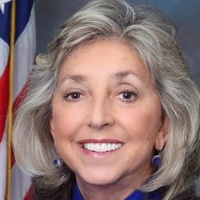
Dina Titus
Representative
NV
Dina Titus
Representative
NV
The Secure Tracks Act enhances rail safety by mandating more frequent visual and automated track inspections. The bill requires the immediate remediation of all identified safety defects and empowers qualified inspectors to oversee necessary repairs. Additionally, it restricts the Secretary of Transportation from granting safety waivers that would compromise the detection of track hazards.
This resolution recognizes the vital historical significance, economic impact, and essential role of Black history museums and cultural institutions in telling the full American story, especially leading up to the nation's 250th anniversary.
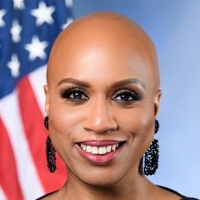
Ayanna Pressley
Representative
MA
Ayanna Pressley
Representative
MA
This resolution formally recognizes the vital historical significance and contributions of Black history museums and cultural institutions across the United States. It affirms that these essential pillars correct historical omissions by preserving irreplaceable records and telling a full, accurate American story. The bill encourages federal agencies and the public to support these institutions, especially as the nation approaches its 250th anniversary.
This resolution designates Black History Month 2026, honors the contributions of Black Americans through the "Unsung Souls" and "Righteous Intercessors" recognitions, and affirms the importance of a complete national narrative.
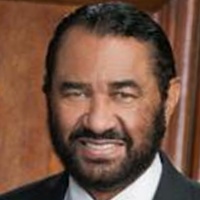
Al Green
Representative
TX
Al Green
Representative
TX
This resolution officially recognizes Black History Month and adopts "A Century of Black History Commemorations" as the theme for 2026. It honors the contributions of Black Americans by establishing categories for "Unsung Souls" and "Righteous Intercessors." Ultimately, the bill affirms that Black history commemorations are essential for a complete national narrative and inspiring future progress toward liberty and justice for all.
The Southeast Asian Deportation Relief Act of 2026 provides relief from detention and removal, grants work authorization, and establishes a process for reopening cases for certain long-term residents from Cambodia, Laos, and Vietnam.
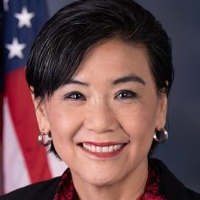
Judy Chu
Representative
CA
Judy Chu
Representative
CA
The Southeast Asian Deportation Relief Act of 2026 provides significant relief for long-term residents from Cambodia, Laos, and Vietnam facing deportation. It prohibits the detention and removal of eligible individuals who entered the U.S. before 2008 and grants them permanent work authorization. Furthermore, the Act establishes a streamlined process for those previously ordered removed to reopen and terminate their immigration cases, effectively vacating past removal orders.
The Head Start for America’s Children Act updates and expands the Head Start program by increasing funding, enhancing staff compensation and mental health support, and improving services for children with disabilities, English learners, and Native American communities.
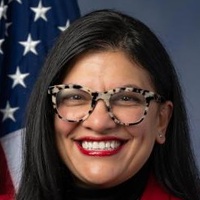
Rashida Tlaib
Representative
MI
Rashida Tlaib
Representative
MI
The "Head Start for America’s Children Act" updates and expands the federal Head Start program to better support the developmental, mental health, and educational needs of infants, toddlers, and children. The bill increases funding for core operations and specialized initiatives, establishes new requirements for staff compensation and professional development, and introduces pilot programs to improve access in high-poverty areas and on college campuses. Additionally, it strengthens support for Native American and migrant/seasonal programs, enhances services for children with disabilities, and mandates new standards to prevent the use of seclusion and restraint.
This bill establishes a federal process for Extreme Risk Protection Orders, creates a grant program to incentivize states to adopt similar laws, and mandates the recognition of such orders across state lines.
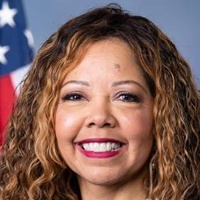
Lucy McBath
Representative
GA
Lucy McBath
Representative
GA
The Federal Extreme Risk Protection Order Act of 2026 establishes a federal process for issuing Extreme Risk Protection Orders (ERPOs) that temporarily prohibit individuals deemed a danger from possessing firearms. The bill allows family members or law enforcement to petition federal courts for temporary or long-term orders based on evidence of imminent risk of harm. Furthermore, it creates a federal grant program to incentivize and support states and tribes in implementing their own qualifying ERPO laws. Finally, it mandates that individuals subject to these federal orders surrender their firearms and ensures these orders are recognized across state lines.
This bill expresses the House's condolences for the victims of the 2019 Aurora, Illinois mass shooting and designates February 15, 2020, as "Henry Pratt Company Victims and Aurora Heroes Day" in Illinois.
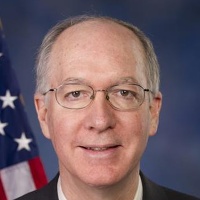
Bill Foster
Representative
IL
Bill Foster
Representative
IL
This resolution expresses the deep condolences of the House of Representatives for the victims of the February 15, 2019, mass shooting in Aurora, Illinois. It also honors the memory of those killed and commends the bravery of the first responders. Finally, the bill designates February 15, 2020, as "Henry Pratt Company Victims and Aurora Heroes Day" in Illinois.
This bill establishes an annual cap of 400,000 H-2A temporary agricultural worker visas, with an exception for positions filled by union-represented workers.
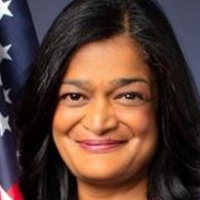
Pramila Jayapal
Representative
WA
Pramila Jayapal
Representative
WA
The U.S. Farmworker Protection Act aims to address the rapid growth of the H-2A agricultural guestworker program, which Congress finds threatens U.S. farmworker wages and employment. This bill establishes an annual cap of 400,000 H-2A worker certifications per fiscal year. However, any positions filled by workers represented by a certified bargaining representative (union) will not count toward this annual limit.
The GRADUATE Act expands the student loan interest deduction into a broader education loan deduction of up to \$10,000 plus \$500 per dependent, subject to income phase-outs beginning at \$125,000 MAGI.

Dan Goldman
Representative
NY
Dan Goldman
Representative
NY
The GRADUATE Act amends tax law to transform the existing student loan interest deduction into a broader education loan deduction, effective after 2025. This new deduction allows taxpayers to deduct the total amount paid on qualified education loans, up to a maximum of \$10,000 plus an additional \$500 per dependent. The maximum deduction amount is subject to an income-based phase-out, beginning when Modified Adjusted Gross Income (MAGI) exceeds \$125,000 for individuals or \$250,000 for married couples filing jointly.
This bill restricts U.S. assistance to Israel if funds are used to support the military detention of Palestinian children, property seizure, or further annexation in the occupied West Bank.
Betty McCollum
Representative
MN
Betty McCollum
Representative
MN
This bill aims to defend the human rights of Palestinian children and families living under Israeli military occupation. It establishes policy prohibiting U.S. assistance funds from supporting specific Israeli actions, including the military detention of Palestinian children and the seizure of Palestinian property in violation of international law. The legislation also mandates annual reporting and oversight requirements regarding these activities and U.S. defense assistance to Israel.
The Pensions for All Act establishes federal grants to help states create retirement programs for uncovered private-sector workers and mandates that employers either offer a comparable plan or enroll employees in FERS, while also providing tax credits for contributions.
Delia Ramirez
Representative
IL
Delia Ramirez
Representative
IL
The Pensions for All Act aims to expand retirement security by providing federal grants to help states establish retirement programs for private-sector workers without workplace plans. It also mandates that employers either offer a comparable retirement plan or enroll employees in the Federal Employees Retirement System (FERS). Furthermore, the bill establishes tax credits for small employers and self-employed individuals contributing to these plans, alongside penalties for non-compliance.
This Act prohibits the discharge of plastic pellets and pre-production plastic materials into U.S. waters from industrial facilities through EPA regulations and permitting requirements.
Mike Levin
Representative
CA
Mike Levin
Representative
CA
The Plastic Pellet Free Waters Act prohibits the discharge of plastic pellets and other pre-production plastic materials into U.S. waters from industrial facilities. This requires the EPA to swiftly issue a rule banning these discharges from facilities involved in the manufacturing, use, packaging, or transport of these plastics. The prohibition will be enforced through existing permitting and regulatory systems under the Federal Water Pollution Control Act.
This Act repeals major U.S. sanctions against Cuba, normalizing trade, travel, and telecommunications while establishing a framework for property claims and human rights negotiations.
James McGovern
Representative
MA
James McGovern
Representative
MA
The United States-Cuba Trade Act of 2026 comprehensively repeals major U.S. sanctions laws against Cuba, effectively normalizing trade relations. This legislation removes restrictions on travel, exports, and financial remittances between the two nations. It also establishes a framework for the President to negotiate property claims and human rights protections with the Cuban government. The Act aims to promote democratic change in Cuba through the extension of nondiscriminatory trade treatment.
This Act mandates automatic spending reductions for Department of Defense components that fail to achieve a clean financial audit opinion after fiscal year 2025.
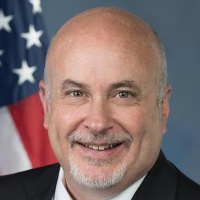
Mark Pocan
Representative
WI
Mark Pocan
Representative
WI
The Audit the Pentagon Act of 2026 addresses the Department of Defense's repeated failure to pass a financial audit. This bill establishes automatic spending reductions for any DoD component that fails to receive a clean audit opinion after fiscal year 2025. It also outlines Congressional priorities regarding protecting wounded warrior accounts and maintaining financial controls for classified programs.
This bill establishes a grant program to fund evidence-based initiatives connecting schools with community systems to improve trauma support and mental health services for students and staff.
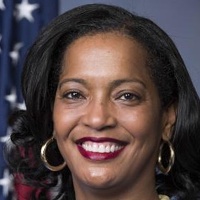
Jahana Hayes
Representative
CT
Jahana Hayes
Representative
CT
The Supporting Trauma-Informed Education Practices Act of 2026 establishes a grant program to enhance access to evidence-based trauma support and mental health services for students and school staff. This funding aims to foster stronger connections between schools and community mental health systems through collaboration, professional development, and direct student services. The bill authorizes $50 million annually from FY 2027 through 2031 to support these critical initiatives.
This bill establishes a comprehensive Transgender Bill of Rights to codify and protect the rights of transgender and nonbinary people across healthcare, employment, legal recognition, and safety.
Pramila Jayapal
Representative
WA
Pramila Jayapal
Representative
WA
This resolution establishes a comprehensive Transgender Bill of Rights to codify and protect the rights of transgender and nonbinary people across the United States. It mandates federal action to ensure equal access to healthcare, employment, housing, legal recognition, and safety. The bill aims to eliminate discrimination and affirm bodily autonomy by amending existing federal civil rights laws.
This Act establishes new financial assistance and debt collection standards for Medicare hospitals while creating a federal grant program for nonprofits to purchase and eliminate eligible medical debt.
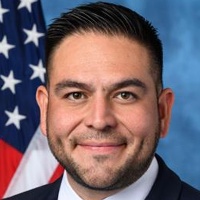
Gabriel (Gabe) Vasquez
Representative
NM
Gabriel (Gabe) Vasquez
Representative
NM
The Patient Debt Relief Act establishes new standards for hospitals participating in Medicare regarding financial assistance and medical debt collection practices, including limits on liens and wage garnishment. It also creates a grant program for eligible nonprofits to purchase and eliminate the medical debt of low-income individuals. These provisions aim to protect patients from aggressive debt collection and provide avenues for debt relief.