Legislative Activity
Track Chuy's sponsored bills, co-sponsored legislation, and voting record
The Returning Home Act establishes a Department of Justice grant program, coordinated with HUD, to provide rental assistance and housing services to individuals reentering the community after incarceration.
Nanette Barragán
Representative
CA
Nanette Barragán
Representative
CA
The Returning Home Act establishes a new grant program to provide rental assistance and housing support services for individuals reentering the community after incarceration. This initiative, run by the DOJ and HUD, offers up to 24 months of rental aid and crucial supportive services to help reduce homelessness among formerly incarcerated individuals. The law prioritizes applicants who implement a "housing first" approach and specifically excludes law enforcement entities from receiving grants.
This bill impeaches Secretary of Homeland Security Kristi Lynn Arnold Noem for high crimes and misdemeanors, citing willful refusal to comply with oversight law, violating the Impoundment Control Act, directing unlawful ICE misconduct, and misusing federal funds for personal gain.
Robin Kelly
Representative
IL
Robin Kelly
Representative
IL
This resolution initiates impeachment proceedings against Secretary of Homeland Security Kristi Lynn Arnold Noem for high crimes and misdemeanors. The articles of impeachment charge her with willfully refusing to comply with Congressional oversight laws and violating the Impoundment Control Act by improperly withholding funds. Further articles allege she directed widespread misconduct by ICE agents that violated federal law and constitutional rights, and misused taxpayer funds for personal gain through improper contracting.
This act eliminates qualified immunity as a defense for law enforcement officers in civil lawsuits alleging constitutional rights violations and establishes a right to sue federal officers for such violations.
Ayanna Pressley
Representative
MA
Ayanna Pressley
Representative
MA
The Qualified Immunity Abolition Act of 2026 eliminates qualified immunity as a defense for law enforcement officers in civil lawsuits alleging constitutional rights violations. This means officers can no longer claim good faith or lack of clearly established law to avoid liability. The Act also establishes a new civil cause of action allowing citizens to sue federal law enforcement officers for constitutional violations.
This bill modifies deposits into the Crime Victims Fund by excluding certain False Claims Act recoveries and mandates an Inspector General audit of the Fund's sustainability.
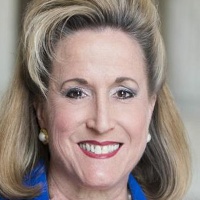
Ann Wagner
Representative
MO
Ann Wagner
Representative
MO
This bill amends the Victims of Crime Act of 1984 to temporarily exclude certain False Claims Act recoveries from being deposited into the Crime Victims Fund through fiscal year 2029. It also mandates a comprehensive audit by the Department of Justice Inspector General on the Fund's sustainability and the impact of recent legislative changes. The resulting report will provide recommendations for improving the Fund's effectiveness and oversight.
This resolution recognizes the 15th anniversary of the 2011 Tucson shooting, honoring the victims, survivors, and the ongoing advocacy of Gabby Giffords.
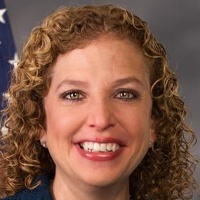
Debbie Wasserman Schultz
Representative
FL
Debbie Wasserman Schultz
Representative
FL
This resolution commemorates the 15th anniversary of the tragic January 8, 2011, Tucson shooting, honoring the six lives lost and the thirteen injured. It specifically commends the courage and ongoing advocacy of gun violence survivor and former Congresswoman Gabby Giffords. The resolution also recognizes the resilience of the community and reaffirms a commitment to ending political violence.
This bill expresses support for designating a week in September as "National Hispanic-Serving Institutions Week" to recognize their achievements and goals.
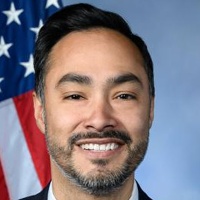
Joaquin Castro
Representative
TX
Joaquin Castro
Representative
TX
This bill officially designates the week of September 15 through September 21, 2024, as "National Hispanic-Serving Institutions Week." It recognizes the significant achievements and goals of these vital institutions across the nation. The resolution encourages public observance with appropriate activities to demonstrate support for Hispanic-Serving Institutions during Hispanic Heritage Month.
The HOTDOG Act mandates the FTC to study and report on concession pricing transparency and fairness at publicly subsidized sports and entertainment venues.

Dan Goldman
Representative
NY
Dan Goldman
Representative
NY
The Honest Oversight of Ticketed Dining and Onsite Grub (HOTDOG) Act mandates the Federal Trade Commission (FTC) to study concession pricing at publicly subsidized sports and entertainment venues. This study will compare in-venue food and drink prices against those in surrounding communities. The FTC must then report its findings and recommendations to Congress within one year to improve pricing transparency and affordability for consumers.
The BRIDGE Act establishes a five-year, competitive grant program to fund the maintenance, replacement, or rehabilitation of commuter rail bridges.
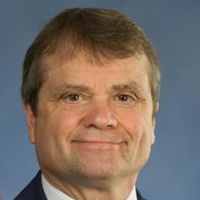
Mike Quigley
Representative
IL
Mike Quigley
Representative
IL
The BRIDGE Act establishes a new competitive grant program to fund the maintenance, replacement, or rehabilitation of commuter rail bridges. This program, administered by the Secretary of Transportation, authorizes $1.5 billion annually from fiscal years 2027 through 2031. Grants will help public transportation operators cover the capital costs associated with these essential rail infrastructure projects.
This bill restricts immigration enforcement authority to federal officials, rescinding the ability of state and local entities to inquire about or apprehend individuals for immigration violations.
Mike Quigley
Representative
IL
Mike Quigley
Representative
IL
The PROTECT Immigration Act of 2025 aims to centralize immigration enforcement exclusively with federal officials. This legislation amends existing law to restrict state and local entities from inquiring about, apprehending, or detaining individuals based on immigration status, with only three specific statutory exceptions. Essentially, it removes the authority granted under Section 287(g) from non-federal personnel.
The Vaccine Transportation Access Act establishes a grant program and increases federal Medicaid funding to eliminate transportation barriers for individuals seeking essential vaccinations.
Nanette Barragán
Representative
CA
Nanette Barragán
Representative
CA
The Vaccine Transportation Access Act establishes a grant program for community organizations to provide reliable transportation services, helping individuals in underserved or low-income areas reach vaccination appointments. Additionally, the bill increases federal Medicaid support by covering 100% of the costs for nonemergency transportation specifically related to receiving eligible vaccines. These measures aim to remove critical mobility barriers and improve equitable access to essential immunizations.
This resolution honors Senate President Pro Tempore Monique Limón for her historic service as the first Latina and first mother to hold the position.
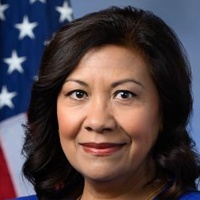
Norma Torres
Representative
CA
Norma Torres
Representative
CA
This resolution honors Senator Monique Limón for her historic service and achievements as the first Latina and first mother to serve as President pro Tempore of the California State Senate. It recognizes her background as a first-generation college graduate and dedicated educator. The bill commends her legislative leadership, particularly her work championing issues for working families. Finally, it celebrates her swearing-in ceremony for this landmark role.
This bill mandates the removal of U.S. Armed Forces from hostilities within or against Venezuela unless explicitly authorized by Congress.
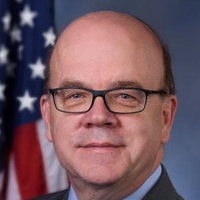
James McGovern
Representative
MA
James McGovern
Representative
MA
This bill mandates the President to immediately remove all United States Armed Forces from hostilities within or against Venezuela. This action is required unless Congress has specifically authorized the use of military force. The legislation aims to ensure that military engagement in Venezuela requires explicit Congressional approval.
This bill mandates the EPA to create a public online mapping tool that identifies disproportionately burdened communities based on environmental, climate, health, economic, and social factors.
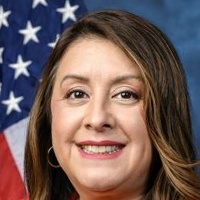
Luz Rivas
Representative
CA
Luz Rivas
Representative
CA
The Environmental Justice Screening Tool Act of 2025 mandates the Environmental Protection Agency (EPA) to create a public online mapping tool within one year to identify communities disproportionately burdened by environmental, climate, health, economic, and social factors. This tool will use specific thresholds across various categories to flag census tracts needing attention. Federal agencies must then adopt this tool to prioritize funding and resources for the identified communities.
The Schedules That Work Act establishes rights for employees to request flexible schedules, mandates advance notice and predictability pay for schedule changes in covered sectors, and grants employees rest time between shifts.

Rosa DeLauro
Representative
CT
Rosa DeLauro
Representative
CT
The Schedules That Work Act aims to provide workers with greater stability and predictability in their work hours. It grants employees the right to request flexible or stable schedules and requires employers to engage in a good-faith discussion about these requests. For covered sector employees (like retail and food service), the bill mandates 14 days' advance notice of schedules and establishes "predictability pay" for last-minute changes or split shifts. The Act also grants employees the right to 11 hours of rest between shifts, with premium pay required if this rest period is violated.
The Part-Time Worker Bill of Rights Act expands FMLA eligibility to part-time employees and establishes protections against scheduling discrimination, ensuring fair access to benefits and work hours.

Janice Schakowsky
Representative
IL
Janice Schakowsky
Representative
IL
The Part-Time Worker Bill of Rights Act aims to strengthen protections and expand benefits for part-time and temporary employees. The legislation eliminates restrictive hours-of-service requirements for FMLA leave and prohibits discrimination based on hours worked regarding pay, benefits, and promotion opportunities. Additionally, it mandates that employers offer available work hours to existing staff before hiring new employees or contractors.
This Act establishes a grant program to fund state, local, and Tribal governments for the complete destruction of firearms.
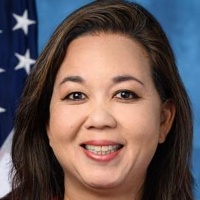
Jill Tokuda
Representative
HI
Jill Tokuda
Representative
HI
The Restoring Trust in Public Safety Act establishes a grant program to fund the complete destruction of firearms by state, local, and Tribal governments. Eligible entities can apply for competitive grants to cover costs associated with destruction equipment, services, and training. Grantees must certify that all firearms and components are fully destroyed and maintain detailed records of the process.
This bill mandates the annual calculation and public reporting of each state's federal tax burden and federal spending outlays.
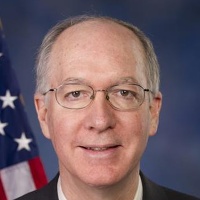
Bill Foster
Representative
IL
Bill Foster
Representative
IL
The Payer State Transparency Act of 2025 mandates the annual calculation of how much each state contributes to federal taxes and how much it receives in federal spending. These figures, detailing each state's federal tax burden and outlays, must be compiled by the Bureau of Economic Analysis and the Office of Management and Budget. The resulting joint report must then be submitted to Congress and made publicly available online.
This bill officially recognizes Middle Eastern and North African (MENA) individuals as a racial and ethnic minority group under the Public Health Service Act and mandates a comprehensive study of MENA population health disparities.
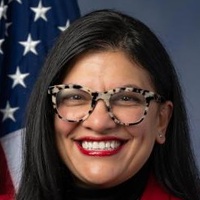
Rashida Tlaib
Representative
MI
Rashida Tlaib
Representative
MI
This bill officially recognizes Middle Eastern and North African (MENA) individuals as a distinct racial and ethnic minority group within federal health law. It directs the Secretary of Health and Human Services to conduct a comprehensive study on the unique health disparities affecting the MENA population. The legislation aims to ensure MENA individuals are included in federal health policies and resource allocation, addressing historical exclusion.
This bill authorizes Congress to award Congressional Gold Medals to the 1980 U.S. Men's Olympic Ice Hockey team for their historic "Miracle on Ice" victory.
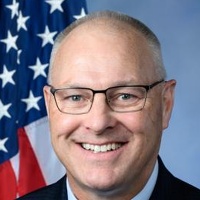
Pete Stauber
Representative
MN
Pete Stauber
Representative
MN
This bill, the Miracle on Ice Congressional Gold Medal Act, officially authorizes Congress to award Congressional Gold Medals to the 1980 U.S. Men's Olympic Ice Hockey Team for their historic "Miracle on Ice" victory. The medals will be struck by the Treasury and permanently displayed at specific national sports museums. The Act also permits the sale of duplicate bronze medals to cover production costs.
This act nullifies a recent Executive Order regarding federal labor relations and ensures existing collective bargaining agreements remain in effect.
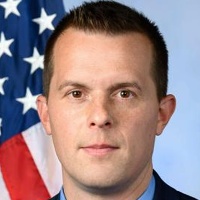
Jared Golden
Representative
ME
Jared Golden
Representative
ME
The Protect America's Workforce Act nullifies a specific Executive Order issued in March 2025 concerning exclusions from federal labor-management relations programs. This legislation ensures that any existing collective bargaining agreements between federal agencies and employee unions remain fully in effect until their stated expiration dates. The Act also prohibits the use of federal funds to implement the overturned Executive Order.