This Act mandates automatic spending reductions for Department of Defense components that fail to achieve a clean financial audit opinion after fiscal year 2025.
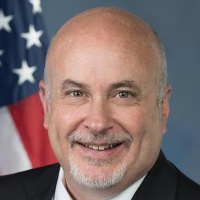
Mark Pocan
Representative
WI-2
The Audit the Pentagon Act of 2026 addresses the Department of Defense's repeated failure to pass a financial audit. This bill establishes automatic spending reductions for any DoD component that fails to receive a clean audit opinion after fiscal year 2025. It also outlines Congressional priorities regarding protecting wounded warrior accounts and maintaining financial controls for classified programs.
Pentagon Faces Automatic Funding Cuts in 2026 if Financial Audits Fail Again
The Audit the Pentagon Act of 2026 introduces a 'no-nonsense' approach to defense spending by triggering automatic financial penalties for Department of Defense (DoD) agencies that can't pass a clean audit. Starting after fiscal year 2025, any Pentagon component that fails to receive an 'unqualified' or clean audit opinion will see its budget slashed by 0.5 percent in the first year, with the penalty doubling to 1.0 percent for every year they stay in the red. These aren't just symbolic gestures; the bill requires these funds to be stripped away on a pro rata basis across nearly all programs and sent directly to the Treasury’s General Fund to pay down the national debt. This move comes as a direct response to the Pentagon failing its eighth consecutive audit in 2025, leaving hundreds of billions of dollars effectively unaccounted for on the books.
Protecting the Front Lines and the Home Front
While the bill aims to tighten the belt on bureaucracy, it draws a hard line at the water’s edge to ensure service members don't pay the price for accounting errors. Section 4 specifically exempts military personnel accounts—meaning paychecks for active duty, Reserve, and National Guard members are safe—along with the Defense Health Program. Whether you are a soldier on deployment or a family member using TRICARE, your benefits are legally shielded from these automatic cuts. Additionally, Section 3 includes a 'Sense of Congress' provision that prioritizes funding for wounded warrior accounts and vital force protection, signaling that while the auditors want their spreadsheets to balance, the safety of those in uniform remains a non-negotiable priority.
The 'National Security' Escape Hatch
One of the most significant features of this bill is the Presidential waiver authority. If a 1.0 percent cut to a specific agency’s budget would legitimately threaten national security or put troops in combat zones at risk, the President can step in to stop the reduction. However, this isn't a blank check for the Pentagon to ignore the rules; the President must submit a detailed report to the House and Senate Appropriations and Budget Committees explaining exactly why the money is essential. For the average taxpayer, this creates a tension between holding a massive government agency accountable for 'losing' 63 percent of its assets and ensuring that a sudden budget cut doesn't leave a gap in our national defense during a crisis.
Balancing the Books on Classified Tech
For the tech workers and contractors involved in 'black budget' or classified programs, the bill attempts to bring transparency to the shadows without leaking secrets. Section 3 clarifies that while the public won't see the line-item details of top-secret projects, the Pentagon must still use 'proven practices' and auditors with the proper security clearances to ensure the money is actually being spent where it's supposed to be. The challenge lies in the bill’s vagueness regarding what 'proven practices' actually means. Without a strict definition, there is a risk that the same accounting loopholes that led to the current audit failures could persist under the guise of national security, making the actual implementation of these 0.5 percent cuts a complex game of high-stakes accounting.