Legislative Activity
Track Michelle's sponsored bills, co-sponsored legislation, and voting record
This bill allows associations of employers to sponsor group health plans, treating them as a single employer under ERISA, with specific requirements for plan structure and premium rating.
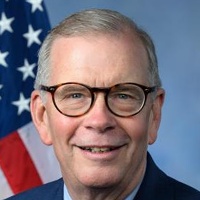
Tim Walberg
Representative
MI
Tim Walberg
Representative
MI
The Association Health Plans Act amends federal law to allow certain groups or associations of employers to sponsor a single group health plan, treating them as a single employer for coverage purposes. This aims to expand access to health coverage by enabling broader risk pooling across different industries. The bill establishes specific criteria these associations must meet to qualify, including minimum size and operational standards. Finally, it outlines rules for setting premium rates and prohibits discrimination based on health status for plans established under this Act.
This bill mandates increased public transparency regarding detailed Medicare spending data by HHS, requires MedPAC to conduct annual, apples-to-apples comparisons of Medicare Advantage and traditional Medicare expenditures, and updates the Trustees' annual report with categorized spending information.
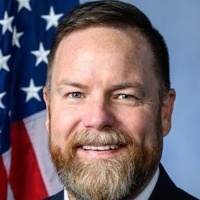
Aaron Bean
Representative
FL
Aaron Bean
Representative
FL
The Apples to Apples Comparison Act of 2025 mandates greater public transparency regarding Medicare spending by requiring the Secretary of HHS to publish detailed, machine-readable expenditure data broken down by county and beneficiary type. Furthermore, the bill requires the Medicare Payment Advisory Commission (MedPAC) to annually compare the average cost of Medicare Advantage enrollees versus traditional Medicare beneficiaries, accounting for plan differences and risk factors. Finally, the Medicare Trustees must also report detailed expenditure information categorized by specific beneficiary enrollment statuses.
The FREE Act mandates federal agencies to develop and implement a "permitting by rule" system to streamline and expedite permit issuance based on applicant certification of compliance with established standards.
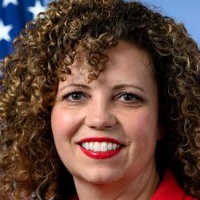
Celeste Maloy
Representative
UT
Celeste Maloy
Representative
UT
The Full Responsibility and Expedited Enforcement (FREE) Act mandates that federal agencies develop and implement a "permitting by rule" system as an alternative to slow, traditional permitting processes. This new system requires applicants to certify compliance with written standards, streamlining approval with a 180-day automatic grant deadline if the agency fails to act. Agencies retain the right to audit and enforce compliance after permits are issued, with the burden of proof shifting to the agency during appeals.
This bill mandates an independent review of VA claimant forms to ensure clarity and establishes a timeline for implementing necessary improvements, while also slightly extending a current limit on certain pension payments.
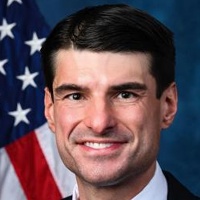
Robert Bresnahan
Representative
PA
Robert Bresnahan
Representative
PA
The Simplifying Forms for Veterans Claims Act mandates an independent review of all Department of Veterans Affairs (VA) forms sent to claimants to ensure they are clear and easy to understand. The VA Secretary must hire an outside entity to assess these forms and implement recommendations for improvement within a set timeline. Additionally, this bill slightly extends the expiration date for certain limits on veterans' pension payments.
The LEOSA Reform Act updates federal law to clarify concealed carry exceptions in school zones and modernizes qualification standards and carrying privileges for qualified active and retired law enforcement officers in certain federal facilities.
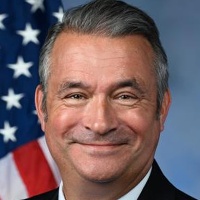
Don Bacon
Representative
NE
Don Bacon
Representative
NE
The LEOSA Reform Act updates federal laws to better align concealed carry rights for qualified active and retired law enforcement officers with existing school zone restrictions. This legislation modernizes the Law Enforcement Officer Safety Act (LEOSA) by expanding qualification standards for retired officers and clarifying where they may carry firearms, including in certain lower-security federal facilities. The bill ensures that LEOSA-authorized carriers are not inadvertently violating federal school zone prohibitions.
This bill mandates the establishment of facilities to rear and release sterile New World screwworm flies to combat agricultural threats, supported by mandatory reporting and funding.
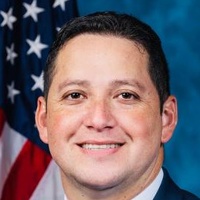
Ernest Gonzales
Representative
TX
Ernest Gonzales
Representative
TX
The STOP Screwworms Act mandates the establishment of facilities to rear and release sterile New World screwworm flies in high-risk areas to combat infestations. The Secretary of Agriculture must build these modular facilities within 180 days of enactment and provide annual public reports on the threat and control efforts. The bill authorizes up to $300 million to fund these necessary actions.
This bill disapproves the Department of Energy's submitted rule establishing new energy conservation standards for consumer gas-fired instantaneous water heaters.
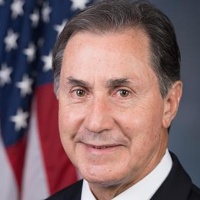
Gary Palmer
Representative
AL
Gary Palmer
Representative
AL
This bill seeks to formally reject a recent rule submitted by the Department of Energy (DOE) concerning new energy conservation standards for consumer gas-fired instantaneous water heaters. By invoking congressional disapproval, the legislation immediately cancels the DOE's proposed efficiency standards. In essence, Congress is overriding the DOE's attempt to implement these specific new regulations for tankless gas water heaters.
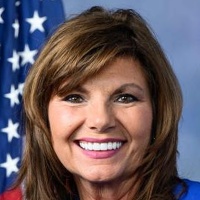
This bill establishes Pregnancy.gov as a centralized, federally managed website to connect pregnant women with verified, non-abortion-affiliated resources and supports, funded through state grants and existing appropriations.
Diana Harshbarger
Representative
TN
Diana Harshbarger
Representative
TN
The Pregnancy.Gov Act establishes a new national public website, Pregnancy.gov, to serve as a centralized hub connecting pregnant women with local resources. This site must offer tailored resource matching based on location and ensure listed providers have a consistent three-year service history. Crucially, the Act prohibits any organization that performs, refers for, or counsels in favor of abortion from being listed or receiving associated state grants.
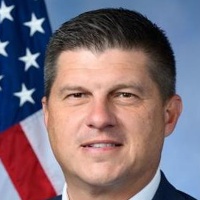
The FARMER Act modifies premium support levels for whole-farm crop insurance plans and increases the government subsidy for the supplemental coverage option, while also mandating a study on expanding that supplemental coverage.
Brad Finstad
Representative
MN
Brad Finstad
Representative
MN
The FARMER Act adjusts federal premium support for certain whole-farm and enterprise-unit crop insurance plans, setting specific subsidy percentages for those options. It also increases the government's premium subsidy rate for the supplemental coverage option from 65% to 80%. Finally, the bill mandates a study on expanding the geographic scope of this supplemental coverage option.
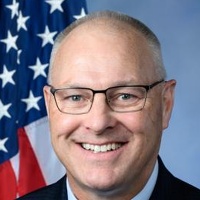
This Act amends federal law to exclusively list West Virginia, rather than both West Virginia and Minnesota, in a specific section concerning contracts for engineering and design services on federal highway projects.
Pete Stauber
Representative
MN
Pete Stauber
Representative
MN
The Parity in Engineering Act amends federal law concerning contracts for engineering and design services on federal highway projects. Specifically, this legislation removes Minnesota from a list in Section 112(b)(2)(F) of title 23 of the U.S. Code, leaving only West Virginia specifically mentioned in that subsection. This change adjusts the application of existing statutory provisions related to state contracting for these services.
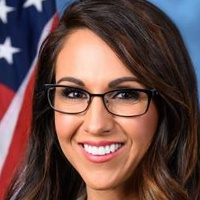
The American Energy Act streamlines the processing of drilling permits during litigation and limits judicial authority to halt oil and gas lease sales unless immediate, major environmental damage is proven without alternative remedies.
Lauren Boebert
Representative
CO
Lauren Boebert
Representative
CO
The American Energy Act streamlines the process for handling drilling permit applications, requiring the Secretary to continue processing them even when litigation is pending, unless the underlying lease is vacated. It also establishes a four-year validity period for new drilling permits. Furthermore, the Act places significant limitations on the ability of courts to halt oil and gas lease sales or stop the awarding of leases once bidding has commenced.
The Prove It Act establishes a formal process for small businesses to challenge agency claims about the economic impact of proposed rules and strengthens requirements for agencies to consider indirect costs on small entities.
Brad Finstad
Representative
MN
Brad Finstad
Representative
MN
The Prove It Act aims to strengthen protections for small businesses against burdensome federal regulations. It establishes a formal process for small entities to challenge agency claims that a proposed rule will not significantly impact them. The bill also expands the required analysis of indirect costs and imposes consequences if agencies fail to periodically review existing rules on time.
The Safeguard American Voter Eligibility (SAVE) Act mandates that individuals registering to vote in federal elections must present documentary proof of U.S. citizenship.
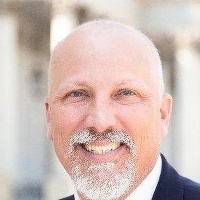
Chip Roy
Representative
TX
Chip Roy
Representative
TX
The Safeguard American Voter Eligibility Act (SAVE Act) significantly amends federal law to require individuals registering to vote in federal elections to present documentary proof of U.S. citizenship. This legislation mandates that states actively clean their voter rolls and cooperate with federal agencies to verify citizenship status. It establishes new criminal penalties for officials who fail to enforce these documentation requirements.
The Neighborhood Homes Investment Act establishes a new federal tax credit to incentivize the development and substantial rehabilitation of affordable starter homes in low-income communities by closing the financing gap between construction costs and sale prices.
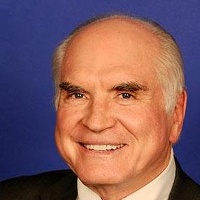
Mike Kelly
Representative
PA
Mike Kelly
Representative
PA
The Neighborhood Homes Investment Act establishes a new federal tax credit designed to close the financing gap hindering the construction and rehabilitation of affordable starter homes in distressed communities. This credit incentivizes developers to build or substantially renovate housing in specific low-income census tracts and sell it affordably to qualified moderate-income homeowners. State agencies will manage the allocation of these credits, ensuring projects meet affordability standards and promoting revitalization in struggling neighborhoods.
This bill removes the current restriction preventing direct charitable rollovers from Individual Retirement Accounts (IRAs) to Donor Advised Funds (DAFs).
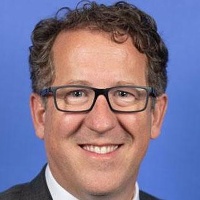
Adrian Smith
Representative
NE
Adrian Smith
Representative
NE
The IRA Charitable Rollover Facilitation and Enhancement Act of 2025 removes the current restriction preventing individuals from making direct charitable rollovers from their Individual Retirement Accounts (IRAs) to Donor Advised Funds (DAFs). This change immediately allows IRA owners to transfer retirement assets directly to DAFs for charitable purposes. The bill simplifies and enhances charitable giving options for IRA holders.
The SAFETY Act of 2025 ensures U.S. food and agricultural producers can continue using established common product names in foreign markets despite international restrictions.
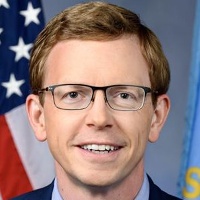
Dusty Johnson
Representative
SD
Dusty Johnson
Representative
SD
The SAFETY Act of 2025 aims to protect American agricultural and food exporters by legally safeguarding their right to use common product names in foreign markets. It establishes a clear definition for "common name," explicitly listing many existing U.S. food, wine, and beer terms that are protected from foreign restrictions. Furthermore, the bill mandates that U.S. trade representatives actively negotiate to ensure these common names remain usable in all future international trade agreements.
The Reentry Act of 2025 allows inmates to receive Medicaid assistance during the 30 days preceding their release and mandates a comprehensive report on healthcare standards within correctional facilities.
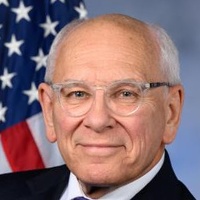
Paul Tonko
Representative
NY
Paul Tonko
Representative
NY
The Reentry Act of 2025 allows incarcerated individuals to receive medical assistance through Medicaid during the 30 days immediately preceding their release. This legislation also mandates a comprehensive report from MACPAC analyzing current healthcare standards within correctional facilities. The report will examine the impact of this coverage change and offer recommendations for improving healthcare access for those transitioning back into the community.
This Act amends the Base Erosion and Anti-Abuse Tax (BEAT) rules to impose stricter regulations on U.S. companies connected to foreign entities subject to specific extraterritorial income taxes.
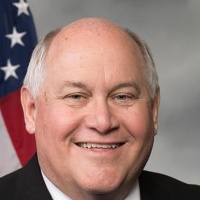
Ron Estes
Representative
KS
Ron Estes
Representative
KS
The Unfair Tax Prevention Act amends the Base Erosion and Anti-Abuse Tax (BEAT) rules to specifically target certain U.S. companies connected to foreign tax systems operating outside their direct jurisdiction. These "foreign-owned extraterritorial tax regime entities" will now be automatically subject to BEAT, with specific exceptions removed and a portion of their cost of goods sold automatically treated as a base erosion benefit. This legislation aims to close loopholes related to complex, indirect foreign ownership structures.
This bill mandates that Medicare provide equitable reimbursement for the transportation and setup of portable ultrasound equipment, mirroring current payments for portable X-ray services.
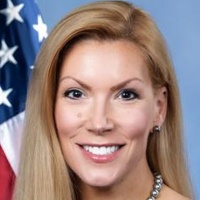
Beth Van Duyne
Representative
TX
Beth Van Duyne
Representative
TX
The Portable Ultrasound Reimbursement Equity Act of 2025 updates Medicare coverage to include diagnostic ultrasound tests. This legislation mandates that Medicare establish separate payments for the transportation and setup of portable ultrasound equipment, mirroring existing payments for portable X-ray services. These changes are set to take effect starting January 1, 2027.
This bill excludes certain veterinary student loan repayments and forgiveness amounts from taxable income to encourage veterinarians to practice in rural areas.
Adrian Smith
Representative
NE
Adrian Smith
Representative
NE
The Rural Veterinary Workforce Act aims to encourage more veterinarians to serve in underserved rural areas by making participation in certain loan repayment or forgiveness programs more financially appealing. This bill amends the tax code to exclude amounts received through qualifying state or federal veterinary student loan repayment programs from being counted as taxable income. This tax benefit applies to amounts received for taxable years beginning after December 31, 2025.