Legislative Activity
Track Randy's sponsored bills, co-sponsored legislation, and voting record
This bill mandates the Secretary of Agriculture to publish a comprehensive report analyzing the U.S. fertilizer industry, market trends, supply chain, and pricing transparency.
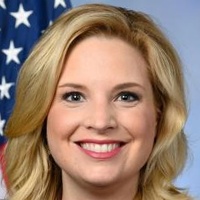
Ashley Hinson
Representative
IA
Ashley Hinson
Representative
IA
This bill, the Fertilizer Research Act of 2025, mandates that the Secretary of Agriculture produce a comprehensive report on the U.S. fertilizer industry. The report must analyze market size, pricing trends over 25 years, import data, and supply chain dynamics. It will also evaluate industry concentration, compare emerging versus conventional fertilizers, and assess the need for mandatory public price reporting.
This resolution expresses support for National Adoption Day and Month by promoting awareness, celebrating adoption, and encouraging the nation to secure safety and well-being for all children awaiting families.
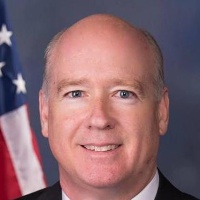
Robert Aderholt
Representative
AL
Robert Aderholt
Representative
AL
This resolution expresses support for National Adoption Day and Month by promoting national awareness of adoption and the children awaiting permanent families. It highlights the significant number of children in foster care waiting for adoption and encourages all Americans to consider providing a safe, permanent, and well-being-focused home for these children. The resolution supports various avenues for achieving permanency, including reunification, kinship care, and adoption.
This bill ensures that essential firearm-related government operations, such as background checks and export license processing, continue during a government shutdown.

Ben Cline
Representative
VA
Ben Cline
Representative
VA
The Firearm Access During Shutdowns Act ensures that essential firearm-related government operations continue without interruption during a federal shutdown. This legislation specifically mandates the continuation of the FBI's NICS background check system and related processing at the ATF, Department of Commerce, and Department of State. By deeming these functions essential for protecting life and property, the bill prevents delays in firearm transfers and export licensing during lapses in appropriations.
This act establishes a structured, multi-phase apprenticeship program allowing drivers under 21 to operate commercial motor vehicles in interstate commerce under strict supervision and specific vehicle requirements.
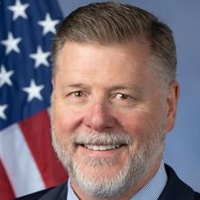
Eric Crawford
Representative
AR
Eric Crawford
Representative
AR
The Developing Responsible Individuals for a Vibrant Economy Act (DRIVE-SAFE Act) establishes a structured apprenticeship program allowing drivers under 21 to operate commercial motor vehicles in interstate commerce. This program requires apprentices to complete 400 hours of supervised training, divided into two probationary phases focusing on foundational and advanced driving skills. Participation mandates specific vehicle technology, such as automatic transmissions and collision mitigation systems, and continuous supervision by an experienced driver.
This resolution honors the life and legacy of Charles "Charlie" James Kirk, condemns his assassination as political violence, and calls for a renewed commitment to civil discourse and American founding principles.

Mike Johnson
Representative
LA
Mike Johnson
Representative
LA
This resolution honors the life and legacy of Charles "Charlie" James Kirk, founder of Turning Point USA. It strongly condemns his assassination as an act of political violence. The bill calls for a renewed national commitment to civil discourse and the founding principles of the United States.
The America’s CHILDREN Act of 2025 establishes a path to permanent residency for certain long-term college graduates who entered the U.S. as dependents of work visa holders and updates age-out protections for dependent children.
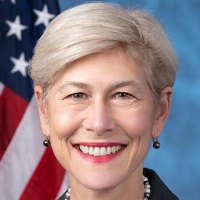
Deborah Ross
Representative
NC
Deborah Ross
Representative
NC
The America’s CHILDREN Act of 2025 establishes a new pathway to permanent residency for certain individuals who entered the U.S. as children, lived here legally for at least eight years as dependents of work visa holders, and subsequently earned a U.S. college degree. The bill also introduces significant "age-out" protections, allowing long-term dependents to retain their original priority dates for visa processing. Furthermore, it clarifies rules for derivative beneficiaries, potentially granting them work authorization in certain dependent statuses.
This resolution supports designating the week of September 21 through September 27, 2025, as "Gold Star Families Remembrance Week" to honor the families of fallen service members.

Dan Newhouse
Representative
WA
Dan Newhouse
Representative
WA
This resolution supports designating the week of September 21 through September 27, 2025, as "Gold Star Families Remembrance Week." The measure aims to officially recognize and honor the profound sacrifices made by families who have lost a loved one serving in the U.S. Armed Forces. It encourages communities nationwide to observe this week through acts of service and by celebrating the lives of these fallen service members.
This Act mandates that new passenger motor vehicles sold in the U.S. must include standard equipment capable of receiving AM broadcast radio signals.

Gus Bilirakis
Representative
FL
Gus Bilirakis
Representative
FL
The AM Radio for Every Vehicle Act of 2025 mandates that the Secretary of Transportation establish a rule requiring AM broadcast radio receivers to be installed as standard equipment in new passenger motor vehicles. This requirement aims to ensure public access to AM radio signals, which are often used for emergency alerts. The bill also directs a GAO study on the effectiveness of AM radio within the national emergency alert system compared to other technologies. Finally, the Act preempts state and local laws on this matter and includes a sunset provision eight years after enactment.
This bill amends the Social Security Act to provide Medicare coverage for FDA-approved multi-cancer early detection screening tests starting in 2028.
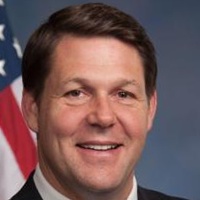
Jodey Arrington
Representative
TX
Jodey Arrington
Representative
TX
The Nancy Gardner Sewell Medicare Multi-Cancer Early Detection Screening Coverage Act amends the Social Security Act to provide Medicare Part B coverage for multi-cancer early detection screening tests starting January 1, 2028. This legislation establishes clear criteria for qualifying tests and outlines payment structures to ensure beneficiaries have access to these advanced diagnostic tools. Importantly, this coverage is designed to complement, rather than replace, existing Medicare-covered cancer screenings.
This resolution expresses support for and officially designates September 17, 2025, as "Constitution Day" to honor the foundational document as the 250th anniversary approaches.
Robert Aderholt
Representative
AL
Robert Aderholt
Representative
AL
This resolution expresses strong support for and officially designates **September 17, 2025, as "Constitution Day."** It recognizes the profound historical importance of the U.S. Constitution as the nation approaches its 250th anniversary. The measure encourages all Americans to observe the day with suitable ceremonies reflecting on the freedoms and responsibilities the document grants.
This Act ensures the automatic continuation of pay for active duty military personnel and essential civilian support staff if Congress fails to pass a budget for fiscal year 2026.
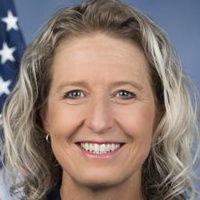
Jennifer Kiggans
Representative
VA
Jennifer Kiggans
Representative
VA
The Pay Our Troops Act of 2026 ensures that active duty military personnel and essential civilian support staff continue to receive their pay if Congress has not yet passed the full budget for fiscal year 2026. This act provides automatic continuing appropriations from the Treasury to prevent a lapse in military salaries due to budget delays. The funding automatically terminates once a new budget or continuing resolution is passed, or on January 1, 2027, whichever comes first.
The FAIR Trucking Act expands federal court jurisdiction for interstate motor carrier highway accident lawsuits exceeding \$5,000,000 when there is diversity of citizenship between the parties.
Ashley Hinson
Representative
IA
Ashley Hinson
Representative
IA
The FAIR Trucking Act expands federal court jurisdiction for lawsuits arising from accidents involving interstate commercial motor vehicles. This allows federal district courts to hear these cases if the amount in dispute exceeds \$5,000,000 and there is diversity of citizenship between the parties. The Act clarifies the rules for determining citizenship in these complex trucking accident claims.
This act ensures that essential Border Patrol Agents and Customs Officers receive their salaries during a government shutdown in fiscal year 2026.
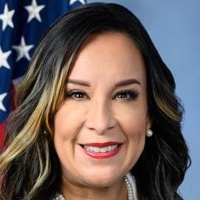
Mónica De La Cruz
Representative
TX
Mónica De La Cruz
Representative
TX
The Pay Our Border Patrol and Customs Agents Act ensures that essential U.S. Border Patrol Agents and Customs and Border Protection officers who must work during a government shutdown in fiscal year 2026 will receive their salaries. This legislation appropriates necessary funds from the Treasury to cover these payments during the lapse in appropriations. The goal is to guarantee that critical border security personnel are paid even if the government temporarily closes.
The PART Act establishes new federal requirements for marking catalytic converters, creates a grant program for VIN stamping, tightens record-keeping for used parts dealers, and increases criminal penalties for theft and trafficking of catalytic converters.
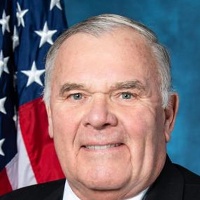
James Baird
Representative
IN
James Baird
Representative
IN
The PART Act aims to combat catalytic converter theft by requiring new vehicles to have traceable identifying markers on these parts. It establishes a federal grant program to help entities stamp identifying numbers onto existing converters. Furthermore, the bill imposes strict record-keeping requirements on businesses that buy used converters and creates new federal criminal penalties for stealing or trafficking stolen catalytic converters.
The FEMA Act of 2025 establishes FEMA as an independent, cabinet-level agency and enacts sweeping reforms across public assistance, individual aid, and mitigation programs to speed up recovery and increase transparency.
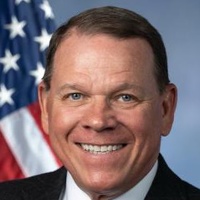
Sam Graves
Representative
MO
Sam Graves
Representative
MO
The FEMA Act of 2025 establishes the Federal Emergency Management Agency (FEMA) as an independent, cabinet-level agency to lead a unified, all-hazards approach to national emergency management. The bill enacts sweeping reforms across Public Assistance, Individual Assistance, and Mitigation programs to accelerate recovery, streamline funding, and reduce bureaucratic hurdles for disaster survivors and communities. Furthermore, it mandates significant new transparency measures, including public data reporting and GAO oversight, to ensure accountability for federal disaster spending.
This bill improves the Conservation Reserve Program by updating enrollment rules, tightening emergency haying restrictions, adding cost-sharing for grazing infrastructure, and increasing the annual rental payment cap.

Jim Costa
Representative
CA
Jim Costa
Representative
CA
The CRP Improvement and Flexibility Act of 2025 updates the Conservation Reserve Program to enhance land management flexibility for farmers. Key changes include allowing continuous enrollment for certain state wildlife practices and providing cost-sharing for new grazing infrastructure like fencing. The bill also tightens restrictions on emergency haying while significantly raising the annual CRP rental payment cap to $\$125,000$.
This act establishes a standardized, time-bound process for meat and poultry plants to request and maintain faster USDA inspection rates based on meeting published food safety criteria.
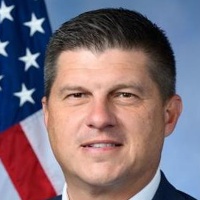
Brad Finstad
Representative
MN
Brad Finstad
Representative
MN
The American Protein Processing Modernization Act establishes a formal, time-bound process for meat and poultry plants to request faster USDA inspection rates, known as "alternate inspection rates." The Secretary of Agriculture must respond to these requests within 90 days, with automatic approval if the deadline is missed. This legislation also outlines clear procedures for maintaining, revoking, or reinstating these faster inspection rates based on ongoing food safety compliance.
This bill establishes a mandatory supply fee paid by Medicare drug plans to long-term care pharmacies for specific prescriptions in 2026 and 2027, while also mandating a GAO study on the financial sustainability of the current payment system.
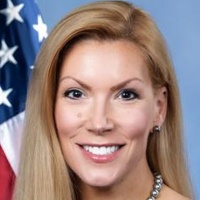
Beth Van Duyne
Representative
TX
Beth Van Duyne
Representative
TX
This Act establishes a mandatory supply fee for Medicare drug plans to pay long-term care pharmacies for specific prescriptions dispensed in 2026 and 2027. The bill mandates a $30 fee per prescription in 2026, increasing in 2027, with penalties for non-payment. Additionally, the GAO is required to study the financial sustainability of the current payment structure for these essential pharmacies. This legislation aims to ensure continued access to medications for patients in long-term care settings.
The DETECT Act of 2025 mandates a report on the potential for the IRS to utilize artificial intelligence to detect tax fraud.
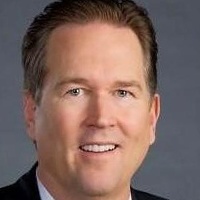
Vern Buchanan
Representative
FL
Vern Buchanan
Representative
FL
The DETECT Act of 2025 mandates a report from the Comptroller General assessing the potential for the IRS to utilize artificial intelligence (AI) to enhance the detection of tax fraud. This report must be delivered to key Congressional committees within 180 days of the Act's enactment. Essentially, the bill initiates a study on leveraging AI for improved tax compliance tracking.
This act mandates the EPA to swiftly finalize rules ensuring clear E15 fuel labeling and automatic compatibility for most existing underground storage tanks with up to 15% ethanol, while requiring future equipment to be compatible with 100% ethanol.

Adrian Smith
Representative
NE
Adrian Smith
Representative
NE
The Ethanol for America Act of 2025 mandates that the EPA finalize rules within 90 days regarding E15 fuel labeling and underground storage tank compatibility. This bill ensures current storage tanks are automatically deemed compatible with E15 and prevents forcing partial upgrades on station owners. Additionally, it requires all new or replacement storage system components to be compatible with up to 100% ethanol for future flexibility.