Legislative Activity
Track Randy's sponsored bills, co-sponsored legislation, and voting record
This Act mandates that health plans cover medically necessary treatment for congenital anomalies or birth defects affecting the eyes, ears, teeth, mouth, or jaw to restore normal function and appearance.
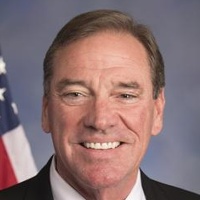
Neal Dunn
Representative
FL
Neal Dunn
Representative
FL
The Ensuring Lasting Smiles Act mandates that group health plans and insurance policies provide comprehensive coverage for medically necessary treatment related to congenital anomalies or birth defects affecting the eyes, ears, teeth, mouth, or jaw. This coverage must include services needed to restore normal function and appearance, including necessary dental and orthodontic support. Plans must apply cost-sharing rules no more restrictive than those for other medical benefits, excluding purely cosmetic procedures.
The FARMER Act modifies premium support levels for whole-farm crop insurance plans and increases the government subsidy for the supplemental coverage option, while also mandating a study on expanding that supplemental coverage.
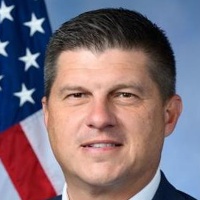
Brad Finstad
Representative
MN
Brad Finstad
Representative
MN
The FARMER Act adjusts federal premium support for certain whole-farm and enterprise-unit crop insurance plans, setting specific subsidy percentages for those options. It also increases the government's premium subsidy rate for the supplemental coverage option from 65% to 80%. Finally, the bill mandates a study on expanding the geographic scope of this supplemental coverage option.
This bill removes federal tax and registration requirements for firearm silencers, preempts certain state regulations, mandates the destruction of existing federal silencer owner records, and updates related definitions and marking requirements.
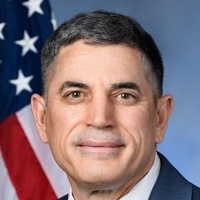
Andrew Clyde
Representative
GA
Andrew Clyde
Representative
GA
The Constitutional Hearing Protection Act aims to treat firearm silencers equally under federal tax law by updating definitions and removing certain registration requirements if existing firearm laws are followed. The bill also preempts state and local governments from imposing special taxes or registration burdens on silencers. Furthermore, it mandates the destruction of existing federal records identifying silencer owners within one year of enactment.
The MOMS Act establishes a federal resource hub for expecting mothers, improves access to prenatal and postnatal care through grants, and allows for the enforcement of child support obligations for unborn children.
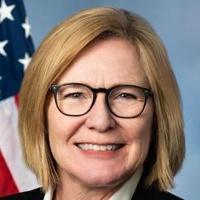
Michelle Fischbach
Representative
MN
Michelle Fischbach
Representative
MN
The MOMS Act aims to support expecting and new mothers through three main initiatives. It establishes a centralized federal resource website, Pregnancy.gov, to connect mothers with local support services and adoption agencies. The bill also creates grant programs to fund organizations offering positive alternatives to abortion and expanding access to at-home prenatal and postnatal telehealth care in underserved areas. Finally, it allows states to establish and enforce child support obligations against biological fathers for unborn children upon the mother's request.
This Act establishes a public-private "Quantum Sandbox" program, managed by the Secretary of Commerce and NIST, to accelerate the development and deployment of near-term quantum applications within two years.
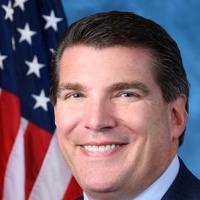
Jay Obernolte
Representative
CA
Jay Obernolte
Representative
CA
The Quantum Sandbox for Near-Term Applications Act of 2025 establishes a new public-private partnership program managed by the Department of Commerce and NIST. This "quantum sandbox" is specifically designed to accelerate the development and testing of quantum applications that can be deployed within two years. By engaging industry, national labs, and research centers, the Act aims to quickly translate quantum innovation into tangible benefits for government and business.
This bill extends key tax credits for biodiesel, renewable diesel, and alcohol fuels through 2026 while preventing taxpayers from claiming overlapping credits with the new clean fuel production credit.
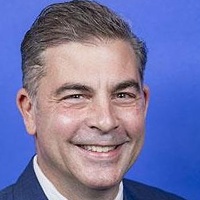
Mike Carey
Representative
OH
Mike Carey
Representative
OH
This bill extends key federal tax credits for biodiesel and renewable diesel production and mixtures through 2026. It ensures that these older credits will not be claimed concurrently with the newer clean fuel production credit (Section 45Z(a)). The legislation also extends the tax credit for second-generation alcohol fuels, coordinating its expiration with the new clean fuel rules.
This bill establishes federal grants to support and improve existing state paid family leave programs while creating an interstate network to standardize paid leave policies and administration across state lines.
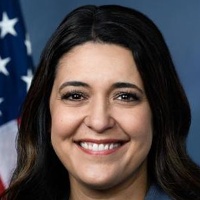
Stephanie Bice
Representative
OK
Stephanie Bice
Representative
OK
The More Paid Leave for More Americans Act aims to enhance paid family leave by establishing a federal grant program to support and improve existing state-level paid leave laws. It also creates the Interstate Paid Leave Action Network (IPLAN) to encourage states to standardize definitions, administration, and benefit coordination across state lines. This dual approach seeks to increase the quality of benefits for workers while simplifying compliance for employers operating in multiple states.
This Act establishes the Interstate Paid Leave Action Network (IPLAN) to create unified, reciprocal standards and administrative systems for state-run paid family and medical leave programs across state lines.
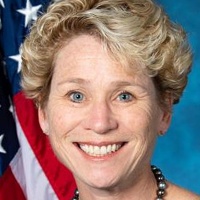
Chrissy Houlahan
Representative
PA
Chrissy Houlahan
Representative
PA
The Interstate Paid Leave Action Network Act of 2025 establishes the IPLAN to create unified, standardized policies and administrative rules for state-run paid family and medical leave programs. This network will develop an interstate agreement to simplify benefit coordination for workers who have moved between participating states. The bill also authorizes federal grants to support state participation and funds a national intermediary to manage coordination and technology development.
The Safeguard American Voter Eligibility (SAVE) Act mandates that individuals registering to vote in federal elections must present documentary proof of U.S. citizenship.

Chip Roy
Representative
TX
Chip Roy
Representative
TX
The Safeguard American Voter Eligibility Act (SAVE Act) significantly amends federal law to require individuals registering to vote in federal elections to present documentary proof of U.S. citizenship. This legislation mandates that states actively clean their voter rolls and cooperate with federal agencies to verify citizenship status. It establishes new criminal penalties for officials who fail to enforce these documentation requirements.
This act prohibits the Federal Motor Carrier Safety Administration from mandating speed limiting devices on interstate commercial vehicles over 26,000 pounds.
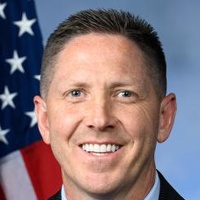
Josh Brecheen
Representative
OK
Josh Brecheen
Representative
OK
The DRIVE Act prohibits the Federal Motor Carrier Safety Administration from mandating speed limiting devices on heavy commercial vehicles engaged in interstate commerce. This legislation removes any federal requirement for trucks over 26,000 pounds to have their top speed electronically capped. In essence, the bill deregulates restrictions concerning speed control technology for large, cross-state eighteen-wheelers.
The Neighborhood Homes Investment Act establishes a new federal tax credit to incentivize the development and substantial rehabilitation of affordable starter homes in low-income communities by closing the financing gap between construction costs and sale prices.
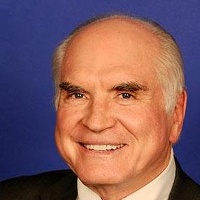
Mike Kelly
Representative
PA
Mike Kelly
Representative
PA
The Neighborhood Homes Investment Act establishes a new federal tax credit designed to close the financing gap hindering the construction and rehabilitation of affordable starter homes in distressed communities. This credit incentivizes developers to build or substantially renovate housing in specific low-income census tracts and sell it affordably to qualified moderate-income homeowners. State agencies will manage the allocation of these credits, ensuring projects meet affordability standards and promoting revitalization in struggling neighborhoods.
This Act makes the existing tax credit for adoption expenses fully refundable, allowing taxpayers to receive the excess credit amount as a refund for tax years beginning after December 31, 2025.
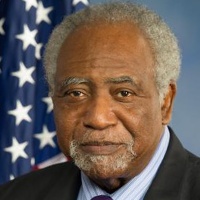
Danny Davis
Representative
IL
Danny Davis
Representative
IL
The Adoption Tax Credit Refundability Act of 2025 makes the existing tax credit for adoption expenses fully refundable, meaning taxpayers can receive the excess credit amount as a refund. This is achieved by renumbering the credit section and updating related tax code references. The bill also mandates new regulations for verifying adoptions via standardized affidavits. These changes will apply to tax years beginning after December 31, 2025.
This bill removes the current restriction preventing direct charitable rollovers from Individual Retirement Accounts (IRAs) to Donor Advised Funds (DAFs).

Adrian Smith
Representative
NE
Adrian Smith
Representative
NE
The IRA Charitable Rollover Facilitation and Enhancement Act of 2025 removes the current restriction preventing individuals from making direct charitable rollovers from their Individual Retirement Accounts (IRAs) to Donor Advised Funds (DAFs). This change immediately allows IRA owners to transfer retirement assets directly to DAFs for charitable purposes. The bill simplifies and enhances charitable giving options for IRA holders.
The Affordable Housing Credit Improvement Act of 2025 updates state allocation formulas, reforms tenant eligibility and credit determination rules, and enhances assistance for Native American and rural housing projects.
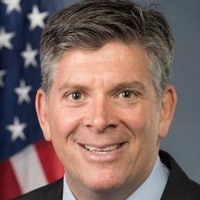
Darin LaHood
Representative
IL
Darin LaHood
Representative
IL
The Affordable Housing Credit Improvement Act of 2025 updates federal housing tax credit allocations to reflect current economic realities and boosts minimum state allotments. It reforms tenant eligibility rules to stabilize tenancy and enhance protections for vulnerable residents, including victims of abuse. The bill also provides disaster relief for property owners, increases incentives for housing the extremely low-income, and directs greater resources toward Native American and rural housing needs. Finally, it streamlines administrative processes and signals a future focus on data transparency and discouraging restrictive local zoning.
This Act establishes a specific P visa category for temporary workers employed by traveling carnivals, circuses, and associated concession providers, while subjecting them to existing H-2B temporary worker regulations.
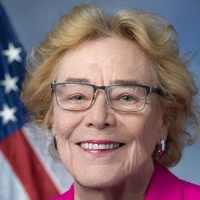
Zoe Lofgren
Representative
CA
Zoe Lofgren
Representative
CA
The Carnivals are Real Entertainment Act establishes a specific P visa pathway for temporary workers employed by traveling carnivals, circuses, and associated concession providers. This new classification ensures essential mobile entertainment staff can enter the U.S. while adhering to existing H-2B temporary worker program regulations. The law mandates that the Secretaries of Homeland Security and Labor develop and finalize the necessary rules within one year of enactment.
This bill establishes the Radar Next Program to upgrade the nation's weather radar system by setting new standards, developing a replacement plan for NEXRAD, and utilizing external partnerships to eliminate radar coverage gaps by September 30, 2040.
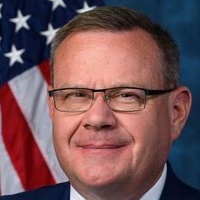
Tim Moore
Representative
NC
Tim Moore
Representative
NC
The Radar Gap Elimination Act establishes the Radar Next Program to modernize the nation's weather radar system. This initiative directs the National Weather Service to develop a comprehensive plan for replacing the existing NEXRAD system to improve performance and coverage across the U.S. and its territories. The program also allows for immediate partnerships to fill current radar coverage gaps while planning for the full system overhaul, which must be executed by September 30, 2040.
The RIFLE Act eliminates the federal tax on firearm transfers and makes corresponding technical changes to the tax code without affecting CPSC oversight of regulated firearms.
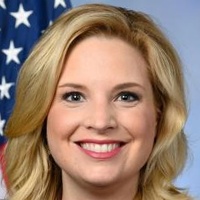
Ashley Hinson
Representative
IA
Ashley Hinson
Representative
IA
The Repealing Illegal Freedom and Liberty Excises Act (RIFLE Act) eliminates the existing federal tax on firearm transfers. This legislation strikes the relevant section from the Internal Revenue Code and makes necessary technical updates to related statutes. Importantly, this Act does not grant the Consumer Product Safety Commission any new authority over regulated firearms.
This bill drastically tightens and expands U.S. sanctions against Iran across its leadership, military, and economy while severely restricting the President's authority to lift these restrictions.
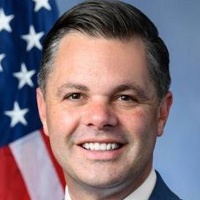
Zachary (Zach) Nunn
Representative
IA
Zachary (Zach) Nunn
Representative
IA
The Maximum Pressure Act dramatically tightens and expands U.S. sanctions against Iran across its military, missile, and economic sectors, codifying existing restrictions and severely limiting the President's authority to grant sanctions relief. It mandates immediate sanctions on top Iranian officials and increases penalties for international parties aiding Iran's weapons programs. Furthermore, the bill enhances oversight by requiring numerous detailed reports to Congress regarding Iran's terrorism financing, nuclear timeline, and economic influence, while also redirecting certain frozen Iranian funds to victims of state-sponsored terrorism.
This bill makes Federal Pell Grants tax-free regardless of use and expands eligible expenses for the American Opportunity and Lifetime Learning Tax Credits starting in 2025.

Lloyd Doggett
Representative
TX
Lloyd Doggett
Representative
TX
The Tax-Free Pell Grant Act makes Federal Pell Grants entirely tax-free, regardless of how the funds are used. Additionally, the bill expands what expenses qualify for the American Opportunity and Lifetime Learning Tax Credits, allowing students to include costs like child care and computer equipment. These changes are set to take effect for tax years beginning after December 31, 2024.
This act extends the "mailbox rule" to ensure documents and payments electronically submitted to the IRS are considered received on the date they are sent.
Darin LaHood
Representative
IL
Darin LaHood
Representative
IL
The Electronic Filing and Payment Fairness Act extends the existing "mailbox rule" to electronic submissions made to the Internal Revenue Service. This means that documents and payments submitted digitally will be considered officially received on the date they are sent, not the date the IRS processes them. This change ensures fairness for taxpayers utilizing electronic filing methods.