Legislative Activity
Track Warren's sponsored bills, co-sponsored legislation, and voting record
This bill prohibits federal agencies from providing funding or support for the creation or maintenance of state-level firearm ownership databases, with exceptions for records of lost or stolen weapons.

Paul Gosar
Representative
AZ
Paul Gosar
Representative
AZ
The Gun Owner Registration Information Protection Act prohibits federal agencies from providing funding or support for the creation and maintenance of state-level firearm ownership databases. This legislation ensures that federal resources cannot be used to track lawful gun owners, with a specific exception for databases tracking lost or stolen firearms.
This bill revokes the tax-exempt status of organizations that provide or fund abortions, with exceptions for life-saving procedures or cases of rape or incest.
Harriet Hageman
Representative
WY
Harriet Hageman
Representative
WY
This bill proposes to amend the Internal Revenue Code to revoke the tax-exempt status of any organization that provides or funds abortions. This revocation would apply unless the abortion is necessary to save the life of the mother or results from rape or incest. Organizations that lose this status would also no longer be eligible for tax-deductible charitable contributions.
This Act mandates that federal agencies use specific sex-based terms like "female" or "mother" instead of "birthing person" in official communications.
Sheri Biggs
Representative
SC
Sheri Biggs
Representative
SC
The Protecting Motherhood Act mandates that federal agencies use specific, sex-based terminology such as "mother," "woman," or "female" instead of the term "birthing person" in all official documents. This legislation defines the required terms to ensure consistency in federal communications regarding pregnancy and parenthood.
The AI OVERWATCH Act establishes a strict licensing requirement for exporting advanced integrated circuits to designated countries of concern while creating exemptions for trusted U.S. entities and mandating a comprehensive national security review for all approved transfers.
Brian Mast
Representative
FL
Brian Mast
Representative
FL
The AI OVERWATCH Act establishes strict new licensing requirements for exporting advanced integrated circuits to designated countries of concern, including China and Russia. This legislation mandates detailed national security certifications to Congress before any license can be approved for these high-performance technologies. Furthermore, the bill creates an exemption process for trusted U.S. companies while terminating existing licenses for these sensitive exports.
This bill prohibits federal Medicaid funding for specified gender transition procedures and drugs administered to individuals under 18 years of age, with limited medical exceptions.

Dan Crenshaw
Representative
TX
Dan Crenshaw
Representative
TX
The Do No Harm in Medicaid Act seeks to prohibit federal Medicaid matching funds for specified gender transition procedures and related medications administered to individuals under 18 years of age. This prohibition includes funding for surgeries and the administration of puberty blockers or supraphysiologic hormone doses. Exceptions are made for treatments related to verifiable genetic disorders of sex development or to correct for certain medical emergencies or prior prohibited procedures, provided parental consent is obtained.
The Whistleblower Protection Act of 2025 extends federal anti-retaliation protections to all employees working under Department of Housing and Urban Development contracts, grants, and subgrants.
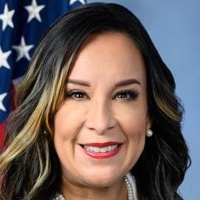
Mónica De La Cruz
Representative
TX
Mónica De La Cruz
Representative
TX
The Whistleblower Protection Act of 2025 extends critical anti-retaliation safeguards to employees working under Department of Housing and Urban Development (HUD) contracts and grants. This legislation ensures that individuals who report waste, fraud, or abuse involving HUD funds are protected from reprisal, regardless of when their contract was executed.
This act removes Section 4024(c) from the CARES Act to clarify the enforcement of state housing laws.
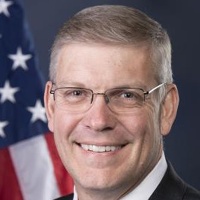
Barry Loudermilk
Representative
GA
Barry Loudermilk
Representative
GA
The Respect State Housing Laws Act aims to clarify federal housing regulations by amending the CARES Act. Specifically, this legislation removes Section 4024(c) from the CARES Act.
This bill significantly increases the maximum offering amounts for both Tier 1 and Tier 2 offerings under Regulation A and mandates periodic inflation adjustments for these limits.
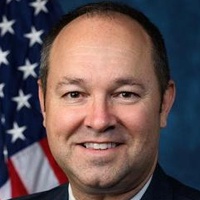
Marlin Stutzman
Representative
IN
Marlin Stutzman
Representative
IN
The Regulation A+ Improvement Act of 2025 significantly increases the maximum offering amounts available under Regulation A for both Tier 1 and Tier 2 offerings. This legislation raises the Tier 1 limit from \$5 million to \$50 million and the Tier 2 limit from \$50 million to \$150 million. Furthermore, the bill mandates that the SEC adjust these dollar thresholds for inflation every five years.
This bill mandates detailed annual reporting to Congress by the Federal Reserve, OCC, and FDIC regarding their interactions with global financial regulatory forums.
Barry Loudermilk
Representative
GA
Barry Loudermilk
Representative
GA
The American Financial Institution Regulatory Sovereignty and Transparency Act of 2025 (American FIRST Act) mandates that key federal banking agencies significantly increase transparency regarding their international regulatory activities. This bill requires the Federal Reserve, the Comptroller of the Currency, and the FDIC to submit detailed annual reports to Congress about their engagement with global financial forums. These reports must cover the purpose, funding, positions taken, and implementation plans related to standards set by these international bodies.
This Act mandates federal agencies to study the impact of bank and credit union partnerships with fintech companies and recommend necessary legal or regulatory changes to enhance these collaborations.
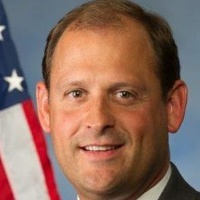
Garland Barr
Representative
KY
Garland Barr
Representative
KY
The Bank-Fintech Partnership Enhancement Act mandates federal regulators to study the impact of partnerships between banks and fintech companies on competition, innovation, and consumer protection. It also requires a separate study on similar partnerships involving credit unions. The goal of these studies is to recommend necessary changes to laws and regulations to better promote effective collaboration between traditional financial institutions and technology firms.
This Act mandates regular Inspector General reviews of how federal banking agencies process insured depository institution merger applications to improve timeliness and efficiency.
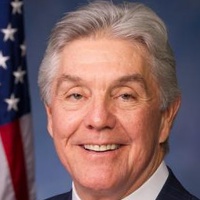
Roger Williams
Representative
TX
Roger Williams
Representative
TX
The Merger Process Review Act mandates that the Inspector General of each federal banking agency regularly review their procedures for handling insured depository institution merger applications. These reviews will evaluate processing times, identify sources of delay, and assess the impact of mergers on competition and financial stability. The findings and agency responses will be reported to Congress and made public to promote efficiency in the merger review process.
The Auto Data Privacy and Autonomy Act establishes strict consent requirements, owner rights, and FTC enforcement over the collection, use, and sharing of data generated by covered vehicles.
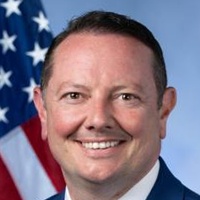
Eric Burlison
Representative
MO
Eric Burlison
Representative
MO
The Auto Data Privacy and Autonomy Act establishes strict rules requiring affirmative consent before collecting, using, or sharing data generated by covered vehicles. It grants vehicle owners comprehensive rights to access, correct, and delete their data, and prohibits conditioning vehicle sales or operation on data sharing. The Federal Trade Commission is empowered to enforce these provisions as an unfair or deceptive practice.
This bill authorizes Congress to award Congressional Gold Medals to the 1980 U.S. Men's Olympic Ice Hockey team for their historic "Miracle on Ice" victory.
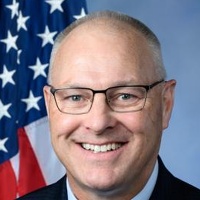
Pete Stauber
Representative
MN
Pete Stauber
Representative
MN
This bill, the Miracle on Ice Congressional Gold Medal Act, officially authorizes Congress to award Congressional Gold Medals to the 1980 U.S. Men's Olympic Ice Hockey Team for their historic "Miracle on Ice" victory. The medals will be struck by the Treasury and permanently displayed at specific national sports museums. The Act also permits the sale of duplicate bronze medals to cover production costs.
This resolution denounces six Members of Congress for allegedly using dangerous rhetoric that attempts to sow disallegiance and encourage insubordination within the U.S. military and intelligence community against the Commander in Chief.
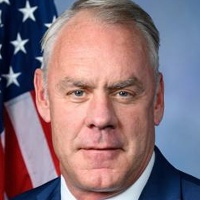
Ryan Zinke
Representative
MT
Ryan Zinke
Representative
MT
This resolution denounces the rhetoric of six specific Members of Congress for allegedly sowing disallegiance within the U.S. military and intelligence community. It condemns their actions for encouraging service members to potentially violate the Uniform Code of Military Justice by suggesting they defy orders without evidence of illegality. The bill asserts that this rhetoric undermines the President's role as Commander in Chief and compromises national security.
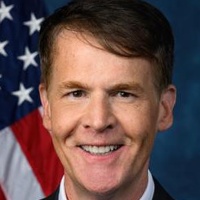
This Act establishes a multi-agency Task Force to develop and implement a comprehensive strategy to dismantle transnational criminal syndicates operating forced-labor scam centers, particularly those targeting Americans with cryptocurrency fraud.
Jefferson Shreve
Representative
IN
Jefferson Shreve
Representative
IN
The Dismantle Foreign Scam Syndicates Act establishes a high-level Task Force, chaired by the Secretary of State, to develop and execute a comprehensive U.S. strategy against transnational criminal organizations running massive online scams, often utilizing victims of human trafficking in Southeast Asia. This strategy must focus on disrupting these operations, sanctioning responsible parties, and providing support for rescued victims. The bill authorizes $30 million over two years to fund these efforts and requires annual reporting to Congress on progress and impact.
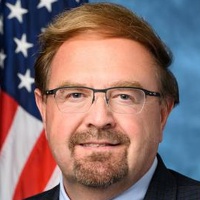
This act mandates the inclusion of a citizenship question on future decennial censuses and requires that only U.S. citizens be counted when apportioning congressional representation and electoral votes.
Charles (Chuck) Edwards
Representative
NC
Charles (Chuck) Edwards
Representative
NC
The Equal Representation Act of 2025 mandates the inclusion of a citizenship question on the decennial census starting in 2030. This legislation requires that the population counts used for apportioning seats in the House of Representatives and determining electoral votes exclude non-citizens. The bill ensures that representation is based solely on the count of U.S. citizens within each state.
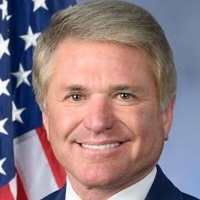
The Mikaela Naylon Give Kids a Chance Act primarily focuses on enhancing pediatric drug research, ensuring completion of pediatric study requirements, extending incentives for rare pediatric disease treatments, and making targeted updates to FDA and organ transplant network operations.
Michael McCaul
Representative
TX
Michael McCaul
Representative
TX
The Mikaela Naylon Give Kids a Chance Act focuses primarily on improving pediatric drug development and ensuring patient access to necessary treatments. This legislation mandates new research requirements for molecularly targeted pediatric cancer drugs, strengthens FDA enforcement of pediatric study completion, and extends incentives for developing drugs for rare pediatric diseases. Additionally, the bill updates organ transplant network functions and establishes an Abraham Accords Office within the FDA to enhance international regulatory cooperation.
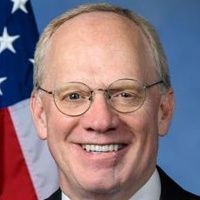
This bill updates the federal definition of a manufactured home to include those built without a permanent chassis, establishes new construction standards, and requires states to grant these homes legal parity with traditional manufactured homes.
John Rose
Representative
TN
John Rose
Representative
TN
The Housing Supply Expansion Act of 2025 updates the federal definition of a manufactured home to include those built without a permanent chassis. It mandates new HUD safety standards and requires states to certify that their laws treat these homes equally to traditionally built manufactured homes. Failure to certify will result in a state prohibition on the sale or installation of these newly defined homes.
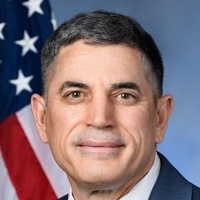
The CLEAN DC Act of 2025 largely repeals the Comprehensive Policing and Justice Reform Amendment Act of 2022, restoring prior law except for two specific subtitles.
Andrew Clyde
Representative
GA
Andrew Clyde
Representative
GA
The CLEAN DC Act of 2025 aims to repeal most provisions of the Comprehensive Policing and Justice Reform Amendment Act of 2022, effectively reverting policing and justice laws to their pre-2022 status. This legislation seeks to undo the majority of changes made by the previous act. However, it specifically preserves the effects of two distinct subtitles from the 2022 Act.
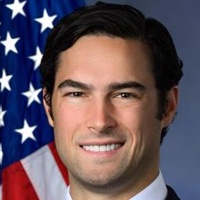
This bill expands the expedited removal and mandatory detention of noncitizens convicted of specific crimes or affiliated with criminal gangs and terrorist organizations, while restricting their eligibility for asylum and other forms of immigration relief.
Brandon Gill
Representative
TX
Brandon Gill
Representative
TX
The Expedited Removal of Criminal Aliens Act expands the authority of the Department of Homeland Security to streamline the removal of noncitizens convicted of specific crimes or associated with criminal gangs and terrorist organizations. The bill mandates the detention of these individuals, restricts their eligibility for asylum and other forms of immigration relief, and creates new exceptions to existing protections against removal to countries where they may face persecution.