Legislative Activity
Track Warren's sponsored bills, co-sponsored legislation, and voting record
This bill expands the expedited removal and mandatory detention of noncitizens convicted of specific crimes or affiliated with criminal gangs and terrorist organizations, while restricting their eligibility for asylum and other forms of immigration relief.
Brandon Gill
Representative
TX
Brandon Gill
Representative
TX
The Expedited Removal of Criminal Aliens Act expands the authority of the Department of Homeland Security to streamline the removal of noncitizens convicted of specific crimes or associated with criminal gangs and terrorist organizations. The bill mandates the detention of these individuals, restricts their eligibility for asylum and other forms of immigration relief, and creates new exceptions to existing protections against removal to countries where they may face persecution.
This bill mandates the SEC to establish data protection policies for sensitive information received from investment advisers.
David Scott
Representative
GA
David Scott
Representative
GA
This bill, the "SEC Data Protection Act," mandates that the Securities and Exchange Commission (SEC) establish comprehensive data protection policies for sensitive, nonpublic information received from investment advisers. The SEC must adopt these rules within one year, ensuring the safeguarding and restricted access of proprietary data. This legislation aims to protect sensitive information collected by the Commission during its oversight of investment advisers.
This Act increases investment limits for financial institutions to promote community welfare.
Michael Lawler
Representative
NY
Michael Lawler
Representative
NY
The Community Investment and Prosperity Act aims to boost community welfare by increasing existing investment limits for financial institutions. Specifically, this legislation raises the statutory investment cap from 15% to 20% within relevant sections of the Revised Statutes and the Federal Reserve Act. This adjustment is intended to encourage greater investment activity.
This bill impeaches Chief Judge James E. Boasberg for allegedly authorizing improper nondisclosure orders that infringed upon the legislative duties of several Members of Congress.
Brandon Gill
Representative
TX
Brandon Gill
Representative
TX
This resolution initiates impeachment proceedings against Chief Judge James E. Boasberg of the U.S. District Court for the District of Columbia for high crimes and misdemeanors. The core allegation is that Judge Boasberg improperly authorized nondisclosure orders related to an FBI investigation that covered Members of Congress acting under their legislative duties. These actions are cited as compromising the separation of powers and violating existing federal statute regarding notification of legal process. The resolution calls for the judge's removal from office based on these alleged improprieties.
This Act restores the "first-to-invent" patent system, abolishes administrative patent reviews, strengthens patent property rights, and ensures full funding for the USPTO.
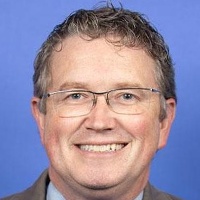
Thomas Massie
Representative
KY
Thomas Massie
Representative
KY
The Restoring America’s Leadership in Innovation Act of 2025 aims to significantly strengthen the U.S. patent system by reverting to a "first-to-invent" standard and eliminating administrative patent review boards. This legislation seeks to re-establish patents as fundamental private property rights, clarifying patentability for software and scientific discoveries. Furthermore, it ensures the USPTO is fully funded by its collected fees and prevents the automatic public release of pending patent applications.
This bill strengthens and enforces mandatory country of origin labeling requirements specifically for beef, protecting the authority to enforce these standards against international trade challenges.
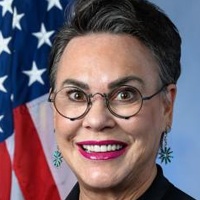
Harriet Hageman
Representative
WY
Harriet Hageman
Representative
WY
The Country of Origin Labeling Enforcement Act of 2025 updates existing agricultural law to specifically clarify and strengthen country of origin labeling requirements for beef. This bill ensures that beef labeling rules mirror those currently applied to lamb and venison, including for ground products. Furthermore, it explicitly protects the Secretary of Agriculture's authority to enforce these beef labeling standards against any conflicting international trade rulings.
The Shutdown Fairness Act guarantees pay for essential federal employees and contractors required to work during a lapse in appropriations, effective retroactively to September 30, 2025.
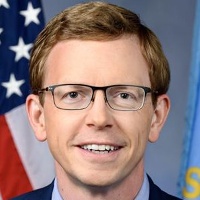
Dusty Johnson
Representative
SD
Dusty Johnson
Representative
SD
The Shutdown Fairness Act ensures that federal employees and contractors deemed essential are automatically paid for the work they perform during a lapse in appropriations, starting in fiscal year 2026. This automatic funding mechanism from the Treasury covers standard pay and benefits for excepted employees until Congress passes a full-year budget. Once regular funding is enacted, these payments are charged against the agency's final appropriation.
This act codifies Executive Order 14330 to permanently allow 401(k) plans access to alternative investment assets.
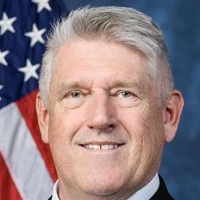
Troy Downing
Representative
MT
Troy Downing
Representative
MT
The Retirement Investment Choice Act aims to permanently establish the rules set forth in Executive Order 14330 into federal law. This action codifies the executive order, which focuses on democratizing access to alternative assets within 401(k) retirement plans. By enacting this into statute, the bill ensures these investment options remain available to plan participants regardless of future executive actions.
This Act prohibits state laws from imposing uniform requirements on federal law enforcement officers.
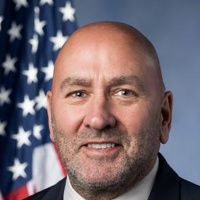
Clay Higgins
Representative
LA
Clay Higgins
Representative
LA
The Uniform Standards Protection Act of 2025 prohibits states from enforcing any law that dictates the uniform requirements for federal law enforcement officers operating within their jurisdiction. This legislation ensures that federal agents are exempt from state-level dress codes, regardless of existing state regulations. Furthermore, the Act mandates the dismissal of any pending legal actions against federal officers based on prior violations of these now-preempted state uniform rules.
This Act automatically provides 14-day continuing appropriations for federal programs at the previous funding level until Congress passes a new budget, effective September 30, 2025.
Dusty Johnson
Representative
SD
Dusty Johnson
Representative
SD
The Eliminate Shutdowns Act establishes an automatic, 14-day continuing appropriation mechanism to keep federal programs operational if Congress fails to pass a new budget by the start of the fiscal year. This funding continues to renew every 14 days until a full appropriation is enacted, ensuring essential services remain active. The Act also includes specific budgetary rules for counting this funding and sets an effective date of September 30, 2025.
This resolution honors the life and legacy of Charles "Charlie" James Kirk, condemns his assassination as political violence, and calls for a renewed commitment to civil discourse and American founding principles.

Mike Johnson
Representative
LA
Mike Johnson
Representative
LA
This resolution honors the life and legacy of Charles "Charlie" James Kirk, founder of Turning Point USA. It strongly condemns his assassination as an act of political violence. The bill calls for a renewed national commitment to civil discourse and the founding principles of the United States.
This Act prohibits U.S. courts and arbitrators from enforcing any foreign law, including Sharia law, if doing so would violate fundamental rights guaranteed by the U.S. or State Constitutions.
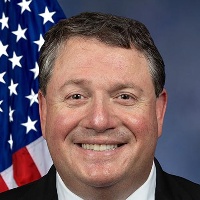
Randall Fine
Representative
FL
Randall Fine
Representative
FL
The No Shari’a Act ensures that U.S. courts rely exclusively on Federal and State laws when making decisions. This legislation prohibits courts and arbitrators from enforcing any foreign law, including Sharia law, if doing so would violate fundamental constitutional rights. The Act is designed to prevent foreign legal codes from undermining the established constitutional protections guaranteed to all Americans.
This bill prohibits the use of Federal funds to pay reparations ordered by international bodies or courts for alleged violations of international law unless explicitly authorized by a subsequent Act of Congress.
Harriet Hageman
Representative
WY
Harriet Hageman
Representative
WY
This bill prohibits the use of any Federal funds to pay reparations, restitution, or compensation ordered by international bodies or courts for alleged violations of international law. Payments stemming from such international judgments are barred unless explicitly authorized by a subsequent, specific Act of Congress. In essence, it prevents the automatic funding of international legal reparations using federal money.
This bill centralizes the authority to establish and approve all federal manufactured home construction and safety standards, including energy efficiency, with the Secretary of Housing and Urban Development.
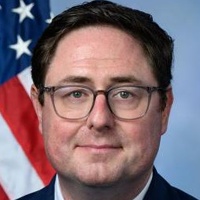
Mike Flood
Representative
NE
Mike Flood
Representative
NE
This bill centralizes the authority for establishing federal manufactured home construction and safety standards under the Secretary of Housing and Urban Development (HUD). It requires any other federal agency to obtain the Secretary's explicit approval before implementing new or updated standards. The Secretary can reject proposed standards based on cost concerns or conflicts with existing safety regulations.
This act updates the definition of "unauthorized alien" in employment verification law by removing the reference to the Attorney General.
Brandon Gill
Representative
TX
Brandon Gill
Representative
TX
The Domestic Jobs Protection Act amends immigration law by updating the definition of "unauthorized alien" within employment verification rules. This change specifically removes a reference to the Attorney General in the existing statutory definition. The goal is to streamline and clarify who is covered under current employment verification statutes.
This Act limits the sharing of consumer reports requested in connection with a residential mortgage loan to prevent unauthorized access to homebuyers' sensitive financial information.
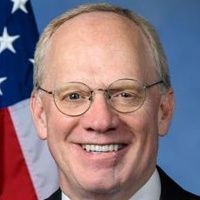
John Rose
Representative
TN
John Rose
Representative
TN
The Homebuyers Privacy Protection Act limits how consumer reporting agencies can share a consumer's report when it is requested in connection with a residential mortgage loan. Reports can only be shared with entities directly involved in the consumer's current mortgage or those providing a firm offer of credit or insurance. The Act also mandates a study by the GAO regarding the use and impact of "trigger leads" derived from credit checks.
The Safe Students Act repeals the Gun-Free School Zones Act of 1990, eliminating the federal ban on possessing firearms within 1,000 feet of a school.
Thomas Massie
Representative
KY
Thomas Massie
Representative
KY
The Safe Students Act completely repeals the federal Gun-Free School Zones Act of 1990, eliminating the previous ban on possessing firearms within 1,000 feet of a school. This action removes the specific federal prohibition and cleans up related definitions and penalty structures within the U.S. Code.
This Act directs the Departments of HUD and Agriculture to create a joint agreement to streamline environmental reviews and processes for housing projects funded by both agencies.
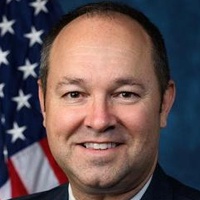
Marlin Stutzman
Representative
IN
Marlin Stutzman
Representative
IN
The Streamlining Rural Housing Act of 2025 mandates that the Departments of HUD and Agriculture create a joint agreement to speed up environmental reviews for federally funded rural housing projects. This partnership aims to designate a lead agency and streamline the acceptance of environmental documentation between the two departments. The Act also establishes an advisory group composed of diverse stakeholders to guide implementation and requires a final report to Congress suggesting further efficiency improvements without compromising resident safety or environmental standards.
This resolution formally recognizes the massive national debt and annual deficits as a direct threat to U.S. national security and commits Congress to regular order in addressing the fiscal crisis.
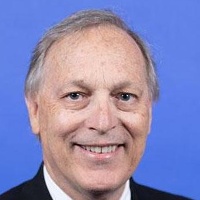
Andy Biggs
Representative
AZ
Andy Biggs
Representative
AZ
This resolution formally declares the escalating national debt a significant threat to U.S. national security. It outlines the current alarming financial picture, including massive deficits and unsustainable spending levels. The bill commits Congress to returning to regular order for budgeting and addressing the fiscal crisis.
This bill requires the District of Columbia to allow Members of Congress with valid concealed carry permits from their home states to carry concealed firearms within the District.
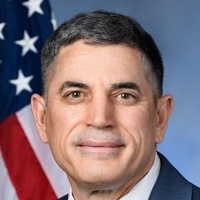
Andrew Clyde
Representative
GA
Andrew Clyde
Representative
GA
This bill would require the District of Columbia to recognize valid concealed carry permits or the legal right to carry a concealed firearm held by Members of Congress from their home states. Specifically, it allows Senators, Representatives, Delegates, and Resident Commissioners to carry a concealed firearm in D.C. provided they meet federal eligibility requirements and carry proper identification.