
Legislative Activity
Track Lloyd's sponsored bills, co-sponsored legislation, and voting record
This resolution expresses deep concern over the surge in book banning and threats to free expression, urging the immediate restoration of removed materials in federal schools and the repeal of restrictive directives.
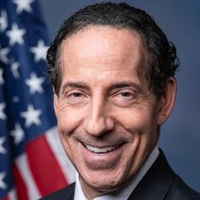
Jamie Raskin
Representative
MD
Jamie Raskin
Representative
MD
This resolution expresses deep concern over the growing trend of book banning and threats to freedom of expression in U.S. schools and libraries. It asserts that such censorship undermines democratic values and harms students by restricting access to diverse ideas and histories. The bill urges local entities to follow best practices for book challenges and calls for the immediate reinstatement of books removed from Department of Defense schools. Ultimately, it reaffirms the nation's commitment to First Amendment rights and the freedom to read.
This Act authorizes the presentation of a Congressional Gold Medal to recognize the American hostages and victims of the October 7, 2023, attacks by Hamas.
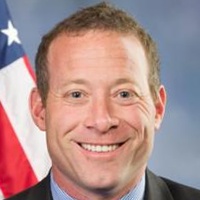
Josh Gottheimer
Representative
NJ
Josh Gottheimer
Representative
NJ
The October 7 Gold Medal Act authorizes Congress to award a Congressional Gold Medal to recognize the American hostages and victims of the brutal October 7, 2023, terrorist attacks in Israel. This medal honors their suffering, sacrifice, and the resilience shown by their families. The Secretary of the Treasury will strike the medal, and bronze duplicates may be sold to cover production costs. The official gold medal will ultimately be displayed at the Weitzman National Museum of American Jewish History.
This resolution officially designates October 8, 2025, as Latina Equal Pay Day to recognize and address the significant wage disparity faced by Latina women compared to White, non-Hispanic men.
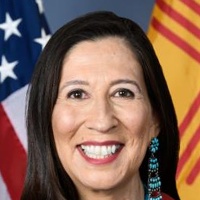
Teresa Leger Fernandez
Representative
NM
Teresa Leger Fernandez
Representative
NM
This resolution officially designates October 8, 2025, as Latina Equal Pay Day to highlight the significant wage disparity faced by Latina workers. It recognizes that Latinas currently earn only about 58 cents for every dollar earned by White, non-Hispanic men, resulting in substantial lifetime earnings loss. The bill calls attention to systemic factors like workplace policies and harassment that contribute to this ongoing economic injustice. Ultimately, Congress reaffirms its commitment to achieving pay equity for all women.
This resolution formally reaffirms the foundational principle of the separation of church and state while opposing extreme right-wing Christian nationalism, citing key historical addresses and anniversaries.
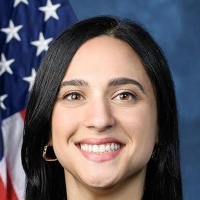
Yassamin Ansari
Representative
AZ
Yassamin Ansari
Representative
AZ
This resolution formally reaffirms the foundational American principle of the separation of church and state, citing historical context and key figures. It strongly opposes the rise of extreme right-wing Christian nationalism as a threat to religious diversity and democracy. The measure also commemorates the 65th anniversary of President Kennedy's address on this separation and the 150th anniversary of a speech by President Grant. Ultimately, this is a statement recognizing core values rather than enacting new law.
The Trust Through Transparency Act of 2025 mandates body camera usage for immigration enforcement agents, establishes specific video retention schedules, and requires annual public reporting on compliance and disciplinary actions.
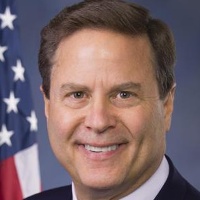
Donald Norcross
Representative
NJ
Donald Norcross
Representative
NJ
The Trust Through Transparency Act of 2025 mandates that federal immigration enforcement agents wear body cameras during public-facing duties. The bill establishes specific rules for retaining video footage, generally requiring deletion after six months unless exceptions like use of force or a filed complaint apply. Furthermore, it requires annual public reporting to Congress on compliance and establishes an advisory panel to recommend best practices for camera usage and data management.
The Weatherization Resilience and Adaptation Program Act establishes a grant program to help low-income homeowners adapt their properties against climate-driven hazards using new resilience standards.
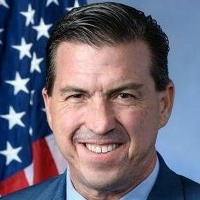
Kevin Mullin
Representative
CA
Kevin Mullin
Representative
CA
The Weatherization Resilience and Adaptation Program Act establishes a grant program to help low-income homeowners and eligible property owners adapt their homes against increasing climate-driven hazards like floods and extreme heat. This program requires the development of new resilience and adaptation standards in consultation with NIST. Funding is authorized to support these critical upgrades, ensuring vulnerable communities can better withstand the impacts of a changing climate.
This act expands physical therapists' participation in the National Health Service Corps loan repayment program and ensures Medicare coverage for their services at Rural Health Clinics and Federally Qualified Health Centers.

Diana DeGette
Representative
CO
Diana DeGette
Representative
CO
The Physical Therapist Workforce and Patient Access Act of 2025 aims to increase patient access to physical therapy, recognizing its importance in pain management and recovery. This bill integrates physical therapists into the National Health Service Corps, making them eligible for loan repayment in underserved areas. Furthermore, it mandates that Medicare Rural Health Clinics and Federally Qualified Health Centers cover physical therapy services starting in 2027.
This bill mandates that certain new medical devices must be designed to be fully usable by individuals who are blind or have low vision.

Janice Schakowsky
Representative
IL
Janice Schakowsky
Representative
IL
The Medical Device Nonvisual Accessibility Act of 2025 mandates that certain new medical devices must be designed to be fully usable by individuals who are blind or have low vision. This ensures that users can access information and operate life-saving equipment independently and privately, similar to sighted users. The FDA is tasked with establishing specific nonvisual accessibility standards for these covered devices within a set timeline. Devices failing to meet these standards after the effective date will be deemed adulterated.
This bill prohibits active duty military and National Guard members operating under Title 32 from enforcing or assisting in the enforcement of immigration laws.
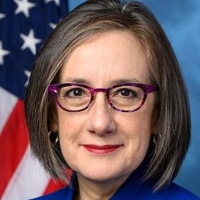
Andrea Salinas
Representative
OR
Andrea Salinas
Representative
OR
The National Guard Proper Use Act prohibits active duty military personnel and National Guard members serving under Title 32 orders from enforcing or assisting in the enforcement of immigration laws. This measure restricts the use of the Armed Forces for domestic immigration enforcement, aligning with existing statutes that govern such deployments.
This Act establishes federal grants to fund comprehensive, trauma-informed mental health services and support programs in schools for students facing significant challenges.
Andrea Salinas
Representative
OR
Andrea Salinas
Representative
OR
The Mental Health Services for Students Act of 2025 establishes a new federal program to provide comprehensive, trauma-informed mental health services and supports in schools through grants and contracts. These funds will support partnerships to implement awareness campaigns, staff training on trauma and suicide risk, and direct student and family treatment. The Secretary must ensure equitable distribution of funding, which is capped at \$2 million per award, with Congress authorized to appropriate \$300 million annually for the initial years.
This resolution condemns using federal regulatory power or litigation to suppress lawful political speech critical of a party or the President, warning against authoritarianism.
Yassamin Ansari
Representative
AZ
Yassamin Ansari
Representative
AZ
This resolution strongly condemns attempts to use federal regulatory power or litigation to suppress lawful speech critical of a political party or the President. It reaffirms the fundamental importance of the First Amendment and warns that such actions resemble tactics used by authoritarian regimes. The bill urges government agencies to protect free expression and ensure accountability, not political censorship.
This Act mandates the restoration of previously available learning materials in Department of Defense Education Activity (DoDEA) schools and establishes new review processes to limit the Secretary of Defense's ability to issue sweeping curriculum or event restrictions.
Jamie Raskin
Representative
MD
Jamie Raskin
Representative
MD
The Stop Censoring Military Families Act mandates the immediate restoration of previously available learning materials in Department of Defense Education Activity (DoDEA) schools and prevents new restrictions until after the 2026–2027 academic year. It establishes strict notification and review processes before the Secretary of Defense can issue major directives affecting multiple DoDEA schools. Furthermore, the Act nullifies several specific Executive Orders within the Department of Defense and requires a study on establishing an independent body to manage DoDEA curricula.
This joint resolution directs the President to remove U.S. Armed Forces from hostilities against certain designated groups and states unless Congress authorizes the use of force, while preserving the right to self-defense.
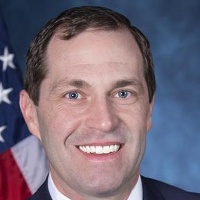
Jason Crow
Representative
CO
Jason Crow
Representative
CO
This joint resolution directs the President to remove U.S. Armed Forces from hostilities initiated after February 20, 2025, against designated terrorist groups or drug trafficking organizations without prior Congressional authorization. It asserts Congress's constitutional power to declare war and finds recent military strikes against vessels lacked proper justification. The bill allows for continued use of forces for self-defense or authorized counternarcotics support, but explicitly states drug trafficking alone does not constitute an armed attack.
This resolution expresses support for National Hydrocephalus Awareness Month and World Hydrocephalus Day to highlight the significant impact of hydrocephalus and encourage continued research and care.
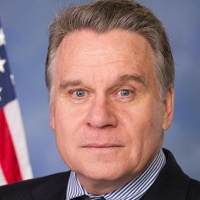
Christopher Smith
Representative
NJ
Christopher Smith
Representative
NJ
This resolution expresses the House of Representatives' support for "National Hydrocephalus Awareness Month" and "World Hydrocephalus Day." It recognizes the significant impact of hydrocephalus, a condition affecting millions, and the ongoing need for better treatment and research. The bill formally backs efforts to raise public awareness and advance scientific understanding of this serious brain condition.
This House resolution strongly condemns all forms of political violence and demands an end to dehumanizing rhetoric against political opponents.
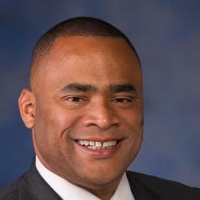
Marc Veasey
Representative
TX
Marc Veasey
Representative
TX
This House Resolution strongly condemns all forms of political violence and threats against elected officials and public figures, regardless of political affiliation. It affirms that disagreements must be resolved through peaceful and democratic means, not intimidation or force. The resolution urges law enforcement to prosecute those who commit or encourage such violence. Finally, it calls on all leaders to cease using dehumanizing rhetoric and promote civil discourse.
The Redistricting Reform Act of 2025 mandates the use of independent, nonpartisan commissions to draw fair congressional maps based on strict criteria, while establishing federal court oversight and administrative procedures to ensure compliance.
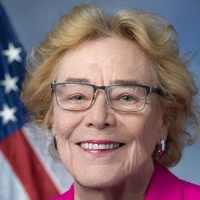
Zoe Lofgren
Representative
CA
Zoe Lofgren
Representative
CA
The Redistricting Reform Act of 2025 fundamentally overhauls congressional map-drawing by mandating the use of independent, non-partisan commissions in every state. This legislation establishes strict, prioritized criteria for map creation, explicitly banning partisan manipulation and requiring maps to prioritize community representation over political advantage. Furthermore, it sets firm deadlines for map enactment and establishes clear federal court procedures to intervene if states fail to adopt a lawful plan. Overall, the bill aims to ensure fairer congressional representation by removing map-drawing authority from state legislatures.
This bill reauthorizes and extends funding for the Special Diabetes Programs through fiscal year 2030 at \$160 million annually.
Diana DeGette
Representative
CO
Diana DeGette
Representative
CO
The Special Diabetes Program Reauthorization Act of 2025 extends critical funding for the Special Diabetes Programs supporting Type 1 diabetes research and prevention. This bill commits $160 million annually for the program from fiscal years 2026 through 2030. The legislation ensures continued support for these vital diabetes initiatives over the next five years.
This bill mandates that federally funded higher education institutions update their harassment policies to explicitly cover technology-facilitated harassment and establishes a competitive grant program to fund anti-harassment initiatives.
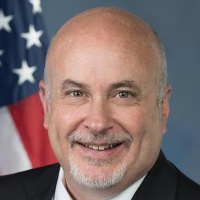
Mark Pocan
Representative
WI
Mark Pocan
Representative
WI
The Tyler Clementi Higher Education Anti-Harassment Act of 2025 mandates that colleges receiving federal funds update their policies to explicitly prohibit and detail procedures for addressing harassment based on protected characteristics, including technology-facilitated abuse. The bill also establishes a competitive grant program, funded up to $50 million annually, to support campus efforts in harassment prevention, training, and support services. This legislation adds new requirements without superseding existing civil rights protections.
This bill mandates dedicated, funded resources for specialized 988 Suicide Prevention Lifeline services for LGBTQ+ youth.
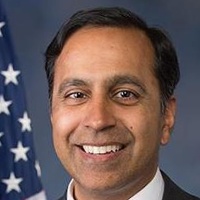
Raja Krishnamoorthi
Representative
IL
Raja Krishnamoorthi
Representative
IL
The **988 LGBTQ+ Youth Access Act of 2025** addresses the high rates of suicide risk among LGBTQ youth by strengthening specialized support through the national crisis hotline. This bill mandates that dedicated resources and services, such as a specific dialing option, must be maintained for LGBTQ individuals contacting 988. Furthermore, it requires that at least 9 percent of appropriated funds for the hotline be specifically reserved to ensure these specialized services for LGBTQ youth remain fully operational.
This bill amends the Social Security Act to provide Medicare coverage for FDA-approved multi-cancer early detection screening tests starting in 2028.
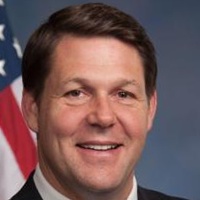
Jodey Arrington
Representative
TX
Jodey Arrington
Representative
TX
The Nancy Gardner Sewell Medicare Multi-Cancer Early Detection Screening Coverage Act amends the Social Security Act to provide Medicare Part B coverage for multi-cancer early detection screening tests starting January 1, 2028. This legislation establishes clear criteria for qualifying tests and outlines payment structures to ensure beneficiaries have access to these advanced diagnostic tools. Importantly, this coverage is designed to complement, rather than replace, existing Medicare-covered cancer screenings.