
Legislative Activity
Track Lloyd's sponsored bills, co-sponsored legislation, and voting record
This Act prohibits discrimination based on religion, sex, or marital status in federally funded child welfare services to improve outcomes for all children, especially LGBTQ youth.
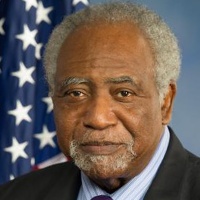
Danny Davis
Representative
IL
Danny Davis
Representative
IL
The John Lewis Every Child Deserves a Family Act prohibits discrimination based on religion, sex, or marital status in federally funded child welfare services. This aims to increase the number of stable, family-like placements for children, especially for LGBTQ youth who are overrepresented in foster care. The bill mandates federal guidance, training, and data collection to improve safety and well-being outcomes for all children involved in the system.
This bill mandates the Secretary of Health and Human Services to create a website allowing Medicare beneficiaries to search for providers participating in both Medicare Advantage (MA) plans and traditional Medicare.
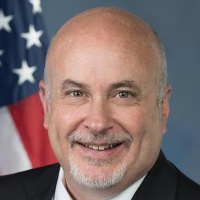
Mark Pocan
Representative
WI
Mark Pocan
Representative
WI
This bill mandates the Secretary of Health and Human Services to create and maintain a public website for Medicare beneficiaries. This resource will allow users to easily search for healthcare providers and suppliers participating in either Medicare Advantage (MA) plans or traditional Medicare. The website must clearly identify which networks each provider belongs to.
This act repeals specific sections of a prior reconciliation act to restore previous laws affecting American families and farmers.

Jahana Hayes
Representative
CT
Jahana Hayes
Representative
CT
The Restoring Food Security for American Families and Farmers Act of 2025 aims to strengthen domestic food security by repealing specific sections of a prior reconciliation act. This action effectively revives the original laws that were previously amended by the repealed provisions. The bill seeks to revert existing agricultural and food-related statutes to their pre-amendment status.
This bill prohibits the Department of Health and Human Services from using appropriated funds to automatically enroll individuals into Medicare Advantage plans.
Mark Pocan
Representative
WI
Mark Pocan
Representative
WI
This bill prohibits the Department of Health and Human Services from using appropriated funds to automatically enroll individuals into Medicare Advantage (MA) plans. It ensures that enrollment in an MA plan only occurs when an individual actively makes that choice, rather than it being the default option.
This bill establishes requirements for Medicare Advantage plans regarding the rate at which they overturn initial denials of coverage made through prior authorization, with contract termination for excessive reversals.
Mark Pocan
Representative
WI
Mark Pocan
Representative
WI
This bill amends the Social Security Act to establish new requirements for Medicare Advantage plans regarding how often they can overturn initial denials of coverage following prior authorization requests. Specifically, it mandates contract termination for plans whose rate of reversed prior authorization denials exceeds 25% in a given year. This measure aims to curb excessive initial denials by Medicare Advantage organizations.
This bill limits the number of Medicare Advantage plans a single organization can offer under contract to three, unless those plans are significantly different from each other.
Mark Pocan
Representative
WI
Mark Pocan
Representative
WI
This bill amends the Social Security Act to impose new limitations on the number of Medicare Advantage (MA) plans an organization can offer under contract. Specifically, it restricts MA organizations from offering more than three MA plans unless those plans have significant differences in premiums, benefits, or cost-sharing. This measure aims to streamline the offerings available through Medicare Advantage.
This bill requires the Secretary to prohibit enrollment in Medicare Advantage plans whose average monthly payment exceeds the average monthly cost of original Medicare coverage, with an exception for special needs plans.
Mark Pocan
Representative
WI
Mark Pocan
Representative
WI
This bill amends the Social Security Act to establish new requirements regarding the average monthly cost of Medicare Advantage (MA) plans compared to original Medicare. If an MA plan's average monthly payment exceeds the cost of original Medicare coverage for its enrollees, the Secretary must prohibit new enrollment in that plan for the following year. This restriction does not apply to specialized Medicare Advantage plans for special needs individuals.
This bill mandates the exclusion of individuals and entities who commit fraud from participation in any Federal health care program.
Mark Pocan
Representative
WI
Mark Pocan
Representative
WI
This bill amends the Social Security Act to mandate the exclusion of individuals and entities who commit fraud from participating in any Federal health care program. Specifically, it requires the Secretary to exclude those convicted of certain fraud-related offenses or determined to have engaged in prohibited fraudulent activities. This ensures that those who misuse federal health programs due to financial misconduct are barred from future participation.
This bill mandates that Medicare Advantage plan advertisements must disclose the plan's rates of prior authorization denials and subsequent approvals.
Mark Pocan
Representative
WI
Mark Pocan
Representative
WI
This bill mandates that all advertisements for Medicare Advantage (MA) plans must clearly disclose key statistics regarding their prior authorization denial rates. Specifically, ads must include the total number of denials, the number of denials later overturned upon reconsideration, and the average time taken for those reversals. This aims to provide consumers with crucial transparency about plan utilization management practices before enrollment.
This bill mandates that Medicare Advantage plans must automatically reconsider any decision that denies coverage without requiring an enrollee request.
Mark Pocan
Representative
WI
Mark Pocan
Representative
WI
This bill amends the Social Security Act to mandate that Medicare Advantage plans must automatically reconsider any determination that denies coverage. This process will occur without requiring the enrollee to submit a formal request for reconsideration. The automatic review begins immediately upon the plan's initial denial of coverage.
This bill establishes a permanent Special Envoy for the Human Rights of LGBTQI+ Peoples within the Department of State to advance U.S. policy countering global criminalization, violence, and discrimination against LGBTQI+ individuals.
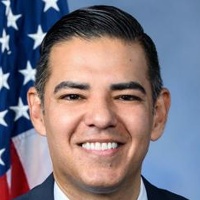
Robert Garcia
Representative
CA
Robert Garcia
Representative
CA
This bill, the International Human Rights Defense Act of 2025, establishes a permanent Special Envoy for the Human Rights of LGBTQI+ Peoples within the Department of State. It codifies U.S. policy to actively combat international criminalization, violence, and discrimination against LGBTQI+ individuals worldwide. The legislation also mandates enhanced reporting on these abuses in annual human rights reports and authorizes assistance to support related protection efforts abroad.
This bill affirms existing VA collective bargaining agreements and nullifies specific Executive Orders related to Federal labor-management relations within the Department of Veterans Affairs.
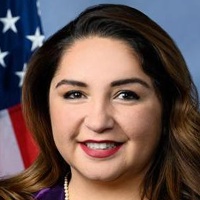
Delia Ramirez
Representative
IL
Delia Ramirez
Representative
IL
The VA Care and Benefits Accountability Act ensures that existing collective bargaining agreements within the Department of Veterans Affairs remain in effect until their specified end dates. Furthermore, this bill nullifies Executive Orders 14251 and 14343, preventing their enforcement or implementation within the VA. This action solidifies current labor agreements for VA employees.
This resolution honors the service and sacrifice of Texas veterans while recognizing the ongoing challenges they face in accessing care, employment, and support during their transition to civilian life.

Jasmine Crockett
Representative
TX
Jasmine Crockett
Representative
TX
This resolution honors the heroic military service and sacrifices of Texas veterans, who represent the largest veteran population in the nation. It acknowledges the significant challenges they face, such as accessing mental health care and securing employment after service. The document expresses the House's appreciation and commits to ensuring veterans receive timely care and benefits. Ultimately, it reaffirms the commitment to supporting veterans in their successful transition back to civilian life.
This act, the Save American Democracy Act (SAD Act), prohibits states from redrawing congressional districts between decennial censuses unless mandated by a court or specific state legislation.
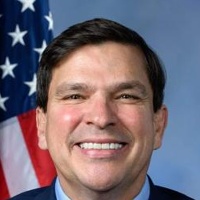
Vicente Gonzalez
Representative
TX
Vicente Gonzalez
Representative
TX
The Save American Democracy Act (SAD Act) asserts Congress's constitutional authority to regulate congressional redistricting. This bill prohibits states from redrawing congressional districts between decennial censuses unless mandated by a court order or specific state legislation. This restriction applies to redistricting efforts following the 2020 census and does not affect state or local elections.
This resolution commemorates the seventh anniversary of Jamal Khashoggi's murder while condemning ongoing Saudi human rights abuses and calling for accountability for those responsible.
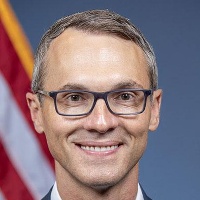
James Walkinshaw
Representative
VA
James Walkinshaw
Representative
VA
This resolution commemorates the seventh anniversary of Jamal Khashoggi's murder and addresses ongoing human rights abuses by the Government of Saudi Arabia, including transnational repression against dissidents. Congress calls on Saudi Arabia to hold all individuals accountable for Khashoggi's murder and to immediately release all wrongfully detained persons. The resolution emphasizes that these abuses strain the essential U.S.-Saudi relationship.
The RESTRAIN Act prohibits the United States from conducting any explosive testing of nuclear weapons starting in fiscal year 2026, while still permitting subcritical nuclear tests.
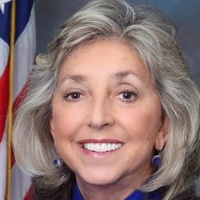
Dina Titus
Representative
NV
Dina Titus
Representative
NV
The RESTRAIN Act prohibits the United States from conducting any explosive testing of nuclear weapons or any other nuclear explosion, effective in fiscal year 2026 and beyond. This legislation specifically bans the use of authorized funds for such testing. However, the Act explicitly allows for the continuation of subcritical nuclear tests.
This bill establishes a pilot grant program to fund schools offering 100% plant-based meal options and creates a separate pilot program to help cover the costs of providing nondairy beverage substitutes for students with written requests for dietary accommodations.
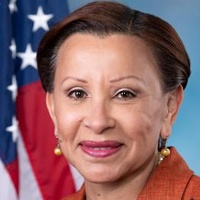
Nydia Velázquez
Representative
NY
Nydia Velázquez
Representative
NY
The Plant-Powered School Meals Pilot Act establishes a three-year grant program to help school food authorities offer 100% plant-based meal options, prioritizing culturally appropriate and educational components. Additionally, the bill clarifies and expands requirements for schools to substitute fluid milk with nutritionally equivalent nondairy beverages to accommodate medical, religious, or personal dietary needs. A separate pilot program is also created to help cover the costs associated with providing these nondairy substitutes based on written requests.
This bill extends and modifies various tax credits for energy production, efficiency improvements, and clean vehicle adoption to lower energy costs and support American energy leadership.
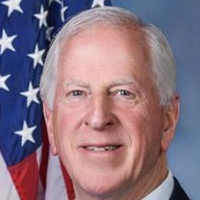
Mike Thompson
Representative
CA
Mike Thompson
Representative
CA
The American Energy Independence and Affordability Act is a comprehensive bill designed to lower energy costs by extending and adjusting key tax incentives across energy production, efficiency, and clean vehicle adoption. It stabilizes support for renewable energy manufacturing, extends deadlines for energy-efficient building credits, and ensures consumer incentives for electric vehicles remain available through 2032. Overall, the legislation aims to provide long-term certainty for energy investments and consumer adoption of cleaner technologies.
This bill implements the transfer and investment of frozen Russian sovereign assets into a dedicated Ukraine Support Fund, mandating regular aid disbursements and requiring diplomatic engagement with allies.
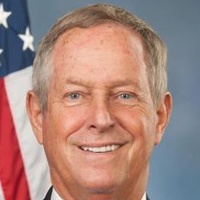
Joe Wilson
Representative
SC
Joe Wilson
Representative
SC
The REPO for Ukrainians Implementation Act of 2025 formally recognizes international calls to repurpose frozen Russian sovereign assets to aid Ukraine. This bill grants the President authority to transfer non-confiscated Russian assets into the Ukraine Support Fund, where they must be invested in U.S. government debt. Furthermore, the Secretary of State is mandated to obligate at least $250 million from the fund to Ukraine every quarter. The Act also requires the President to report on the location of these Russian assets globally and directs diplomatic efforts to encourage allies to contribute quarterly.
This bill mandates the designation of the Russian Federation as a state sponsor of terrorism if the Secretary of State cannot certify the safe return and reintegration of Ukrainian children abducted since the 2022 invasion.
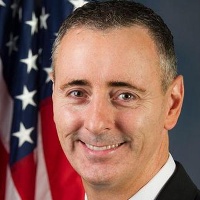
Brian Fitzpatrick
Representative
PA
Brian Fitzpatrick
Representative
PA
This bill mandates the Secretary of State to designate the Russian Federation as a state sponsor of terrorism if Russia fails to ensure the safe return and reintegration of Ukrainian children abducted since the 2022 invasion. The designation triggers existing sanctions unless the Secretary can certify that all forcibly deported children are safely reunited with their families. Removal of this designation requires Russia to cease terrorism support and meet strict criteria regarding the return of all displaced children.