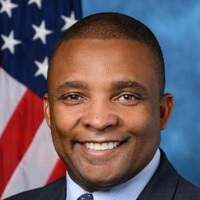
Legislative Activity
Track Donald's sponsored bills, co-sponsored legislation, and voting record
This bill grants states greater flexibility to contract out Medicaid eligibility determinations and fair hearings while prohibiting conflicts of interest with managed care organizations.
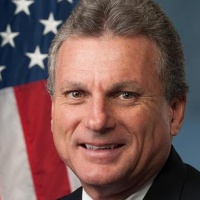
Earl Carter
Representative
GA
Earl Carter
Representative
GA
This bill, the Medicaid Staffing Flexibility and Protection Act of 2025, grants states increased flexibility to contract with external agencies or private contractors to handle Medicaid eligibility determinations, redeterminations, and fair hearings. While allowing this outsourcing, the legislation strictly prohibits contracts that create incentives to delay or deny benefits to eligible individuals. Furthermore, any contractor performing eligibility functions must have no financial relationship with Medicaid managed care organizations operating in the state.
This bill amends House rules to require a 60% supermajority vote of those present and voting to censure, disapprove of, or remove a Member, Delegate, or Resident Commissioner from committee.
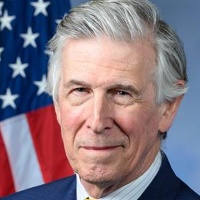
Donald Beyer
Representative
VA
Donald Beyer
Representative
VA
This bill proposes amending the House Rules to increase the threshold required for disciplinary action against a Member, Delegate, or Resident Commissioner. Specifically, it mandates that a supermajority of at least 60% of votes cast must support any resolution for censure, disapproval, or removal from committee membership. This change establishes a higher bar for imposing these specific forms of House discipline.
This act bans anticompetitive contract terms in health plan and provider agreements that restrict patient choice or prevent lower-cost care options.
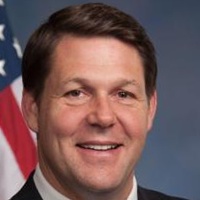
Jodey Arrington
Representative
TX
Jodey Arrington
Representative
TX
The Healthy Competition for Better Care Act aims to promote lower costs and higher quality healthcare by banning anticompetitive contract terms between health plans and providers. Specifically, it prohibits agreements that restrict plans from steering patients toward better value care or that mandate favorable terms for provider affiliates. This legislation ensures health plans retain the flexibility to design networks and quality initiatives while fostering greater competition in the healthcare market.
This Act establishes federal requirements for social media platforms to implement parental controls for minors' direct messaging, prohibits ephemeral messaging for minors, and mandates app store warnings, all while preserving end-to-end encryption.
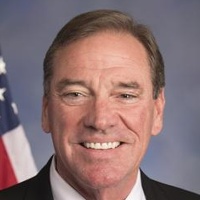
Neal Dunn
Representative
FL
Neal Dunn
Representative
FL
The Safe Messaging for Kids Act of 2025 aims to enhance child safety on social media platforms by regulating direct messaging and ephemeral communication features for minors under 17. The bill mandates that platforms provide robust, parent-controlled settings for direct messaging, including default disabling for users under 13. Furthermore, it prohibits ephemeral messaging for minors and requires app stores to issue warnings before minors download social media apps with messaging features. Enforcement will be handled by the Federal Trade Commission, with provisions made to protect existing encryption standards.
This bill, the Tax Cuts for Veterans Act of 2025, excludes all military retirement and disability benefits from federal income tax.
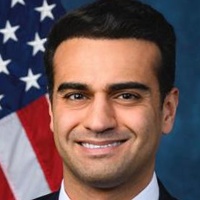
Abraham Hamadeh
Representative
AZ
Abraham Hamadeh
Representative
AZ
This bill, the Tax Cuts for Veterans Act of 2025, aims to provide significant financial relief to service members and veterans. It proposes to exclude all military retirement pay and disability benefits from federal income tax. The legislation specifically covers benefits received by members of the U.S. Armed Forces and makes related provisions for other uniformed services.
This bill establishes the Semiquincentennial Congressional Time Capsule to be sealed in 2026 and opened in 2276.
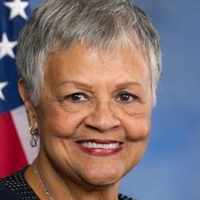
Bonnie Watson Coleman
Representative
NJ
Bonnie Watson Coleman
Representative
NJ
This bill establishes the Semiquincentennial Congressional Time Capsule to commemorate the 250th anniversary of the United States. The capsule, created by the Architect of the Capitol and filled with items chosen by the four congressional leadership offices, will be sealed in the Capitol Visitor Center. It is mandated to remain sealed until July 4, 2276, when it will be presented to the 244th Congress.
This bill refines Medicare payment systems to improve patient access to new kidney care treatments, adjusts payment updates based on forecast accuracy, and expands Medicare coverage for kidney disease screening and education.
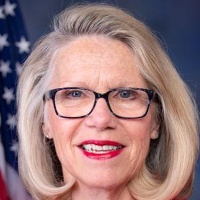
Carol Miller
Representative
WV
Carol Miller
Representative
WV
The Kidney Care Access Protection Act aims to improve patient access to innovative kidney care treatments by reforming Medicare payment systems for new drugs and devices. It also addresses payment stability by adjusting for forecast errors in dialysis service updates and enhances prevention efforts. Finally, the Act expands Medicare coverage for chronic kidney disease screening and education services starting in 2026.
This bill extends and significantly enhances the Work Opportunity Tax Credit through 2030, increases credit amounts, adjusts for inflation, removes the age limit for SNAP recipients, and adds military spouses as an eligible group.
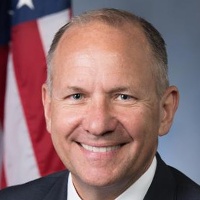
Lloyd Smucker
Representative
PA
Lloyd Smucker
Representative
PA
This bill extends and significantly enhances the Work Opportunity Tax Credit (WOTC) for employers hiring from targeted groups, increasing the credit amount and adjusting it for inflation through 2031. It also removes the age limit for SNAP recipients claiming the credit and adds qualified military spouses as an eligible group. Furthermore, the legislation mandates an inter-agency initiative to promote the hiring of targeted workers in key industries like manufacturing and healthcare.
The PEARL Act establishes a three-year pilot program for U.S. Customs and Border Protection to adopt and train shelter dogs as support dogs.
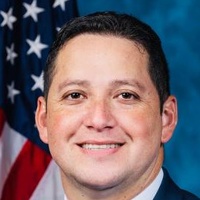
Ernest Gonzales
Representative
TX
Ernest Gonzales
Representative
TX
The PEARL Act establishes a three-year pilot program within U.S. Customs and Border Protection (CBP) to enhance its Support Canine Program. This initiative requires CBP to adopt dogs from local animal shelters and train them to serve as support dogs.
This act establishes the National Strategy for School Security Act of 2025, requiring the Secretary of Homeland Security to develop and annually update a national strategy to secure schools from terrorism threats.
Ernest Gonzales
Representative
TX
Ernest Gonzales
Representative
TX
The National Strategy for School Security Act of 2025 mandates the creation of a comprehensive national strategy to secure K-12 schools from terrorism threats. This strategy, developed by the Secretary of Homeland Security in collaboration with the Secretary of Education, must detail all federal security programs, identify vulnerabilities, and outline goals for improvement. The strategy must be submitted to Congress within one year and updated annually through 2033.
This act establishes a 25 basis point discount on mortgage insurance premiums for first-time homebuyers who complete a certified financial literacy housing counseling program before applying for a loan or signing a sales agreement.
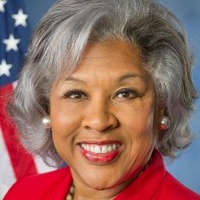
Joyce Beatty
Representative
OH
Joyce Beatty
Representative
OH
The Housing Financial Literacy Act of 2025 incentivizes first-time homebuyers to complete financial literacy housing counseling programs. By completing the required counseling before applying for a loan or signing a sales agreement, eligible homebuyers will receive a 25 basis point discount on their mortgage insurance premium payments. This act aims to promote financial preparedness among new homeowners.
The PRECISE Act expands conservation loan and assistance programs to specifically incentivize and fund the adoption of precision agriculture technology and practices for rural producers.
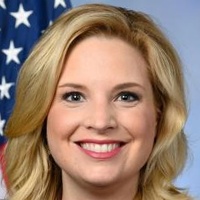
Ashley Hinson
Representative
IA
Ashley Hinson
Representative
IA
The PRECISE Act aims to promote conservation and efficiency in agriculture by expanding access to conservation loans and rural assistance for adopting precision agriculture practices and technology. It updates definitions and increases potential payments under existing conservation programs like EQIP and CSP to incentivize the use of precision methods. Furthermore, the bill directs emphasis toward using third-party providers for technical assistance related to soil health and precision agriculture planning.
This Act establishes an interagency task force to combat foreign robocalls, modifies FCC review frequency, introduces a bond requirement for the Robocall Mitigation Database, and grants immunity for private efforts to trace unlawful robocall origins.
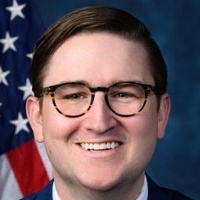
Addison McDowell
Representative
NC
Addison McDowell
Representative
NC
The Foreign Robocall Elimination Act establishes an interagency taskforce to study and recommend strategies for combating unlawful robocalls originating from outside the United States. It also grants the FCC authority to require providers to post a bond to ensure integrity in the Robocall Mitigation Database. Furthermore, the bill provides legal immunity for private consortiums tracing the origin of these illegal calls and allows for the publication of non-cooperative providers.
This act mandates Medicare coverage for FDA-approved early detection screening tests for Alzheimer's disease and related dementias beginning in 2028.
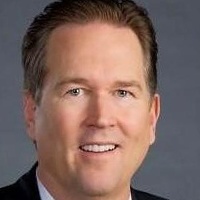
Vern Buchanan
Representative
FL
Vern Buchanan
Representative
FL
The Alzheimer’s Screening and Prevention Act of 2025 (ASAP Act) amends Medicare to cover early detection screening tests for Alzheimer's disease and related dementias starting in 2028. This coverage applies to FDA-cleared tests, including genomic sequencing and other equivalent diagnostic methods, designed to detect pre-symptomatic or early-stage conditions. The bill ensures these screenings are added to the list of covered medical services under Medicare.
This bill expands the definition of a fishery resource disaster to include economic harm caused by the activities of foreign persons.
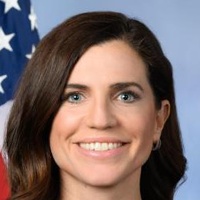
Nancy Mace
Representative
SC
Nancy Mace
Representative
SC
The Protect American Fisheries Act of 2025 amends existing law to recognize economic harm caused by foreign activities as a trigger for fishery disaster declarations. This allows the Secretary of Commerce to declare a disaster if foreign actions, such as predatory pricing or market distortion, negatively impact the viability of American fisheries. Governors and tribal leaders must now document these foreign activities when requesting federal assistance.
The SROS Act excludes certain retirement income received by qualified former military or law enforcement personnel employed as school resource officers from gross income.
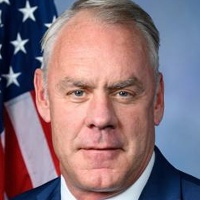
Ryan Zinke
Representative
MT
Ryan Zinke
Representative
MT
The Strengthening Resources for our Schools (SROS) Act aims to encourage qualified retirees to serve as school resource officers. This bill amends the Internal Revenue Code to exclude certain retirement income received by eligible former members of the Armed Forces or law enforcement officers from gross income while they are employed as school resource officers. The exclusion may become a lifetime exemption if the individual serves in the role for at least 10 years.
This bill revokes the security clearances of former defense personnel who lobby for specific Chinese military companies.
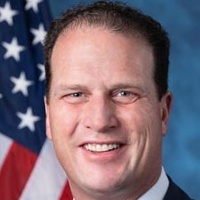
August Pfluger
Representative
TX
August Pfluger
Representative
TX
The Restricting Ex-Vetted Officials from Knowledge Exploitation (REVOKE) Act mandates the Secretary of Defense to suspend or revoke the security clearances of former military or DoD personnel who lobby for specific Chinese military companies. This prohibition applies to entities identified on both congressional defense reports and the Treasury Department's related list. The Secretary may grant a national security-based waiver for up to 180 days.
This resolution supports the goals of National Rural Health Day by recognizing the vital role of rural communities and committing to policies that improve rural healthcare access and affordability.
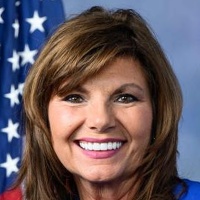
Diana Harshbarger
Representative
TN
Diana Harshbarger
Representative
TN
This resolution officially recognizes and supports the goals of National Rural Health Day to honor the vital role of rural communities and their healthcare providers. It acknowledges the unique challenges faced by rural residents, such as limited access to care and hospital closures. The bill expresses a commitment to advancing policies that improve the accessibility and affordability of healthcare in rural America.
This Act establishes the National Biopharmaceutical Center of Excellence to advance domestic biomanufacturing science, scale production, and strengthen the national supply chain and workforce.
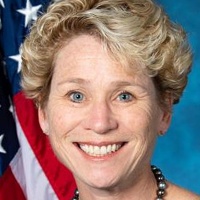
Chrissy Houlahan
Representative
PA
Chrissy Houlahan
Representative
PA
The Biomanufacturing Excellence Act of 2025 aims to bolster U.S. leadership in biotechnology by establishing a National Biopharmaceutical Center of Excellence. This Center will accelerate manufacturing innovation, strengthen domestic supply chains, and ensure adherence to quality standards. It will also facilitate crucial workforce training to support the growing biomanufacturing sector.
The BRAVE Act of 2025 seeks to significantly improve veteran mental health care by addressing workforce shortages, modernizing Vet Center infrastructure, tailoring support for women veterans, and enhancing coordination between the VA and DoD.
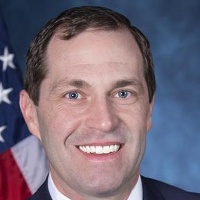
Jason Crow
Representative
CO
Jason Crow
Representative
CO
The BRAVE Act of 2025 aims to significantly improve mental health care for veterans by strengthening the workforce through pay and qualification adjustments, modernizing Vet Center infrastructure and technology, and enhancing specialized support for women veterans. The bill mandates comprehensive reports to address staffing shortages, improve service coordination between VA entities, and ensure outreach efforts are data-driven and tailored to specific veteran needs. Ultimately, this legislation seeks to increase the accessibility, quality, and relevance of mental health and readjustment services across the Department of Veterans Affairs.