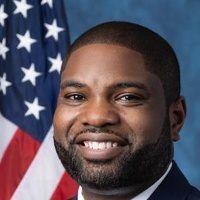
Legislative Activity
Track Byron's sponsored bills, co-sponsored legislation, and voting record
The American Energy Act streamlines the processing of drilling permits during litigation and limits judicial authority to halt oil and gas lease sales unless immediate, major environmental damage is proven without alternative remedies.

Lauren Boebert
Representative
CO
Lauren Boebert
Representative
CO
The American Energy Act streamlines the process for handling drilling permit applications, requiring the Secretary to continue processing them even when litigation is pending, unless the underlying lease is vacated. It also establishes a four-year validity period for new drilling permits. Furthermore, the Act places significant limitations on the ability of courts to halt oil and gas lease sales or stop the awarding of leases once bidding has commenced.
This resolution recognizes the vital contributions of linemen, often acting as first responders, and supports designating April 18, 2025, as "National Lineman Appreciation Day."
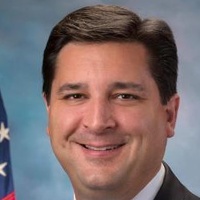
David Rouzer
Representative
NC
David Rouzer
Representative
NC
This resolution officially recognizes the vital and dangerous work performed by power linemen who maintain our electrical infrastructure and ensure public safety. It highlights their crucial role as first responders, often working in hazardous conditions after disasters. Furthermore, the resolution supports the designation of April 18, 2025, as "National Lineman Appreciation Day" to formally honor their service.
The Safeguard American Voter Eligibility (SAVE) Act mandates that individuals registering to vote in federal elections must present documentary proof of U.S. citizenship.

Chip Roy
Representative
TX
Chip Roy
Representative
TX
The Safeguard American Voter Eligibility Act (SAVE Act) significantly amends federal law to require individuals registering to vote in federal elections to present documentary proof of U.S. citizenship. This legislation mandates that states actively clean their voter rolls and cooperate with federal agencies to verify citizenship status. It establishes new criminal penalties for officials who fail to enforce these documentation requirements.
This act prohibits the Federal Motor Carrier Safety Administration from mandating speed limiting devices on interstate commercial vehicles over 26,000 pounds.
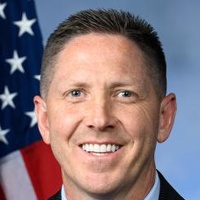
Josh Brecheen
Representative
OK
Josh Brecheen
Representative
OK
The DRIVE Act prohibits the Federal Motor Carrier Safety Administration from mandating speed limiting devices on heavy commercial vehicles engaged in interstate commerce. This legislation removes any federal requirement for trucks over 26,000 pounds to have their top speed electronically capped. In essence, the bill deregulates restrictions concerning speed control technology for large, cross-state eighteen-wheelers.
This Act mandates the reimbursement of interest payments made by local governments and electric cooperatives on loans used for disaster recovery activities eligible under the Stafford Act.
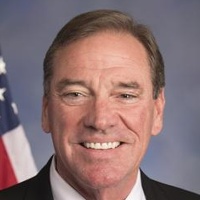
Neal Dunn
Representative
FL
Neal Dunn
Representative
FL
The FEMA Loan Interest Payment Relief Act establishes a program for FEMA to reimburse local governments and electric cooperatives for interest paid on specific disaster recovery loans. This reimbursement is capped at the lesser of the actual interest paid or the interest calculated using the Federal Reserve's prime rate. The law mandates FEMA to quickly establish procedures for states to apply for reimbursement of qualifying interest paid up to nine years prior to enactment.
This Act establishes a federal tax credit for individuals who donate to high-performing charter school organizations for expansion purposes, subject to annual caps and specific spending requirements.
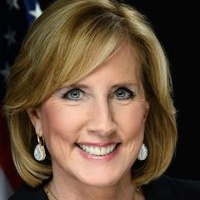
Claudia Tenney
Representative
NY
Claudia Tenney
Representative
NY
The High-Quality Charter Schools Act establishes a new federal tax credit for individuals who donate to eligible, high-performing charter school organizations for expansion purposes. This credit is set at 75% of the qualified contribution, subject to annual income limitations and an overall national cap of $5 billion starting in 2026. The bill also mandates specific spending deadlines for recipient organizations and ensures that participation does not subject these charter schools to government control. These provisions will take effect for tax years beginning after December 31, 2025.
The S-CAP Act of 2025 increases the maximum number of shareholders a business can have to qualify as an S corporation from 100 to 250, effective for tax years beginning after December 31, 2025.
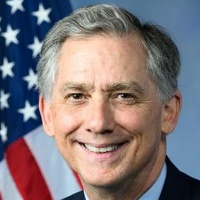
J. Hill
Representative
AR
J. Hill
Representative
AR
The S-CAP Act of 2025 significantly increases the maximum number of shareholders a business can have while qualifying for S corporation tax status, raising the limit from 100 to 250. This change is designed to allow more small businesses to benefit from pass-through taxation. This new 250-shareholder limit will take effect for tax years beginning after December 31, 2025.
This Act redefines immediate relatives for immigration, caps family-sponsored visas, and creates a new, non-work, temporary visa for parents of adult U.S. citizens.
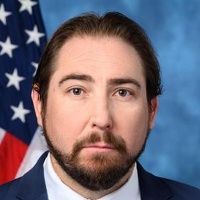
Eli Crane
Representative
AZ
Eli Crane
Representative
AZ
The Nuclear Family Priority Act significantly restructures U.S. family-based immigration by redefining "immediate relatives" to only include spouses and children of U.S. citizens, removing parents from that top category. It also establishes a new, temporary nonimmigrant visa for parents of adult U.S. citizens, which prohibits work and public benefits. Furthermore, the bill revises the annual cap for family-sponsored visas and makes numerous technical amendments across immigration law to align with these changes.
This Act establishes a new federal crime and penalties for intentionally staging motor vehicle collisions involving commercial motor vehicles.
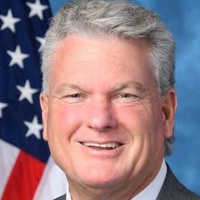
Mike Collins
Representative
GA
Mike Collins
Representative
GA
The Staged Accident Fraud Prevention Act of 2025 establishes a new federal crime targeting individuals who intentionally stage motor vehicle collisions involving commercial motor vehicles. This act sets significant penalties, including up to 20 years in prison for staging an accident, with mandatory minimum sentences for crashes resulting in serious injury or death. The legislation also includes provisions to prevent federal prosecution if the individual has already been tried in a state or local jurisdiction for the same incident.
This Act promotes new bank formation by phasing in capital standards, adjusting business plan review timelines, offering temporary leverage ratio relief for rural institutions, expanding agricultural lending authority, and mandating a study on barriers to new bank creation.
Garland Barr
Representative
KY
Garland Barr
Representative
KY
The Promoting New Bank Formation Act aims to encourage the creation of new banks by providing regulatory relief for newly insured institutions. This includes a three-year phase-in period for new capital standards and streamlined processes for adjusting initial business plans. The Act also establishes temporary, favorable capital requirements for new rural depository institutions and expands lending authority for Federal savings associations to include agricultural loans. Finally, it mandates a study on barriers to new bank formation, especially in underserved areas.
This bill repeals the requirement for financial institutions to collect and report specific data on small business loans to reduce compliance costs and improve small business access to credit.
Roger Williams
Representative
TX
Roger Williams
Representative
TX
The 1071 Repeal to Protect Small Business Lending Act aims to eliminate the mandatory data collection and reporting requirements for small business loans previously established under Section 704B of the Equal Credit Opportunity Act. Proponents argue that these regulations impose unnecessary compliance costs on lenders, potentially hindering small business access to credit. This bill repeals those specific reporting mandates to reduce regulatory burdens on financial institutions.
The POWER Act of 2025 establishes a temporary, income-limited tax credit of up to \$500 for qualified homeowners in disaster-prone areas who purchase an emergency generator.
Wesley Hunt
Representative
TX
Wesley Hunt
Representative
TX
The POWER Act of 2025 establishes a new, temporary tax credit of up to $500 for individuals who purchase an emergency generator for their primary residence. To qualify, homeowners must have experienced at least two major disasters in their area within the last five years and personally received federal assistance for one of those events. The credit amount is subject to phase-out based on the taxpayer's modified adjusted gross income.
This resolution formally condemns the wave of domestic terrorism attacks targeting Tesla vehicles and dealerships nationwide and acknowledges the joint FBI-ATF investigation into these violent incidents.
Lauren Boebert
Representative
CO
Lauren Boebert
Representative
CO
This resolution formally condemns the recent wave of violent domestic terrorism attacks targeting Tesla vehicles and dealerships across the nation. It highlights numerous incidents, including arson, gunfire, and vandalism, that have occurred in multiple states. In response to this escalation, the bill notes that the FBI and ATF have established a joint task force to investigate these serious, politically motivated attacks.
The RIFLE Act eliminates the federal tax on firearm transfers and makes corresponding technical changes to the tax code without affecting CPSC oversight of regulated firearms.
Ashley Hinson
Representative
IA
Ashley Hinson
Representative
IA
The Repealing Illegal Freedom and Liberty Excises Act (RIFLE Act) eliminates the existing federal tax on firearm transfers. This legislation strikes the relevant section from the Internal Revenue Code and makes necessary technical updates to related statutes. Importantly, this Act does not grant the Consumer Product Safety Commission any new authority over regulated firearms.
This bill establishes a dedicated Inspector General for the Bureau of Consumer Financial Protection, outlines their appointment, funding, and reporting requirements, and clarifies their oversight structure.
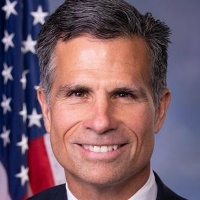
Daniel Meuser
Representative
PA
Daniel Meuser
Representative
PA
This bill establishes a dedicated, independent Inspector General (IG) position specifically for the Bureau of Consumer Financial Protection (BCFP). It changes the appointment process, mandates regular testimony before Congress, and ensures dedicated funding for the new IG office. The law takes effect upon the Senate confirmation of the first BCFP Inspector General, at which point the current joint IG role will revert solely to overseeing the Federal Reserve Board.
This bill brings the non-monetary policy administrative costs of the Federal Reserve Board of Governors under the annual Congressional appropriations process.
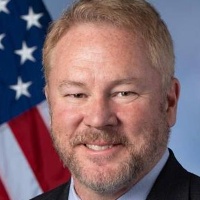
Warren Davidson
Representative
OH
Warren Davidson
Representative
OH
The Federal Reserve Regulatory Oversight Act places the administrative costs associated with the Federal Reserve's non-monetary policy functions, such as bank supervision and regulation, under the annual Congressional appropriations process. This requires the Fed to seek explicit Congressional approval for funding these specific operational expenses starting in fiscal year 2026. The bill does not affect the funding for the Fed's core monetary policy activities.
The SHORT Act redefines "firearm" to exclude certain collector's items, eliminates disparate federal treatment of short-barreled rifles and shotguns, preempts state and local registration/tax burdens on these items, and mandates the destruction of certain existing NFA records.
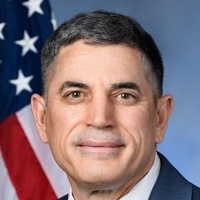
Andrew Clyde
Representative
GA
Andrew Clyde
Representative
GA
The SHORT Act aims to reform federal firearms regulations by redefining what constitutes a "firearm" for tax purposes, largely excluding antique or collector's items. It eliminates disparate federal treatment for short-barreled rifles and shotguns used lawfully and preempts state and local governments from imposing special taxes or registration requirements on these specific weapons. Furthermore, the bill mandates the destruction of certain existing federal registration and transfer records related to defined firearms.
This act updates executive branch reorganization authority by expanding presidential objectives, redefining covered entities, removing certain restrictions, and extending the relevant deadlines to 2026.

James Comer
Representative
KY
James Comer
Representative
KY
The Reorganizing Government Act of 2025 updates the laws governing presidential executive reorganization plans. This bill expands the objectives for these plans to include reducing federal employees and eliminating burdensome regulations. It also extends the authority for the President to submit reorganization plans to Congress until the end of 2026.
This act establishes expedited judicial review and shifts the burden of proof to the government when individuals challenge NICS denials, while also mandating annual reporting on record challenges.
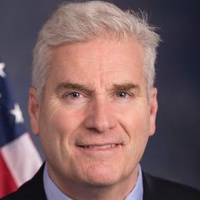
Tom Emmer
Representative
MN
Tom Emmer
Representative
MN
The Firearm Due Process Protection Act of 2025 aims to strengthen due process rights for individuals challenging denials in the National Instant Criminal Background Check System (NICS). It mandates expedited court hearings for record correction lawsuits and shifts the burden of proof onto the government to demonstrate why a person should be ineligible to own a firearm. Additionally, the bill requires the FBI to submit annual reports detailing the outcomes and timelines of all NICS record challenges.
This act eliminates the Optional Practical Training (OPT) program, ending work authorization for F-1 visa students unless explicitly authorized by future Congressional action.

Paul Gosar
Representative
AZ
Paul Gosar
Representative
AZ
The Fairness for High-Skilled Americans Act of 2025 aims to eliminate the Optional Practical Training (OPT) program, which currently allows F-1 student visa holders to gain temporary work authorization after completing their studies. This bill removes the government's authority to grant such work permission unless explicitly authorized by a future Act of Congress.