Legislative Activity
Track Byron's sponsored bills, co-sponsored legislation, and voting record
The USA FIRST Act redirects unspent foreign aid funds to the Disaster Relief Fund for domestic disaster relief efforts.
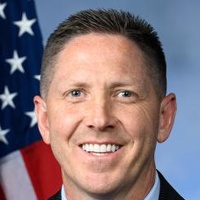
Josh Brecheen
Representative
OK
Josh Brecheen
Representative
OK
The "USA FIRST Act" redirects unspent funds from the United States Agency for International Development to the Disaster Relief Fund. This fund supports the Stafford Act, which provides aid for major disasters.
The Trafficking Survivors Relief Act of 2025 aims to provide federal remedies for victims of trafficking, including vacating convictions, expunging arrest records, and allowing for reduced sentencing in certain cases where the offense was a direct result of their trafficking.
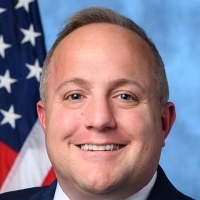
Russell Fry
Representative
SC
Russell Fry
Representative
SC
The Trafficking Survivors Relief Act of 2025 aims to provide legal relief to victims of trafficking by allowing them to vacate convictions or expunge arrests for certain federal offenses committed as a direct result of their trafficking. It also allows for reduced sentences for covered prisoners and enables the use of grant funds for legal representation in post-conviction relief cases. The act further establishes a "human trafficking defense," and mandates reports to Congress on the implementation and impact of these provisions. This bill seeks to address the exploitation of forced criminal activity by human traffickers and provide support and protection to survivors.
The "One Flag for All Act" would generally require only the U.S. flag to be displayed on the exterior and in public areas of federal buildings, with specific exceptions for POW/MIA flags, flags of visiting dignitaries, state flags of members of congress, armed forces flags, flags of historical significance, public safety flags, flags commemorating national observances, flags representing religious organizations during religious events at military facilities, flags representing a Federal agency, flags representing an Indian Tribe, and flags representing the State, territory, county, city, or local jurisdiction where the public building is located.
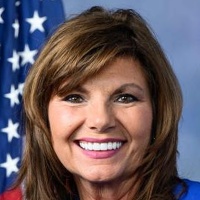
Diana Harshbarger
Representative
TN
Diana Harshbarger
Representative
TN
The "One Flag for All Act" generally prohibits the display of flags other than the U.S. flag on the exterior or in public areas of covered federal buildings. There are explicit exceptions for flags such as POW/MIA flags, state flags displayed at a Member of Congress's office, flags representing the Armed Forces, flags of historical significance, and flags representing local jurisdictions where the building is located. The bill defines "covered public buildings" broadly, including federal buildings, Senate and House buildings, military installations, and U.S. embassies and consulates.
The "Death Tax Repeal Act" eliminates estate and generation-skipping transfer taxes, adjusts gift tax calculations, and sets a $10,000,000 lifetime gift exemption.
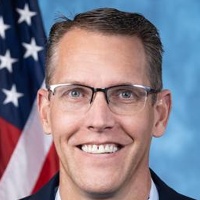
Randy Feenstra
Representative
IA
Randy Feenstra
Representative
IA
The "Death Tax Repeal Act" eliminates both estate and generation-skipping transfer taxes, effective from the date of enactment. It adjusts gift tax calculations by setting the lifetime gift exemption at $10,000,000, with inflation adjustments after 2011. The Act also includes transitional rules for applying certain sections of the Internal Revenue Code during the enactment year.
This resolution expresses Congressional opposition to imposing new performance fees or royalties on local radio stations and businesses for broadcasting or playing music.
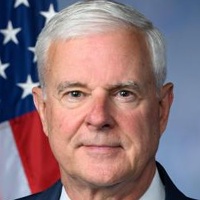
Steve Womack
Representative
AR
Steve Womack
Representative
AR
The Local Radio Freedom Act expresses Congressional opposition to imposing new performance fees, taxes, or royalties on local radio stations and businesses for playing music. It argues that the current system of free airplay provides essential promotional value to artists and that new fees would threaten the financial viability of local broadcasters and the vital community services they provide.
The SAFE for America Act of 2025 eliminates the diversity visa program, effective October 1, 2025.
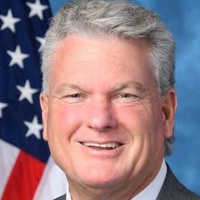
Mike Collins
Representative
GA
Mike Collins
Representative
GA
The SAFE for America Act of 2025 eliminates the Diversity Visa Program, which makes visas available to persons from countries with low rates of immigration to the United States. This is achieved through repealing subsection (c) of Section 203 of the Immigration and Nationality Act. The Act also makes corresponding technical amendments to other sections of the Immigration and Nationality Act to reflect this change. These changes would take effect beginning October 1, 2025.
This bill updates the definition of "customs waters" to align with international law, extending U.S. authority for customs enforcement to the territorial sea and contiguous zone.
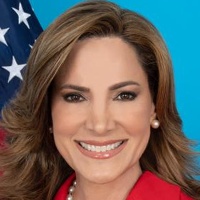
Maria Salazar
Representative
FL
Maria Salazar
Representative
FL
The "Extending Limits of U.S. Customs Waters Act" updates the definition of "customs waters" to align with international law, Presidential Proclamation 5928, and Presidential Proclamation 7219. It extends U.S. customs authority to include the territorial sea and contiguous zone, as permitted by international law. These changes will take effect the day after the Act is enacted.
The "National Right-to-Work Act" prohibits mandatory union membership as a condition of employment, protecting employees' rights to choose whether or not to join or support a labor union.
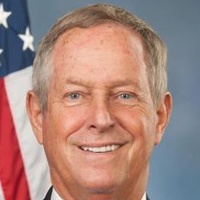
Joe Wilson
Representative
SC
Joe Wilson
Representative
SC
The "National Right-to-Work Act" amends both the National Labor Relations Act and the Railway Labor Act to protect an employee's right to choose whether or not to join or support a labor union. It eliminates the possibility of mandatory union membership or dues payments as a condition of employment, ensuring that employees cannot be forced to join or support a union against their will.
Prohibits designating Big Cypress National Preserve as wilderness.
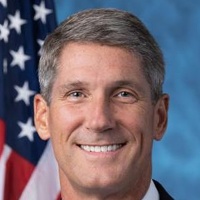
C. Franklin
Representative
FL
C. Franklin
Representative
FL
This bill prohibits the Big Cypress National Preserve in Florida from being designated as wilderness or included in the National Wilderness Preservation System. This ensures the area will not receive the specific protections and management guidelines associated with wilderness areas.
Repeals the Impoundment Control Act of 1974, eliminating congressional oversight of presidential decisions to withhold funds.
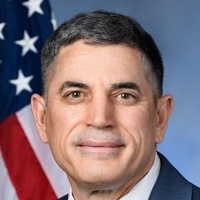
Andrew Clyde
Representative
GA
Andrew Clyde
Representative
GA
This bill repeals the Impoundment Control Act of 1974, eliminating the requirements for the President to report to Congress on decisions to withhold or delay spending of appropriated funds. This removes the process by which Congress can approve or disapprove of these presidential actions.
The "Stop Human Trafficking of Unaccompanied Migrant Children Act of 2025" aims to protect unaccompanied alien children by establishing stricter vetting standards for sponsors, mandating home visits, and requiring detailed reports to Congress.
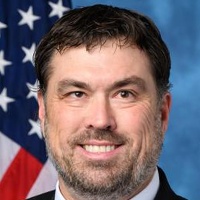
Morgan Luttrell
Representative
TX
Morgan Luttrell
Representative
TX
The "Stop Human Trafficking of Unaccompanied Migrant Children Act of 2025" aims to protect unaccompanied alien children by establishing stricter vetting standards for sponsors, including background checks for all adults in the household and mandatory home visits. It also requires retroactive vetting of past sponsors and detailed monthly reports to Congress on the placement and well-being of these children. The goal is to prevent human trafficking and ensure the safety of unaccompanied migrant children placed with sponsors in the United States.
The "Stop CCP Land Act" restricts states from receiving certain federal funds if they do not prohibit covered foreign countries, including those on the State Department's Defense Trade Control Country Policies List and Russia, from purchasing agricultural land.
Stephanie Bice
Representative
OK
Stephanie Bice
Representative
OK
The "Stop CCP Land Act" aims to restrict states from receiving certain federal funds if they do not prohibit covered foreign countries, including those on the State Department's Defense Trade Control Country Policies List and Russia, from purchasing agricultural land. It mandates annual reporting for individuals from these countries who already own agricultural land and requires reports to Congress on improving monitoring of foreign investment in agricultural land and assessing the Act's impact on national security. This act defines "agricultural land," "foreign person," and "covered program funds" to ensure clarity in implementation.
The Port Crane Security and Inspection Act of 2025 aims to protect U.S. ports by inspecting foreign-made cranes for security risks, prohibiting the use of new foreign cranes and software from adversarial nations, and enhancing overall port cybersecurity.
Carlos Gimenez
Representative
FL
Carlos Gimenez
Representative
FL
The Port Crane Security and Inspection Act of 2025 mandates security inspections of foreign-made cranes used at high-risk U.S. ports, assessing and mitigating cybersecurity risks associated with these cranes. The Act prohibits the operation of new foreign cranes and, within five years, foreign software on cranes at U.S. ports, particularly those connected to a "covered foreign country". These covered foreign countries are identified as foreign adversaries by the intelligence community or the Secretary of Homeland Security and the Director of National Intelligence. The goal is to enhance port security and protect against potential cyber threats.
Mandates the disclosure of third parties entitled to payment from civil action settlements or judgments to ensure transparency.
Darrell Issa
Representative
CA
Darrell Issa
Representative
CA
The Litigation Transparency Act of 2025 requires parties in civil actions to disclose the identity of any third party entitled to payment contingent on the outcome of the case, along with the relevant agreements. This disclosure aims to increase transparency in civil litigation by revealing who financially benefits from the lawsuit's outcome. Certain payments, such as loan repayments and attorney's fees, are exempt from this disclosure requirement. The Act applies to both ongoing and future court cases.
Repeals a mandate requiring kill switches in cars.
Scott Perry
Representative
PA
Scott Perry
Representative
PA
The "No Kill Switches in Cars Act" repeals a section of the Infrastructure Investment and Jobs Act. The repealed section required the Department of Transportation to create a rule mandating that all new cars have advanced drunk and impaired driving prevention technology. This bill prohibits the government from requiring car manufacturers to install kill switches in vehicles.
The "Freedom to Invest in Tomorrow's Workforce Act" expands the use of 529 savings accounts to cover expenses related to postsecondary credentialing programs, including tuition, fees, books, supplies, equipment, and testing fees.
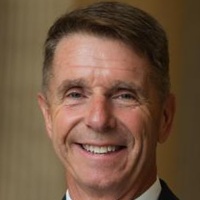
Robert Wittman
Representative
VA
Robert Wittman
Representative
VA
The "Freedom to Invest in Tomorrow's Workforce Act" amends Section 529 savings accounts to include expenses related to postsecondary credentialing programs. This allows 529 funds to cover costs like tuition, fees, books, supplies, and testing fees for recognized programs and credentials, as defined by the bill. These changes would apply to distributions made after the bill is enacted.
The "UNPLUG EVs Act" rescinds unspent funds from electric vehicle charging and fueling grant programs and the National Electric Vehicle Infrastructure Formula Program to reduce the federal deficit.
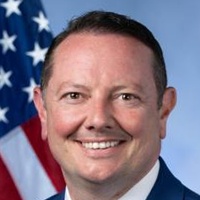
Eric Burlison
Representative
MO
Eric Burlison
Representative
MO
The "UNPLUG EVs Act" rescinds any unspent funds allocated for electric vehicle charging and fueling grants, as well as funds from the National Electric Vehicle Infrastructure Formula Program. The recovered funds will be deposited into the Treasury's general fund and used to reduce the federal deficit.
This resolution expresses the sense of Congress that the United States should formally recognize Taiwan as an independent nation, establish full diplomatic relations, negotiate a free trade agreement, and support its membership in international organizations.
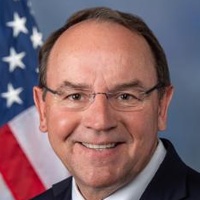
Thomas Tiffany
Representative
WI
Thomas Tiffany
Representative
WI
This resolution expresses the sense of Congress that the United States should formally recognize Taiwan as an independent, sovereign nation and abandon the obsolete "One China Policy." It calls for the normalization of diplomatic relations, the negotiation of a bilateral free trade agreement, and active U.S. support for Taiwan’s membership in international organizations.
The BOWSER Act repeals the District of Columbia Home Rule Act, returning control to the federal government one year after enactment.
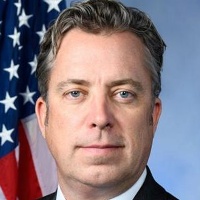
Andrew Ogles
Representative
TN
Andrew Ogles
Representative
TN
The BOWSER Act repeals the District of Columbia Home Rule Act, which currently grants a degree of self-governance to the District of Columbia. This repeal would take effect one year after the enactment of the BOWSER Act. Effectively, this would end the current form of local government in DC.
The Fair Access to Banking Act prohibits large financial institutions and payment networks from denying services to law-abiding businesses based on subjective, non-financial, or political criteria.
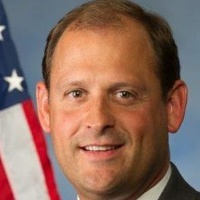
Garland Barr
Representative
KY
Garland Barr
Representative
KY
The Fair Access to Banking Act prohibits large financial institutions and payment networks from denying services to law-abiding businesses based on subjective, politically motivated, or reputational criteria. The bill mandates that financial institutions use impartial, quantitative, risk-based standards to evaluate customers rather than category-based exclusions. To ensure compliance, the legislation establishes enforcement mechanisms through federal regulators and provides a legal pathway for businesses to sue for damages if they are unfairly denied access to financial services.