Legislative Activity
Track Byron's sponsored bills, co-sponsored legislation, and voting record
This bill establishes national reciprocity for concealed carry permits, allowing individuals legally permitted to carry in their home state to carry a handgun in any other state that allows concealed carry.
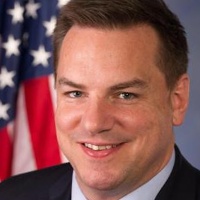
Richard Hudson
Representative
NC
Richard Hudson
Representative
NC
The Constitutional Concealed Carry Reciprocity Act of 2025 establishes a national standard for carrying concealed handguns across state lines. This act allows individuals legally permitted to carry in their home state to carry concealed in any other state that allows its residents to carry concealed firearms. The law does not override private property restrictions or prohibitions on government property, but it provides protections and legal recourse for those traveling in compliance with the new federal standard.
The FEMA Independence Act of 2025 restructures FEMA into an independent, cabinet-level agency reporting directly to the President, separate from the Department of Homeland Security.
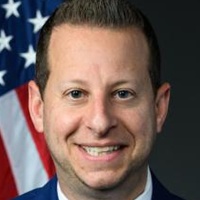
Jared Moskowitz
Representative
FL
Jared Moskowitz
Representative
FL
The FEMA Independence Act of 2025 fundamentally restructures the Federal Emergency Management Agency (FEMA) by establishing it as an independent, cabinet-level agency reporting directly to the President. This legislation details the appointment requirements for a new Director, establishes an independent Office of the Inspector General, and outlines the transfer of all existing FEMA functions and personnel. Ultimately, the Act aims to strengthen FEMA's national leadership role across all phases of emergency management: mitigation, preparedness, response, and recovery.
This act permanently establishes a 7-year recovery period for the depreciation of motorsports entertainment complexes for tax purposes.
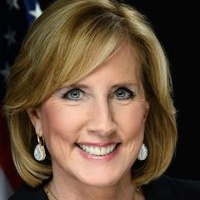
Claudia Tenney
Representative
NY
Claudia Tenney
Representative
NY
The Motorsports Fairness and Permanency Act of 2025 makes permanent a significant tax benefit for motorsports entertainment complexes. This legislation ensures these large venues can continue to use an accelerated 7-year recovery period for depreciating their building costs. By removing the previous expiration date, the Act provides long-term financial certainty for the industry.
This bill eliminates the authority for states to set their own emission standards for nonroad engines and vehicles and repeals the provision allowing states to adopt California's new motor vehicle emission standards.
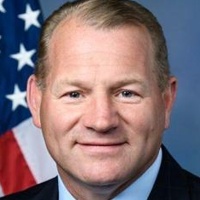
Troy Nehls
Representative
TX
Troy Nehls
Representative
TX
The Stop CARB Act of 2025 centralizes federal control over emission standards for nonroad engines and vehicles, immediately revoking any state authority or existing waivers to set stricter rules. This bill specifically prohibits states from creating or enforcing their own emission standards for equipment like construction and farm machinery. Furthermore, it repeals the provision of the Clean Air Act that allowed other states to adopt California's stricter new motor vehicle emission standards.
The Fair and Open Competition Act of 2025 prohibits the federal government from requiring or penalizing bidders or contractors on federally funded construction projects based on their agreement or non-agreement with labor unions.
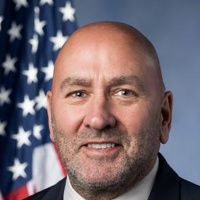
Clay Higgins
Representative
LA
Clay Higgins
Representative
LA
The Fair and Open Competition Act of 2025 ensures fair competition on federally funded construction projects by prohibiting the government from requiring or penalizing bidders based on union agreements. This legislation aims to keep federal agencies neutral in labor relations while promoting cost savings and opening opportunities for all businesses. Exceptions to this neutrality rule are strictly limited to specific public health, safety, or national security emergencies.
The HELPER Act of 2025 establishes a new FHA mortgage insurance program offering 100% financing with an upfront premium and no monthly premiums for eligible first responders, educators, and law enforcement officers.
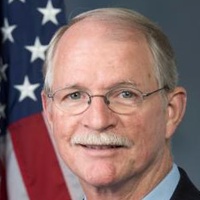
John Rutherford
Representative
FL
John Rutherford
Representative
FL
The HELPER Act of 2025 establishes a new FHA mortgage insurance program to assist first responders, educators, and law enforcement officers in purchasing homes. This program offers eligible first-time homebuyers 100% financing with no down payment required. Instead of monthly premiums, borrowers pay an upfront FHA insurance premium at closing.
This Act prevents the President and the Secretary of HHS from using emergency declarations to impose gun control measures and prohibits federal disaster rules from restricting the possession or transfer of firearms, ammunition, and related accessories.
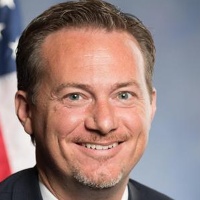
Michael Cloud
Representative
TX
Michael Cloud
Representative
TX
The Protecting the Right to Keep and Bear Arms Act of 2025 restricts the President and the Secretary of Health and Human Services from using emergency declarations to enact gun control measures. This bill specifically prevents the use of the National Emergencies Act and the Public Health Service Act for imposing new firearm restrictions. Furthermore, it amends disaster relief law to prohibit federal disaster declarations from banning the possession, sale, or transfer of firearms, ammunition, or related accessories.
This bill allows investors to defer taxes on capital gain dividends from mutual funds when those dividends are automatically reinvested until the shares are sold or the investor passes away.
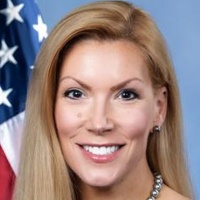
Beth Van Duyne
Representative
TX
Beth Van Duyne
Representative
TX
This bill, the Generating Retirement Ownership through Long-Term Holding Act, allows individual investors to defer paying taxes on capital gain dividends from mutual funds if those dividends are automatically reinvested into more fund shares. Taxes on these deferred gains are only due when the investor sells the shares or upon death. This provision aims to encourage long-term investment in mutual funds by providing immediate tax relief on reinvested earnings.
This act redefines "State of Residence" for federal firearms law, particularly for military personnel, and updates background check requirements to include the buyer's home address.
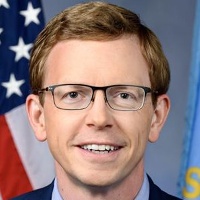
Dusty Johnson
Representative
SD
Dusty Johnson
Representative
SD
The Travelers Gun Rights Act updates the federal definition of "State of Residence" for firearm laws, particularly for active-duty military personnel. This change also modifies background check requirements to ensure a buyer's home address is documented on the necessary paperwork. The bill clarifies residency rules for individuals who may reside in multiple states or lack a traditional physical home.
The Department of Government Efficiency Act codifies Executive Order 14210 into law, establishing its directives with the full authority of a statute.
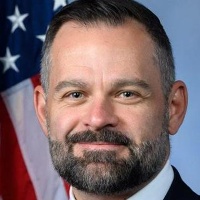
Cory Mills
Representative
FL
Cory Mills
Representative
FL
The Department of Government Efficiency Act, or DOGE Act, codifies Executive Order 14210 into permanent law. This action elevates the directives and rules established in the Executive Order to the full authority of a statute passed by Congress. Essentially, the provisions of the order are now legally binding requirements.
The "Stop the Cartels Act" combats drug and human trafficking by prioritizing intelligence, cutting funds to non-cooperative entities, tightening immigration laws, and modifying substance abuse programs.
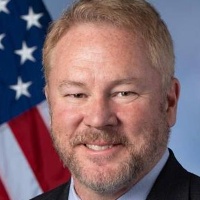
Warren Davidson
Representative
OH
Warren Davidson
Representative
OH
The Stop the Cartels Act aims to combat drug and human trafficking by prioritizing intelligence gathering, blocking funds to Mexico until cooperation barriers are removed, and designating drug cartels as Special Transnational Criminal Organizations. It also stops federal grant money from going to state or local governments that don't follow federal immigration laws and modifies current immigration laws, particularly concerning the treatment of alien minors and asylum eligibility. Additionally, the act reauthorizes and modifies federal programs aimed at preventing and treating substance abuse, increasing funding for certain block grants while eliminating or phasing out several other related programs.
This bill disapproves the Bureau of Consumer Financial Protection's rule prohibiting creditors and consumer reporting agencies from using medical information.
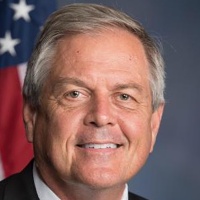
Ralph Norman
Representative
SC
Ralph Norman
Representative
SC
This bill disapproves a recent rule issued by the Bureau of Consumer Financial Protection (BCFP) concerning the use of medical information by creditors and consumer reporting agencies. Utilizing the Congressional Review Act, Congress nullifies this specific BCFP regulation. Consequently, the rejected rule will have no legal effect.
Nullifies the Consumer Financial Protection Bureau's rule on overdraft lending practices of large financial institutions.
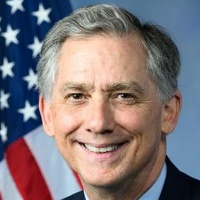
J. Hill
Representative
AR
J. Hill
Representative
AR
This bill disapproves and invalidates the Consumer Financial Protection Bureau's rule regarding overdraft lending practices of very large financial institutions. The rule, found in the Federal Register, is nullified by this disapproval.
The International Nuclear Energy Financing Act of 2025 aims to promote nuclear energy by directing U.S. representatives to international financial institutions to support the removal of barriers to nuclear energy funding and establish trust funds for nuclear energy projects in developing countries.
J. Hill
Representative
AR
J. Hill
Representative
AR
The "International Nuclear Energy Financing Act of 2025" aims to promote nuclear energy by directing the Secretary of the Treasury to advocate for the removal of prohibitions on financial and technical assistance for nuclear energy generation and distribution at international development banks. It also seeks to establish "Nuclear Energy Assistance Trust Funds" to provide financial and technical support for nuclear energy projects in borrowing countries, ensuring competitive financing and adherence to U.S. or allied standards. The Act requires annual reporting on these efforts and will terminate 10 years after enactment.
Prohibits federal funding to the United Nations' immigration and refugee relief organizations IOM, UNHCR, and UNRWA, and requires a study and audit of past funding.
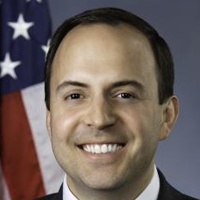
Lance Gooden
Representative
TX
Lance Gooden
Representative
TX
The "No Tax Dollars for the United Nations Immigration Invasion Act" prohibits the U.S. government from financially contributing to the United Nations International Organization for Migration (IOM), the United Nations High Commissioner for Refugees (UNHCR), and the United Nations Relief and Works Agency for Palestine Refugees in the Near East (UNRWA). It also mandates a study by the Comptroller General to identify all federal assistance programs that provide funds to these organizations, detailing amounts, restrictions, and potential repayments, as well as an audit of the Department of State’s Refugee Travel Loan Program. A report summarizing the study and audit results must be submitted to Congress within 180 days of the Act's enactment.
The "Federal Firearms Licensee Protection Act of 2025" increases penalties for stealing firearms from licensed dealers, manufacturers, or importers, especially during burglaries or robberies, and clarifies related definitions.
John Rutherford
Representative
FL
John Rutherford
Representative
FL
The "Federal Firearms Licensee Protection Act of 2025" increases penalties for stealing firearms from licensed dealers. It sets stricter punishments, including up to 20 years in prison, for violating laws related to firearm theft. The act also mandates minimum prison sentences of 3 years for burglaries and 5 years for robberies targeting licensed firearm businesses.
To award a Congressional Gold Medal to the 761st Tank Battalion, the first Black soldiers to serve in an American armored unit, for their valor and crucial contributions to the Allied victory in Europe.
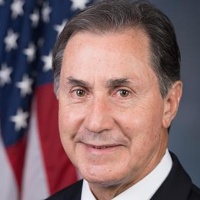
Gary Palmer
Representative
AL
Gary Palmer
Representative
AL
This bill authorizes the Speaker of the House and the President pro tempore of the Senate to award a Congressional Gold Medal to the 761st Tank Battalion, also known as the "Black Panthers," in recognition of their courageous service and crucial contributions during World War II. The medal will be given to the National Museum of African American History and Culture for display, honoring the 761st as the first Black soldiers to serve in an American armored unit and their significant role in the Allied victory in Europe. The bill also allows for the creation and sale of bronze duplicates of the medal to support the United States Mint Public Enterprise Fund.
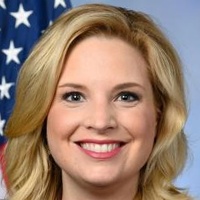
The "SBA Disaster Transparency Act" mandates the Small Business Administration to publicly post reports on disaster assistance submitted to Congress on its website.
Ashley Hinson
Representative
IA
Ashley Hinson
Representative
IA
The SBA Disaster Transparency Act requires the Small Business Administration (SBA) to publish reports related to disaster assistance on its website. This ensures transparency by making information accessible to the public after the reports are submitted to Representatives.
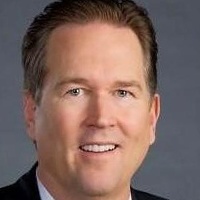
The "Enhancing Domestic Drug Manufacturing Competitiveness Act" mandates a study to identify and address regulatory barriers hindering pharmaceutical manufacturing in the U.S. to enhance domestic production.
Vern Buchanan
Representative
FL
Vern Buchanan
Representative
FL
The "Enhancing Domestic Drug Manufacturing Competitiveness Act" mandates a study by the Comptroller General to identify regulatory barriers hindering pharmaceutical manufacturing in the U.S. compared to other countries. The study will assess the impact of regulations on costs, delays, and supply chain resilience. It will also explore technological solutions and policy recommendations to streamline regulations and boost domestic pharmaceutical manufacturing. A report with findings and recommendations must be submitted to Congress within one year.
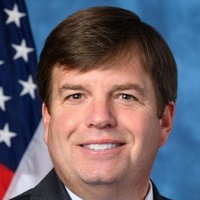
This bill restricts individuals and entities associated with Iran, North Korea, China, and Russia from purchasing or leasing U.S. agricultural land and participating in USDA programs, while also enhancing reporting requirements and penalties for foreign agricultural investment.
Dale Strong
Representative
AL
Dale Strong
Representative
AL
The "Protecting America's Agricultural Land from Foreign Harm Act of 2025" aims to safeguard U.S. agricultural land by prohibiting its purchase or lease by individuals or entities associated with the governments of Iran, North Korea, China, and Russia, while also preventing their participation in USDA programs. The bill expands reporting requirements under the Agricultural Foreign Investment Disclosure Act of 1978, increases penalties for violations, and mandates public online databases of foreign ownership. Additionally, it requires regular reports from the Secretary of Agriculture, the Director of National Intelligence, and the Government Accountability Office on foreign ownership and its potential risks.