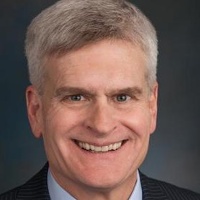
Legislative Activity
Track Bill's sponsored bills, co-sponsored legislation, and voting record
This bill raises the resource limits for Supplemental Security Income (SSI) eligibility to \$20,000 for individuals and \$10,000 per person for couples starting in 2025, with future adjustments for inflation.

Catherine Cortez Masto
Senator
NV
Catherine Cortez Masto
Senator
NV
The SSI Savings Penalty Elimination Act significantly raises the resource limits for individuals and couples to qualify for Supplemental Security Income (SSI), starting in 2025. This legislation increases the individual savings limit to \$20,000 and the couple's limit to \$20,000 total. Furthermore, these new resource limits will automatically adjust annually for inflation beginning in 2026.
The ABC Act mandates a comprehensive review and simplification of processes, forms, and communication across Medicare, Medicaid, CHIP, and Social Security programs to reduce burdens on family caregivers.
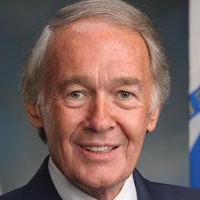
Edward Markey
Senator
MA
Edward Markey
Senator
MA
The Alleviating Barriers for Caregivers Act (ABC Act) mandates a comprehensive review of Medicare, Medicaid, CHIP, and Social Security programs to significantly simplify application processes, forms, and communications. This effort aims to reduce the burden on family caregivers by eliminating redundant information requests across agencies. The responsible officials must report their simplification plans and progress to Congress within two years of enactment.
This resolution designates March 27, 2025, as "National Women in Agriculture Day" to recognize and celebrate the vital contributions of women across the U.S. agricultural sector.

Joni Ernst
Senator
IA
Joni Ernst
Senator
IA
This resolution officially designates March 27, 2025, as "National Women in Agriculture Day." It recognizes the vital and substantial contributions of the over 1.2 million female agricultural producers to the U.S. economy and global food supply. The measure encourages citizens to acknowledge the leadership, mentorship, and economic impact women have across the entire agricultural sector.
The Sanctioning Russia Act of 2025 imposes sweeping economic and financial penalties on the Russian Federation and its affiliates, contingent upon Russia's failure to negotiate peace with Ukraine.
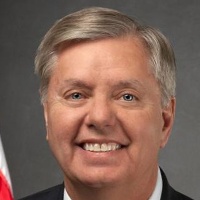
Lindsey Graham
Senator
SC
Lindsey Graham
Senator
SC
The Sanctioning Russia Act of 2025 mandates sweeping economic penalties against the Russian Federation and its affiliates for actions against Ukraine. This legislation requires the President and Treasury Secretary to impose escalating sanctions on Russian officials, financial institutions, and energy sector entities. Furthermore, the Act prohibits U.S. persons from investing in Russian debt, bans the trading of Russian securities on U.S. exchanges, and imposes a massive 500% import duty on Russian goods. Sanctions can only be terminated if Russia agrees to a verifiable peace deal with Ukraine.
The Judicial Relief Clarification Act of 2025 restricts federal courts from issuing orders that affect non-parties to a lawsuit and limits their power to grant emergency relief in certain diversity jurisdiction cases.
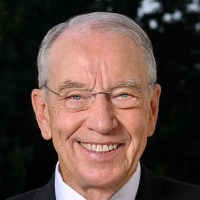
Charles Grassley
Senator
IA
Charles Grassley
Senator
IA
The Judicial Relief Clarification Act of 2025 generally restricts federal courts from issuing orders that affect non-parties to a lawsuit or granting emergency relief in certain state/federal disputes under diversity jurisdiction. The bill also clarifies language regarding who can seek declaratory judgments and limits the scope of judicial review over agency actions. Overall, this legislation aims to narrow the scope of judicial authority in issuing certain types of relief and clarifying participation in specific legal challenges.
This bill mandates the U.S. Trade Representative to monitor and annually report to Congress on industrial subsidies provided by the Government of the People's Republic of China that pose a risk to U.S. competitiveness and strategic industries.
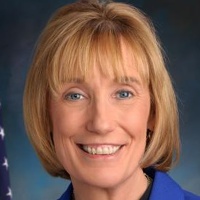
Margaret Hassan
Senator
NH
Margaret Hassan
Senator
NH
This bill mandates the U.S. Trade Representative (USTR) to closely monitor industrial subsidies provided by the Government of the People's Republic of China. The USTR must then submit an annual report to Congress detailing the risks these subsidies pose to U.S. jobs and strategically critical industries. Finally, the report must recommend specific actions the U.S. government can take to counter these harmful subsidies.
This Act prohibits state and local governments from imposing excise taxes on the sale of firearms, ammunition, or parts when such sales involve interstate or foreign commerce, while preserving the Pittman-Robertson Act.
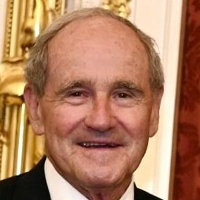
James Risch
Senator
ID
James Risch
Senator
ID
The Freedom from Unfair Gun Taxes Act prohibits state and local governments from imposing excise taxes on the sale of firearms, ammunition, or related parts when those sales involve interstate or foreign commerce. This measure specifically targets state-level taxation on the initial distribution of these items across state lines. Importantly, this Act does not affect the existing federal funding mechanism established by the Pittman-Robertson Wildlife Restoration Act.
This resolution honors the life, distinguished public service, and enduring legacy of former Wyoming Senator Alan K. Simpson.
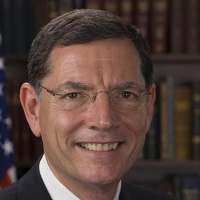
John Barrasso
Senator
WY
John Barrasso
Senator
WY
This resolution formally honors the life and distinguished public service career of the Honorable Alan K. Simpson, former U.S. Senator for Wyoming. It celebrates his extensive tenure in both state and federal government, highlighting his focus on fiscal responsibility and support for veterans. The Senate expresses its deep sorrow at his passing and directs that the day's adjournment serve as a final tribute to his memory.
This resolution condemns Beijing's systematic destruction of Hong Kong's autonomy, rule of law, and fundamental freedoms through the imposition of national security legislation and the targeting of pro-democracy advocates.
James Risch
Senator
ID
James Risch
Senator
ID
This resolution condemns the People's Republic of China and the Hong Kong government for systematically dismantling Hong Kong's promised autonomy and democratic freedoms. It specifically denounces the imposition and expansion of sweeping national security laws used to suppress dissent, arrest activists, and target journalists. The resolution urges international accountability for these actions and calls for the immediate release of all political detainees.
The SHORT Act modifies federal firearms definitions, eliminates disparate treatment and state preemption for certain short-barreled rifles and shotguns, and mandates the destruction of related registration records.

Roger Marshall
Senator
KS
Roger Marshall
Senator
KS
The SHORT Act aims to revise federal firearms tax definitions and eliminate disparate federal treatment of short-barreled rifles and shotguns used for lawful purposes. It also preempts state and local governments from imposing special taxes or registration requirements on these specific weapons if they are involved in interstate commerce. Finally, the bill mandates the destruction of existing federal records related to the registration and transfer of these firearms.
This Act limits the FCC's authority to stop state and federal correctional facilities from using approved, localized cellphone jamming systems to block contraband communications, provided they meet specific operational and notification requirements.
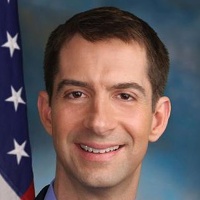
Tom Cotton
Senator
AR
Tom Cotton
Senator
AR
The Cellphone Jamming Reform Act of 2025 limits the FCC's authority to prohibit state and federal correctional facilities from using signal jamming systems within their housing areas. This legislation permits prisons to deploy jammers specifically to block communications involving contraband devices or incarcerated individuals. Any facility choosing to use this technology must adhere to strict operational rules, including location limitations and pre-approval notification to local public safety officials and the Bureau of Prisons.
This Act establishes that federal law must define "male" and "female" strictly based on biological sex determined at conception, prohibiting the recognition of "gender identity" as a substitute for sex.
Roger Marshall
Senator
KS
Roger Marshall
Senator
KS
The Defining Male and Female Act of 2025 establishes fixed, biological definitions for "male" and "female" based on reproductive function at conception for all federal law interpretations. This Act mandates that the federal government must use these biological definitions when defining sex, man, woman, and parental roles. Furthermore, it explicitly states that "gender identity" shall not be recognized as a substitute for biological sex in federal statutes or regulations.
This bill eliminates California's authority and that of other states to set their own emission standards for off-road engines and prevents other states from adopting California's motor vehicle emission standards.
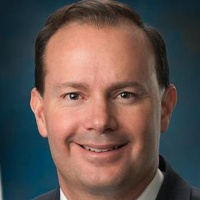
Mike Lee
Senator
UT
Mike Lee
Senator
UT
The Stop CARB Act of 2025 aims to centralize federal control over emission standards for off-road engines and vehicles by immediately repealing all state authority to set or enforce their own rules in this area. This legislation also eliminates the ability for other states to adopt California's stricter new motor vehicle emission standards. In essence, the bill strips states of their power to create pollution regulations that exceed federal requirements for specific engine types and vehicles.
The Major Richard Star Act allows veterans with combat-related disabilities to receive both military retired pay and veteran's disability compensation without reduction.
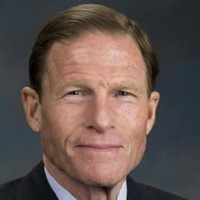
Richard Blumenthal
Senator
CT
Richard Blumenthal
Senator
CT
The Major Richard Star Act allows veterans with combat-related disabilities to receive both veteran's disability compensation and military retired pay concurrently, without reduction. This act amends Title 10 of the United States Code to ensure that disability retirees with combat-related disabilities are not subject to reductions in retired pay due to receiving veteran's disability compensation. These changes will take effect the first day of the month following the enactment of the Act.
The PARTS Act of 2025 redefines "firearm silencer" and "firearm muffler" in federal law to include both complete sound-reducing devices and the main housing components intended for attachment to a portable firearm.
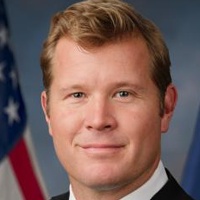
Tim Sheehy
Senator
MT
Tim Sheehy
Senator
MT
The PARTS Act of 2025, or Protecting Americans Right To Silence Act, updates the federal definition of a "firearm silencer" or "firearm muffler." This legislation clarifies that both complete sound-reducing devices and the main housing component of such a device are legally considered silencers if designed to attach to a portable firearm. This change ensures that the core components intended for noise reduction are regulated under existing federal law.
This act prevents the government from recovering Social Security or SSI overpayments if the error was discovered ten or more years after the overpayment occurred.
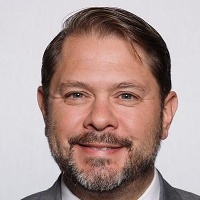
Ruben Gallego
Senator
AZ
Ruben Gallego
Senator
AZ
The Social Security Overpayment Relief Act limits the government's ability to recover Social Security and SSI overpayments. Specifically, the government cannot seek repayment or reduce future benefits for overpayments discovered ten or more years after the overpayment occurred. This provides relief by preventing the collection of very old benefit overpayments.
This Act expands the Work Opportunity Tax Credit to include employers who hire military spouses.
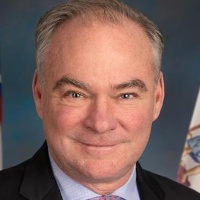
Timothy Kaine
Senator
VA
Timothy Kaine
Senator
VA
The Military Spouse Hiring Act amends the Work Opportunity Tax Credit (WOTC) to include military spouses as eligible hires. This allows employers to claim the tax credit for hiring individuals certified as spouses of active-duty military personnel. The provision applies to wages paid for individuals hired after the Act's enactment date.
The Concrete and Asphalt Innovation Act of 2025 establishes federal programs for research, demonstration, and procurement incentives to accelerate the development and domestic use of low-emissions cement, concrete, and asphalt.
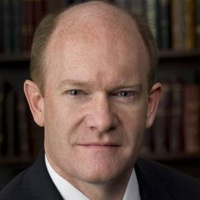
Christopher Coons
Senator
DE
Christopher Coons
Senator
DE
The Concrete and Asphalt Innovation Act of 2025 establishes federal programs to accelerate research, development, and deployment of low-emissions cement, concrete, and asphalt. The bill aims to slash greenhouse gas emissions from these critical building materials while boosting domestic manufacturing and supply chains. Key components include establishing research programs, creating specialized Manufacturing USA institutes, and providing financial incentives for states to adopt greener road materials. The Act also creates an Interagency Task Force to coordinate strategies for performance standards, workforce development, and market adoption of these innovative products.
The HELPER Act of 2025 establishes a new FHA mortgage insurance program offering zero-down-payment loans to eligible first responders, educators, and law enforcement officers.

Ashley Moody
Senator
FL
Ashley Moody
Senator
FL
The HELPER Act of 2025 establishes a new FHA mortgage insurance program to help first responders, educators, and law enforcement officers purchase homes. This program offers qualifying first-time homebuyers the potential for a zero down payment mortgage. A key feature is the elimination of monthly mortgage insurance premiums, though an upfront premium will still be charged.
This Act prohibits states from obtaining waivers to set new vehicle emission standards that restrict the sale or use of new cars with internal combustion engines and requires the revocation of existing conflicting waivers.
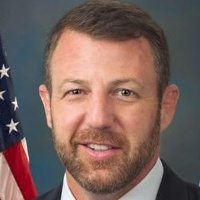
Markwayne Mullin
Senator
OK
Markwayne Mullin
Senator
OK
The Preserving Choice in Vehicle Purchases Act of 2025 amends the Clean Air Act to prohibit states from receiving waivers to set new vehicle emission standards that restrict the sale or use of new cars with internal combustion engines. This legislation invalidates any existing or future state standards that directly or indirectly limit traditional gasoline-powered vehicles. Furthermore, the bill mandates the revocation of any previously granted waivers that conflict with this new restriction.