Legislative Activity
Track Bill's sponsored bills, co-sponsored legislation, and voting record
This bill expands the legal definition of "critical minerals" to include materials designated as "critical materials" by the Secretary of Energy.
Mike Lee
Senator
UT
Mike Lee
Senator
UT
The Critical Mineral Consistency Act of 2025 expands the legal definition of "critical minerals" to explicitly include materials previously designated as "critical materials" by the Secretary of Energy. This legislation mandates the Secretary to promptly update the official list of critical minerals upon such a designation. The goal is to ensure consistency in how these vital resources are legally defined and tracked.
This act authorizes the Secretary of Veterans Affairs to approve multi-state apprenticeship programs for veterans seeking educational assistance in the trucking industry.
Richard Blumenthal
Senator
CT
Richard Blumenthal
Senator
CT
The Veterans’ Transition to Trucking Act of 2025 authorizes the Secretary of Veterans Affairs to directly approve multi-state apprenticeship programs for veterans seeking to use their educational benefits in the trucking industry. This streamlines the approval process for interstate commerce carrier programs. Essentially, the VA can now act as the approving agency for these specific, multi-state training opportunities.
The Affordable Housing Bond Enhancement Act revises rules for reporting, carrying forward, and refinancing housing bonds, increases home improvement loan limits, and modifies tax credit and reporting requirements related to mortgage revenue bonds and certificates.
Catherine Cortez Masto
Senator
NV
Catherine Cortez Masto
Senator
NV
The Affordable Housing Bond Enhancement Act revises rules governing private activity bonds and mortgage revenue bonds to increase housing finance flexibility. It establishes new annual reporting requirements for bond usage while easing restrictions on refinancing and significantly increasing the limit for qualified home improvement loans. Furthermore, the Act adjusts tax recapture periods and extends deadlines related to mortgage credit certificates.
The Affordable Housing Credit Improvement Act of 2025 overhauls state allocation formulas, reforms tenant eligibility and credit determination rules, and enhances assistance for Native American and rural housing projects under the Low-Income Housing Tax Credit program.

Todd Young
Senator
IN
Todd Young
Senator
IN
The Affordable Housing Credit Improvement Act of 2025 comprehensively reforms the Low-Income Housing Tax Credit program by updating state allocation formulas based on population and inflation, and by modifying tenant eligibility rules to protect vulnerable residents. The bill also introduces significant changes for property owners regarding casualty loss, acquisition costs, and incentives for serving extremely low-income households. Finally, it directs efforts toward increasing program transparency and encouraging local governments to reform restrictive housing policies.
This resolution supports National Fentanyl Awareness Day in 2025 to increase public awareness about the deadly impact of counterfeit fentanyl pills, especially on young people.
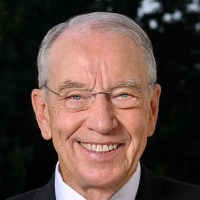
Charles Grassley
Senator
IA
Charles Grassley
Senator
IA
This resolution officially supports the mission of National Fentanyl Awareness Day in 2025 to combat the deadly counterfeit pill crisis. It highlights the severe danger posed by fake pills containing lethal doses of fentanyl, which are increasingly accessible to young people. The bill aims to increase public awareness regarding this threat and applauds law enforcement efforts to stop the spread of illicit drugs.
This bill strengthens federal law enforcement tools and establishes a new coordination center to combat organized retail and supply chain crime.
Charles Grassley
Senator
IA
Charles Grassley
Senator
IA
The Combating Organized Retail Crime Act aims to combat sophisticated criminal gangs engaged in large-scale retail and supply chain theft. This bill strengthens federal law by updating money laundering and stolen property statutes, including establishing a $5,000 aggregate value threshold for certain offenses. Crucially, it mandates the creation of a specialized federal Coordination Center within Homeland Security to unify efforts across all levels of law enforcement and private industry against these transnational criminal organizations.
This bill extends the deadline and adjusts the incentive payment rate for providers participating in eligible alternative payment models through 2027.
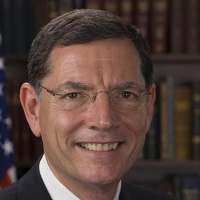
John Barrasso
Senator
WY
John Barrasso
Senator
WY
The Preserving Patient Access to Accountable Care Act extends the availability of incentive payments for healthcare providers participating in approved alternative payment models. Specifically, it pushes the final year for these bonuses from 2026 to 2027. For the extended year of 2027, the bill establishes a new incentive payment percentage of 3.53 percent.
This resolution officially designates the week of April 19 through April 27, 2025, as "National Park Week" to celebrate the history, value, and importance of the National Park System.
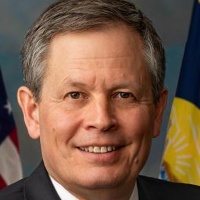
Steve Daines
Senator
MT
Steve Daines
Senator
MT
This resolution officially designates the week of April 19 through April 27, 2025, as "National Park Week." It recognizes the historical significance and vital mission of the National Park Service in preserving America's natural and cultural treasures. The bill encourages the public to visit, experience, and support these cherished sites during this designated week.
This bill mandates comprehensive federal reports on violence against law enforcement, gaps in aggression data reporting, and officer mental health resources to improve safety and wellness.
Charles Grassley
Senator
IA
Charles Grassley
Senator
IA
This bill mandates the Attorney General to produce comprehensive reports to Congress addressing the rising violence against law enforcement officers, including ambushes and non-traditional aggressions. These reports must analyze current data collection gaps, evaluate existing training and mental health resources, and recommend legislative or procedural improvements. The ultimate goal is to enhance officer safety, wellness, and the federal government's ability to support local and state police departments effectively.
The FIGHT Act of 2025 strengthens federal prohibitions against animal fighting ventures, particularly involving roosters, enhances enforcement mechanisms, and grants citizens the right to sue violators.
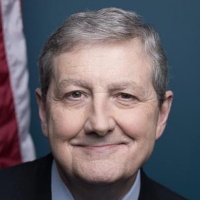
John Kennedy
Senator
LA
John Kennedy
Senator
LA
The FIGHT Act of 2025 significantly strengthens federal prohibitions against animal fighting ventures, particularly those involving roosters, by expanding illegal activities to include attendance by minors and gambling. This bill enhances enforcement by tightening restrictions on interstate transport and advertising, while also empowering private citizens to file lawsuits to enjoin violations. Furthermore, the Act allows for the seizure of real property used to facilitate these illegal fighting activities.
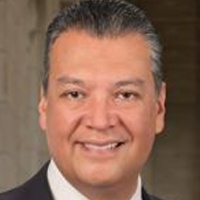
This Act excludes specific VA disability payments from being counted as income when unhoused disabled veterans apply for certain housing assistance programs.
Alejandro Padilla
Senator
CA
Alejandro Padilla
Senator
CA
The Housing Unhoused Disabled Veterans Act aims to increase housing assistance eligibility for disabled veterans by excluding specific VA disability benefits from income calculations for certain housing programs. This ensures that compensation received for service-connected disabilities does not prevent veterans from qualifying for supportive housing assistance. However, these excluded benefits will still be considered when calculating the final adjusted rent amount.
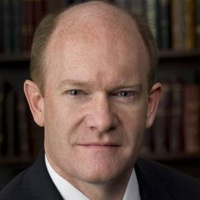
The NO FAKES Act of 2025 establishes exclusive rights for individuals and their heirs to control the licensing and use of their digital voice and visual likeness replicas.
Christopher Coons
Senator
DE
Christopher Coons
Senator
DE
The NO FAKES Act of 2025 establishes exclusive property rights for individuals over the creation and use of their digital voice and visual likenesses (Digital Replicas). This federal law grants the right holder the authority to license or control the use of these replicas, both during the individual's life and for a set period after death. The Act outlines specific licensing rules, liability for unauthorized use in commerce, and safe harbor provisions for online services that comply with takedown notices based on digital fingerprinting.
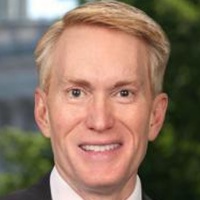
This bill revises physician self-referral exemptions and lifts restrictions on the expansion of physician-owned hospitals located in rural areas.
James Lankford
Senator
OK
James Lankford
Senator
OK
The Physician Led and Rural Access to Quality Care Act revises federal physician self-referral rules to create specific exemptions for certain physician-owned hospitals located in rural areas. This legislation allows these designated "covered rural hospitals" to be exempt from general referral prohibitions. Furthermore, the bill eliminates the existing ban that prevented these physician-owned hospitals from expanding their operations.
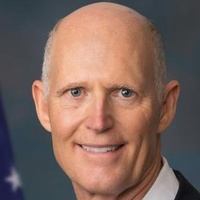
The TASK Act directs the SEC to consider requiring public companies to disclose specific details about their supply chains related to forced labor in Xinjiang, transactions with restricted Chinese entities, and the presence and influence of Chinese Communist Party committees in their Chinese operations.
Rick Scott
Senator
FL
Rick Scott
Senator
FL
The Transaction and Sourcing Knowledge (TASK) Act directs the Securities and Exchange Commission (SEC) to consider new reporting requirements for publicly traded companies regarding environmental, social, and governance (ESG) issues. Specifically, it mandates the SEC to look into requiring disclosures related to supply chains connected to forced labor in Xinjiang, China, and transactions with U.S. government-restricted entities. Furthermore, the bill requires companies operating in China to report on the presence and involvement of any Chinese Communist Party (CCP) committees within their facilities.
The SAFE Act mandates that companies listing stock on U.S. exchanges must disclose financial support received from the Chinese government and details about their internal Chinese Communist Party (CCP) structure and leadership ties.
Rick Scott
Senator
FL
Rick Scott
Senator
FL
The Secure Americas Financial Exchanges Act (SAFE Act) mandates that stock exchanges require listed companies to disclose any financial support received from the People's Republic of China (PRC). Companies must also reveal details about internal Chinese Communist Party (CCP) structures and any leadership ties to the PRC government. These new transparency rules aim to inform investors about potential foreign influence on publicly traded entities.
This joint resolution disapproves the EPA's recently enacted rule setting new pollution control standards for heavy-duty vehicles and engines in California.
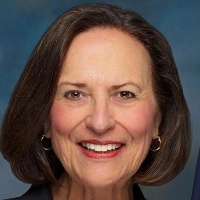
Deb Fischer
Senator
NE
Deb Fischer
Senator
NE
This joint resolution expresses Congress's formal disapproval of a recent rule issued by the Environmental Protection Agency (EPA) concerning California's pollution control standards for heavy-duty vehicles and engines. By invoking the Congressional Review Act, this measure nullifies the EPA's proposed regulations regarding emission standards, warranty provisions, and zero-emission vehicle requirements. Consequently, the specific EPA rule published on April 11, 2023, will not take legal effect.
The BOP SCAN Mail Act mandates the Bureau of Prisons to develop and implement a strategy to digitize mail processing to interdict synthetic drugs like fentanyl entering federal correctional facilities.

Jim Justice
Senator
WV
Jim Justice
Senator
WV
The BOP SCAN Mail Act mandates the Bureau of Prisons (BOP) to develop and implement a comprehensive strategy to stop synthetic drugs, like fentanyl, from entering federal facilities via mail. This strategy requires digitizing mail delivery so inmates receive digital copies within 24 hours, while physical mail is delivered later if cleared of contraband. The ultimate goal is to achieve 100% scanning capacity to enhance security and alleviate staffing burdens within the BOP.
The DETERRENT Act mandates increased federal and institutional transparency regarding foreign gifts and contracts for colleges, bans certain contracts with "countries of concern," and establishes strict enforcement penalties for non-compliance.
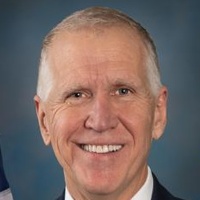
Thom Tillis
Senator
NC
Thom Tillis
Senator
NC
The DETERRENT Act significantly tightens reporting requirements for colleges and universities regarding foreign gifts and contracts, mandating public disclosure databases and imposing strict new prohibitions on agreements with "foreign countries or entities of concern." It establishes severe financial penalties and potential ineligibility for federal aid for institutions that knowingly violate these transparency and compliance rules. The bill also requires institutions to implement internal policies and designate compliance officers to manage risks associated with foreign influence.
The Save Our Seafood Act exempts nonimmigrant aliens working as fish processors from the annual numerical limitation on H-2B temporary work visas.

Lisa Murkowski
Senator
AK
Lisa Murkowski
Senator
AK
The Save Our Seafood Act exempts nonimmigrant aliens working as fish processors from the annual numerical cap on H-2B temporary work visas. This change specifically targets workers involved in handling, preparing, freezing, or packing seafood to ensure the industry has access to necessary labor. The bill provides clear definitions for "fish" and "processor" related to this exemption.
The CONNECT for Health Act of 2025 permanently removes geographic barriers to Medicare telehealth, enhances program integrity through targeted oversight, and establishes new supports to improve quality and access for beneficiaries.
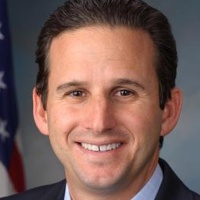
Brian Schatz
Senator
HI
Brian Schatz
Senator
HI
The CONNECT for Health Act of 2025 aims to significantly expand access to telehealth services under Medicare by permanently removing outdated geographic restrictions and broadening provider eligibility. The bill also enhances program integrity by dedicating new funding to oversight and establishing educational outreach for providers with unusual billing patterns. Finally, it mandates new resources, training, and public data reporting to ensure the quality and accessibility of virtual care for all beneficiaries.