
Legislative Activity
Track Steve's sponsored bills, co-sponsored legislation, and voting record
The Gas-Operated Semi-Automatic Firearms Exclusion (GOSAFE) Act prohibits the manufacture, sale, and possession of certain gas-operated semi-automatic firearms and large-capacity ammunition feeding devices, while establishing a formal process for firearm determinations and funding buy-back programs.
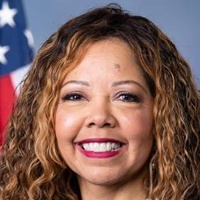
Lucy McBath
Representative
GA
Lucy McBath
Representative
GA
The Gas-Operated Semi-Automatic Firearms Exclusion Act (GOSAFE Act) prohibits the manufacture, sale, and possession of certain gas-operated semi-automatic firearms and large-capacity ammunition feeding devices (over 10 rounds). The bill establishes a formal process managed by the Attorney General and ATF to list prohibited firearms, while grandfathering existing possessions under strict transfer rules. Furthermore, it permits states to use federal Byrne grants for voluntary buy-back programs targeting these newly restricted items. Violations carry significant fines and potential prison sentences.
This resolution urges the United States to lead global efforts to halt the nuclear arms race, reduce existing stockpiles, and implement verifiable measures to prevent nuclear war.
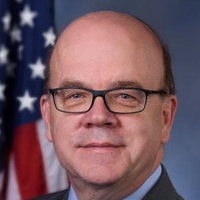
James McGovern
Representative
MA
James McGovern
Representative
MA
This resolution urges the United States to immediately prioritize global nuclear disarmament and lead the world back from the brink of nuclear war. It calls on the President to negotiate verifiable arms reduction treaties with all nuclear states to halt the arms race and prevent catastrophic conflict. Key actions include renouncing "first use," ending hair-trigger alert postures, and ceasing the development of new nuclear weapons. Furthermore, the bill demands comprehensive support, cleanup, and economic transition planning for communities and workers affected by past and present nuclear activities.
This Act establishes federal minimum standards for public employee collective bargaining rights, allowing states to maintain their own laws if they meet or exceed these standards, otherwise the Federal Labor Relations Authority will enforce federal rules.
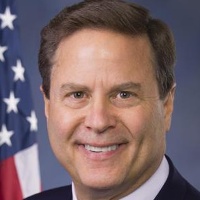
Donald Norcross
Representative
NJ
Donald Norcross
Representative
NJ
The Public Service Freedom to Negotiate Act of 2025 establishes federal minimum standards for collective bargaining rights for public employees across the nation. It requires the Federal Labor Relations Authority (FLRA) to review state laws to ensure they substantially provide these minimum rights, including the right to organize and bargain collectively. If a state fails to meet these standards, the FLRA will administer federal labor relations rules for the uncovered employees. The Act also prohibits strikes or lockouts that would measurably disrupt emergency or public safety services.
The Raise the Wage Act of 2025 gradually increases the federal minimum wage to \$17.00, phases out subminimum wages for tipped employees and workers with disabilities, and eliminates the subminimum wage for young workers.
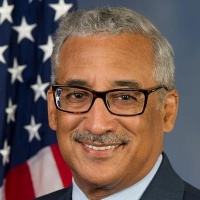
Robert Scott
Representative
VA
Robert Scott
Representative
VA
The Raise the Wage Act of 2025 establishes a phased increase of the federal minimum wage, culminating in a \$17.00 per hour rate five years after enactment, followed by automatic annual adjustments tied to median wage growth. This bill also phases out the lower minimum wage for tipped employees and workers under 20, ensuring they eventually earn the standard federal minimum wage. Furthermore, it sets a schedule to eliminate subminimum wages for individuals with disabilities and prohibits the issuance of new special certificates allowing for lower pay.
This Act officially recognizes peer support specialists, establishes a new Office of Recovery within SAMHSA led by someone with lived experience, and mandates a report on state criminal background check processes for these specialists.
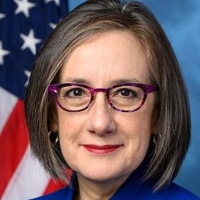
Andrea Salinas
Representative
OR
Andrea Salinas
Representative
OR
The PEER Support Act aims to formally recognize and strengthen the profession of peer support specialists who use their lived experience to help others in recovery. The bill establishes a new Office of Recovery within SAMHSA, led by an individual with lived recovery experience. Furthermore, it mandates the official classification of peer support specialist roles in the federal job system and directs a review of state criminal background check processes for these specialists.
This bill establishes financial incentives for deploying grid-enhancing technologies and mandates improved reporting on transmission congestion costs.

Kathy Castor
Representative
FL
Kathy Castor
Representative
FL
The Advancing GETs Act of 2025 aims to modernize the electric grid by incentivizing the adoption of Grid-Enhancing Technologies (GETs) through a shared savings program managed by FERC. The bill also mandates annual reporting on transmission congestion costs to improve transparency and requires the Department of Energy to create a public application guide and clearinghouse for GETs deployment. Ultimately, this legislation seeks to increase grid capacity, reliability, and efficiency using existing infrastructure.
This bill terminates the Survivors' and Dependents' Educational Assistance Program (DEA) on August 1, 2029, automatically transferring eligible recipients to the Post-9/11 GI Bill.
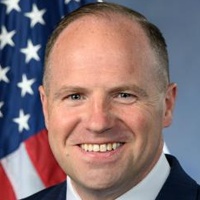
Timothy Kennedy
Representative
NY
Timothy Kennedy
Representative
NY
The Gold Star Family Education Parity Act terminates the authority for the Survivors’ and Dependents’ Educational Assistance Program (DEA) on August 1, 2029. Individuals who lose eligibility due to this cutoff will be automatically transitioned to receive educational assistance under the Post-9/11 GI Bill. This ensures continued educational support for eligible survivors and dependents.
The Religious Workforce Protection Act extends nonimmigrant status and provides job flexibility for religious workers caught in long green card backlogs, while also waiving the one-year foreign residence requirement for those who left due to the R-1 visa time limit.

Mike Carey
Representative
OH
Mike Carey
Representative
OH
The Religious Workforce Protection Act aims to support religious workers facing long green card backlogs by allowing extensions of their nonimmigrant status beyond the usual five-year limit until their permanent residency application is processed. It also modifies job flexibility rules for certain delayed applicants and exempts religious workers who left the U.S. due to the five-year R-1 visa limit from the mandatory one-year foreign residence requirement before reapplying.
This bill eliminates reduced-price school meals while expanding eligibility for free meals by raising the income threshold and allowing direct certification for children receiving Medicaid.
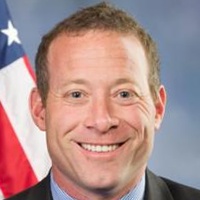
Josh Gottheimer
Representative
NJ
Josh Gottheimer
Representative
NJ
The Expanding Access to School Meals Act of 2025 aims to simplify school meal programs by eliminating the "reduced-price" meal category for both breakfast and lunch. It significantly expands eligibility for free school meals by raising the federal poverty level threshold to 224% and allowing automatic certification for children receiving Medicaid benefits. Additionally, the bill enhances financial support for schools by allowing retroactive reimbursement claims and increasing the multiplier for the Community Eligibility Program.
This Act allows employees to fully deduct union dues above the line and restores the itemized deduction for certain other job-related business expenses.
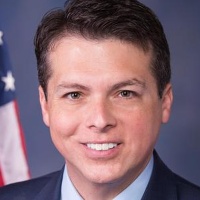
Brendan Boyle
Representative
PA
Brendan Boyle
Representative
PA
The Tax Fairness for Workers Act restores key federal tax deductions for employees, effective after 2024. This legislation makes union dues fully deductible "above the line," meaning they reduce Adjusted Gross Income without itemizing. Additionally, it allows itemizers to deduct certain other job-related business expenses that were previously limited.
This bill streamlines security vetting for international STEM graduate students and creates a new pathway to lawful permanent residency for those holding advanced U.S. STEM degrees with qualifying job offers.
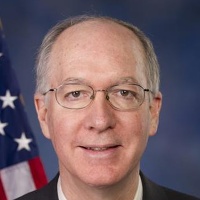
Bill Foster
Representative
IL
Bill Foster
Representative
IL
The Keep STEM Talent Act of 2025 aims to strengthen security vetting for international graduate students in STEM fields while creating a new pathway to permanent residency for those who earn advanced STEM degrees in the U.S. The bill mandates pre-admission applications and enhanced background checks for incoming STEM graduate students. Furthermore, it establishes a streamlined green card category for advanced STEM degree holders with qualifying job offers, allowing them to pursue permanent residency without jeopardizing their current student status.
This Act prohibits the State Department from implementing any reorganization without specific statutory authorization from Congress and the submission of a detailed plan outlining the impact of the changes.

Sydney Kamlager-Dove
Representative
CA
Sydney Kamlager-Dove
Representative
CA
The Defending American Diplomacy Act prohibits the Secretary of State from implementing any reorganization of the State Department without specific statutory authorization from Congress and the submission of a detailed plan. This plan must thoroughly analyze the impact on foreign policy goals, operations, and personnel. If the Secretary proceeds without authorization, specific funding restrictions against the Department of Government Efficiency and official travel for high-level appointees will take effect.
This bill prohibits the use of federal funds for the removal of 3 percent or more of the Department of Health and Human Services (HHS) employees or any of its sub-agencies within any 60-day period.
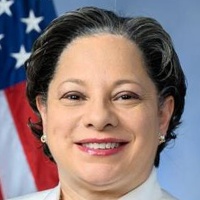
Jennifer McClellan
Representative
VA
Jennifer McClellan
Representative
VA
This bill restricts the use of federal funds to carry out large-scale removals of employees within the Department of Health and Human Services (HHS). Specifically, it prohibits using federal money for terminations if 3% or more of the total HHS workforce, or 3% or more of any individual sub-agency's staff, are removed within a 60-day period. This measure aims to prevent sudden, mass layoffs across the department and its major divisions.
This bill raises the resource limits for Supplemental Security Income (SSI) eligibility starting in 2025 and ties future limits to inflation adjustments.
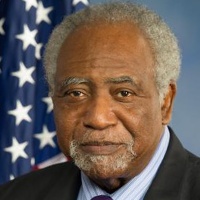
Danny Davis
Representative
IL
Danny Davis
Representative
IL
The SSI Savings Penalty Elimination Act significantly raises the resource limits for individuals and couples applying for Supplemental Security Income (SSI), starting in 2025. This legislation also mandates that these new resource limits will be automatically adjusted annually to keep pace with inflation. The goal is to allow SSI applicants to save more money without losing eligibility for benefits.
This Act mandates the Department of Labor to establish and enforce comprehensive workplace violence prevention standards for healthcare and social service workers, while also tying compliance to Medicare funding for certain facilities.
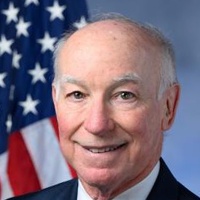
Joe Courtney
Representative
CT
Joe Courtney
Representative
CT
This Act mandates the Secretary of Labor to establish an interim and then a final standard requiring comprehensive workplace violence prevention plans for employers in the healthcare and social service sectors. These plans must be developed with employee input and detail risk assessments, hazard controls, reporting procedures, and annual training. Furthermore, the bill amends the Social Security Act to require Medicare-funded hospitals and skilled nursing facilities not covered by OSHA to comply with these new federal workplace violence prevention standards. The legislation also establishes clear definitions for workplace violence and includes strong anti-retaliation protections for employees who exercise their rights under the Act.
This Act imposes sweeping, mandatory sanctions, tariffs, and investment prohibitions on the Russian Federation and its affiliates until Russia negotiates a lasting peace with Ukraine.
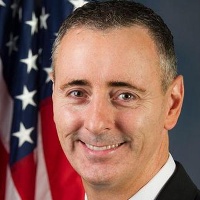
Brian Fitzpatrick
Representative
PA
Brian Fitzpatrick
Representative
PA
The Sanctioning Russia Act of 2025 imposes sweeping economic penalties on the Russian Federation in response to its aggression against Ukraine. This legislation mandates severe, immediate sanctions against key Russian officials, financial institutions, and energy sector entities, including asset freezes and trade prohibitions. Furthermore, the Act dramatically increases import duties on Russian goods and requires the President to review and reimpose these measures until Russia negotiates a lasting peace with Ukraine.
The Reentry Act of 2025 allows inmates to receive Medicaid assistance during the 30 days preceding their release and mandates a comprehensive report on healthcare standards within correctional facilities.
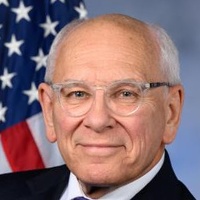
Paul Tonko
Representative
NY
Paul Tonko
Representative
NY
The Reentry Act of 2025 allows incarcerated individuals to receive medical assistance through Medicaid during the 30 days immediately preceding their release. This legislation also mandates a comprehensive report from MACPAC analyzing current healthcare standards within correctional facilities. The report will examine the impact of this coverage change and offer recommendations for improving healthcare access for those transitioning back into the community.
The Hunger-Free Future Act of 2025 mandates that any adjustment to the Thrifty Food Plan used for SNAP benefits cannot result in an increase in household food insecurity.

Shontel Brown
Representative
OH
Shontel Brown
Representative
OH
The Hunger-Free Future Act of 2025 mandates that any adjustment to the Thrifty Food Plan used for calculating SNAP benefits must not result in an increase in food insecurity. This ensures that updates to the cost of the food plan do not negatively impact households' ability to afford adequate nutrition.
The Abortion Care Awareness Act of 2025 mandates a national public health campaign by HHS to educate the public on accessing abortion care, understanding related rights, and identifying misinformation.

Jasmine Crockett
Representative
TX
Jasmine Crockett
Representative
TX
The Abortion Care Awareness Act of 2025 mandates the creation of a national public health campaign by the Secretary of HHS to educate the public on accessing abortion and related health services legally and safely. This campaign must provide medically accurate information on care options, including telehealth and medication abortion, while also teaching people how to recognize disinformation and protect their health data. The effort must be culturally competent and accessible to underserved communities, explicitly prohibiting the promotion of misinformation or abstinence-only programs.
This Act establishes federal grant programs to improve medical education, expand community health center capacity, and increase rural provider training in gender-affirming care for transgender individuals.
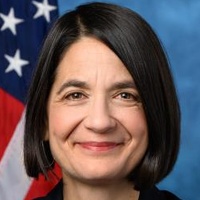
Becca Balint
Representative
VT
Becca Balint
Representative
VT
The Transgender Health Care Access Act aims to improve access to gender-affirming care by addressing critical gaps in medical education and provider capacity. The bill establishes grant programs to develop and implement comprehensive training curricula for medical professionals across various settings, including rural areas. Furthermore, it provides funding to expand the ability of community health centers to deliver culturally competent and necessary care to transgender individuals. Ultimately, this legislation seeks to ensure that healthcare providers are adequately trained and equipped to meet the medical needs of the transgender population.