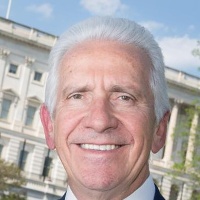
Legislative Activity
Track Jim's sponsored bills, co-sponsored legislation, and voting record
This act prohibits the destruction of broadband internet access service facilities by expanding federal law to protect all such infrastructure, regardless of who operates it.
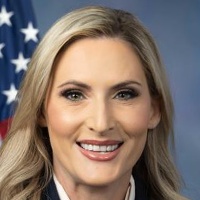
Laurel Lee
Representative
FL
Laurel Lee
Representative
FL
The Stopping the Theft and Destruction of Broadband Act of 2025 strengthens federal law to explicitly prohibit the destruction of broadband internet access service facilities. This update broadens protection beyond defense-related infrastructure to cover any privately or publicly operated broadband service. The Act provides a clear definition of what constitutes broadband internet access service under federal protection.
The Invest to Protect Act of 2025 establishes a Department of Justice grant program to fund training, mental health resources, and recruitment/retention bonuses for small local law enforcement agencies.
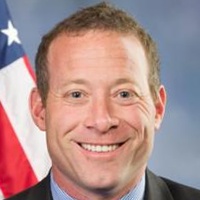
Josh Gottheimer
Representative
NJ
Josh Gottheimer
Representative
NJ
The Invest to Protect Act of 2025 establishes a new, streamlined grant program within the Department of Justice to support small local and Tribal law enforcement agencies (under 175 officers). These funds are specifically designated for officer training, mental health resources, and recruitment/retention bonuses. The law mandates a rapid application process and includes strict accountability measures, such as audits and public reporting of bonuses. Congress is authorized to appropriate up to $50 million annually for this program through fiscal year 2031.
The TAKE IT DOWN Act establishes federal criminal penalties for sharing nonconsensual intimate images (real or digitally forged) and mandates that covered online platforms remove such content within 48 hours of receiving a valid request.

Maria Salazar
Representative
FL
Maria Salazar
Representative
FL
The TAKE IT DOWN Act establishes federal criminal penalties for the intentional sharing of both real and digitally forged nonconsensual intimate images, with stricter penalties for images involving minors. It mandates that covered online platforms create a clear process for victims to request the removal of such content within 48 hours. Failure by platforms to reasonably comply with these removal requests will be treated as an unfair or deceptive practice enforced by the Federal Trade Commission (FTC).
This Act establishes federal minimum standards for public employee collective bargaining rights, allowing states to maintain their own laws if they meet or exceed these standards, otherwise the Federal Labor Relations Authority will enforce federal rules.
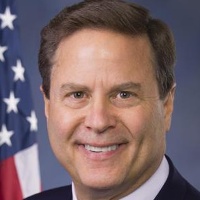
Donald Norcross
Representative
NJ
Donald Norcross
Representative
NJ
The Public Service Freedom to Negotiate Act of 2025 establishes federal minimum standards for collective bargaining rights for public employees across the nation. It requires the Federal Labor Relations Authority (FLRA) to review state laws to ensure they substantially provide these minimum rights, including the right to organize and bargain collectively. If a state fails to meet these standards, the FLRA will administer federal labor relations rules for the uncovered employees. The Act also prohibits strikes or lockouts that would measurably disrupt emergency or public safety services.
This bill officially terminates the national emergency declared by the President on April 2, 2025, under Executive Order 14257.
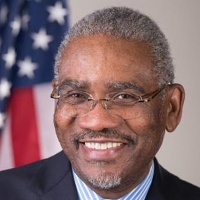
Gregory Meeks
Representative
NY
Gregory Meeks
Representative
NY
This bill officially terminates the national emergency that the President declared on April 2, 2025, under Executive Order 14257. It utilizes the authority of the National Emergencies Act to immediately end the emergency declaration. Consequently, all special powers and authorities activated by that declaration are rescinded.
The Affordable Housing Credit Improvement Act of 2025 updates state allocation formulas, reforms tenant eligibility and credit determination rules, and enhances assistance for Native American and rural housing projects.
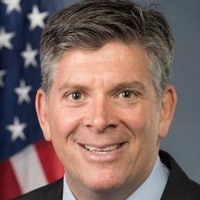
Darin LaHood
Representative
IL
Darin LaHood
Representative
IL
The Affordable Housing Credit Improvement Act of 2025 updates federal housing tax credit allocations to reflect current economic realities and boosts minimum state allotments. It reforms tenant eligibility rules to stabilize tenancy and enhance protections for vulnerable residents, including victims of abuse. The bill also provides disaster relief for property owners, increases incentives for housing the extremely low-income, and directs greater resources toward Native American and rural housing needs. Finally, it streamlines administrative processes and signals a future focus on data transparency and discouraging restrictive local zoning.
This Act allows employees to fully deduct union dues above the line and restores the itemized deduction for certain other job-related business expenses.
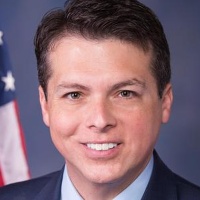
Brendan Boyle
Representative
PA
Brendan Boyle
Representative
PA
The Tax Fairness for Workers Act restores key federal tax deductions for employees, effective after 2024. This legislation makes union dues fully deductible "above the line," meaning they reduce Adjusted Gross Income without itemizing. Additionally, it allows itemizers to deduct certain other job-related business expenses that were previously limited.
The Religious Workforce Protection Act extends nonimmigrant status and provides job flexibility for religious workers caught in long green card backlogs, while also waiving the one-year foreign residence requirement for those who left due to the R-1 visa time limit.
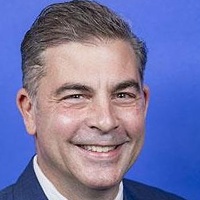
Mike Carey
Representative
OH
Mike Carey
Representative
OH
The Religious Workforce Protection Act aims to support religious workers facing long green card backlogs by allowing extensions of their nonimmigrant status beyond the usual five-year limit until their permanent residency application is processed. It also modifies job flexibility rules for certain delayed applicants and exempts religious workers who left the U.S. due to the five-year R-1 visa limit from the mandatory one-year foreign residence requirement before reapplying.
This bill eliminates reduced-price school meals while expanding eligibility for free meals by raising the income threshold and allowing direct certification for children receiving Medicaid.
Josh Gottheimer
Representative
NJ
Josh Gottheimer
Representative
NJ
The Expanding Access to School Meals Act of 2025 aims to simplify school meal programs by eliminating the "reduced-price" meal category for both breakfast and lunch. It significantly expands eligibility for free school meals by raising the federal poverty level threshold to 224% and allowing automatic certification for children receiving Medicaid benefits. Additionally, the bill enhances financial support for schools by allowing retroactive reimbursement claims and increasing the multiplier for the Community Eligibility Program.
This Act overhauls federal firearm dealer regulations by mandating enhanced physical security, stricter inventory tracking, increased licensing fees, and new oversight for online firearm facilitators.
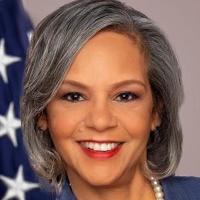
Robin Kelly
Representative
IL
Robin Kelly
Representative
IL
The Federal Firearm Licensee Act significantly overhauls federal regulation of gun dealers by mandating enhanced physical security, stricter inventory tracking, and increased record-keeping requirements. The bill repeals outdated restrictions on the ATF, increases licensing fees, and establishes new regulations for online firearm transfer facilitators. Furthermore, it strengthens enforcement by increasing penalties for compliance failures and mandating more frequent inspections for high-risk dealers.
This Act establishes a federal grant program to help public water systems reduce nitrate and arsenic contamination in drinking water, prioritizing disadvantaged communities.
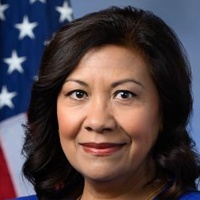
Norma Torres
Representative
CA
Norma Torres
Representative
CA
This Act establishes the Nitrate and Arsenic Reduction Grant Program under the Safe Drinking Water Act to fund projects that reduce these contaminants in public drinking water systems. Priority for these grants will be given to disadvantaged communities and systems that have previously failed to meet safety standards. The program aims to ensure cleaner drinking water, with special consideration for projects benefiting schools and low-income residents.
The IDEA Full Funding Act establishes mandatory, increasing funding levels for the Individuals with Disabilities Education Act (IDEA) from 2026 through 2035, contingent upon offsetting budget cuts.
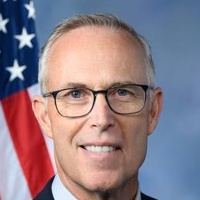
Jared Huffman
Representative
CA
Jared Huffman
Representative
CA
The IDEA Full Funding Act establishes mandatory, increasing funding levels for the Individuals with Disabilities Education Act (IDEA) programs through fiscal year 2035. This legislation sets specific appropriation targets based on student counts and national average spending to ensure greater financial support for special education services. Furthermore, the bill requires that these new IDEA appropriations adhere to "cut-as-you-go" budget offset rules.
This act establishes a new, increased tax credit and direct payment system for the production and use of renewable natural gas through 2035.
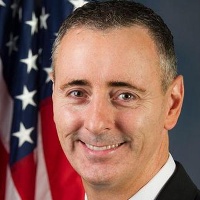
Brian Fitzpatrick
Representative
PA
Brian Fitzpatrick
Representative
PA
The Renewable Natural Gas Incentive Act of 2025 establishes a new, fixed tax credit of \$1.00 per gallon equivalent for the sale or use of qualifying renewable natural gas (RNG) as transportation fuel. This legislation updates the Internal Revenue Code to define RNG, set rules for blended fuels, and ensure producers register for the program. The direct payment option for businesses claiming this credit is set to expire after December 31, 2035.
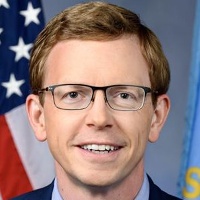
The SAFETY Act of 2025 ensures U.S. food and agricultural producers can continue using established common product names in foreign markets despite international restrictions.
Dusty Johnson
Representative
SD
Dusty Johnson
Representative
SD
The SAFETY Act of 2025 aims to protect American agricultural and food exporters by legally safeguarding their right to use common product names in foreign markets. It establishes a clear definition for "common name," explicitly listing many existing U.S. food, wine, and beer terms that are protected from foreign restrictions. Furthermore, the bill mandates that U.S. trade representatives actively negotiate to ensure these common names remain usable in all future international trade agreements.
The CARE Act of 2025 mandates Medicare to test a new payment model covering emergency response services provided by ground ambulance companies even when patient transport does not occur.
Mike Carey
Representative
OH
Mike Carey
Representative
OH
The CARE Act of 2025 mandates that the Center for Medicare and Medicaid Innovation (CMMI) test a new payment model for emergency services. This model will allow Medicare to pay ground ambulance providers for emergency responses, even when a patient does not ultimately require transport under Medicare Part B. The five-year demonstration aims to evaluate the impact of covering these non-transport emergency responses on patient access and resource utilization.
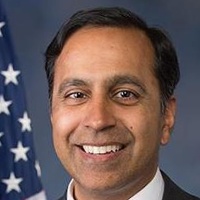
The Taiwan Allies Fund Act establishes a fund to provide financial assistance to nations facing pressure from the PRC for maintaining ties with Taiwan, while also encouraging deeper U.S. support for Taiwan's international presence.
Raja Krishnamoorthi
Representative
IL
Raja Krishnamoorthi
Representative
IL
The Taiwan Allies Fund Act establishes a dedicated fund to support countries that maintain relationships with Taiwan despite pressure from the People's Republic of China (PRC). This fund authorizes up to $40 million annually for fiscal years 2026 through 2028 to help eligible nations counter PRC coercion. Aid will focus on strengthening democratic partnerships, supporting Taiwan's international participation, and offering alternatives to PRC economic influence. The Secretary of State will manage the fund, coordinating with Taiwan, and must report annually to Congress on the fund's activities and Taiwan's matching contributions.
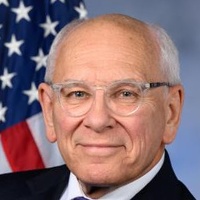
The Reentry Act of 2025 allows inmates to receive Medicaid assistance during the 30 days preceding their release and mandates a comprehensive report on healthcare standards within correctional facilities.
Paul Tonko
Representative
NY
Paul Tonko
Representative
NY
The Reentry Act of 2025 allows incarcerated individuals to receive medical assistance through Medicaid during the 30 days immediately preceding their release. This legislation also mandates a comprehensive report from MACPAC analyzing current healthcare standards within correctional facilities. The report will examine the impact of this coverage change and offer recommendations for improving healthcare access for those transitioning back into the community.
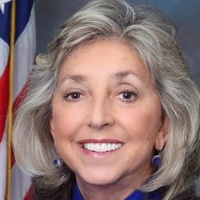
This Act establishes a program, managed by the Librarian of Congress, to create and disseminate educational resources countering denial of the Armenian Genocide.
Dina Titus
Representative
NV
Dina Titus
Representative
NV
The Armenian Genocide Education Act establishes a program managed by the Librarian of Congress to develop and share educational resources combating denial of the 1915-1923 Armenian Genocide. This initiative will create online materials, train educators, and encourage the integration of accurate history into school curricula. The Act authorizes $2 million annually for five years to support these educational efforts aimed at promoting awareness and preventing future atrocities.
This Act mandates the Department of Labor to establish and enforce comprehensive workplace violence prevention standards for healthcare and social service workers, while also tying compliance to Medicare funding for certain facilities.
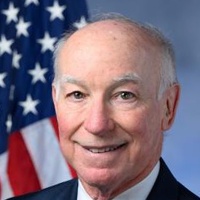
Joe Courtney
Representative
CT
Joe Courtney
Representative
CT
This Act mandates the Secretary of Labor to establish an interim and then a final standard requiring comprehensive workplace violence prevention plans for employers in the healthcare and social service sectors. These plans must be developed with employee input and detail risk assessments, hazard controls, reporting procedures, and annual training. Furthermore, the bill amends the Social Security Act to require Medicare-funded hospitals and skilled nursing facilities not covered by OSHA to comply with these new federal workplace violence prevention standards. The legislation also establishes clear definitions for workplace violence and includes strong anti-retaliation protections for employees who exercise their rights under the Act.
This Act imposes sweeping, mandatory sanctions, tariffs, and investment prohibitions on the Russian Federation and its affiliates until Russia negotiates a lasting peace with Ukraine.
Brian Fitzpatrick
Representative
PA
Brian Fitzpatrick
Representative
PA
The Sanctioning Russia Act of 2025 imposes sweeping economic penalties on the Russian Federation in response to its aggression against Ukraine. This legislation mandates severe, immediate sanctions against key Russian officials, financial institutions, and energy sector entities, including asset freezes and trade prohibitions. Furthermore, the Act dramatically increases import duties on Russian goods and requires the President to review and reimpose these measures until Russia negotiates a lasting peace with Ukraine.