Legislative Activity
Track Andy's sponsored bills, co-sponsored legislation, and voting record
This bill makes technical corrections and clarifications to the Camp Lejeune Justice Act of 2022, including adjusting venue options, setting standards of proof, and capping attorney fees, all retroactively applied to August 10, 2022.
Gregory Murphy
Representative
NC
Gregory Murphy
Representative
NC
The Ensuring Justice for Camp Lejeune Victims Act of 2025 makes technical corrections to the 2022 Camp Lejeune Justice Act to clarify standards for proving harm and venue for trials. This legislation sets specific caps on attorney fees and retroactively applies these changes to all existing and future claims filed under the original 2022 Act. The bill ensures that existing statutes of limitations for filing claims remain unchanged.
This bill exempts certain private fund investment advisers managing under \$5 billion for qualified or accredited investors from SEC registration while easing biennial reporting requirements for smaller SEC-registered advisers.
Andrew Garbarino
Representative
NY
Andrew Garbarino
Representative
NY
The Tailoring for Main Street’s Investors Act aims to reduce regulatory burdens on certain investment advisers who exclusively manage private funds for high-net-worth investors. This bill exempts advisers managing under \$5 billion in assets from full SEC registration, provided their funds have limited liquidity. Additionally, it eases reporting requirements for smaller advisers managing under \$1 billion by allowing them to file their Form ADV biennially and mandates the creation of a simplified short form for these firms.
This bill allows associations of employers to sponsor group health plans, treating them as a single employer under ERISA, with specific requirements for plan structure and premium rating.
Tim Walberg
Representative
MI
Tim Walberg
Representative
MI
The Association Health Plans Act amends federal law to allow certain groups or associations of employers to sponsor a single group health plan, treating them as a single employer for coverage purposes. This aims to expand access to health coverage by enabling broader risk pooling across different industries. The bill establishes specific criteria these associations must meet to qualify, including minimum size and operational standards. Finally, it outlines rules for setting premium rates and prohibits discrimination based on health status for plans established under this Act.
The LEDGER Act mandates the establishment of a comprehensive, government-wide system to track and record the exact destination and availability period of every federal expenditure.
Mike Haridopolos
Representative
FL
Mike Haridopolos
Representative
FL
The LEDGER Act mandates the creation of a comprehensive, centralized system managed by the Secretary of the Treasury to track every expenditure made by all branches of the U.S. Government. This new system must detail exactly where federal funds are spent and how long those funds were available for obligation. The goal is to significantly enhance the traceability and transparency of government spending.
This Act allows certain investment companies to exclude the fees and expenses of underlying business development companies when reporting total acquired fund costs on their SEC registration statements.
Brad Sherman
Representative
CA
Brad Sherman
Representative
CA
The Access to Small Business Investor Capital Act amends SEC reporting requirements for certain investment companies. This change allows these companies to exclude the indirect fees and expenses incurred from investing in an Acquired Fund, provided that Acquired Fund is a business development company. This simplifies the calculation of total "Acquired Fund Fees and Expenses" disclosed on registration statements.
This Act mandates the inclusion of the Secretary of Agriculture in reviews of foreign investment transactions involving U.S. agricultural interests and requires specific review of agricultural land purchases by entities from designated foreign adversary nations.

Frank Lucas
Representative
OK
Frank Lucas
Representative
OK
The Agricultural Risk Review Act of 2025 ensures the Secretary of Agriculture has a seat on the Committee on Foreign Investment in the United States (CFIUS) for reviews involving agricultural land, biotechnology, or the food industry. This legislation mandates that specific committees review certain agricultural land transactions involving foreign entities from designated adversarial nations. These new provisions aim to enhance national security by scrutinizing foreign investment in critical U.S. agricultural assets.
This act raises the asset threshold to $\$25$ billion for bank and savings and loan holding companies to qualify for streamlined Federal Reserve policy treatment.
Byron Donalds
Representative
FL
Byron Donalds
Representative
FL
The Small Bank Holding Company Relief Act mandates the Federal Reserve to raise the asset threshold for qualifying as a "small" bank holding company to \$25 billion. This change will allow larger institutions, up to that new limit, to benefit from regulatory policy treatment previously reserved for smaller entities.
The COAL POWER Act repeals the Environmental Protection Agency's recent rule on emission standards for coal- and oil-fired electric utility steam generating units.
Troy Downing
Representative
MT
Troy Downing
Representative
MT
The COAL POWER Act, officially the Combating Overregulation And Limitation of Proven, Operable, Working Energy Resources Act, directly repeals a recent Environmental Protection Agency (EPA) rule concerning emission standards for coal- and oil-fired power plants. This legislation effectively nullifies the specified EPA regulation, removing its legal standing.
This Act prohibits the retirement or fuel source conversion of certain dispatchable power plants in areas deemed at high or elevated risk of electricity supply shortfalls, while providing a pathway for financial relief or exemptions under specific reliability and financial hardship criteria.
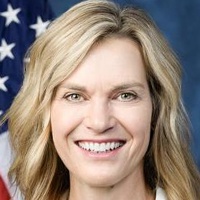
Julie Fedorchak
Representative
ND
Julie Fedorchak
Representative
ND
The Baseload Reliability Protection Act prohibits owners of certain dispatchable power plants in areas facing high or elevated risk of electricity shortages from retiring those units or switching their fuel source. Owners can seek an exemption from this ban from FERC, which must grant it if continued operation causes financial hardship or if retirement does not harm grid reliability. The Department of Energy may offer financial assistance to keep essential, money-losing plants operational.
This Act streamlines the veterans' benefits appeals process through enhanced reporting, new procedural tools for the Board of Veterans Appeals and the Court of Appeals for Veterans Claims, and studies aimed at increasing efficiency.
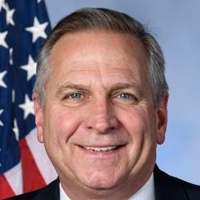
Mike Bost
Representative
IL
Mike Bost
Representative
IL
The Veterans Appeals Efficiency Act of 2025 aims to significantly speed up the Department of Veterans Affairs (VA) claims and appeals process through increased reporting and new procedural tools. This legislation mandates annual transparency on decision times and empowers the Board of Veterans Appeals (BVA) to group similar cases for faster resolution. Furthermore, it expands the jurisdiction of the Court of Appeals for Veterans Claims (CAVC) and requires studies to explore issuing precedential BVA decisions to streamline common legal issues.
This act mandates the creation of a real-time, exclusive online portal for Members of Congress to access detailed federal award and spending information, including payments to individuals.

Chip Roy
Representative
TX
Chip Roy
Representative
TX
The Make DOGE Permanent Act mandates the creation of a special, real-time access portal for members of Congress to view federal award spending data. This exclusive access will provide Congress with the latest information, including details on payments made to individuals and federal employees, which may be restricted on the public website. The Office of Management and Budget (OMB) must establish this dedicated link within six months of the bill's enactment.
This bill establishes federal criminal penalties for performing gender transition procedures on minors, with specific exceptions for certain medical conditions.
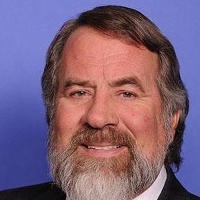
Doug LaMalfa
Representative
CA
Doug LaMalfa
Representative
CA
The Protecting Children from Experimentation Act of 2025 establishes a new federal crime prohibiting healthcare professionals from performing specific gender transition procedures on minors under 18. This bill imposes criminal penalties, including fines and imprisonment, for violations connected to interstate commerce. Minors subjected to these procedures are explicitly protected from prosecution and granted the right to sue those involved. The Act broadly defines banned procedures, including the use of puberty blockers, cross-sex hormones, and various surgeries, while carving out exceptions for certain medical conditions and life-saving measures.
This resolution strongly condemns the rise of antisemitism in the United States and honors the memory of Yaron Lischinsky and Sarah Milgrim, who were murdered while promoting peace.
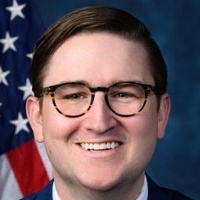
Addison McDowell
Representative
NC
Addison McDowell
Representative
NC
This resolution strongly condemns the rise of antisemitism in the United States and around the world. It specifically honors the memory of Yaron Lischinsky and Sarah Milgrim, who were tragically murdered while promoting peace. Ultimately, Congress reaffirms its commitment to combating all forms of hate and ensuring the vigorous enforcement of laws protecting religious freedom.
This resolution condemns former FBI Director James Comey for allegedly inciting violence against President Trump through a cryptic social media post and demands an investigation and his permanent barring from federal employment.
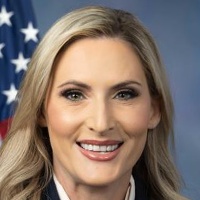
Laurel Lee
Representative
FL
Laurel Lee
Representative
FL
This resolution strongly condemns former FBI Director James Comey for a social media post interpreted as inciting violence against President Donald J. Trump during his overseas trip. Congress demands that federal authorities investigate Comey's actions and permanently bar him from any future federal employment. The measure asserts that political violence incitement by former high-ranking officials is unacceptable and threatens national security.
This act modifies federal securities laws to establish specific fiduciary and investment approval requirements for certain 403(b) retirement plans offered by charities and educational institutions to maintain their exemptions from registration.
Frank Lucas
Representative
OK
Frank Lucas
Representative
OK
The Retirement Fairness for Charities and Educational Institutions Act of 2025 modifies federal securities laws to update exemptions for 403(b) retirement plans. This legislation clarifies requirements under the Investment Company Act, the Securities Act, and the Securities Exchange Act. The changes generally condition these exemptions on the employer taking on specific fiduciary responsibilities regarding the selection and approval of investment options offered to participants.
This Act restricts federal subpoena power over insurance data, enhances confidentiality protections for data shared by the Federal Insurance Office, and limits the Office of Financial Research's ability to subpoena insurance companies while imposing new requirements on financial regulators when collecting data from them.
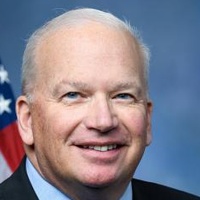
Scott Fitzgerald
Representative
WI
Scott Fitzgerald
Representative
WI
The Insurance Data Protection Act aims to adjust federal regulatory authority over insurance data by limiting the subpoena power of the Office of Financial Research against insurance companies. It also strengthens confidentiality protections for data shared with and held by the Federal Insurance Office and other financial regulators. Furthermore, the bill mandates that financial regulators must seek existing data from other sources before directly collecting information from insurance companies, ensuring data privacy is maintained.
This bill restructures the Consumer Financial Protection Bureau (CFPB) from a single-director agency into an independent commission-led agency with specific expertise and political balance requirements.
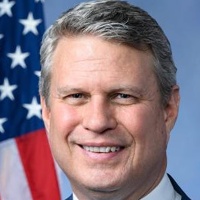
Bill Huizenga
Representative
MI
Bill Huizenga
Representative
MI
This bill, the Bureau of Consumer Financial Protection Commission Act, restructures the Consumer Financial Protection Bureau (CFPB) by replacing its single Director leadership with an independent, five-member commission appointed by the President and confirmed by the Senate. The legislation updates numerous federal laws to replace references to the "Director" with the "Commission" or "Bureau" to reflect this new governance structure. The commission will oversee the agency's core rulemaking and enforcement authority, with a Chair selected from among its members to manage day-to-day operations.
This Act mandates that health plans cover medically necessary treatment for congenital anomalies or birth defects affecting the eyes, ears, teeth, mouth, or jaw to restore normal function and appearance.
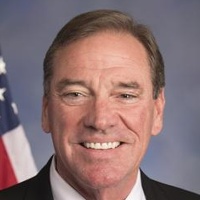
Neal Dunn
Representative
FL
Neal Dunn
Representative
FL
The Ensuring Lasting Smiles Act mandates that group health plans and insurance policies provide comprehensive coverage for medically necessary treatment related to congenital anomalies or birth defects affecting the eyes, ears, teeth, mouth, or jaw. This coverage must include services needed to restore normal function and appearance, including necessary dental and orthodontic support. Plans must apply cost-sharing rules no more restrictive than those for other medical benefits, excluding purely cosmetic procedures.
This Act establishes a bipartisan Fiscal Commission tasked with developing and reporting legislative recommendations to reduce the national debt, followed by an expedited congressional process for considering those recommendations.
Bill Huizenga
Representative
MI
Bill Huizenga
Representative
MI
The Fiscal Commission Act establishes a bipartisan commission tasked with developing legislative recommendations to improve the nation's long-term fiscal health, aiming to reduce the national debt ratio to 100% of GDP by 2039. This Commission, composed of appointed members from both chambers of Congress and outside experts, must submit its final report and proposed legislation within a specific timeframe. The Act also creates an expedited, amendment-free process for Congress to consider and vote on any resulting "implementing bills."
This bill authorizes the Secretary of the Interior to acquire approximately 551.14 acres of land to expand the southern boundary of Mammoth Cave National Park.
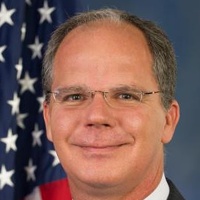
Brett Guthrie
Representative
KY
Brett Guthrie
Representative
KY
The Mammoth Cave National Park Boundary Adjustment Act of 2025 authorizes the Secretary of the Interior to acquire approximately 551.14 acres of land to expand the boundaries of Mammoth Cave National Park. This addition, detailed on a specific map, modifies the park's existing boundaries in Edmonson and Barren Counties, Kentucky.