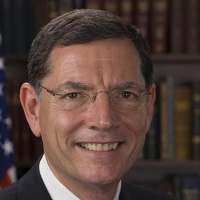
Legislative Activity
Track John's sponsored bills, co-sponsored legislation, and voting record
This Act prohibits federal funding and solicitation of human fetal tissue obtained through induced abortions while permitting research using tissue from miscarriages or stillbirths under revised regulations.

Cindy Hyde-Smith
Senator
MS
Cindy Hyde-Smith
Senator
MS
The Protecting Life and Integrity in Research Act of 2025 prohibits all federal funding and support for research utilizing human fetal tissue obtained as a result of an induced abortion. The bill restricts federal agencies to only conducting or supporting research using tissue obtained after a miscarriage or stillbirth, subject to new regulations. Furthermore, it makes it illegal for individuals to solicit or knowingly accept donations of human fetal tissue obtained pursuant to an induced abortion.
This bill repeals the EPA's recent multi-pollutant emissions standards and prohibits the EPA from issuing tailpipe regulations that mandate specific vehicle technologies or limit the availability of new motor vehicles based on engine type.

Michael Crapo
Senator
ID
Michael Crapo
Senator
ID
The Choice in Automobile Retail Sales Act of 2025 repeals the EPA's recent multi-pollutant emissions standards for light-duty and medium-duty vehicles. Furthermore, this Act prohibits the EPA from issuing future tailpipe emission regulations that mandate specific technologies or limit the availability of new motor vehicles based on engine type. The EPA must update existing rules within 24 months to comply with these new restrictions.
The GATE Act of 2025 prohibits National Laboratories from admitting foreign nationals from China, Russia, Iran, North Korea, or Cuba, with narrow exceptions requiring high-level certification of U.S. benefit.
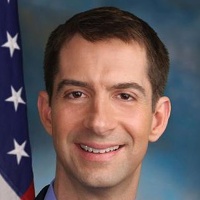
Tom Cotton
Senator
AR
Tom Cotton
Senator
AR
The Guarding American Technology from Exploitation (GATE) Act of 2025 prohibits U.S. National Laboratories from granting access to foreign nationals from China, Russia, Iran, North Korea, or Cuba, regardless of the length of their intended visit. This immediate ban applies to both current and future visitors and assignees from these specified countries. Exceptions can only be granted by the Secretary of Energy if they certify that the benefit to the U.S. outweighs the national security risks, following consultation with the FBI. Any granted waiver must be reported to Congress within 30 days.
This Act mandates an annual report assessing U.S. reliance on China for critical agricultural products and proposes strategies to onshore or nearshore those supply chains.
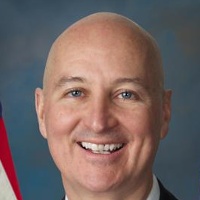
Pete Ricketts
Senator
NE
Pete Ricketts
Senator
NE
The Securing American Agriculture Act mandates an annual assessment of U.S. reliance on China for critical agricultural products and inputs. This report will identify supply chain vulnerabilities that could be exploited by foreign adversaries. Based on these findings, the Secretary of Agriculture must recommend strategies to onshore or nearshore the production of these essential farming supplies. The data collection for this assessment will rely solely on voluntary submissions from private companies to protect confidential business information.
This bill mandates improved tracking and timely processing for communications use applications while establishing a minimum cost threshold for broadband projects subject to major project review under NEPA.
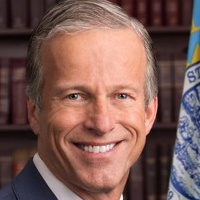
John Thune
Senator
SD
John Thune
Senator
SD
The Accelerating Broadband Permits Act aims to speed up the deployment of broadband infrastructure by improving how federal agencies track and manage communications use applications. It mandates better data collection and requires agencies to analyze and report on any delays that cause applications to miss established processing deadlines. Furthermore, the bill updates the definition of a "major project" for broadband infrastructure to include projects over $5 million that require National Environmental Policy Act (NEPA) review.
The "Protection of Women and Girls in Sports Act of 2025" amends Title IX to prohibit individuals born male from participating in women's and girls' athletic programs in educational institutions that receive federal funds, defining "sex" as determined at birth.
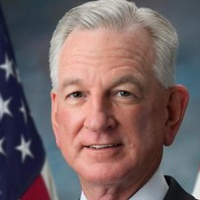
Tommy Tuberville
Senator
AL
Tommy Tuberville
Senator
AL
The "Protection of Women and Girls in Sports Act of 2025" amends Title IX to prohibit schools receiving federal funding from allowing individuals born male to participate in female athletic programs. Sex is defined as determined by reproductive biology and genetics at birth. This bill aims to ensure fair competition for women and girls in sports.
The Farmers Freedom Act of 2025 amends the definition of "navigable waters" under federal law to specifically exclude prior converted cropland from federal jurisdiction.
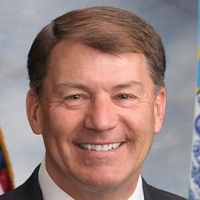
Mike Rounds
Senator
SD
Mike Rounds
Senator
SD
The Farmers Freedom Act of 2025 amends the definition of "navigable waters" under federal pollution control laws. This bill specifically excludes "prior converted cropland"—farmland drained before 1985—from this definition, limiting federal jurisdiction over these agricultural areas. The Act also clarifies related terms like "abandoned" and "agricultural purpose" in this context.
Prohibits federal funds from being used to rejoin or contribute to the World Health Organization (WHO) until the Secretary of State certifies that the WHO meets specific reform criteria, including preventing politicization, limiting Chinese Communist Party influence, ensuring transparency, and avoiding involvement in controversial issues.

Marsha Blackburn
Senator
TN
Marsha Blackburn
Senator
TN
The "WHO is Accountable Act" prohibits federal funds from being used to rejoin or contribute to the World Health Organization (WHO) unless the Secretary of State certifies that the WHO has met specific reform criteria. These criteria include ensuring the WHO is free from political influence (particularly from the Chinese Communist Party), is transparent and accountable, and focuses on its core mission without engaging in politically charged issues. The Act also requires the WHO to grant observer status to Taiwan and ensure its directives are not legally binding on U.S. citizens.
The Farm and Food Cybersecurity Act of 2025 mandates regular risk assessments of cybersecurity threats to the agriculture and food sector and requires annual simulation exercises to improve cyber resilience in the food supply chain.
Tom Cotton
Senator
AR
Tom Cotton
Senator
AR
The "Farm and Food Cybersecurity Act of 2025" directs the Secretary of Agriculture to conduct biennial risk assessments of cybersecurity threats and vulnerabilities within the agriculture and food critical infrastructure sector, in coordination with the Cybersecurity and Infrastructure Security Agency. It also mandates annual crisis simulation exercises for five years to evaluate and improve the preparedness of government and private sectors in responding to food-related emergencies and cyberattacks. The Act aims to enhance cybersecurity and resilience in the agriculture and food sector, protect food safety, and ensure national security. It authorizes \$1,000,000 to be appropriated for each fiscal year from 2026 through 2030 to carry out these activities.
This bill modifies permitting requirements for oil and gas leases under the Bureau of Land Management (BLM) when the federal government has partial mineral ownership or the well is on non-federal land.
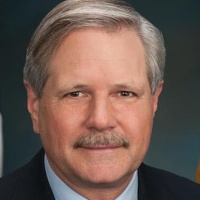
John Hoeven
Senator
ND
John Hoeven
Senator
ND
The Bureau of Land Management Mineral Spacing Act modifies permitting requirements for oil and gas leases under the Mineral Leasing Act when the federal government owns a minority of the mineral rights in a drilling unit or when wells on non-federal land access federal mineral estates. It limits the Secretary of the Interior's authority to require permits to drill, bonds, land access, mitigation, or surface reclamation approvals in certain situations. The Act requires lessees to notify the Secretary of the Interior when submitting state drilling permits and provide access agreements for inspections. This act does not apply to Indian lands and does not affect royalty payments.
The "Broadband Buildout Accountability Act" shields the Broadband Equity, Access, and Deployment Program from FOIA requests, excluding standard public information requirements.
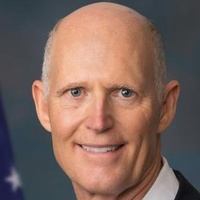
Rick Scott
Senator
FL
Rick Scott
Senator
FL
The "Broadband Buildout Accountability Act" shields the Broadband Equity, Access, and Deployment Program from the Freedom of Information Act (FOIA), with a specific exception for 5 U.S. Code § 552, to balance transparency and program efficiency.
This bill adds the Secretary of Agriculture to the Committee on Foreign Investment in the United States to address agricultural land transactions involving foreign adversaries.

Roger Marshall
Senator
KS
Roger Marshall
Senator
KS
The "Protecting American Agriculture from Foreign Adversaries Act of 2025" adds the Secretary of Agriculture to the Committee on Foreign Investment in the United States to address transactions involving agricultural land, biotechnology, and industry. It mandates the Committee to review agricultural land transactions involving foreign entities from countries of concern like China, North Korea, Russia, and Iran, as identified by the Secretary of Agriculture. This ensures scrutiny of foreign investments in U.S. agriculture that could pose national security risks. The requirements terminate for a covered country once it is removed from the list of foreign adversaries.
Prohibits Chinese nationals and entities controlled by the Chinese government from purchasing real estate near U.S. federal lands.
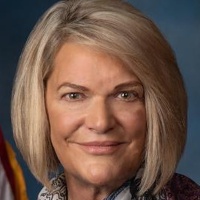
Cynthia Lummis
Senator
WY
Cynthia Lummis
Senator
WY
The "No American Land for Communist China Act" aims to safeguard U.S. national security by preventing Chinese government entities and businesses with significant Chinese government ownership from purchasing real estate near sensitive federal lands, including those managed by the Departments of Interior, Defense, Agriculture, and Energy, as well as Indian country. The President is tasked with enforcing this prohibition.
This resolution designates February 15–22, 2025, as "National FFA Week" to honor the organization's role in developing future leaders and celebrate its historic milestones.

Todd Young
Senator
IN
Todd Young
Senator
IN
This resolution designates February 15–22, 2025, as "National FFA Week" to celebrate the National FFA Organization’s vital role in developing the next generation of agricultural leaders. It commemorates the 90th anniversary of the New Farmers of America and the 75th anniversary of the FFA’s Federal charter. The bill encourages nationwide participation in honoring the organization's long-standing commitment to leadership, personal growth, and career success.
This resolution designates March 7, 2025, as "National Speech and Debate Education Day" to celebrate the vital role of speech and debate in fostering essential communication and critical thinking skills.
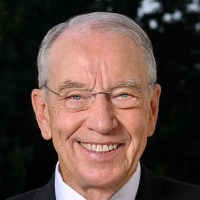
Charles Grassley
Senator
IA
Charles Grassley
Senator
IA
This resolution designates March 7, 2025, as "National Speech and Debate Education Day" to celebrate the lifelong benefits of speech and debate training. It highlights how these programs foster essential skills like critical thinking, communication, and collaboration while recognizing the dedication of educators in preparing students for civic and professional success.
Repeals excise taxes on certain chemicals and substances, effective January 1, 2025.
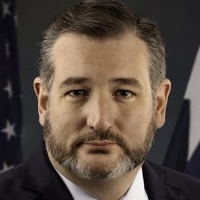
Ted Cruz
Senator
TX
Ted Cruz
Senator
TX
The "Chemical Tax Repeal Act" repeals excise taxes on specific taxable chemicals and substances listed under subchapters B and C of Chapter 38 of the Internal Revenue Code of 1986. This repeal is set to take effect on January 1, 2025.
The "Death Tax Repeal Act of 2025" eliminates estate and generation-skipping transfer taxes, modifies gift tax calculations, and adjusts lifetime gift exemptions.
John Thune
Senator
SD
John Thune
Senator
SD
The "Death Tax Repeal Act of 2025" eliminates both estate and generation-skipping transfer taxes, while also modifying gift tax laws. It adjusts gift tax calculations, addresses transfers in trust, sets an initial $10,000,000 amount for calculating tentative tax, and adjusts for inflation. These changes apply to estates of decedents dying, generation-skipping transfers occurring, and gifts made on or after the enactment date of this Act.
This resolution commends the personnel and organizations responsible for the successful planning and execution of the 2025 Presidential Inauguration.
Mike Rounds
Senator
SD
Mike Rounds
Senator
SD
This resolution formally expresses the Senate’s gratitude to the Joint Congressional Committee on Inaugural Ceremonies, law enforcement, and all personnel involved in the January 20, 2025, Presidential Inauguration. It commends these groups for their professionalism, resilience, and dedication in ensuring a safe and successful event despite unexpected logistical challenges.
The "POSTAL Act" prevents the Postal Service from taking actions that would leave a state without a processing and distribution center.
Cynthia Lummis
Senator
WY
Cynthia Lummis
Senator
WY
The "POSTAL Act" prevents the U.S. Postal Service from closing or downgrading processing and distribution centers if doing so would leave a state without one. A processing and distribution center is defined as a central mail facility that distributes mail, provides mail preparation instructions, dispatch schedules, and sorting plans, and is a sectional center facility, a general mail facility, or a dedicated mail processing facility without a station or branch. The term "State" includes a State or the District of Columbia.
This bill directs the Department of Education to consider the International Holocaust Remembrance Alliance's definition of antisemitism when evaluating discrimination complaints under Title VI of the Civil Rights Act of 1964.

Tim Scott
Senator
SC
Tim Scott
Senator
SC
The Antisemitism Awareness Act of 2025 requires the Department of Education to consider the International Holocaust Remembrance Alliance (IHRA) definition of antisemitism when evaluating discrimination complaints under Title VI of the Civil Rights Act of 1964, ensuring consistent enforcement against antisemitism in federally funded programs. This bill aims to increase awareness and improve the safety of Jewish communities by codifying the use of the IHRA definition. The Act does not expand the Department of Education's authority, change harassment standards, reduce existing rights, or diminish First Amendment rights.