Legislative Activity
Track John's sponsored bills, co-sponsored legislation, and voting record
The TAKE IT DOWN Act criminalizes the intentional sharing of nonconsensual intimate images and deepfakes while requiring online platforms to establish clear procedures for their rapid removal upon request.
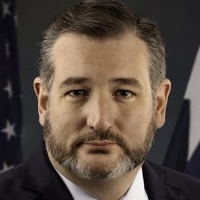
Ted Cruz
Senator
TX
Ted Cruz
Senator
TX
The TAKE IT DOWN Act establishes new federal crimes for the intentional sharing of nonconsensual intimate images, including realistic AI-generated deepfakes, with enhanced penalties for content involving minors. It mandates that online platforms create clear reporting systems and remove reported nonconsensual intimate content within 48 hours. The Federal Trade Commission (FTC) is empowered to enforce these notice and removal requirements against covered platforms.
This bill clarifies that the federal government, not states, has exclusive authority to set emission standards for certain existing locomotives and small engines used in construction or farm equipment.

Joni Ernst
Senator
IA
Joni Ernst
Senator
IA
The LOCOMOTIVES Act clarifies federal authority under the Clean Air Act regarding emissions standards for certain existing locomotives and engines used in construction or farm equipment. This legislation ensures that federal standards, rather than varying state standards, apply to these specific engines, particularly those under 175 horsepower and locomotives engaged in commerce. Essentially, it centralizes regulatory power over these emissions sources at the federal level.
The Honoring Our Fallen Heroes Act of 2025 establishes a presumption that certain cancers leading to death or disability in public safety officers are the result of on-duty exposure to carcinogens.

Amy Klobuchar
Senator
MN
Amy Klobuchar
Senator
MN
The Honoring Our Fallen Heroes Act of 2025 establishes a presumption that certain cancers leading to death or disability in public safety officers were caused by on-duty exposure to recognized carcinogens. This law defines specific exposure-related cancers and sets conditions, such as five years of service, for the presumption to apply. It also updates review processes for adding new cancers to the list and grants retroactive application and filing extensions for eligible past and present claims.
This resolution officially designates the week of May 11 through May 17, 2025, as National Police Week to honor law enforcement officers, remember those killed in the line of duty, and encourage public observance.
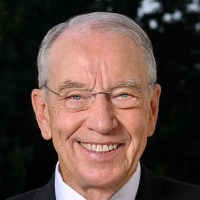
Charles Grassley
Senator
IA
Charles Grassley
Senator
IA
This resolution officially designates the week of May 11 through May 17, 2025, as "National Police Week." It serves to honor the valor and integrity of law enforcement officers across the nation. The resolution specifically remembers the officers killed in the line of duty during 2024 and encourages the public to observe this week to show appreciation for law enforcement personnel.
This Act prohibits payment card networks and processors from forcing firearms retailers to use a unique merchant category code for credit or debit card transactions.
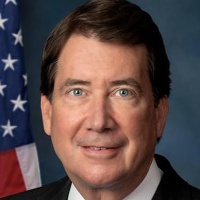
Bill Hagerty
Senator
TN
Bill Hagerty
Senator
TN
The Protecting Privacy in Purchases Act prohibits payment card networks and processors from requiring firearms retailers to use a unique Merchant Category Code (MCC) that singles them out. This ensures that credit and debit card transactions for firearms and ammunition are treated the same as general retail purchases. The Attorney General is tasked with enforcing this prohibition and reporting annually to Congress on compliance efforts.
This bill establishes a four-year transitional Medicare coverage period for FDA-designated breakthrough medical devices to ensure prompt patient access while final coverage determinations are made.

Todd Young
Senator
IN
Todd Young
Senator
IN
This Act establishes a fast-track process to ensure Medicare coverage for medical devices officially designated as "breakthrough devices" by the FDA. Once designated, these devices receive a four-year transitional coverage period under Medicare Parts A and B. The legislation also mandates timely final coverage decisions and provides funding for the administrative oversight required by this new system.
This Act mandates that health plans cover medically necessary diagnosis and treatment for congenital anomalies or birth defects affecting the eyes, ears, teeth, mouth, or jaw, starting in 2026.

Tammy Baldwin
Senator
WI
Tammy Baldwin
Senator
WI
The Ensuring Lasting Smiles Act mandates that health plans cover medically necessary diagnosis and treatment for congenital anomalies or birth defects affecting the eyes, ears, teeth, mouth, or jaw. This coverage must apply to outpatient and inpatient care, including necessary dental and orthodontic support, unless the procedure is purely cosmetic. These new requirements take effect for plan years beginning on or after January 1, 2026.
This act exempts the discharge of Forest Service-approved firefighting products used for fire control and suppression from National Pollutant Discharge Elimination System (NPDES) permit requirements.
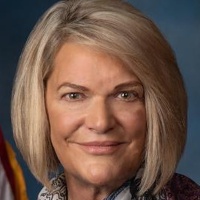
Cynthia Lummis
Senator
WY
Cynthia Lummis
Senator
WY
The Forest Protection and Wildland Firefighter Safety Act of 2025 streamlines firefighting operations by exempting the use of approved fire retardants during wildfire suppression from standard federal water pollution discharge permits. This change ensures that necessary aerial application of Forest Service-qualified products does not require an NPDES permit. The bill focuses on removing regulatory hurdles for essential wildfire control activities.
The American Innovation and Jobs Act restores immediate expensing for business R&D investments and expands refundable research tax credits for new and small businesses.
Todd Young
Senator
IN
Todd Young
Senator
IN
The American Innovation and Jobs Act aims to boost U.S. competitiveness by restoring immediate expensing for most business research and development (R&D) investments. It also significantly expands the refundable R&D tax credit for new and small businesses, increasing the maximum refund amount and raising eligibility thresholds. Furthermore, the bill makes technical adjustments to the R&D credit calculation to make it more accessible for startups. These provisions are designed to incentivize domestic innovation and job creation starting in tax years after 2021 and 2024, respectively.
This Act treats certain online marketplace providers as importers for the purpose of collecting the federal excise tax on imported sporting goods sold through their platforms.
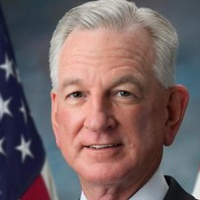
Tommy Tuberville
Senator
AL
Tommy Tuberville
Senator
AL
The Sporting Goods Excise Tax Modernization Act updates federal excise tax rules for imported sporting goods sold through online marketplaces. This legislation treats certain marketplace providers who facilitate overseas sales as the importer of record for tax purposes. This ensures that the existing excise tax is collected when goods are shipped directly to U.S. consumers via these platforms.
This resolution officially supports the goals of National Nurses Week (May 6-12, 2025) to recognize the vital contributions of nurses to American healthcare.

Jeff Merkley
Senator
OR
Jeff Merkley
Senator
OR
This resolution officially supports the goals and ideals of National Nurses Week, observed from May 6 through May 12, 2025. It recognizes the vital contributions of nurses as frontline healthcare providers and patient advocates. The measure encourages the public to observe the week with appropriate events honoring the nursing profession.
This bill restricts the Palestine Liberation Organization's status within UN agencies and limits the United States' membership status in the UN, while explicitly excluding Taiwan from its provisions.

James Risch
Senator
ID
James Risch
Senator
ID
The No Official Palestine Entry Act of 2025 restricts the Palestine Liberation Organization (PLO) from holding any status beyond observer in United Nations agencies. This legislation also modifies the U.S. standing in the UN, prohibiting full membership and capping participation at a level above observer status. Importantly, the Act explicitly states that none of its provisions apply to Taiwan.
This resolution expresses support for designating the week of May 4-10, 2025, as National Small Business Week to celebrate the vital contributions of small businesses and entrepreneurs nationwide.
Joni Ernst
Senator
IA
Joni Ernst
Senator
IA
This resolution expresses strong support for designating the week of May 4 through May 10, 2025, as National Small Business Week. It aims to celebrate the vital contributions of the over 34.5 million small businesses that support tens of millions of jobs nationwide. The bill honors the hard work and entrepreneurial spirit of small business owners in every community.
This resolution officially designates April 2025 as Financial Literacy Month to promote essential personal finance education across the nation.
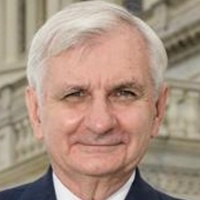
John Reed
Senator
RI
John Reed
Senator
RI
This resolution officially designates April 2025 as "Financial Literacy Month" to raise national awareness about the critical need for personal finance education. It highlights current financial struggles, such as high household debt and lack of banking access, while emphasizing that financial education leads to better economic outcomes. The resolution encourages federal, state, and local entities to observe the month with programs promoting essential skills like budgeting, saving, and debt management.
This bill prohibits U.S. funding for any United Nations entity that takes action to expel, suspend, or otherwise restrict Israel's full and equal participation.
James Risch
Senator
ID
James Risch
Senator
ID
The Stand with Israel Act prohibits the U.S. government from contributing funds to any United Nations entity that takes action to expel, suspend, or otherwise restrict Israel's full and equal participation. This measure ensures U.S. financial support is withheld from UN bodies that discriminate against Israel.
This Act expands market access for state-inspected meat and poultry by allowing their products to be shipped across state lines under federal approval.
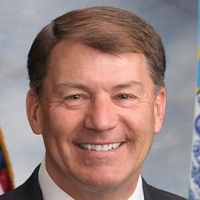
Mike Rounds
Senator
SD
Mike Rounds
Senator
SD
The New Markets for State-Inspected Meat and Poultry Act of 2025 updates federal law to allow meat and poultry inspected under approved state programs to be sold across state lines. This legislation grants the Secretary authority to permit interstate commerce for these state-inspected products. Furthermore, it prevents individual states or localities from blocking the entry or sale of products already deemed compliant for interstate commerce.
The LOCAL Infrastructure Act reinstates the ability to use advance refunding bonds for infrastructure projects by repealing the relevant section of the 2017 tax law.

Roger Wicker
Senator
MS
Roger Wicker
Senator
MS
The LOCAL Infrastructure Act reinstates the availability of advance refunding bonds, effectively undoing a change made by the 2017 tax law. This action immediately restores the previous rules regarding these bonds. By bringing back advance refunding, the bill aims to provide greater financial flexibility for infrastructure projects.
This resolution officially designates the week of April 19 through April 27, 2025, as "National Park Week" to celebrate the history, value, and importance of the National Park System.
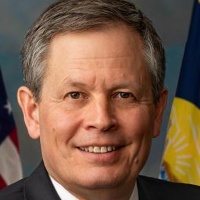
Steve Daines
Senator
MT
Steve Daines
Senator
MT
This resolution officially designates the week of April 19 through April 27, 2025, as "National Park Week." It recognizes the historical significance and vital mission of the National Park Service in preserving America's natural and cultural treasures. The bill encourages the public to visit, experience, and support these cherished sites during this designated week.
The LIABLE Act creates an exception to the jurisdictional immunity of international organizations, allowing lawsuits against them in U.S. courts for personal injury or death caused by their officials or agents through specific acts of terrorism under certain conditions.
Ted Cruz
Senator
TX
Ted Cruz
Senator
TX
The LIABLE Act creates a new exception to the general immunity shielding international organizations from lawsuits in U.S. courts when terrorism is involved. This allows individuals to sue an international organization if an employee caused death or injury through specific terrorist acts while working for the organization. Lawsuits are permitted only if the organization materially supported a designated foreign terrorist organization and the claimant or victim had a connection to the U.S. or if the organization has a significant U.S. presence. Claims must be filed within 20 years of the injury or death.
The SNOOP Act of 2025 reinstates the higher reporting thresholds for third-party payment processors to send 1099-K forms to the IRS and limits when backup withholding applies to network transactions.
Bill Hagerty
Senator
TN
Bill Hagerty
Senator
TN
The SNOOP Act of 2025 aims to adjust the reporting requirements for third-party payment processors regarding transactions sent to the IRS. This bill reinstates the higher reporting threshold of over $20,000 in payments across more than 200 transactions for issuing 1099-K forms. Furthermore, it clarifies that backup withholding on network payments only applies if both the transaction count and dollar amount thresholds are met for the year.