Legislation
This Act withdraws approximately 225,504 acres of federal land and water in Minnesota's Rainy River Watershed from mineral entry, leasing, and disposal, with limited exceptions for certain materials if environmental standards are met.

Tina Smith
Senator
MN
Tina Smith
Senator
MN
The Boundary Waters Wilderness Protection Act withdraws approximately 225,504 acres of federal land and water in Minnesota's Rainy River Watershed from most forms of entry, mineral leasing, and material sales. This action aims to protect the area, though the Forest Service retains limited authority to permit the removal of certain materials if environmental health is not compromised. The bill formally establishes the boundaries for this withdrawal based on existing environmental assessments.
This Act mandates a study by the Comptroller General on the transparency and risks associated with U.S. sister city partnerships involving communities from countries with significant public sector corruption.

Marsha Blackburn
Senator
TN
Marsha Blackburn
Senator
TN
The Sister City Transparency Act mandates a comprehensive study by the Comptroller General into U.S. sister city partnerships involving foreign communities from countries with significant public corruption. This study will examine how these partnerships are formed, their activities, and the associated risks to U.S. economic and national security interests. The resulting report will provide Congress with recommendations on best practices for transparency and oversight.
This act establishes a new federal grant program to expand dual or concurrent enrollment opportunities, enabling high school students to earn transferable college credit tuition-free.
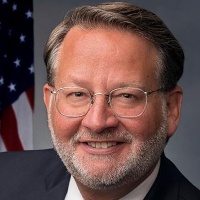
Gary Peters
Senator
MI
Gary Peters
Senator
MI
The Making Education Affordable and Accessible Act of 2025 establishes a new federal grant program to expand dual or concurrent enrollment opportunities for high school students. These grants will help colleges partner with local school districts to allow students, particularly those from low-income or rural backgrounds, to earn college credit tuition-free while still in high school. Funds can be used for teacher training, outreach, and ensuring earned credits easily transfer to higher education institutions.
The Jobs in the Woods Act establishes a competitive grant program through the Secretary of Agriculture to fund forestry workforce training in eligible low-income rural areas with reliable internet access.
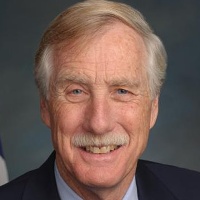
Angus King
Senator
ME
Angus King
Senator
ME
The Jobs in the Woods Act establishes a new competitive grant program administered by the Secretary of Agriculture to fund forestry workforce development. These grants aim to support training programs for forestry jobs specifically within eligible, low-income rural communities that meet certain broadband standards. Eligible entities can apply for grants between $\$500,000$ and $\$2$ million over four years, with priority given to programs addressing workforce shortages and ensuring job placement.
The SPARC Act establishes a new federal loan repayment program to incentivize specialty medical practitioners to serve in designated rural shortage areas for a minimum of six years.

Jacky Rosen
Senator
NV
Jacky Rosen
Senator
NV
The Specialty Physicians Advancing Rural Care (SPARC) Act establishes a new federal loan repayment program to incentivize specialty physicians and certain non-physician specialty providers to serve in rural health shortage areas. Participants must commit to six years of full-time service in exchange for having a portion of their educational debt repaid annually. This initiative aims to significantly bolster the availability of specialized medical care across underserved rural communities.
The STOP CCP Act of 2025 prohibits U.S. persons from investing in publicly traded securities of Chinese entities involved in defense or surveillance technology and expands the list of sanctioned military-linked companies while mandating the automatic application of all relevant sanctions against targeted entities.
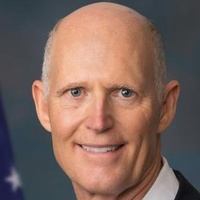
Rick Scott
Senator
FL
Rick Scott
Senator
FL
The STOP CCP Act of 2025 prohibits U.S. persons from investing in publicly traded securities of specific Chinese entities involved in defense or surveillance technology. This legislation mandates the expansion of the Treasury Department's list of Chinese military-industrial complex companies and closes loopholes by automatically applying all relevant sanctions when a Chinese entity is targeted under any existing authority. The goal is to prevent U.S. capital from financing pernicious Chinese companies and policies.
The FIREWALL Act establishes a refundable personal tax credit for homeowners to cover 50% of qualified expenditures made to mitigate risks from natural disasters like fires, floods, and hurricanes.
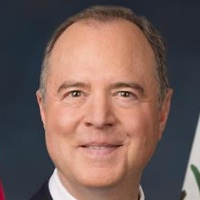
Adam Schiff
Senator
CA
Adam Schiff
Senator
CA
The FIREWALL Act establishes a refundable personal tax credit for homeowners who make qualified expenditures to increase their property's resilience against natural disasters like fires, floods, and hurricanes. This credit covers 50% of the mitigation costs, up to a lifetime cap of \$25,000, for principal residences in recently impacted disaster areas. The goal is to incentivize proactive home hardening and lower future disaster-related liabilities.
The TSP Fiduciary Security Act of 2025 mandates that managers of the Thrift Savings Fund incorporate U.S. national security considerations into investment decisions and prohibits investments through the TSP mutual fund window in entities based in the People's Republic of China.
Rick Scott
Senator
FL
Rick Scott
Senator
FL
The TSP Fiduciary Security Act of 2025 amends the fiduciary duties of the Thrift Savings Fund (TSF) managers to explicitly include protecting U.S. national security in investment decisions. The bill directs the Secretary of Labor to establish rules for reviewing TSF investments and shareholder voting against specific national security risks, particularly concerning entities linked to "covered countries" like China. Furthermore, it prohibits mutual funds available through the TSP mutual fund window from investing in any company based in the People's Republic of China.
The SNOOP Act of 2025 reinstates the higher reporting thresholds for third-party payment processors to send 1099-K forms to the IRS and limits when backup withholding applies to network transactions.
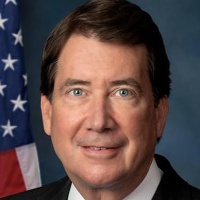
Bill Hagerty
Senator
TN
Bill Hagerty
Senator
TN
The SNOOP Act of 2025 aims to adjust the reporting requirements for third-party payment processors regarding transactions sent to the IRS. This bill reinstates the higher reporting threshold of over $20,000 in payments across more than 200 transactions for issuing 1099-K forms. Furthermore, it clarifies that backup withholding on network payments only applies if both the transaction count and dollar amount thresholds are met for the year.
This Act makes the Union Station Redevelopment Corporation eligible for specific federal infrastructure grants, ensuring 100% federal funding for its transportation projects.
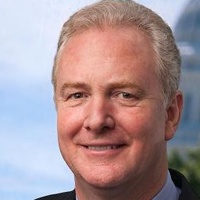
Chris Van Hollen
Senator
MD
Chris Van Hollen
Senator
MD
The Union Station Redevelopment Corporation Funding Eligibility Act makes the Corporation eligible to apply for several major federal transportation grant programs, including BUILD, National Infrastructure Project Assistance, Rail Safety and Improvement, and Intercity Passenger Rail grants. Crucially, this Act ensures that if the Corporation receives funding from these programs, the federal government will cover 100 percent of the eligible project costs. This change removes typical federal matching or cost-sharing requirements for the Corporation's projects.
The America's First Fuels Act increases residential tax credits for biomass heating equipment and introduces a new 30% investment tax credit for businesses installing qualifying open-loop biomass heating property starting in 2026.
Angus King
Senator
ME
Angus King
Senator
ME
The America's First Fuels Act aims to incentivize the adoption of biomass heating technology through significant tax credits. It increases the existing energy-efficient home improvement credit limit up to \$10,000 for qualifying biomass stoves and boilers installed after 2025. Furthermore, the bill introduces a new 30% investment tax credit for businesses installing qualifying "open-loop biomass heating property."
The SAFE Act mandates that companies listing stock on U.S. exchanges must disclose financial support received from the Chinese government and details about their internal Chinese Communist Party (CCP) structure and leadership ties.
Rick Scott
Senator
FL
Rick Scott
Senator
FL
The Secure Americas Financial Exchanges Act (SAFE Act) mandates that stock exchanges require listed companies to disclose any financial support received from the People's Republic of China (PRC). Companies must also reveal details about internal Chinese Communist Party (CCP) structures and any leadership ties to the PRC government. These new transparency rules aim to inform investors about potential foreign influence on publicly traded entities.
This act mandates an annual report from the Treasury Secretary detailing United States portfolio investments in the People's Republic of China, including identifying major investors and recipients.
Rick Scott
Senator
FL
Rick Scott
Senator
FL
The Protecting American Capital Act of 2025 requires the Secretary of the Treasury to submit an annual report to Congress detailing United States portfolio investments in the People's Republic of China. This report must identify major U.S. investors and assess the Chinese entities receiving these funds, including those under U.S. sanctions. The goal is to provide transparency regarding American capital flowing into the Chinese economy.
This bill amends the Safe Drinking Water Act to clarify state authority over contaminant identification and expand eligibility for federal assistance grants to disadvantaged communities and private well owners facing water contamination issues.
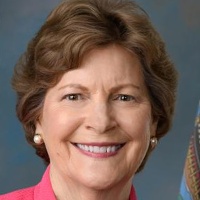
Jeanne Shaheen
Senator
NH
Jeanne Shaheen
Senator
NH
This bill amends the Safe Drinking Water Act to clarify state authority in identifying drinking water contaminants and expands eligibility for federal assistance programs. It allows states to request grants on behalf of disadvantaged communities or those facing financial hardship due to contamination. Furthermore, the legislation enables direct grant assistance for owners of private drinking water wells.
This Act establishes federal minimum standards for collective bargaining rights for public employees, allowing states to maintain their existing laws if they meet or exceed these standards, with the Federal Labor Relations Authority overseeing compliance.

Mazie Hirono
Senator
HI
Mazie Hirono
Senator
HI
The Public Service Freedom to Negotiate Act of 2025 establishes federal minimum standards for collective bargaining rights for public employees across the nation. It tasks the Federal Labor Relations Authority (FLRA) with reviewing state laws to ensure they substantially provide these minimum rights, taking over administration where state laws fall short. The Act explicitly protects existing labor agreements while prohibiting strikes or lockouts that would endanger public safety services. Finally, it ensures that existing state or local laws providing equal or greater protections are not preempted by this federal minimum standard.
This Act coordinates federal quantum research efforts, establishes a national quantum manufacturing institute, and mandates studies to assess program progress and collaboration barriers.
Marsha Blackburn
Senator
TN
Marsha Blackburn
Senator
TN
The Advancing Quantum Manufacturing Act of 2025 aims to accelerate U.S. quantum technology development by improving coordination between the Department of Energy and the National Science Foundation. The bill establishes a new Manufacturing USA institute dedicated to scaling up quantum manufacturing capabilities across computing, sensing, and communication. Finally, it mandates independent reviews and studies to assess the progress and collaboration barriers within the National Quantum Initiative Program.
This bill increases funding and cost limits for the Weatherization Assistance Program while establishing a new fund to cover necessary pre-weatherization repairs for low-income homes.
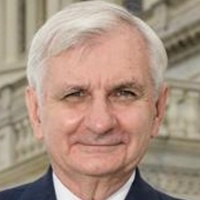
John Reed
Senator
RI
John Reed
Senator
RI
The Weatherization Assistance Program Improvements Act of 2025 significantly updates the program that helps low-income households improve energy efficiency. This bill establishes a new fund to cover essential pre-weatherization repairs that currently block necessary upgrades. Furthermore, it substantially raises the maximum financial assistance allowed per home, increasing the general cap from $6,500 to $15,000 to better reflect current market costs. The Secretary is also granted flexibility to further adjust these limits based on economic conditions.
The Raise the Wage Act of 2025 phases in increases to the federal minimum wage, eliminates subminimum wages for tipped employees and workers with disabilities, and sets a timeline for ending the subminimum wage for young workers.
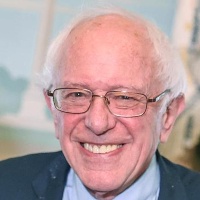
Bernard Sanders
Senator
VT
Bernard Sanders
Senator
VT
The Raise the Wage Act of 2025 systematically increases the federal minimum wage to \$17.00 per hour over five years, after which it will be indexed to median wage growth. This legislation also phases out the subminimum wage for tipped employees and workers with disabilities, requiring them to eventually earn the standard federal minimum wage. Furthermore, the bill repeals the special minimum wage for workers under 20 once their rate catches up to the standard minimum.
This act modifies tax rules for certain insurance companies by preventing debt from being treated as a capital asset and extending the carryover period for specific capital losses to ten years.
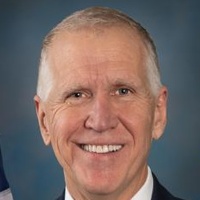
Thom Tillis
Senator
NC
Thom Tillis
Senator
NC
The Secure Family Futures Act of 2025 modifies tax rules for certain insurance companies regarding their investments and losses. Specifically, it prevents qualifying insurers from treating newly acquired debt instruments as capital assets for tax purposes. Additionally, the bill extends the carryover period for specific capital losses incurred by these companies to ten years. These changes apply only to tax years beginning after December 31, 2025.
This bill extends the expiration date of a key provision of the Cybersecurity Act of 2015 by ten years, moving it from 2025 to 2035.
Gary Peters
Senator
MI
Gary Peters
Senator
MI
The Cybersecurity Information Sharing Extension Act is a short bill designed to extend the effective period of a key provision within the Cybersecurity Act of 2015. Specifically, this legislation pushes back the expiration date for Section 111(a) by ten years. This ensures that the relevant cybersecurity information-sharing provisions will remain active until 2035.