Legislation
This act permanently extends and significantly expands the Earned Income Tax Credit for workers without qualifying children, lowers the minimum claiming age, removes the maximum age limit, increases credit amounts, and allows taxpayers to elect to use higher prior-year earned income for calculation.
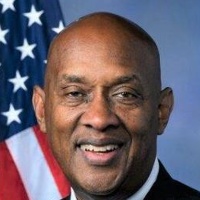
Dwight Evans
Representative
PA
Dwight Evans
Representative
PA
The Tax Cut for Workers Act of 2025 significantly expands the Earned Income Tax Credit (EITC) for workers without qualifying children by permanently lowering the minimum age, eliminating the maximum age, and substantially increasing the credit amount. It also allows taxpayers to elect to use higher prior-year earned income when calculating the current year's credit. Furthermore, the bill removes expiration dates for applying EITC rules in certain U.S. territories.
This Act enhances protections for election records, equipment, and personnel by stiffening penalties for interference and providing new avenues for judicial review of compliance failures.

Marc Veasey
Representative
TX
Marc Veasey
Representative
TX
The Protecting Election Administration from Interference Act of 2025 significantly enhances federal protections for election records, papers, and voting equipment by mandating their preservation and establishing new security standards developed by CISA. The bill also strengthens penalties for officials who recklessly disregard these preservation rules and creates a new mechanism for judicial review to swiftly enforce compliance. Furthermore, it criminalizes the intimidation or harassment of election workers during the critical processes of vote tabulation, canvassing, and certification.
The Retirement Savings for Americans Act of 2025 establishes a mandatory, government-matched retirement savings account for workers, overseen by a new federal board, and provides a direct government match deposited into these accounts as a tax credit.
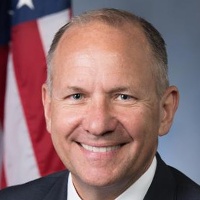
Lloyd Smucker
Representative
PA
Lloyd Smucker
Representative
PA
The Retirement Savings for Americans Act of 2025 establishes the American Worker Retirement Fund, a new, mandatory-enrollment retirement savings vehicle within the U.S. Treasury designed to help workers build protected savings through personal contributions and government matching credits. The bill also creates a governing Board to oversee the investment management system, imposing strict fiduciary duties on all administrators. Finally, it introduces a Government Match Tax Credit, which directly deposits a tiered government match into participants' accounts based on their savings rate and income level.
This act significantly increases the Earned Income Tax Credit (EITC) thresholds and phaseout amounts for working individuals and married couples filing jointly, applicable for tax years beginning after December 31, 2025.

Gabriel (Gabe) Vasquez
Representative
NM
Gabriel (Gabe) Vasquez
Representative
NM
The Boost the Middle Class Act aims to increase financial support for working families by significantly raising the income thresholds for the Earned Income Tax Credit (EITC). This legislation increases both the amounts needed to qualify for the credit and the income levels at which the credit begins to phase out. These changes, which also update future inflation adjustments, will take effect for tax years beginning after December 31, 2025.
The Honor and Hire Veterans Act of 2025 increases the Work Opportunity Tax Credit percentage and raises the wage cap for employers hiring qualified veterans.
Gabriel (Gabe) Vasquez
Representative
NM
Gabriel (Gabe) Vasquez
Representative
NM
The Honor and Hire Veterans Act of 2025 significantly boosts the Work Opportunity Tax Credit for employers hiring qualified veterans. This legislation increases the credit percentage for veterans to 50% of qualified first-year wages and raises the maximum wage cap used in the calculation. These changes aim to incentivize businesses to prioritize the employment of veterans.
This act bans bump stocks and similar devices that increase the firing rate of semi-automatic firearms, requiring registration for any previously modified weapons.

Dina Titus
Representative
NV
Dina Titus
Representative
NV
The Closing the Bump Stock Loophole Act of 2025 seeks to amend federal gun laws by banning devices and modifications that significantly increase the rate of fire of semiautomatic firearms, effectively treating them like machineguns. The bill specifically prohibits the manufacture, sale, or possession of such accessories and modified firearms after 120 days of enactment. Existing owners of previously modified firearms must register them under the National Firearms Act within that same timeframe to legally keep them.
This act establishes a refundable 10% federal income tax credit for individual taxpayers with a Modified Adjusted Gross Income (MAGI) under \$100,000, applicable only for the 2025 tax year.
Gabriel (Gabe) Vasquez
Representative
NM
Gabriel (Gabe) Vasquez
Representative
NM
The Tax Relief from Tariffs and High Costs Act establishes a new, refundable tax credit for individual taxpayers for the 2025 tax year. This credit equals 10% of the taxpayer's federal income tax liability, but only applies to those with a Modified Adjusted Gross Income (MAGI) of $100,000 or less. If the credit exceeds the amount owed, the taxpayer will receive the difference as a refund.
This bill establishes a public-private "Quantum Sandbox" partnership, led by the Secretary of Commerce and NIST, to accelerate the development and deployment of near-term quantum technology applications.

Marsha Blackburn
Senator
TN
Marsha Blackburn
Senator
TN
The Quantum Sandbox for Near-Term Applications Act of 2025 establishes a new public-private partnership, managed by the Department of Commerce and NIST, to accelerate the development of practical quantum applications. This "quantum sandbox" will focus specifically on near-term use cases—applications expected to be functional within 24 months. The goal is to leverage existing cloud-accessible quantum hardware to quickly deliver tangible benefits to government and industry. This initiative aims to bolster U.S. economic security by driving immediate innovation in quantum technology.
This bill establishes a new refundable Child Tax Credit system providing advance monthly payments and creates a separate credit for other dependents, replacing the existing annual credit structure.

Michael Bennet
Senator
CO
Michael Bennet
Senator
CO
The American Family Act fundamentally restructures the Child Tax Credit by replacing the annual lump sum with advance monthly payments for qualifying children. This legislation establishes a new refundable monthly credit of up to $360 per child, alongside a separate $500 non-refundable credit for other dependents. These advance payments are subject to income phase-outs and will reconcile with the final tax return. The old annual Child Tax Credit is terminated for tax years beginning after December 31, 2024.
The Protecting Employees and Retirees in Business Bankruptcies Act of 2025 significantly strengthens financial protections and recovery rights for workers and retirees while severely restricting executive compensation and the ability of bankrupt companies to unilaterally reject union contracts.

Richard Durbin
Senator
IL
Richard Durbin
Senator
IL
The Protecting Employees and Retirees in Business Bankruptcies Act of 2025 significantly strengthens financial protections for workers and retirees during employer bankruptcy proceedings. It increases the priority of wage claims, restricts the ability of companies to reject union contracts or cut retiree benefits, and imposes strict limitations on executive compensation during restructuring. Overall, the bill shifts the balance of power in bankruptcy to ensure employees and retirees recover more of what they are owed before other creditors or executives.
This Act establishes a Principal Quantum Advisor and mandates activities to rapidly transition quantum information science technology into operational use across the Department of Defense.
Marsha Blackburn
Senator
TN
Marsha Blackburn
Senator
TN
The Defense Quantum Acceleration Act of 2025 establishes a framework to rapidly integrate quantum information science (QIS) technology into the Department of Defense (DoD). It mandates the appointment of a Principal Quantum Advisor to oversee the transition of QIS solutions, such as quantum sensing and computing, into operational military use. The Act requires the DoD to develop a five-year strategic plan, establish a joint QIS testbed, and focus on allied collaboration to secure the quantum supply chain.
The REPAIR Act of 2025 establishes strict deadlines and a mandatory mediation process overseen by the Federal Permitting Improvement Steering Council to resolve court-ordered remands of project authorizations.

Bill Cassidy
Senator
LA
Bill Cassidy
Senator
LA
The REPAIR Act of 2025 establishes new rules and strict deadlines for challenging federal project authorizations in court. It mandates a mediation and remediation process overseen by the Federal Permitting Improvement Steering Council if a court remands an authorization due to procedural errors. Furthermore, the Act clarifies that completing an environmental review under NEPA does not automatically grant an individual the right to sue over the project approval.
The Family First Act permanently expands the Child Tax Credit, introduces a new tax credit for pregnant mothers, simplifies the Earned Income Tax Credit, eliminates the Head of Household filing status, and restricts the deduction for State and local taxes for individuals, all effective for tax years beginning after 2025.

Jim Banks
Senator
IN
Jim Banks
Senator
IN
The Family First Act significantly restructures the Child Tax Credit, making it fully refundable with new income-based tiers for children under 17, and introduces a new refundable tax credit for pregnant mothers based on gestational age. Additionally, the bill eliminates the Head of Household filing status and the dependent exemption, while simplifying the Earned Income Tax Credit rules. Finally, it denies the individual deduction for most State and local taxes starting in 2026.
The Brianna Lieneck Boating Safety Act of 2025 mandates a comprehensive study on recreational vessel operator education and training to evaluate existing programs and recommend minimum federal standards.

Andrew Garbarino
Representative
NY
Andrew Garbarino
Representative
NY
The Brianna Lieneck Boating Safety Act of 2025 mandates a comprehensive study on recreational vessel operator education and training programs. This report will analyze existing state and federal training standards, course materials, and testing procedures. The goal is to evaluate current reciprocity among states and recommend minimum federal education standards to enhance boater safety.
This Act limits the term of new federal conservation easements to 30 years and provides landowners with options to renegotiate or buy back existing easements.

Harriet Hageman
Representative
WY
Harriet Hageman
Representative
WY
The Landowner Easement Rights Act limits new federal conservation easements to a maximum term of 30 years. It grants landowners the option to renegotiate existing easements for a new 30-year term, receiving payment for the current fair market value minus the original payment, or to buy back the easement. The Act also establishes new notification requirements for the Secretary of the Interior regarding landowner rights for eligible easements.
This bill expedites the approval of U.S. natural gas exports to NATO allies and Ukraine for three years to enhance their energy security against adversaries.

Lizzie Fletcher
Representative
TX
Lizzie Fletcher
Representative
TX
The American Gas for Allies Act aims to bolster the security of NATO allies and Ukraine by streamlining the approval process for U.S. Liquified Natural Gas (LNG) exports to these nations. This legislation temporarily mandates the expedited authorization of natural gas export applications to NATO members and Ukraine for a three-year period. By prioritizing these exports, the bill supports U.S. national security interests and strengthens energy independence for key partners against adversarial nations.
The S-CAP Act of 2025 increases the maximum number of shareholders a business can have to qualify as an S corporation from 100 to 250, effective for tax years beginning after December 31, 2025.

J. Hill
Representative
AR
J. Hill
Representative
AR
The S-CAP Act of 2025 significantly increases the maximum number of shareholders a business can have while qualifying for S corporation tax status, raising the limit from 100 to 250. This change is designed to allow more small businesses to benefit from pass-through taxation. This new 250-shareholder limit will take effect for tax years beginning after December 31, 2025.
This Act expands Medicare coverage to include audiology services provided directly by qualified audiologists starting in 2027, removing physician supervision and referral requirements.

Gus Bilirakis
Representative
FL
Gus Bilirakis
Representative
FL
The Medicare Audiology Access Improvement Act of 2025 expands Medicare coverage for audiology services, beginning in 2027. This legislation allows qualified audiologists to provide diagnostic and treatment services without physician referral or supervision, as permitted by state law. The bill also specifies payment rates and includes audiologists in coverage for Rural Health Clinics and Federally Qualified Health Centers.
This Act authorizes states to allow qualified conservation organizations to acquire, hold, and manage conservation easements under the Forest Legacy Program.

John Garamendi
Representative
CA
John Garamendi
Representative
CA
The Forest Legacy Management Flexibility Act grants states the authority to allow qualified conservation organizations to acquire, hold, and manage conservation easements under the Forest Legacy Program. This allows states to partner with accredited, conservation-focused groups to enhance forest protection efforts. The bill establishes clear criteria for these organizations and outlines conditions under which easement rights would revert to the state if management responsibilities are not met.
This Act modifies federal length limitations and waives certain warning flag requirements for truck combinations using defined lowboy trailers designed to haul assembled vehicles.

Tom Barrett
Representative
MI
Tom Barrett
Representative
MI
The Lowboy Auto Hauler Fairness Act of 2025 officially defines lowboy trailers and establishes new, more flexible length limitations for truck-lowboy combinations hauling vehicles. This allows these specialized carriers to operate up to 80 feet in total length if specific overhang requirements are met. Furthermore, the bill exempts these lowboy trailers from standard rear warning flag requirements.