Legislation
This bill protects reproductive health care providers and their patients from state-level interference, prohibits the use of federal funds for such enforcement, and provides grants for legal defense and facility security.
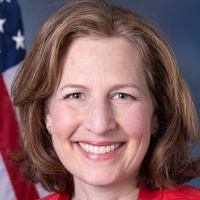
Kim Schrier
Representative
WA
Kim Schrier
Representative
WA
The Let Doctors Provide Reproductive Health Care Act protects health care providers and their patients by prohibiting states from restricting access to legal reproductive health services, including abortion, contraception, and IVF. The bill establishes legal protections against state interference, prevents the use of federal funds for such enforcement, and provides grants to support legal defense and facility security for providers. Additionally, it ensures that providers cannot be denied professional liability insurance based on their provision of these lawful services.
The SECURED Act of 2026 requires short-term rental platforms to identify and disclose property owners who are registered child sex offenders to prospective guests.
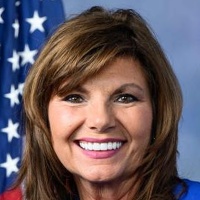
Diana Harshbarger
Representative
TN
Diana Harshbarger
Representative
TN
The SECURED Act of 2026 mandates that short-term rental platforms require property owners to disclose if they are registered child sex offenders. If an owner is a registered offender, platforms must provide a clear, public disclosure and a link to a registry before a guest completes a booking. This legislation is enforceable by the Federal Trade Commission and state authorities to ensure transparency and guest safety.
This bill renames the District of Columbia tuition assistance grant program to the "Eleanor Holmes Norton District of Columbia Tuition Assistance Grant Program."
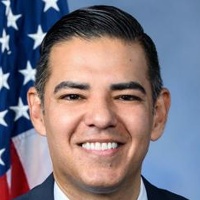
Robert Garcia
Representative
CA
Robert Garcia
Representative
CA
This bill officially renames the District of Columbia tuition assistance grant program to the "Eleanor Holmes Norton District of Columbia Tuition Assistance Grant Program." This change honors the program's namesake and ensures that all official federal documents and references are updated to reflect the new title.
This bill establishes a Department of Energy testbed to research and demonstrate innovative, sustainable technologies for processing critical materials to strengthen domestic supply chains.
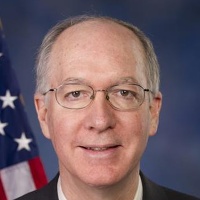
Bill Foster
Representative
IL
Bill Foster
Representative
IL
The Critical Materials Processing Technology Testbed Act establishes a Department of Energy initiative to research, develop, and demonstrate innovative technologies for processing critical materials. By fostering collaboration between national laboratories, academia, and the private sector, the program aims to improve processing efficiency, sustainability, and worker safety. This legislation ensures that resulting technological advancements are securely transferred to U.S. industry to strengthen domestic supply chains.
The Customer Property Protection Act amends the Commodity Exchange Act to allow a bankrupt broker’s own assets to be used to satisfy outstanding net equity claims owed to public customers.
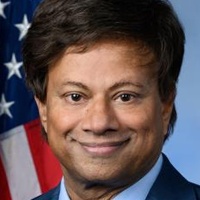
Shri Thanedar
Representative
MI
Shri Thanedar
Representative
MI
The Customer Property Protection Act strengthens financial safeguards for public customers in the event of a commodity broker’s bankruptcy. It mandates that a broker’s own assets be used to cover any shortfall in customer net equity claims after existing customer property is exhausted. This measure ensures greater protection for customer funds while maintaining the existing rights of other secured creditors.
The Mount Cristo Rey Protection Act prohibits the use of federal funds for eminent domain or the construction of security infrastructure at the culturally and religiously significant Mount Cristo Rey site in New Mexico.
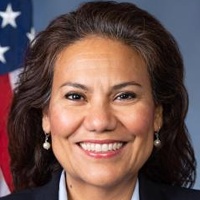
Veronica Escobar
Representative
TX
Veronica Escobar
Representative
TX
The Mount Cristo Rey Protection Act prohibits the use of federal funds for eminent domain actions or the construction of security infrastructure on or near Mount Cristo Rey in New Mexico. This legislation aims to protect the site’s profound religious and cultural significance by preventing federal interference with land owned by the Roman Catholic Diocese of Las Cruces.
The English Language Proficiency Act eliminates all existing exemptions to the naturalization requirement, mandating that all citizenship applicants demonstrate proficiency in the English language and knowledge of U.S. history and government.
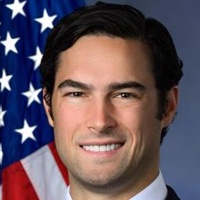
Brandon Gill
Representative
TX
Brandon Gill
Representative
TX
The English Language Proficiency Act amends the Immigration and Nationality Act to mandate that all naturalization applicants demonstrate proficiency in the English language and knowledge of U.S. history and government. This bill eliminates existing exemptions previously granted to elderly applicants and individuals with physical or developmental disabilities. Consequently, all applicants for U.S. citizenship would be required to meet these standards without exception.
The CLINIC Assistance Act authorizes the Department of Labor to provide grants to law schools for establishing clinical programs that help individuals navigate and resolve disputes regarding employer-sponsored benefit plans.
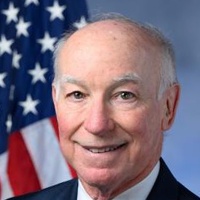
Joe Courtney
Representative
CT
Joe Courtney
Representative
CT
The CLINIC Assistance Act authorizes the Department of Labor to provide grants to accredited law schools for the development of attorney-supervised clinical programs. These programs will provide pro bono legal assistance to individuals navigating denied claims and other disputes related to employer-sponsored welfare benefit plans under ERISA. By funding these clinics, the bill aims to increase access to legal representation for beneficiaries while providing valuable experience to law students.
The Stop CHEATERS Act provides significant multi-year funding to the IRS to modernize technology, improve taxpayer services, and enhance tax enforcement efforts focused on high-income individuals and large corporations.
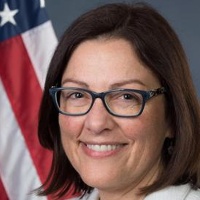
Suzan DelBene
Representative
WA
Suzan DelBene
Representative
WA
The Stop CHEATERS Act provides significant multi-year funding to the IRS to modernize its technology, improve taxpayer services, and strengthen tax enforcement. The bill specifically mandates that the agency prioritize auditing high-income individuals and large corporations to close the tax gap. Additionally, it requires regular reporting to Congress to ensure accountability and progress in these enforcement efforts.
The Interagency Council on Affordable Housing Act of 2026 establishes a federal council to coordinate national policy, improve program efficiency, and expand the supply of affordable housing through interagency and cross-governmental collaboration.
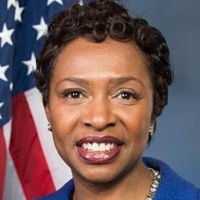
Yvette Clarke
Representative
NY
Yvette Clarke
Representative
NY
The Interagency Council on Affordable Housing Act of 2026 establishes a new independent federal agency tasked with coordinating a national strategy to increase the supply of affordable housing and improve rental market fairness. The Council will unite various federal departments to streamline housing programs, provide technical assistance to state and local governments, and ensure better access to housing resources for low-income populations. Through research, reporting, and interagency collaboration, the Council aims to foster a unified national approach to addressing homelessness and housing affordability.
This bill mandates that Medicare Advantage plans ensure all AI-driven prior authorization denials are reviewed and approved by qualified physicians to protect patients from automated decision-making.
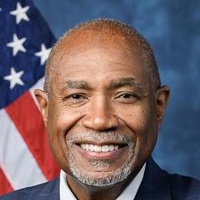
Herbert Conaway
Representative
NJ
Herbert Conaway
Representative
NJ
The Protecting Patients from Automated Denials Act mandates that Medicare Advantage plans cannot deny prior authorization requests based solely on artificial intelligence. The bill requires that all such denials be reviewed and signed by a qualified physician who exercises independent medical judgment. Additionally, it establishes strict transparency, record-keeping, and reporting requirements to ensure AI is used only for administrative purposes and remains subject to federal oversight.
The No GRIFT Act of 2026 prohibits the Department of Justice from awarding grants to nonprofit organizations that rely on federal funding for over half their revenue while paying any employee more than the Attorney General’s salary.

Andy Biggs
Representative
AZ
Andy Biggs
Representative
AZ
The No GRIFT Act of 2026 prohibits the Department of Justice from awarding grants to nonprofit organizations that rely on federal funding for more than half of their revenue while paying any employee more than the Attorney General’s annual salary. To qualify for funding, organizations must certify that they do not exceed these compensation and revenue thresholds.
The Tariff Impacted Farmer Support Act of 2026 provides $15 billion in economic assistance to eligible producers of covered commodities to offset revenue losses incurred during the 2025 and 2026 crop years.
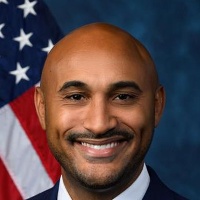
Shomari Figures
Representative
AL
Shomari Figures
Representative
AL
The Tariff Impacted Farmer Support Act of 2026 provides $15 billion in economic assistance to help eligible producers offset revenue losses on key commodities like corn, cotton, peanuts, poultry, and soybeans. The program offers one-time payments to qualifying farmers for either the 2025 or 2026 crop year to mitigate the financial impact of trade-related market fluctuations.
This bill establishes stricter oversight, transparency requirements, and procedural protections for reductions in force and policy changes across key federal foreign affairs agencies.
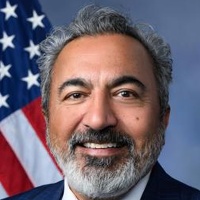
Ami Bera
Representative
CA
Ami Bera
Representative
CA
The Protecting America’s Diplomatic Workforce Act establishes stricter oversight and transparency requirements for significant staff reductions across major U.S. foreign affairs agencies. The bill mandates congressional notification for large-scale layoffs, updates retention procedures for Foreign Service members, and ensures advance notice for personnel changes. These measures aim to protect the stability and effectiveness of the nation’s diplomatic and international development workforce.
This act mandates that all lethal force deployed by autonomous or AI-enabled weapon systems remain under direct human command and oversight, with specific requirements for target verification and accountability.
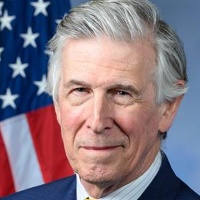
Donald Beyer
Representative
VA
Donald Beyer
Representative
VA
The Human Authority over Autonomous Weapons Act of 2026 mandates that all lethal force deployed by U.S. Armed Forces using autonomous or AI-enabled systems remains under direct human command and oversight. The bill requires the Secretary of Defense to establish procedures ensuring a "human-in-the-loop" for target authorization, while requiring secondary verification of targets for the first five years. These requirements exclude specific missile and defensive weapon systems currently used to protect the United States.
This bill requires companies with multi-class stock structures to provide a detailed breakdown of shareholder voting results by individual share class.
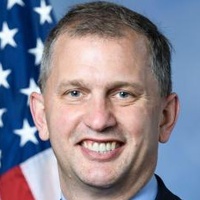
Sean Casten
Representative
IL
Sean Casten
Representative
IL
The Multi-Class Stock Company Voting Transparency Act requires companies with multiple classes of voting stock to provide greater transparency during shareholder meetings. Under this legislation, issuers must disclose a detailed breakdown of voting results, including votes cast, abstentions, and broker non-votes, separated by each individual share class.
This bill directs the Center for Medicare and Medicaid Innovation to test a new payment model that allows blood transfusions for hospice patients to be billed separately from the standard all-inclusive Medicare hospice rate.

Debbie Dingell
Representative
MI
Debbie Dingell
Representative
MI
The Improving Access to Transfusion Care for Hospice Patients Act of 2026 directs the Center for Medicare and Medicaid Innovation to test a new payment model that separates blood transfusion costs from the standard Medicare hospice daily rate. This initiative aims to improve patient access to necessary care by allowing transfusions to be billed independently. The program also requires a comprehensive evaluation to measure the impact of this change on patient outcomes and healthcare utilization.
The Outside Influence Prevention Act requires that at least half of the funding for independent expenditures in U.S. House elections come from donors residing within the state where the election is held.
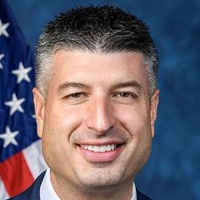
Tom Barrett
Representative
MI
Tom Barrett
Representative
MI
The Outside Influence Prevention Act requires that political committees funding independent expenditures in U.S. House elections receive at least 50% of their contributions from donors residing within the state where the election is held. This legislation aims to ensure that local representation remains driven by the interests of in-state constituents rather than outside financial influence.
This bill amends the federal charter of the Daughters of the American Revolution to restrict membership eligibility to individuals who meet the organization's genealogical requirements and are defined as adult human females.

Ben Cline
Representative
VA
Ben Cline
Representative
VA
The Daughters of the American Revolution Membership Integrity Act amends the organization’s federal charter to formally define membership eligibility. The bill restricts membership to adult human females, establishing a biological definition for the term "female" based on reproductive system development.
The Campaign Accountability and Parity Act (CAP Act) limits annual campaign spending for House of Representatives candidates to the average annual Members' Representational Allowance.
Tom Barrett
Representative
MI
Tom Barrett
Representative
MI
The Campaign Accountability and Parity (CAP) Act seeks to level the playing field in congressional elections by capping annual campaign spending for House candidates. Under this legislation, a candidate’s total expenditures may not exceed the average annual Members' Representational Allowance (MRA) from the previous year.