This Act prohibits special Government employees from receiving large federal awards from their own agencies and mandates increased public disclosure of their positions and financial reports.
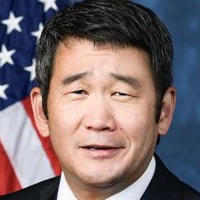
Dave Min
Representative
CA-47
The Ban on Self-Interested Contracting Act (BASIC Act) establishes a new criminal prohibition preventing special Government employees from knowingly receiving large federal awards from their own agencies or related parties. The Act also mandates increased transparency by requiring the publication of certain position data and financial disclosure reports for these employees. Finally, it creates a public, searchable database detailing covered special Government employees.
BASIC Act Bans Federal Employees From Scoring $1M+ Contracts With Their Own Agencies
The Ban on Self-Interested Contracting Act (BASIC Act) is looking to clean up how federal contracts are awarded, specifically targeting a group known as "special Government employees" (SGEs). In short, the bill makes it a federal crime for an SGE to knowingly seek or accept a "covered Federal award"—a contract, grant, or similar instrument worth over $1 million annually—from the agency that employs them. This isn't just about the employee; the ban also extends to awards funneled indirectly to their immediate family (spouse, siblings, etc.) or to any organization where the SGE holds a leadership role (like an officer or director) or is negotiating employment, provided they are involved in or benefit from the award (SEC. 2).
Who Are These 'Special' Employees, Anyway?
SGEs are typically experts brought in for temporary or intermittent work, often serving as consultants or advisors. They are not full-time staff, but they still hold significant positions of influence. The BASIC Act essentially says: you can't be an expert consultant for an agency and then turn around and award yourself (or your company) a giant contract from that same agency. This is a direct attempt to reduce the classic conflict of interest where an insider benefits from their government position. There are a few carve-outs for low-level positions (GS-10 or below), students, and those only serving on advisory committees, recognizing that not all SGEs hold high-level influence (SEC. 2).
Putting the Finances on Display
Beyond the contracting ban, this bill is a huge win for transparency. It requires executive agencies to make the financial disclosure reports filed by most SGEs publicly available. If you’ve ever wondered what assets and income these part-time government experts are reporting, this bill aims to give you access, using the same public procedures currently in place for other high-level officials (SEC. 3). For the average person, this means better visibility into potential financial conflicts of interest before they become a problem.
The New Public Watchlist
To make tracking SGEs easier, the bill mandates the creation of a public, searchable, and downloadable electronic database, maintained by the Office of Personnel Management and the Office of Government Ethics (SEC. 4). This database must list the name of every covered SGE, a running tally of how long they’ve served, and, crucially, a description of why they were designated as a special employee instead of a regular one. This new database, which excludes advisory committee members, is designed to keep tabs on who’s coming and going in these influential roles and how long they’re staying. If you want to know which temporary consultant is advising your agency on a new infrastructure project, this database should be your go-to source.
The Real-World Impact and Implementation Hurdles
For taxpayers, the BASIC Act is designed to ensure that multi-million dollar federal contracts are awarded purely on merit, not insider connections. For the SGEs and the organizations that employ them, it means a clear and necessary separation between their temporary government service and their private business dealings with that specific agency. The bill requires the Federal Acquisition Regulation (FAR) and other federal regulations to be updated within 60 days of enactment to enforce this new prohibition, which is a tight turnaround for bureaucratic changes (SEC. 2).
One potential hiccup is that the database requirement is conditional—it only has to be maintained “to the extent it is technically possible” (SEC. 4). While this sounds like a reasonable technical caveat, it could easily become an excuse for delaying or scaling back the public database if agencies drag their feet. Furthermore, defining who has "duties comparable to a GS-10 position or lower" for exemption purposes might require some subjective interpretation, which could lead to agencies trying to classify high-value SGEs as low-level to skirt the rules. Overall, however, the BASIC Act is a strong, straightforward move toward better ethics and less self-dealing in high-value federal contracting.