This bill establishes a grant program to fund statewide senior legal hotlines providing free civil legal assistance to older Americans.
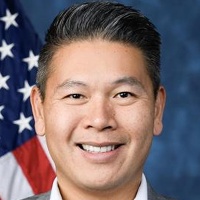
Derek Tran
Representative
CA-45
The Senior Legal Hotline Act of 2025 establishes a new federal grant program to support the creation and operation of statewide senior legal hotlines. These grants, administered under the Older Americans Act, will be awarded to eligible nonprofit organizations to provide free legal advice, counseling, and referrals to older individuals across an entire state. Grantees must meet specific operational requirements, including ensuring adequate staffing and coordinating services with existing legal and aging networks.
New Senior Legal Hotline Bill Authorizes $10M Annually to Fund Free Legal Advice for Older Adults
The proposed Senior Legal Hotline Act of 2025 aims to set up a dedicated, federally funded system to provide free legal guidance to older Americans across the country. Essentially, this bill creates a new competitive grant program under the Older Americans Act, authorizing $10 million annually from Fiscal Year 2027 through 2031 to fund statewide senior legal hotlines.
The Legal Lifeline for Seniors
This isn’t about funding new court battles; it’s about access to timely advice. The bill defines a “senior legal hotline” as a program offering free legal services—advice, counseling, and referrals—by telephone on a broad range of civil legal issues. Think landlord-tenant disputes, benefits questions, or consumer scams. The core mission is targeting older individuals with the “greatest social and economic need,” ensuring the most vulnerable seniors get priority access to help.
To keep things streamlined, the Assistant Secretary can only award one grant per state per fiscal year. This means the money is specifically designed to establish or operate a single, comprehensive statewide service, rather than scattering funds among multiple local providers. This structure is meant to ensure coverage across the entire state, from major cities to rural areas.
The Catch: Matching Funds and Coordination
While this sounds like a great deal for seniors, the requirements for the organizations applying for the grants are significant. An “eligible entity” (a nonprofit or partnership providing free legal aid) must secure matching funds equal to at least 25 percent of the grant amount. This match can be in cash or in-kind contributions. For a smaller, regional nonprofit, raising that 25% match could be a major hurdle, potentially favoring larger, more established legal aid organizations that already have substantial fundraising capacity. This could inadvertently exclude smaller, grassroots groups that are often deeply embedded in the communities that need the most help.
Another major focus is coordination. Any organization receiving funds must commit to working closely with the state’s aging services network and other legal aid providers, including those funded by the Legal Services Corporation. This isn't just about handing out advice; it’s about building a robust referral system. If a senior calls the hotline with a complex issue that requires full representation, the hotline must have mechanisms in place to connect that person with a lawyer or agency that can take the case further. This mandated collaboration should help reduce the frustrating experience of being bounced from one agency to another.
Real-World Impact and Implementation
For an older adult living on a fixed income, a quick, free phone call to a lawyer can be the difference between solving a problem and losing their housing or benefits. For example, if a 70-year-old in a remote part of the state receives a notice about a change in their Medicare coverage that they don't understand, the hotline provides immediate, expert advice without requiring them to travel or pay a consultation fee. The bill explicitly requires outreach efforts to those with the “greatest economic and social need,” ensuring the service doesn't just reach the digitally savvy or well-connected.
On the implementation side, the Assistant Secretary has significant discretion when selecting grantees, considering the “quality of the application.” Since the bill doesn't provide explicit, objective criteria for what makes an application “quality,” the selection process could be subjective. Furthermore, if a state doesn't have a qualified nonprofit that can meet the 25% matching requirement or submit a strong enough application, that state will simply not receive any funding for this program, leaving its seniors without this specific resource.