The REPAIR Infrastructure Act reauthorizes and amends a federal program with $3 billion annually through 2031 to fund projects focused on restoring community access and improving resilient infrastructure, while prohibiting highway lane expansion.
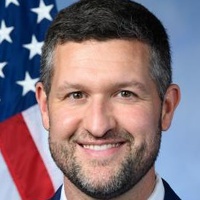
Patrick Ryan
Representative
NY-18
The REPAIR Infrastructure Act reauthorizes and amends an existing program to establish the Restoring Essential Public Access and Improving Resilient Infrastructure (REPAIR) program, funding it with $3 billion annually from 2027 through 2031. This legislation adds new criteria focused on community access, economic mobility, and redressing historical barriers when selecting projects, while explicitly prohibiting the use of funds to increase highway travel lanes. Furthermore, it expands eligibility for REPAIR-funded projects across several other major federal surface transportation grant programs.
REPAIR Act Puts $3 Billion Annually Toward Fixing Communities, Bans Highway Widening
The Restoring Essential Public Access and Improving Resilient Infrastructure Act, or REPAIR Infrastructure Act, isn’t just another infrastructure bill; it’s a major shift in how the federal government plans to spend billions on transportation projects. This legislation reauthorizes and significantly overhauls a grant program, dedicating $3 billion annually from the Highway Trust Fund between fiscal years 2027 and 2031 to projects that prioritize community connectivity and equity. Crucially, the bill explicitly prohibits using any of these funds to increase the number of travel lanes on existing highways (Sec. 2). This means the focus is moving away from simply increasing vehicle capacity and toward making communities whole again.
The New Rules: Community First, Cars Second
The most significant change here is the new set of criteria the Department of Transportation must use when handing out these grants. If you’re a city planner, a community organizer, or just someone who lives near a major road, these changes matter a lot. The bill demands that applicants demonstrate how a project will improve affordable transportation options, increase safe access to essential services like jobs, healthcare, and schools, and integrate with the surrounding community’s character (Sec. 2). Think less concrete jungle, more walkable, bikeable, and transit-friendly areas.
For example, if an old highway interchange has created a physical barrier between a residential neighborhood and a job center, a REPAIR grant could fund the replacement of that highway with a boulevard, or maybe cap it with a park, making it easier for residents to walk or take a bus to work. The bill also heavily weighs community participation, requiring formal partnerships with local organizations and plans that actively engage the most impacted residents. This is designed to prevent the kind of top-down planning that historically divided neighborhoods.
Redressing Historic Divides
One of the most interesting additions is the requirement that projects demonstrate an approach that redresses historic economic and physical barriers for underserved communities (Sec. 2). This is where the bill addresses the legacy of infrastructure projects—often highways—that plowed through and isolated minority and low-income neighborhoods. To get the construction grant money, applicants also need to show they have plans for creative placemaking and community restoration, which can include things like preserving affordable housing, assisting renters and small businesses, and promoting mixed-use development to prevent gentrification and displacement.
Furthermore, the bill introduces the term “divisive roadway infrastructure”—which includes limited access highways and viaducts—and makes evaluating the impacts of these barriers an eligible use of Highway Safety Improvement Program funds (Sec. 3). This means that safety dollars, which traditionally focus on things like guardrails and intersection upgrades, can now be used to study how to dismantle or mitigate roads that are literally dividing neighborhoods and causing safety issues for pedestrians and cyclists.
Spreading the Wealth Across Programs
This legislation doesn't just create a new pot of money; it changes the rules for existing pots of money. The REPAIR-eligible projects—those focused on connectivity, equity, and access—are now eligible for funding under nearly every major federal highway program, including the Surface Transportation Block Grant Program and the National Highway Performance Program (Sec. 3). This is a big deal because it means states and localities can use their existing, formula-based transportation funds for these community-centric projects, not just for traditional road maintenance.
In an extra push for green infrastructure, the bill modifies the Carbon Reduction Program. If a state successfully demonstrates that it has reduced transportation emissions, it must first use its carbon reduction funds on a REPAIR-eligible project before it can spend the money on other transportation uses (Sec. 3). This effectively uses emission reduction success as a trigger to prioritize community restoration projects, aligning climate goals directly with equity goals.