Legislation
This bill removes the Government Accountability Office's authority to audit and review the District of Columbia government's operations and eliminates related reporting requirements.

Eleanor Norton
Representative
DC
Eleanor Norton
Representative
DC
This bill, the Government Accountability Office District of Columbia Home Rule Act, repeals the authority of the Government Accountability Office (GAO) to conduct mandatory audits and reviews of the District of Columbia government's operations. It removes the District from the scope of federal auditing functions performed by the GAO. The legislation also makes conforming amendments to the D.C. Home Rule Act to eliminate references to the Comptroller General and related reporting requirements.
The ROOT Act modifies Medicare's tracking of appropriate use criteria for outpatient imaging by updating data collection requirements for clinical decision support systems and establishing new compliance monitoring for ordering physicians starting in 2026.

Diana Harshbarger
Representative
TN
Diana Harshbarger
Representative
TN
The Radiology Outpatient Ordering Transmission (ROOT) Act updates Medicare requirements for ordering advanced diagnostic imaging services. It mandates changes to how clinical decision support (CDS) systems report data directly to the government, starting in 2026. The bill also establishes new tracking mechanisms for identifying and reviewing "low compliant" ordering professionals. Finally, it provides specific exemptions to the consultation requirement for certain preventive scans and rural providers.
This bill allows state and local election offices to prioritize hiring veterans, individuals with disabilities, and certain nonresident military family members for election work.
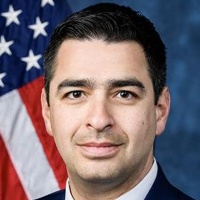
Gabe Evans
Representative
CO
Gabe Evans
Representative
CO
This Act allows state and local election offices the option to prioritize hiring veterans and individuals with disabilities for election work. It also permits election offices to hire nonresident spouses or dependents of active-duty military members serving away from home, without requiring local residency.
The CPUC Act mandates that state utility regulators publicly disclose meetings with lobbyists or executives from electric companies within one year of enactment.
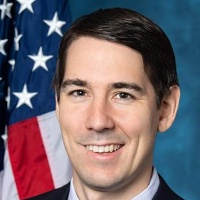
Josh Harder
Representative
CA
Josh Harder
Representative
CA
The Curb Private Utilities Corruption Act (CPUC Act) mandates that state utility regulatory boards publicly disclose meetings held with lobbyists or representatives from electric companies. This aims to increase transparency regarding who is influencing utility regulation decisions. States must review and make a final decision on adopting this public disclosure standard within one year of the Act's enactment.
This Act mandates that Congress must approve the budget and all appropriations bills by October 1st or Members of Congress will forfeit their pay for the period of non-compliance, effective September 29, 2027.
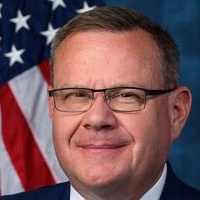
Tim Moore
Representative
NC
Tim Moore
Representative
NC
The No Budget, No Pay Act mandates that Congress must pass the concurrent budget resolution and all necessary appropriations bills by October 1st each year. If Congress fails to meet this deadline, Members of Congress will have their pay suspended for the period of non-compliance. This suspension includes a prohibition on receiving any retroactive back pay for the time they were out of compliance. These provisions are set to take effect starting September 29, 2027.
This bill allows VA chaplains to voluntarily share a veteran's contact information with a faith-based organization upon the veteran's explicit consent following a spiritual assessment.
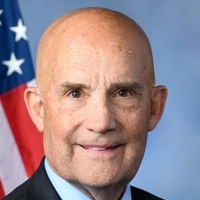
Keith Self
Representative
TX
Keith Self
Representative
TX
The Enhancing Faith-Based Support for Veterans Act of 2025 allows VA chaplains, following a voluntary spiritual assessment, to share a veteran's contact information with a faith-based organization *only* if the veteran explicitly consents. This measure aims to enhance spiritual support options available to eligible veterans receiving VA medical care.
This Act ensures the Transportation Security Administration (TSA) can continue its operations during a government funding lapse by utilizing prior-year unobligated balances at the previous spending rate.

Debbie Dingell
Representative
MI
Debbie Dingell
Representative
MI
The Keep Air Travel Safe Act ensures the Transportation Security Administration (TSA) can continue all essential operations during a Congressional funding lapse. It allows the TSA Administrator to use unobligated prior-year funds to maintain activities at the previous year's spending rate. This temporary funding remains active until a new budget is passed or for a maximum of 180 days.
This act mandates recalculating state populations based solely on U.S. citizens for federal apportionment and grant distribution purposes.
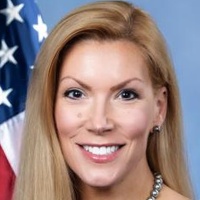
Beth Van Duyne
Representative
TX
Beth Van Duyne
Representative
TX
The One Citizen, One Seat Act mandates a revision of the 2020 census to count only U.S. citizens for state population totals. This new citizen-only count must then be used by states for all official purposes, including the distribution of federal grants. States must adopt this revised count within 60 days of receiving it to continue receiving federal funding.
This Act prohibits landlords from charging early lease termination fees for victims of domestic violence, dating violence, sexual assault, or stalking in federally assisted housing covered by VAWA.
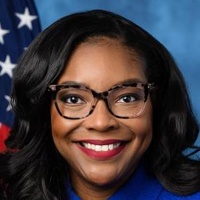
Emilia Sykes
Representative
OH
Emilia Sykes
Representative
OH
The Break Free From Domestic Violence Act prohibits landlords from charging early lease termination fees for victims of domestic violence, dating violence, sexual assault, or stalking who are living in housing receiving federal assistance covered under VAWA. This allows survivors to voluntarily and immediately end their lease without financial penalty if they need to flee a dangerous situation.
This Act establishes a demonstration program to provide trauma-informed, victim-centered training grants to healthcare providers working with domestic violence survivors.
Emilia Sykes
Representative
OH
Emilia Sykes
Representative
OH
The Better Care For Domestic Violence Survivors Act establishes a demonstration program to award competitive grants for specialized, trauma-informed training for healthcare providers who serve survivors of domestic violence and sexual assault. These grants require collaboration between healthcare entities and victim service organizations to implement evidence-based practices. The program aims to improve victim identification, response, and coordination across community services, with mandatory evaluation and reporting to Congress.
This bill ensures the continued operation of the Federal Aviation Administration for up to 30 days during a lapse in appropriations.
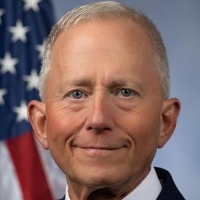
Jefferson Van Drew
Representative
NJ
Jefferson Van Drew
Representative
NJ
This bill ensures the continued operation of the Federal Aviation Administration (FAA) in the event that Congress fails to pass necessary funding. It automatically appropriates funds to keep the FAA running for up to 30 days during a lapse in appropriations. This measure prevents an immediate shutdown of critical FAA functions while budget negotiations continue.
This bill prohibits the President from issuing new Executive Orders or Presidential Memoranda funded by federal money during a lapse in appropriations (government shutdown).
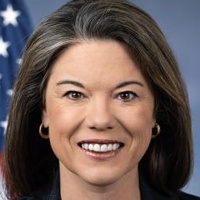
Angie Craig
Representative
MN
Angie Craig
Representative
MN
The TRUMP Act prohibits the President from using federal funds to create or issue new Executive Orders or Presidential Memoranda during any lapse in discretionary appropriations (a government shutdown). This measure aims to restrict executive action when Congress has failed to fund government operations.
The SMART Act eliminates the Diversity Visa Program, caps refugee admissions, overhauls family immigration priorities, establishes a new points-based system for employment immigration, reforms H-1B visa allocations, and creates a new "Gold-card" investor visa.
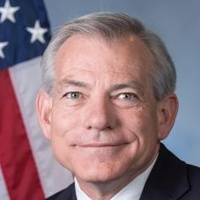
David Schweikert
Representative
AZ
David Schweikert
Representative
AZ
The Securing Migration, Addressing Reform, and Talent Retention (SMART) Act overhauls the U.S. immigration system by eliminating the Diversity Visa Program and establishing a new points-based system for employment-based immigration. The bill also reforms family-sponsored immigration by redefining "immediate relatives" and creating a new non-working visa category for parents of adult citizens. Furthermore, it sets new annual caps for refugee admissions and reforms the allocation and release of H-1B specialty visas.
This Act shortens the required marriage duration from 10 years to 5 years for divorced domestic violence survivors to qualify for certain Social Security benefits based on an ex-spouse's record.
Emilia Sykes
Representative
OH
Emilia Sykes
Representative
OH
The Fair Social Security for Domestic Violence Survivors Act amends Social Security rules to support survivors of domestic violence. This bill lowers the required marriage duration from 10 years to 5 years for divorced spouses seeking benefits based on an abuser's record. To qualify for this reduced requirement, applicants must provide a court finding confirming they were a victim of domestic violence during the marriage. These changes will take effect 18 months after the Act is enacted.
This act allows new buyers to assume existing Section 502 rural home loans, releasing the original borrower from all future debt obligations.

Jim Costa
Representative
CA
Jim Costa
Representative
CA
The Rural Homeownership Continuity Act of 2025 allows current homeowners with Section 502 guaranteed loans to transfer their existing mortgage to a qualified new buyer upon selling their property. This provision releases the original borrower from all future liability for the loan upon successful assumption by the new owner. The Secretary is authorized to establish rules for these transfers, including potential fees for loan servicing.
This act establishes a formal process for designating and integrating promising, privately-developed military technology projects into the Department of Defense's official planning and budgeting systems.
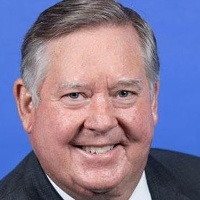
Ken Calvert
Representative
CA
Ken Calvert
Representative
CA
The DOD Entrepreneurial Innovation Act establishes a formal process for designating promising technology projects within the Department of Defense as "Entrepreneurial Innovation Projects." This designation grants selected projects special visibility and integration into the annual defense planning and budgeting process. To facilitate this, each military department must create an advisory panel, including private-sector experts, to review and recommend projects that significantly boost national security capabilities.
This Act modernizes recreational fishing data collection, mandates regular stock assessments, and increases transparency in fishery management decisions.
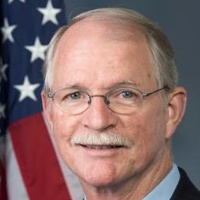
John Rutherford
Representative
FL
John Rutherford
Representative
FL
The Fisheries Data Modernization and Accuracy Act of 2025 aims to significantly improve the reliability and utility of U.S. fisheries data. It mandates reforms to the recreational data collection program (MRIP) by establishing an independent review process when data accuracy falls below set standards. The bill also empowers states to develop and implement their own data collection programs, shifting the federal reliance away from the MRIP baseline. Finally, it requires the establishment of a regular schedule for updating crucial fish stock assessments and promotes the use of independent, external scientific surveys in federal management decisions.
The OPT Fair Tax Act mandates that income earned by F-1 visa holders during Optional Practical Training (OPT) will now be subject to Social Security and Medicare taxes.

Tom Cotton
Senator
AR
Tom Cotton
Senator
AR
The OPT Fair Tax Act amends tax law to specifically subject income earned by F-1 visa holders during Optional Practical Training (OPT) to Social Security and Medicare taxes. This change removes the current exemption for OPT employment, treating those earnings as standard employment for federal tax purposes.
This act grants the District of Columbia the authority to establish its own local process for granting clemency for crimes under D.C. law.
Eleanor Norton
Representative
DC
Eleanor Norton
Representative
DC
The District of Columbia Clemency Home Rule Act grants the D.C. government the authority to establish its own process for granting clemency, such as pardons or sentence commutations, for crimes committed under D.C. law. This legislation allows the District to determine which local official or body will hold these powers. The Act preserves existing clemency authority held by the President or the Mayor until D.C. enacts its own specific law on the matter.
This act clarifies that the transit agency's accountable executive has the final authority on implementing safety recommendations from the Safety Committee.
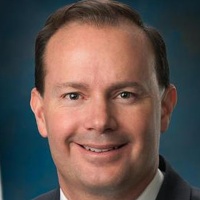
Mike Lee
Senator
UT
Mike Lee
Senator
UT
The Safe Transit Accountability Act clarifies the chain of command for public transit safety decisions by designating the agency's "accountable executive" as the final decision-maker. This executive will resolve disagreements within the Safety Committee and has ultimate responsibility for implementing safety and asset management plans. This ensures a single, clearly identified leader is accountable for transit safety outcomes.