Legislation
This Act expands Medicare coverage for advance care planning discussions, clarifies provider payment, removes patient cost-sharing starting in 2027, and mandates outreach and study of these services.
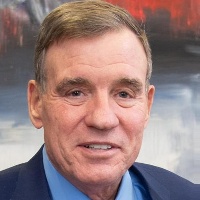
Mark Warner
Senator
VA
Mark Warner
Senator
VA
The Improving Access to Advance Care Planning Act expands Medicare coverage for crucial discussions about future healthcare wishes, making these planning services easier to access and receive via telehealth. The bill clarifies which providers can offer these services and ensures Medicare payment begins immediately upon enactment. Furthermore, it eliminates patient cost-sharing for these services starting in 2027 and mandates federal outreach to educate providers about the new coverage.
This act restricts federal justice grant recipients from dealing with licensed firearm dealers flagged by the ATF for frequently selling guns quickly recovered in crimes, while also mandating increased public sharing of gun tracing data.

Tammy Duckworth
Senator
IL
Tammy Duckworth
Senator
IL
The Responsible Retirement of Law Enforcement Firearms Act of 2025 ties federal justice grant eligibility to responsible firearm purchasing practices. Organizations receiving Edward Byrne Grants must agree not to deal with licensed dealers who have a high number of firearms traced back to them shortly after retail sale. Furthermore, the bill mandates the ATF to regularly share tracing information with state and local law enforcement and publicly list these "covered licensed dealers."
This Act mandates that all new federal public building designs must officially adhere to the historical "Guiding Principles for Federal Architecture" established in 1962.

Chris Van Hollen
Senator
MD
Chris Van Hollen
Senator
MD
The Democracy in Design Act mandates that all new federal public building designs must adhere to the historical "Guiding Principles for Federal Architecture" established in 1962. This law requires the General Services Administration (GSA) to issue new regulations, following a public comment period, to enforce these specific architectural standards.
This Act establishes a new advisory committee to review and recommend replacements for offensive place names on federal lands, streamlining the process for reconciliation and respect.
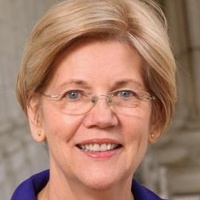
Elizabeth Warren
Senator
MA
Elizabeth Warren
Senator
MA
The Reconciliation in Place Names Act establishes a formal, public process for reviewing and replacing offensive place names across the United States. It creates an Advisory Committee on Reconciliation in Place Names, composed of diverse experts and tribal representatives, to gather and propose new names for geographic features and federal land units. The Board on Geographic Names must then review these proposals, approving them unless a compelling reason exists not to, thereby promoting names that reflect fairness and respect for all Americans.
This resolution expresses support for recognizing Christopher Columbus's historical impact and affirms the observance of the second Monday in October as Columbus Day.
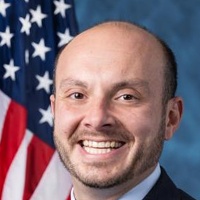
Andrew Garbarino
Representative
NY
Andrew Garbarino
Representative
NY
This resolution formally expresses support for the historical recognition of Christopher Columbus and his significant impact on the Italian-American community. It affirms the observance of the second Monday in October as "Columbus Day." The bill celebrates Columbus's arrival as a pivotal historical event and honors the pioneering spirit he represents within Italian-American heritage.
This bill establishes five Regional Agriculture Cybersecurity Centers to research, develop, and train the agricultural sector against cyber threats, with a specific focus on adversaries like China and Russia.
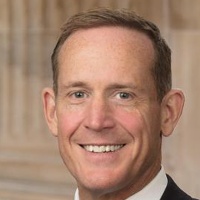
Ted Budd
Senator
NC
Ted Budd
Senator
NC
The Cybersecurity in Agriculture Act of 2025 establishes a program to enhance cybersecurity across the agricultural sector by creating five Regional Agriculture Cybersecurity Centers. These centers, hosted by eligible land-grant universities, will focus on research, threat monitoring, tool development, and training specific to farming and the food supply chain. The initiative is specifically tasked with developing defenses against cyber threats originating from adversarial nations.
This act mandates a joint study by the GAO and the Secretary of Transportation to analyze weather-related hazards and identify gaps in surface transportation safety measures.
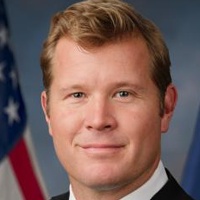
Tim Sheehy
Senator
MT
Tim Sheehy
Senator
MT
The Surface Transportation Weather Safety Gap Analysis Act of 2025 mandates a joint study by the Comptroller General and the Secretary of Transportation to assess weather-related hazards impacting surface transportation. This review will identify gaps in current federal, state, and local safety measures designed to mitigate risks during severe weather events. The resulting report must include recommendations for legislative or administrative actions needed to improve traveler safety and system resilience.
This act streamlines the renewal process for seasonal agricultural restricted commercial driver's licenses and clarifies that implements of husbandry are not considered commercial motor vehicles under CDL regulations.
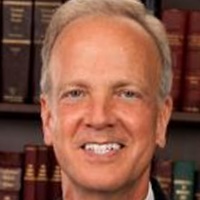
Jerry Moran
Senator
KS
Jerry Moran
Senator
KS
The Seasonal Agriculture CDL Modernization Act aims to streamline the process for agricultural workers to obtain and maintain restricted commercial driver's licenses (CDLs). This legislation mandates that the Secretary of Transportation update federal regulations to allow states to offer online renewal systems for these seasonal licenses. Furthermore, the Act clarifies that implements of husbandry are not classified as commercial motor vehicles under CDL requirements.
The MIND Act of 2025 directs the FTC to study and report on governance frameworks for neural data, while also establishing conditional limitations on federal agency use of neurotechnology.
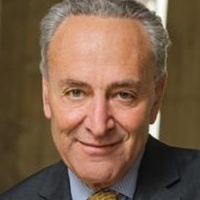
Charles Schumer
Senator
NY
Charles Schumer
Senator
NY
The Management of Individuals’ Neural Data Act of 2025 (MIND Act) addresses growing concerns over the collection and use of sensitive brain data derived from neurotechnology. This bill directs the Federal Trade Commission (FTC) to conduct a comprehensive study and report on necessary federal governance, privacy protections, and regulatory frameworks for neural data. Ultimately, the Act aims to establish clear rules to prevent exploitation, manipulation, and discrimination while encouraging responsible innovation in brain-computer interfaces.
This act mandates that PCAOB enforcement hearings be open to the public by default and removes a specific requirement for publishing certain Board determinations.
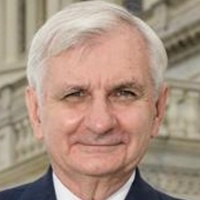
John Reed
Senator
RI
John Reed
Senator
RI
The PCAOB Enforcement Transparency Act of 2025 modifies the Public Company Accounting Oversight Board's (PCAOB) procedures regarding enforcement actions. This bill mandates that PCAOB public hearings will be open to the public by default, requiring an active decision to close them. Additionally, it removes a specific requirement for the PCAOB to publish certain enforcement determinations.
This bill officially designates the historic path of US Highway 66 as the Route 66 National Historic Trail within the National Trails System Act, managed by the Secretary of the Interior without the use of eminent domain.
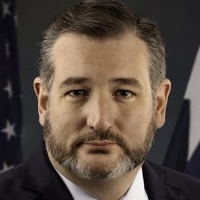
Ted Cruz
Senator
TX
Ted Cruz
Senator
TX
This act officially designates the historic paths of US Highway 66, spanning from Chicago to Santa Monica, as the Route 66 National Historic Trail within the National Trails System. The Secretary of the Interior will manage the trail while respecting its historic character and consulting with affected Indian Tribes. Importantly, this designation prohibits the use of eminent domain for land acquisition and does not impose new regulatory requirements or buffer zones around the route.
This act extends the authorization and funding for the National Flood Insurance Program until September 30, 2026.
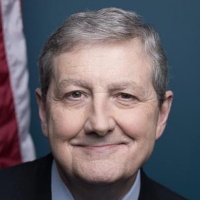
John Kennedy
Senator
LA
John Kennedy
Senator
LA
The NFIP Extension Act temporarily reauthorizes the National Flood Insurance Program (NFIP). This legislation extends the program's funding authorization and overall expiration date from September 30, 2023, to September 30, 2026. The bill ensures continuous operation of federal flood insurance programs for three additional years.
This Act establishes a mandatory federal program to rigorously test advanced Artificial Intelligence systems for risks, providing Congress with data-backed insights to inform future regulation.
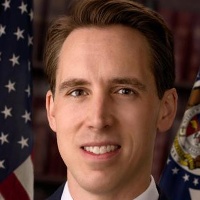
Joshua Hawley
Senator
MO
Joshua Hawley
Senator
MO
The Artificial Intelligence Risk Evaluation Act of 2025 establishes a mandatory program within the Department of Energy to rigorously test advanced AI systems for potential risks, including loss of control and security threats. Developers of these powerful systems must share code and training data to participate, or face substantial daily fines and be barred from deployment. The resulting data will inform Congress on evidence-based standards and a permanent federal oversight framework for managing evolving AI dangers.
The AI LEAD Act establishes clear liability standards for developers and deployers of covered products, prohibits contractual liability waivers, creates federal enforcement mechanisms, and mandates registration for foreign AI developers.
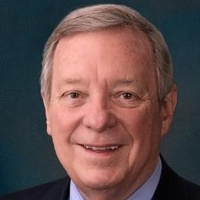
Richard Durbin
Senator
IL
Richard Durbin
Senator
IL
The AI LEAD Act fundamentally reforms product liability law by establishing clear standards for when developers and deployers of "covered products" are legally responsible for harm caused by those products. It sets specific, often high, bars for proving developer liability related to design defects, failure to warn, and strict liability for dangerous conditions. Furthermore, the Act prohibits companies from using contracts to entirely waive their liability and establishes a federal right of action for individuals to enforce these new standards in court.
This Act prohibits the spread of materially false information and the use of deceptive AI within 60 days of a federal election, while also criminalizing intentional voter intimidation and interference with vote tabulation.
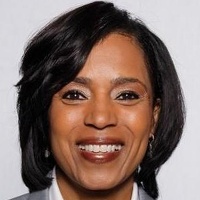
Angela Alsobrooks
Senator
MD
Angela Alsobrooks
Senator
MD
The Deceptive Practices and Voter Intimidation Prevention Act of 2025 aims to safeguard federal elections by criminalizing the knowing spread of materially false information intended to suppress voting within 60 days of an election. This bill specifically prohibits the use of deceptive Artificial Intelligence in election interference and grants citizens the right to sue violators. Furthermore, it empowers the Attorney General to issue public corrections to widespread false information and creates new criminal penalties for intimidating election workers involved in vote tabulation and certification.
This Act establishes grants to fund mobile cancer screening units to increase early detection, especially in rural and underserved communities.

Roger Marshall
Senator
KS
Roger Marshall
Senator
KS
The Mobile Cancer Screening Act establishes a federal grant program to fund the creation and operation of mobile screening units, such as vans equipped for imaging. This initiative aims to increase early cancer detection, particularly for lung cancer, by bringing essential screening services directly to rural and underserved communities. Funding priority will be given to organizations that demonstrate the greatest potential to close screening gaps and ensure comprehensive follow-up care for patients.
The Consistent Egg Labels Act of 2025 aims to prevent consumer deception by requiring food labels for eggs and egg products to accurately reflect their contents according to new federal definitions.
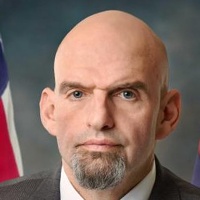
John Fetterman
Senator
PA
John Fetterman
Senator
PA
The Consistent Egg Labels Act of 2025 aims to prevent consumer confusion by ensuring food labels accurately reflect the contents of egg and egg substitute products. This legislation establishes clear definitions for what legally constitutes a real egg or egg product for labeling purposes. The bill mandates that products marketed using egg terminology must meet established federal standards to prevent misleading consumers, especially regarding nutritious, affordable shell eggs. The FDA is required to issue new guidance on enforcing these labeling standards within one year of enactment.
This Act mandates the docking of pay for Members of Congress for each day a government shutdown occurs due to a failure to fund federal agencies.
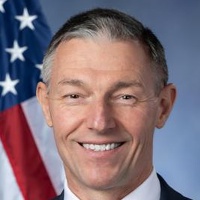
Mike Kennedy
Representative
UT
Mike Kennedy
Representative
UT
The No Work, No Pay Act of 2025 mandates that Members of Congress will have their pay docked for each day a government shutdown occurs. This deduction is calculated based on one day's salary multiplied by the total number of shutdown days within a pay period. This provision applies to the One Hundred Twentieth Congress and all subsequent Congresses.
This resolution supports designating September 30, 2025, as "Impact Aid Recognition Day" to celebrate the 75th anniversary of the federal program that financially supports school districts impacted by tax-exempt federal property and federally connected students.
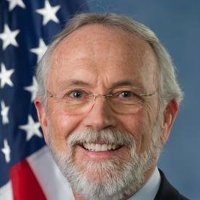
Dan Newhouse
Representative
WA
Dan Newhouse
Representative
WA
This resolution designates September 30, 2025, as "Impact Aid Recognition Day" to celebrate the 75th anniversary of the Impact Aid program. The program provides essential financial assistance to local school districts that educate students living on tax-exempt federal property. This recognition underscores Congress's continued commitment to ensuring quality education for federally connected students.
This resolution expresses Congressional support for designating October 4-10, 2025, as World Space Week to celebrate space science and technology's benefits to life on Earth.
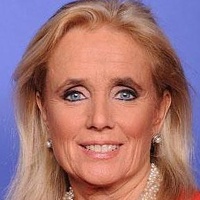
Debbie Dingell
Representative
MI
Debbie Dingell
Representative
MI
This resolution expresses the official support of Congress for designating the week of October 4–10, 2025, as World Space Week. It recognizes the importance of space science and technology for improving life on Earth and driving innovation across various sectors. The bill specifically encourages public and student participation in events celebrating the 2025 theme, "Living in Space."