Legislation
The PARTNERS Act establishes a pilot program for joint training between the U.S. and Mexican Armed Forces focused on countering transnational criminal organizations.
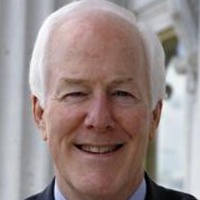
John Cornyn
Senator
TX
John Cornyn
Senator
TX
The PARTNERS Act establishes a pilot program for joint training between the U.S. and Mexican Armed Forces focused on countering transnational criminal organizations. This initiative will involve the Mexican military training in the United States on tactics like rotary-wing operations, network analysis, and counter-illicit trafficking. The Secretary of Defense is required to submit a detailed plan for this cooperative security effort to Congress.
This act ensures automatic funding for the pay and allowances of all Armed Forces members throughout Fiscal Year 2026, even if standard appropriations are delayed.
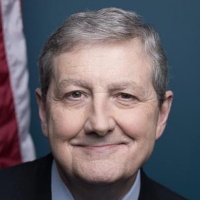
John Kennedy
Senator
LA
John Kennedy
Senator
LA
The Paychecks for Patriots Act of 2025 ensures that all members of the Armed Forces receive their pay and allowances for Fiscal Year 2026, even if standard appropriations bills have not yet been enacted. This automatic funding mechanism guarantees continuous compensation for active duty and reserve service members. The authority remains in effect until a specific law is passed to fund these military personnel costs.
This bill mandates that the wealthiest Americans pay annual taxes on the unrealized gains of their covered assets and removes several existing tax deferral mechanisms for these "applicable taxpayers."

Steve Cohen
Representative
TN
Steve Cohen
Representative
TN
The Billionaires Income Tax Act fundamentally changes how the wealthiest Americans are taxed by eliminating the ability to defer taxes on investment gains, requiring annual recognition of appreciation on covered assets. This legislation treats transfers like gifts or death as taxable sales and imposes stricter tax rules across various investment and compensation scenarios for "applicable taxpayers." Ultimately, the bill aims to ensure immediate taxation on wealth accumulation for high-net-worth individuals and associated entities starting in 2026.
The FARM Act mandates that Original Equipment Manufacturers provide owners and independent repair providers with fair access to the necessary documentation, parts, software, and tools to repair farm equipment.

Marie Gluesenkamp Perez
Representative
WA
Marie Gluesenkamp Perez
Representative
WA
The FARM Act establishes the "Right to Repair" for agricultural equipment by requiring Original Equipment Manufacturers (OEMs) to provide owners and independent repair providers with necessary documentation, parts, software, and tools on fair and reasonable terms. This ensures farmers and independent mechanics can diagnose, maintain, and repair farm equipment without being solely reliant on the OEM. The Federal Trade Commission (FTC) is tasked with enforcing these requirements, treating violations as unfair or deceptive practices subject to specific civil penalties for non-compliant OEMs. The Act also includes provisions allowing circumvention of certain digital locks for repair purposes while explicitly protecting OEM trade secrets and safety/emissions compliance.
This act renames the Mayor of the District of Columbia as the Governor, the Council of the District of Columbia as the Legislative Assembly, and the Chair of the Council as the Speaker, updating all corresponding legal references.

Eleanor Norton
Representative
DC
Eleanor Norton
Representative
DC
The District of Columbia Government Title Equality Act officially renames key leadership positions and legislative bodies within the D.C. government. This bill changes the title of the Mayor to Governor and the Council of the District of Columbia to the Legislative Assembly. It also redesignates the Council Chair as the Speaker of the Legislative Assembly, updating all corresponding legal references.
This bill mandates the creation and maintenance of a public NOAA database and webpage detailing the costs, locations, and types of all annual billion-dollar disasters in the United States.
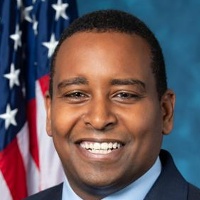
Joe Neguse
Representative
CO
Joe Neguse
Representative
CO
The Measuring the Cost of Disasters Act of 2025 mandates the National Oceanic and Atmospheric Administration (NOAA) to establish and maintain a public database and webpage detailing all billion-dollar disasters in the U.S. This resource must be updated every six months with key information like cost, location, and type of event. The webpage must also feature visual mapping tools similar to those previously provided by NCEI.
This bill requires patent owners to consent to the filing of petitions for inter partes review or post-grant review.

Marcy Kaptur
Representative
OH
Marcy Kaptur
Representative
OH
The Balancing Incentives Act of 2025 amends patent law to require the owner of a patent to consent before a third party can file a petition for either an inter partes review or a post-grant review. This legislation introduces a new consent prerequisite for initiating these administrative patent challenge proceedings.
This resolution expresses the House's stance on the deadly connection between firearm violence and intimate partner violence, honoring victims and recommending legislative action to strengthen protections.
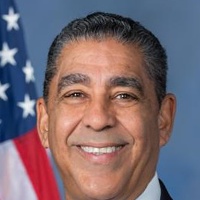
Adriano Espaillat
Representative
NY
Adriano Espaillat
Representative
NY
This resolution expresses the sense of the House of Representatives recognizing the critical link between firearm violence and intimate partner violence, particularly its devastating impact on women. It honors victims of intimate partner homicide by highlighting statistics that show firearms are frequently used in these fatal incidents. Furthermore, the House urges Congress to strengthen background checks and restrict firearm access for individuals subject to domestic violence restraining orders. The resolution also calls for increased support for survivors and comprehensive research on this deadly connection.
This resolution formally declares gun violence a public health crisis in the United States and urges coordinated federal action for prevention and research.
Adriano Espaillat
Representative
NY
Adriano Espaillat
Representative
NY
This resolution formally declares gun violence a public health crisis in the United States, citing its severe impact, especially on children and adolescents. It supports similar declarations made at local and state levels across the nation. The bill urges the federal government to coordinate efforts and expand research through agencies like the CDC to implement effective prevention strategies. Ultimately, it commits the body to working toward ending this crisis to ensure public safety and well-being.
This joint resolution terminates the national emergency declared in July 2025 concerning duties on articles imported from Brazil.
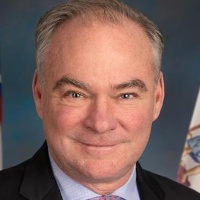
Timothy Kaine
Senator
VA
Timothy Kaine
Senator
VA
This joint resolution terminates the national emergency declared by Executive Order 14323 on July 30, 2025. The declaration was originally put in place to impose duties on articles imported from Brazil. This bill officially ends that emergency status using the authority granted by the National Emergencies Act.
This bill mandates that group health plans and insurers provide comprehensive coverage for all stages and modalities of breast or chest wall reconstruction, including symmetry procedures and complication treatment, following breast cancer treatment.

Katherine Cammack
Representative
FL
Katherine Cammack
Representative
FL
The Women’s Health and Cancer Rights Modernization Act of 2025 mandates that group health plans and issuers provide comprehensive coverage for all stages of breast or chest wall reconstruction following breast cancer treatment. This coverage must include every modality, type, and procedural variation of reconstruction, as well as treatment for related complications like lymphedema. Furthermore, the bill requires plans to ensure in-network access to providers for these services and prohibits discrimination against patients seeking reconstruction.
This resolution calls for the United States to champion a regional AI strategy in the Americas that prioritizes inclusive systems to combat bias, promote social justice, and uphold democratic values.
Adriano Espaillat
Representative
NY
Adriano Espaillat
Representative
NY
This resolution calls on the United States to champion a regional Artificial Intelligence (AI) strategy across the Americas. The goal is to foster inclusive AI systems that actively combat biases against marginalized groups. This strategy emphasizes collaboration within the Western Hemisphere to promote social justice, economic well-being, and democratic values through responsible AI development.
This Act provides continuing appropriations to ensure FAA air traffic controllers and TSA security personnel receive pay and benefits if full fiscal year 2026 funding is delayed.
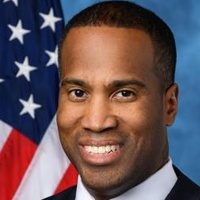
John James
Representative
MI
John James
Representative
MI
The Keep America Flying Act of 2026 ensures continuous funding for essential FAA air traffic controllers and TSA security personnel at the start of fiscal year 2026. This temporary measure guarantees these critical employees receive their pay and benefits if full appropriations are delayed. Funding provided under this Act will be charged against future enacted appropriations and terminates on September 30, 2026, or sooner upon the enactment of regular funding.
The FREE Act mandates federal agencies to develop and implement a "permitting by rule" system to streamline and expedite permit issuance based on applicant certification of compliance with established standards.

Celeste Maloy
Representative
UT
Celeste Maloy
Representative
UT
The Full Responsibility and Expedited Enforcement (FREE) Act mandates that federal agencies develop and implement a "permitting by rule" system as an alternative to slow, traditional permitting processes. This new system requires applicants to certify compliance with written standards, streamlining approval with a 180-day automatic grant deadline if the agency fails to act. Agencies retain the right to audit and enforce compliance after permits are issued, with the burden of proof shifting to the agency during appeals.
The Shenandoah Mountain Act establishes the Shenandoah Mountain National Scenic Area and designates five new Wilderness Areas within the George Washington and Jefferson National Forests to protect scenic, water, and biological resources while allowing for compatible recreation.
Timothy Kaine
Senator
VA
Timothy Kaine
Senator
VA
The Shenandoah Mountain Act establishes the Shenandoah Mountain National Scenic Area within the George Washington and Jefferson National Forests to protect its scenic quality, water resources, and unique biological values. This legislation also designates five new Wilderness Areas within the National Forest System. Management within the Scenic Area prioritizes conservation while allowing for existing and improved nonmotorized recreation opportunities. Furthermore, the Act withdraws the area from new mineral entry, leasing, and renewable energy development.
This bill expresses support for designating October 28th as "Oxi Day" to commemorate Greece's historic refusal to surrender to Axis forces in World War II.

Chris Pappas
Representative
NH
Chris Pappas
Representative
NH
This resolution officially designates October 28th as "Oxi Day" to commemorate Greece's heroic refusal to surrender to Axis forces during World War II. This act of defiance is recognized for its significant contribution to the eventual defeat of fascism. The bill encourages Americans to observe this important day of remembrance.
This Act authorizes the Secretary of Agriculture to exchange approximately 17.5 acres of Federal land in Itasca County, Minnesota, for approximately 36.7 acres of private land owned by Big Winnie Land and Timber, LLC, to be added to the Chippewa National Forest.
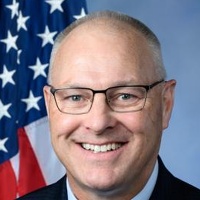
Pete Stauber
Representative
MN
Pete Stauber
Representative
MN
This Act authorizes the Secretary of Agriculture to execute a land exchange between the United States and Big Winnie Land and Timber, LLC (BWLT) involving parcels in Itasca County, Minnesota. The exchange requires BWLT to transfer approximately 36.7 acres of private land to the U.S. for addition to the Chippewa National Forest. In return, the U.S. will transfer approximately 17.5 acres of Federal land to BWLT, subject to a reserved road access easement. The transaction must be for equal value, potentially requiring a cash payment from BWLT if the Federal land is appraised as more valuable.
This resolution commemorates the annual celebration of Día de los Muertos while urging accountability and humane treatment for those who have died in immigration custody.
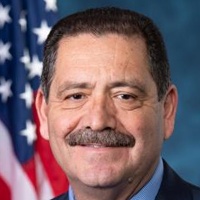
Jesús García
Representative
IL
Jesús García
Representative
IL
This resolution officially recognizes the annual celebration of Día de los Muertos in the United States, honoring its rich cultural significance and traditions of remembrance. It connects the spirit of honoring ancestors to the need for compassion and accountability regarding lives lost in immigration detention. The bill urges federal agencies to protect the dignity and rights of individuals in custody, especially during culturally significant times. Ultimately, it calls for honoring human dignity through remembrance and ensuring humane treatment for all.
This resolution condemns Hamas for assassinating innocent Palestinians in Gaza following a ceasefire agreement.
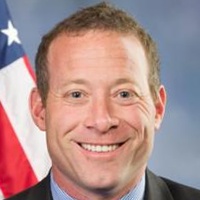
Josh Gottheimer
Representative
NJ
Josh Gottheimer
Representative
NJ
This resolution condemns Hamas for its campaign of assassinations and intimidation against innocent Palestinian civilians in Gaza following a recent ceasefire agreement. The House of Representatives expresses strong disapproval of these terroristic acts aimed at regaining territorial control. Furthermore, the resolution reaffirms the U.S. commitment to supporting the ceasefire and promoting stability for civilians in Gaza.
This Act expands the goals of the AGARDA program to enhance the role of sustainable agriculture in developing innovative resilience solutions, including precision agriculture and carbon sequestration.
Joe Neguse
Representative
CO
Joe Neguse
Representative
CO
The Sustainable Agriculture Research Act aims to enhance the role of agriculture in developing innovative sustainability solutions. It amends the AGARDA program to focus on agricultural technologies addressing extreme weather, water conservation, carbon storage, and sustainable energy. The bill also specifically defines and promotes the adoption of precision agriculture to improve efficiency and environmental quality.