Legislation
This bill establishes a grant program to fund partnerships promoting mental and behavioral health careers to high school and community college students.
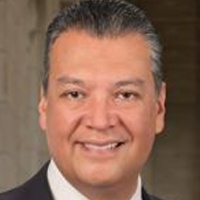
Alejandro Padilla
Senator
CA
Alejandro Padilla
Senator
CA
This bill establishes the Mental Health Career Promotion Grant Program to address workforce shortages in mental and behavioral health. The program awards grants to partnerships between schools, community colleges, and mental health providers to create or expand initiatives that promote these careers to students. Activities funded will include educational presentations, internships, and mentorship opportunities for students in grades 9 through college.
This act establishes the Medal of Sacrifice to honor local, State, Tribal, territorial, or Federal law enforcement officers and first responders killed in the line of duty, administered by a Presidentially appointed Commission.
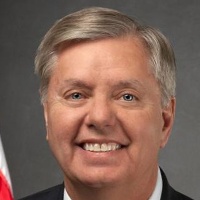
Lindsey Graham
Senator
SC
Lindsey Graham
Senator
SC
This bill establishes the Medal of Sacrifice to honor local, State, Tribal, territorial, or Federal law enforcement officers and first responders killed in the line of duty. It mandates the creation of a Presidential Commission to advise on the medal's design, presentation, and eligibility determinations. The medal itself will feature a distinct design incorporating elements of the Great Seal of the United States.
This bill eliminates a specific work requirement exemption and related state funding provisions within the Supplemental Nutrition Assistance Program (SNAP).
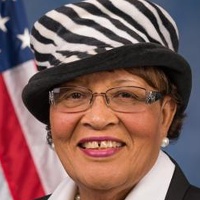
Alma Adams
Representative
NC
Alma Adams
Representative
NC
The Improving Access to Nutrition Act of 2026 addresses the Supplemental Nutrition Assistance Program (SNAP) by eliminating a specific work requirement exemption and related state funding provisions. Congress finds that existing SNAP work requirements are ineffective at reducing poverty and create significant barriers to food assistance, disproportionately affecting vulnerable populations. This legislation aims to streamline access to benefits by removing these administrative hurdles.
The Strong Start Act establishes a new $3,000 direct payment tax credit for parents of newborn or newly adopted children and makes permanent and expands government contributions to American Dream accounts for eligible families.
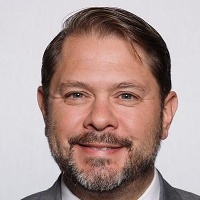
Ruben Gallego
Senator
AZ
Ruben Gallego
Senator
AZ
The Strong Start Act establishes a new, direct $3,000 tax credit for parents of newborn or newly adopted children, payable within 30 days of filing. It also permanently extends and enhances American Dream accounts by making initial government contributions permanent, adding new matching contributions for low-income families with qualifying children, and ensuring these accounts do not affect eligibility for most federal assistance programs. Furthermore, the bill mandates the automatic enrollment of eligible individuals into these accounts.
This bill establishes new transparency and reporting requirements for the Department of Labor when providing assistance to individuals who may use that information in civil lawsuits under ERISA.
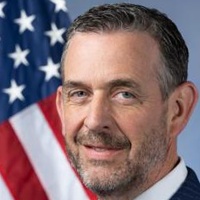
Michael Rulli
Representative
OH
Michael Rulli
Representative
OH
The Balance the Scales Act amends ERISA to establish new procedural requirements for the Department of Labor when providing "adverse assistance" to individuals for potential ERISA lawsuits. Before providing such assistance, the Secretary must enter into a written agreement and notify potentially impacted employers or plan fiduciaries. The bill also mandates annual reporting to Congress detailing all adverse assistance agreements and the assistance provided under them.
This Act establishes a program to fund "navigators" who will help communities, especially rural and Tribal ones, secure funding and develop multi-benefit water projects.
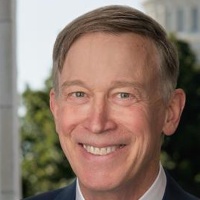
John Hickenlooper
Senator
CO
John Hickenlooper
Senator
CO
The Water Project Navigators Act establishes a Department of the Interior program to provide grants for hiring "navigators." These navigators will assist communities and organizations in developing and applying for funding for multi-benefit water projects. The program prioritizes support for rural, Tribal, and disadvantaged communities to increase their capacity for securing water project funding.
This Act mandates premium pay of at least one and one-half times the regular rate for all work performed on designated federal legal public holidays.
Ruben Gallego
Senator
AZ
Ruben Gallego
Senator
AZ
The Holiday Pay Act amends the Fair Labor Standards Act to mandate premium pay for employees working on designated federal holidays. Specifically, it requires employers to compensate covered employees at a rate of at least one and one-half times their regular rate of pay for work performed on these legal public holidays. This new premium pay cannot be counted toward standard overtime obligations. The Act establishes enforcement mechanisms and clarifies that it sets a minimum standard, allowing state or local laws to provide greater holiday compensation.
The Rebuild America’s Schools Act of 2026 establishes federal grant and bond programs to provide significant, targeted funding for the long-term improvement, modernization, and repair of public school facilities across the nation.
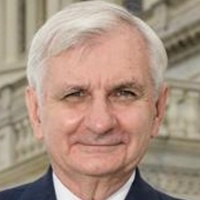
John Reed
Senator
RI
John Reed
Senator
RI
The Rebuild America’s Schools Act of 2026 establishes major federal funding streams, primarily through grants and tax-credit bonds, to modernize and repair public school facilities nationwide. This legislation prioritizes improvements focused on health, safety, and energy efficiency, directing significant resources toward districts serving low-income students. The Act also mandates transparency through public reporting and requires local districts to develop long-term facility master plans.
This Act extends the Military Lending Act's 36% interest rate cap and loan term restrictions to most consumer credit, excluding mortgages and certain auto loans.
John Reed
Senator
RI
John Reed
Senator
RI
The Predatory Lending Elimination Act amends federal law to apply the Military Lending Act's 36% interest rate cap (MAPR) to most consumer credit transactions. This new restriction generally excludes residential mortgages and specific auto loans, while preserving stronger state consumer protection laws. The Consumer Financial Protection Bureau is tasked with issuing implementing rules within one year.
This bill establishes Medicare coverage and a new payment system for comprehensive ALS-related services while mandating a report on clinical trial challenges.

Lisa Murkowski
Senator
AK
Lisa Murkowski
Senator
AK
The ALS Better Care Act aims to improve care for individuals with ALS by establishing new Medicare coverage and a dedicated payment system for essential ALS-related services starting in 2027. This legislation mandates a supplemental annual payment to providers for coordinating complex care, including therapy and specialized support, while also requiring a report on challenges facing ALS clinical trials. The goal is to enhance the quality of life and lifespan for ALS patients by ensuring better access to coordinated, specialized care.
This act prohibits federal law from considering the provision of benefits when determining an individual's employment status.
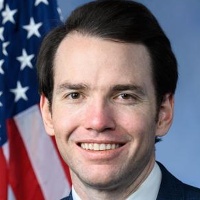
Kevin Kiley
Representative
CA
Kevin Kiley
Representative
CA
The Modern Worker Security Act prohibits federal law from considering the provision of benefits when determining an individual's employment status. This means benefits commonly associated with full-time employment can no longer be used as a factor in classifying a worker. The goal is to clarify the definition of an employee by removing benefit considerations from the determination process.
This bill formally integrates therapeutic and diagnostic medical physicists into the VA healthcare system, establishing their qualifications, pay grades, and benefits.
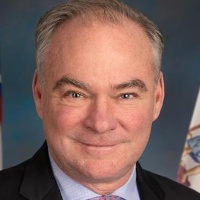
Timothy Kaine
Senator
VA
Timothy Kaine
Senator
VA
This bill formally integrates Therapeutic and Diagnostic Medical Physicists into the Department of Veterans Affairs (VA) healthcare system. It establishes specific qualification requirements, including board certification, and incorporates these roles into the VA's established pay and personnel administration structures. The legislation also mandates a report assessing the impact of pay adjustments for these specialized physicists.
This bill mandates that the Thrift Savings Fund's fiduciaries protect U.S. national security by restricting investments in entities tied to adversarial nations and establishing a review process for fund investments and shareholder votes.
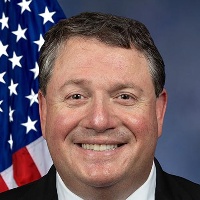
Randall Fine
Representative
FL
Randall Fine
Representative
FL
The TSP Fiduciary Security Act of 2026 mandates that the Federal Retirement Thrift Investment Board protect national security as part of its fiduciary duty when managing the Thrift Savings Fund. The bill requires the Secretary of Labor to establish new regulations presuming non-compliance for investments in entities linked to prohibited foreign adversaries or certain shareholder votes. Furthermore, it explicitly prohibits TSP mutual fund window investments in entities based in the People's Republic of China.
This act significantly increases the annual cap for H-1C nonimmigrant nurse visas to 20,000 for employment in designated shortage areas and mandates staffing ratio policies for petitioning healthcare facilities.
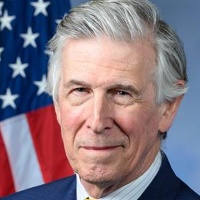
Donald Beyer
Representative
VA
Donald Beyer
Representative
VA
The National Urgent Recruitment for Skilled Employees Visa Act of 2026, or NURSE Visa Act, significantly increases the annual availability of H-1C visas for nonimmigrant nurses from 500 to 20,000. This expansion aims to address critical nursing shortages by prioritizing placements in designated shortage areas. Additionally, the bill mandates that healthcare facilities petitioning for these visas must maintain a formal policy on provider-to-patient staffing ratios.
This bill mandates a comprehensive report and public index of all federal criminal statutory and regulatory offenses, including prosecution data and *mens rea* requirements.
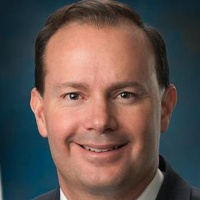
Mike Lee
Senator
UT
Mike Lee
Senator
UT
The Count the Crimes to Cut Act mandates a comprehensive accounting of all federal criminal offenses, both statutory and regulatory. It requires the Attorney General and numerous federal agencies to report detailed information on these crimes, including penalties and prosecution history. Finally, the bill mandates the creation of public, online indexes for all identified criminal offenses.
This act authorizes the Puyallup Tribe of Indians to withdraw funds from its permanent trust fund under an approved management plan while preserving the Tribe's ability to benefit from future federal laws.
Maria Cantwell
Senator
WA
Maria Cantwell
Senator
WA
The Helping Our People Act of 2026 allows the Puyallup Tribe of Indians to withdraw funds from its permanent trust fund under an approved management plan. This legislation also clarifies that future federal laws will apply equally to the Tribe, ensuring continued partnership opportunities with the United States government.
The ABODE Act establishes a grant competition program to fund the development or rehabilitation of energy-efficient and resilient affordable housing for low-income households.
Richard Durbin
Senator
IL
Richard Durbin
Senator
IL
The ABODE Act establishes a competitive grant program to fund the development or rehabilitation of highly energy-efficient and resilient affordable housing. Grants will be awarded to organizations to build or renovate homes for low-income households, prioritizing projects that reduce costs and increase accessibility. The Department of Housing and Urban Development will study the long-term savings generated by these improved housing standards.
This Act prohibits colleges, student athletes, and related entities from entering into Name, Image, and Likeness (NIL) or other revenue agreements with entities or nationals of specified foreign countries, while imposing strict reporting and compliance requirements.
Blake Moore
Representative
UT
Blake Moore
Representative
UT
The No Foreign NIL Funds Act prohibits U.S. colleges, student-athletes, and related groups from entering into Name, Image, and Likeness (NIL) agreements or other revenue-generating contracts with entities or nationals of designated foreign countries. This legislation aims to restrict foreign influence in collegiate athletics by banning financial relationships with countries outside of NATO allies, Australia, New Zealand, and Ireland. Covered entities must report solicitations from foreign interests, and non-compliant institutions risk losing federal student aid eligibility.
This act prohibits the marketing and manufacturing of certain non-compliant dietary supplements, including those containing tianeptine, and strengthens FDA enforcement against violative imports.
Frank Pallone
Representative
NJ
Frank Pallone
Representative
NJ
This Act prohibits the marketing and distribution of products falsely labeled as dietary supplements or those manufactured under the direction of debarred individuals. It strengthens FDA enforcement by allowing the refusal of entry for non-compliant imported products and authorizing the seizure of violative domestic products.
This act establishes stricter criteria and limitations for hospitals seeking rural geographic reclassification for Medicare payment purposes, effective in 2026.
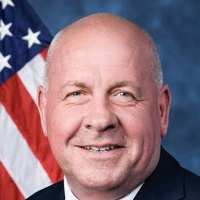
David Taylor
Representative
OH
David Taylor
Representative
OH
The Defend Rural Health Act of 2026 establishes stricter criteria for hospitals seeking rural geographic reclassification for Medicare payment purposes starting in late 2026. It limits eligibility to hospitals meeting specific designations like Rural Referral Center or Sole Community Hospital, and phases out existing reclassifications after 2029 unless new criteria are met. Furthermore, the bill prohibits hospitals from holding dual geographic classifications simultaneously for payment purposes.