Legislation
This resolution honors the life and legislative legacy of former Michigan Senator Donald W. Riegle, Jr., recognizing his decades of public service and key accomplishments.
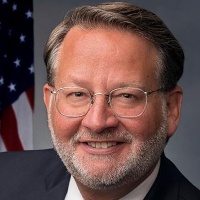
Gary Peters
Senator
MI
Gary Peters
Senator
MI
This resolution honors the life and extensive public service of the late Honorable Donald W. Riegle, Jr., former Senator for Michigan. It recognizes his decades in Congress, highlighting key legislative achievements such as co-sponsoring the Equal Credit Opportunity Act and leading significant banking reforms. The Senate expresses its profound sorrow and adjourns in his memory.
This bill protects the right of Alaska Natives to create, sell, and transport authentic handicrafts made from marine mammal parts across state lines.
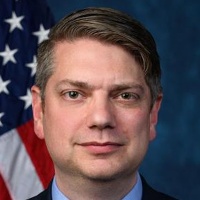
Nicholas Begich
Representative
AK
Nicholas Begich
Representative
AK
This Act, also known as the ARTIST Act, updates federal law to protect the ability of Alaska Natives to create and sell authentic handicrafts made from marine mammal parts. It specifically exempts these traditional crafts from certain restrictions under the Marine Mammal Protection Act. Furthermore, the bill prohibits states from banning the interstate commerce of these authentic Alaska Native items.
This Act designates approximately 530,000 acres of Colorado federal land as new wilderness areas while protecting existing water rights and regulating future water development.

Diana DeGette
Representative
CO
Diana DeGette
Representative
CO
The Colorado Wilderness Act of 2026 designates approximately 530,000 acres of federal land across Colorado as new additions to the National Wilderness Preservation System. This legislation establishes management guidelines for these new wilderness areas, including specific provisions for grazing, military overflights, and existing water rights. The Act also protects wilderness water resources while strictly prohibiting new water diversion or storage development within the designated lands.
This Act prohibits food retailers and delivery services from using personal data to charge consumers higher prices (dynamic pricing) and requires disclosure for online grocery orders.
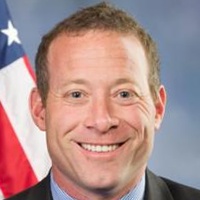
Josh Gottheimer
Representative
NJ
Josh Gottheimer
Representative
NJ
The No Rigged Grocery Prices Act prohibits food retailers and delivery services from using personal data to increase a consumer's food price through dynamic pricing. The bill creates exceptions for voluntary loyalty programs and cost-based pricing. It also mandates disclosures for online grocery orders and requires approval for item substitutions by delivery services. The Federal Trade Commission is empowered to enforce these provisions.
The **21st Century ROAD to Housing Act** is a sweeping bill designed to increase housing supply, improve affordability, modernize financing for manufactured homes, and enhance federal housing oversight through a series of reforms, pilots, and restrictions on institutional investors.

J. Hill
Representative
AR
J. Hill
Representative
AR
The **21st Century ROAD to Housing Act** is a comprehensive bill aimed at increasing housing supply, improving affordability, and modernizing federal housing finance and oversight. It introduces numerous pilot programs and voluntary guides to encourage zoning reform, streamlines environmental reviews, updates rules for manufactured housing, and strengthens accountability for federal housing agencies. Ultimately, the Act seeks to reduce regulatory burdens and expand access to homeownership and stable rentals for low- and moderate-income Americans.
This resolution supports designating May 29, 2026, as "Mental Health Awareness in Agriculture Day" to address the high rates of mental health challenges and stigma within the agricultural industry.
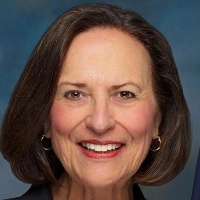
Deb Fischer
Senator
NE
Deb Fischer
Senator
NE
This resolution supports designating May 29, 2026, as "Mental Health Awareness in Agriculture Day." The goal is to raise awareness about the critical mental health challenges faced by farmers and farmworkers, who experience disproportionately high suicide rates. This day aims to reduce the stigma surrounding mental illness within the agricultural industry.
This bill extends funding for the program supporting small medical practices and providers in underserved and rural areas participating in Medicare's Quality Payment Program through fiscal year 2031.
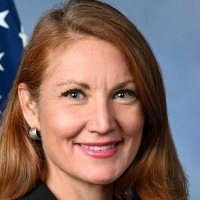
Melanie Stansbury
Representative
NM
Melanie Stansbury
Representative
NM
This bill, the Small Practice, Underserved, and Rural Support Program Extension Act of 2026, extends crucial funding for the Quality Payment Program-Small Practice, Underserved, and Rural Support program. This extension ensures continued support for small medical practices and providers serving in underserved and rural communities. The funding authorization is extended through fiscal year 2031.
This Act requires hospitals receiving Medicare direct graduate medical education payments to report de-identified citizenship and immigration status data for their medical residents to Congress annually.
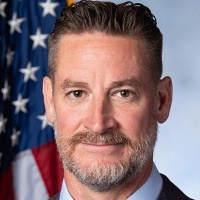
W. Steube
Representative
FL
W. Steube
Representative
FL
The GME Transparency Act of 2026 requires hospitals receiving Medicare payments for graduate medical education (GME) costs to report de-identified data on the citizenship and immigration status of their medical residents. This information will be compiled by the Secretary of Health and Human Services into an annual report for Congress. Hospitals failing to submit this required data will lose eligibility for Medicare GME payments for those residents.
This bill establishes a pilot program to sell underutilized federal property to community-focused entities for redevelopment, supported by a new federal grant program.
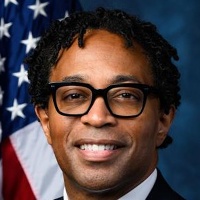
Wesley Bell
Representative
MO
Wesley Bell
Representative
MO
The Vacancy to Value Act of 2026 establishes a pilot program for the General Services Administration (GSA) to sell or transfer underutilized federal properties for community-focused redevelopment, such as affordable housing and job creation. The Act also creates a Federal Redevelopment Grant Program, administered by HUD, to provide competitive funding for these revitalization projects. Entities acquiring property must commit to specific redevelopment timelines and community benefit requirements, with priority given to nonprofit and public organizations.
This bill mandates the NIH to study and report on the development of a standardized, noninvasive HPV test for men to close a critical gap in cancer prevention and public health equity.
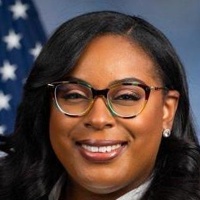
LaMonica McIver
Representative
NJ
LaMonica McIver
Representative
NJ
The Closing the HPV Testing Gap Act directs the National Institutes of Health (NIH) to conduct a comprehensive study on developing a standardized, noninvasive HPV test for men. This action aims to close a critical gap in cancer prevention and public health surveillance, which currently lacks FDA-approved testing for men. The resulting report will provide recommendations for research, implementation, and interagency coordination to advance gender equity in cancer prevention efforts.
This Act establishes a temporary zero-interest loan program to help eligible, long-standing rural hospitals replace, improve, or renovate their facilities.
Jill Tokuda
Representative
HI
Jill Tokuda
Representative
HI
The Rural Hospital Revitalization Act of 2026 establishes a temporary, zero-interest loan program to help eligible, long-standing rural hospitals replace, improve, or renovate their facilities. Loans prioritize hospitals serving the most remote and underserved populations, offering a five-year interest-free period with potential renewals based on financial need and community impact. Following the initial period, loans are refinanced under standard terms unless the hospital remains financially vulnerable, in which case further interest-free extensions or technical assistance are provided.
This act establishes new mandatory paid and unpaid break requirements for employees, including meal, rest, restroom, and medical breaks, under the Fair Labor Standards Act.
Bonnie Watson Coleman
Representative
NJ
Bonnie Watson Coleman
Representative
NJ
The Worker Rights and Support Act amends the Fair Labor Standards Act to establish new mandatory meal, rest, restroom, and medical break requirements for employees. This legislation ensures employees receive specific paid and unpaid break times based on hours worked or medical necessity. Violations of these new break provisions are subject to enforcement actions under the Fair Labor Standards Act.
This Act aims to protect parents from unwarranted investigations and penalties for allowing children to engage in reasonable, unsupervised childhood independence activities.
Blake Moore
Representative
UT
Blake Moore
Representative
UT
The Promoting Childhood Independence and Resilience Act of 2026 aims to protect parents from unwarranted investigation or prosecution for allowing children to engage in reasonable, age-appropriate independent activities. The bill directs the Department of Health and Human Services to study and report on best practices for supporting childhood independence. Furthermore, it amends federal law to ensure that state child welfare systems recognize these activities as beneficial, not as grounds for abuse or neglect claims.
This Act mandates the VA to create a centralized system for collecting and cross-referencing data to identify and locate next-of-kin for unclaimed veteran remains.
David Valadao
Representative
CA
David Valadao
Representative
CA
The Locating Our Unclaimed Veterans Act mandates the Department of Veterans Affairs to establish a centralized system for storing information on unclaimed veteran remains. This system will coordinate data from various sources, including coroners and federal agencies like the FBI and DoD, to help identify these veterans. The VA must report on the system's progress and the number of remains successfully identified for three years following enactment.
This bill directs the Transportation Research Board to evaluate innovative hull designs and advanced materials for more durable and efficient waterborne transit systems.
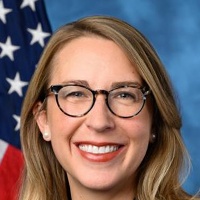
Hillary Scholten
Representative
MI
Hillary Scholten
Representative
MI
This Act directs the Transportation Research Board to study innovative hull designs and advanced materials for waterborne transit systems. The goal is to enhance operational performance and payload capacity through the use of technologies like carbon fiber and composite materials.
The Our Doctors First Act of 2026 prohibits the use of Medicare funds for graduate medical education costs associated with residents who are not U.S. citizens or nationals, imposing escalating penalties for noncompliance.
W. Steube
Representative
FL
W. Steube
Representative
FL
The Our Doctors First Act of 2026 prohibits the use of Medicare funds for graduate medical education costs associated with residents who are not U.S. citizens or nationals. This restriction applies to payments for both direct and indirect medical education expenses for hospitals and nonhospital providers. The bill establishes escalating civil monetary penalties and potential exclusion from future Medicare payments for entities that violate this new citizenship requirement.
The Elder Pride Act of 2026 establishes a rural outreach grant program to connect older LGBTQI individuals and members of other protected classes in rural areas with essential services, reduce isolation, and improve sexual health care access.
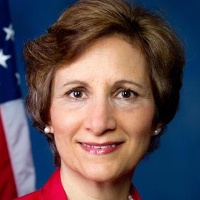
Suzanne Bonamici
Representative
OR
Suzanne Bonamici
Representative
OR
The Elder Pride Act of 2026 establishes a new rural outreach grant program under the Older Americans Act. This program aims to reduce isolation and improve care access for older LGBTQI individuals and members of other protected classes in rural areas. Grants will fund partnerships that provide essential services, including comprehensive sexual health support for all older residents.
This bill mandates the Secretary of State to determine within one year if China's actions against Tibetans constitute genocide or crimes against humanity and to recommend policy responses.
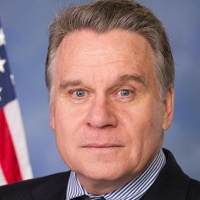
Christopher Smith
Representative
NJ
Christopher Smith
Representative
NJ
This bill mandates the Secretary of State to determine, within one year, whether the actions of Chinese officials against Tibetans constitute ongoing genocide or crimes against humanity. The determination must consider specific atrocities, including forced assimilation and systematic harm. The Secretary must also submit a detailed report outlining the evidence and recommending appropriate U.S. policy responses.
This bill strengthens penalties for illegal interstate fireworks trafficking by designating it as a specified unlawful activity for federal money laundering prosecutions.
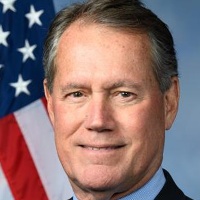
Ed Case
Representative
HI
Ed Case
Representative
HI
This bill, the Fireworks Trafficking and Money Laundering Prevention Act, addresses the serious public safety risks and criminal connections associated with illegal fireworks distribution. It designates the unlawful interstate transportation of fireworks as a "specified unlawful activity" for federal money laundering purposes. This change strengthens law enforcement's ability to prosecute the financial networks behind illegal fireworks trafficking.
This Act mandates the USDA to create transparent roadmaps, standardized notifications, and public databases for all Rural Development grants to simplify access for rural communities.

Julia Letlow
Representative
LA
Julia Letlow
Representative
LA
The Rural Grants Transparency Act aims to simplify access to USDA rural development grants for small communities. It mandates the creation of clear, publicly available "Roadmaps" detailing application steps, criteria, and contacts for every relevant program. The bill also requires standardized applicant notifications and the publication of scoring criteria for competitive grants. These measures are designed to increase transparency without requiring new federal funding.