Legislative Activity
Track Randy's sponsored bills, co-sponsored legislation, and voting record
Prohibits the EPA from using its Integrated Risk Information System program to create regulations, carry out enforcement, or inform air toxics assessments.
Glenn Grothman
Representative
WI
Glenn Grothman
Representative
WI
The "No Industrial Restrictions in Secret Act of 2025" or "No IRIS Act of 2025" prevents the EPA Administrator from utilizing assessments produced by the EPA's Integrated Risk Information System program. This prohibition extends to developing regulations, enforcement actions, permitting, and informing air toxics assessments.
The "Make American Flags in America Act of 2025" mandates that U.S. flags displayed on Federal property or bought by Federal agencies be made entirely in the U.S., and requires a study on country-of-origin labeling enforcement for flags.
Nicholas Langworthy
Representative
NY
Nicholas Langworthy
Representative
NY
The "Make American Flags in America Act of 2025" mandates that U.S. flags displayed on Federal property or bought by Federal agencies be entirely manufactured in the U.S. using 100% U.S.-made materials, in accordance with international agreements. It also directs the Federal Trade Commission to study and report on country-of-origin labeling enforcement for U.S. flags, aiming to improve enforcement and deter violations.
The "ELITE Vehicles Act" repeals tax credits for clean vehicles, previously-owned clean vehicles, and qualified commercial clean vehicles, and removes electric vehicle charging stations from eligibility for the alternative fuel vehicle refueling property credit.
Jodey Arrington
Representative
TX
Jodey Arrington
Representative
TX
The "Eliminate Lavish Incentives To Electric Vehicles Act" repeals tax credits for new and used clean vehicles, as well as for qualified commercial clean vehicles. It also removes electric vehicle charging stations from eligibility for the alternative fuel vehicle refueling property credit. These changes would take effect 30 days after the enactment of the Act.
The COST Act mandates transparency in the use of federal funds by requiring disclosure of the percentage and dollar amount of federal funding in programs, projects, and activities.
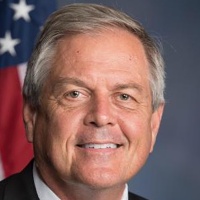
Ralph Norman
Representative
SC
Ralph Norman
Representative
SC
The COST Act mandates that any entity using federal funds for a program, project, or activity must disclose the percentage and dollar amount of the total cost covered by these funds in all related documents and communications. Compliance will be certified through performance progress reporting. The Office of Management and Budget will conduct annual reviews and provide a public mechanism for reporting non-compliance.
The bill mandates fair-value accounting for federal credit programs, requiring the Congressional Budget Office and the Office of Management and Budget to provide fair-value estimates for loan and loan guarantee programs to ensure budget compliance and transparency.
Ralph Norman
Representative
SC
Ralph Norman
Representative
SC
The "Fair-Value Accounting and Budget Act" mandates the use of fair-value estimates, in addition to credit reform estimates, for all federal loan and loan guarantee programs by the Congressional Budget Office (CBO). It requires the CBO to include both fair-value and credit reform estimates in its annual budget and economic outlook. Additionally, the Office of Management and Budget (OMB) must submit an annual report to Congress on fair-value estimates of federal credit programs. Both CBO and OMB are required to use the Government Accounting Standards Board's definition of "fair value" in their estimates.
This resolution urges the United Kingdom, France, and Germany to trigger the UN "snapback" mechanism to reimpose international sanctions on Iran for its nuclear and ballistic missile violations before the provision expires in October 2025.
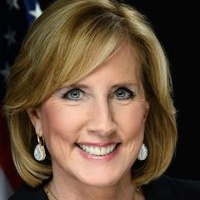
Claudia Tenney
Representative
NY
Claudia Tenney
Representative
NY
This resolution calls on the United Kingdom, France, and Germany to immediately trigger the "snapback" mechanism under UN Security Council Resolution 2231 to reimpose international sanctions on Iran. It condemns Iran’s ongoing nuclear violations and urges action before the snapback authority expires on October 18, 2025. The measure reaffirms the U.S. commitment to preventing Iran from acquiring nuclear weapons and holds the regime accountable for its destabilizing activities.
The Agent Raul Gonzalez Officer Safety Act establishes federal criminal penalties and immigration consequences for individuals who use a motor vehicle to evade law enforcement near the U.S. border.
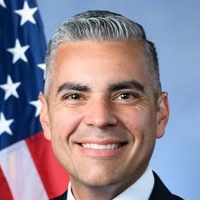
Juan Ciscomani
Representative
AZ
Juan Ciscomani
Representative
AZ
The Agent Raul Gonzalez Officer Safety Act establishes a new federal criminal offense for using a motor vehicle to evade law enforcement near the U.S. border, with penalties increasing significantly if the act results in injury or death. Additionally, the bill mandates that non-citizens convicted of this offense are inadmissible to the U.S., subject to deportation, and ineligible for immigration relief such as asylum. The legislation also requires the Attorney General to submit annual reports to Congress detailing enforcement data and prosecution outcomes.
The "Collision Avoidance Systems Act of 2025" mandates the Department of Transportation to update safety standards to allow and set performance standards for pulsating brake lights on vehicles to help prevent rear-end collisions.
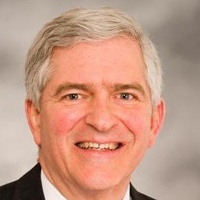
Daniel Webster
Representative
FL
Daniel Webster
Representative
FL
The "Collision Avoidance Systems Act of 2025" permits and sets performance standards for pulsating light systems on vehicles to help prevent rear-end collisions. It mandates the Secretary of Transportation to update Federal Motor Vehicle Safety Standard Number 108 within 180 days to include these systems. The bill defines a pulsating light system as a high-mounted stop lamp that pulses rapidly up to 4 times within 1.2 seconds upon braking before converting to a continuous light.
The "No Asylum for Criminals Act of 2025" makes anyone convicted of a felony or misdemeanor ineligible for asylum, with limited exceptions for certain political offenses.
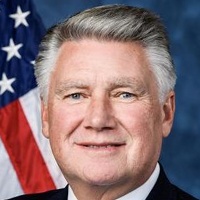
Mark Harris
Representative
NC
Mark Harris
Representative
NC
The "No Asylum for Criminals Act of 2025" amends asylum eligibility, denying it to anyone with a felony or misdemeanor conviction. A felony is defined as any crime defined as a felony by the relevant jurisdiction, or any crime punishable by more than one year of imprisonment, while a misdemeanor is any crime defined as a misdemeanor by the relevant jurisdiction, or any crime not punishable by more than one year of imprisonment. The Secretary of Homeland Security can create exceptions for certain political offenses committed outside the U.S.
This resolution designates February 15–22, 2025, as "National FFA Week" to celebrate the organization's impact on agricultural education and its historic milestones.
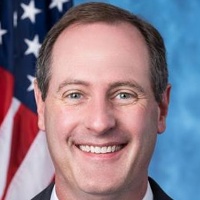
Tracey Mann
Representative
KS
Tracey Mann
Representative
KS
This resolution designates February 15–22, 2025, as "National FFA Week" to honor the National FFA Organization’s vital role in cultivating the next generation of agricultural leaders. It celebrates the organization’s commitment to personal growth and career readiness while commemorating the 90th anniversary of the New Farmers of America and the 75th anniversary of the FFA’s federal charter.
This resolution expresses Congressional opposition to imposing new performance fees or royalties on local radio stations and businesses for broadcasting or playing music.
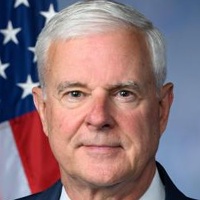
Steve Womack
Representative
AR
Steve Womack
Representative
AR
The Local Radio Freedom Act expresses Congressional opposition to imposing new performance fees, taxes, or royalties on local radio stations and businesses for playing music. It argues that the current system of free airplay provides essential promotional value to artists and that new fees would threaten the financial viability of local broadcasters and the vital community services they provide.
The "One Flag for All Act" would generally require only the U.S. flag to be displayed on the exterior and in public areas of federal buildings, with specific exceptions for POW/MIA flags, flags of visiting dignitaries, state flags of members of congress, armed forces flags, flags of historical significance, public safety flags, flags commemorating national observances, flags representing religious organizations during religious events at military facilities, flags representing a Federal agency, flags representing an Indian Tribe, and flags representing the State, territory, county, city, or local jurisdiction where the public building is located.
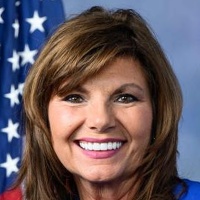
Diana Harshbarger
Representative
TN
Diana Harshbarger
Representative
TN
The "One Flag for All Act" generally prohibits the display of flags other than the U.S. flag on the exterior or in public areas of covered federal buildings. There are explicit exceptions for flags such as POW/MIA flags, state flags displayed at a Member of Congress's office, flags representing the Armed Forces, flags of historical significance, and flags representing local jurisdictions where the building is located. The bill defines "covered public buildings" broadly, including federal buildings, Senate and House buildings, military installations, and U.S. embassies and consulates.
Prohibits securities exchanges from processing transactions involving securities issued by "natural asset companies" that manage land for conservation and ecological performance.
Mark Green
Representative
TN
Mark Green
Representative
TN
The "Protect America's Lands Act" prevents national securities exchanges from handling transactions of securities issued by "natural asset companies." These companies manage land for conservation and aim to enhance the value of natural assets and ecosystem services. The bill defines specific criteria for what constitutes a "natural asset company" to ensure the prohibition is appropriately applied.
The "Death Tax Repeal Act" eliminates estate and generation-skipping transfer taxes, adjusts gift tax calculations, and sets a $10,000,000 lifetime gift exemption.
Randy Feenstra
Representative
IA
Randy Feenstra
Representative
IA
The "Death Tax Repeal Act" eliminates both estate and generation-skipping transfer taxes, effective from the date of enactment. It adjusts gift tax calculations by setting the lifetime gift exemption at $10,000,000, with inflation adjustments after 2011. The Act also includes transitional rules for applying certain sections of the Internal Revenue Code during the enactment year.
The "More Homes on the Market Act" increases the tax exclusion for profit from the sale of a primary residence, incentivizing homeowners to sell and increasing housing supply.
Jimmy Panetta
Representative
CA
Jimmy Panetta
Representative
CA
The "More Homes on the Market Act" increases the tax exclusion for profit from the sale of a primary residence, raising it to $500,000 for single filers and $1,000,000 for married couples filing jointly. These amounts will be adjusted for inflation starting in 2025. This change encourages homeowners to sell their properties, thereby increasing the availability of homes on the market.
The bill would require certain Medicaid recipients to work, volunteer, or participate in a work program for at least 80 hours a month to maintain eligibility.
Aaron Bean
Representative
FL
Aaron Bean
Representative
FL
This bill amends the Social Security Act to require certain adults on Medicaid to complete 80 hours per month of work, community service, or a work program to maintain eligibility. Federal funding to states would be denied for those who do not meet this "community engagement requirement" for at least 3 months of the year. Certain individuals, such as those under 18 or over 65, pregnant individuals, and those with disabilities, are exempt from this requirement. States have the option to disenroll individuals if federal funding is unavailable due to non-compliance.
The "Fighting Trade Cheats Act of 2025" increases penalties for customs violations, allows private parties to sue for customs fraud, and excludes violators from the importer of record program.
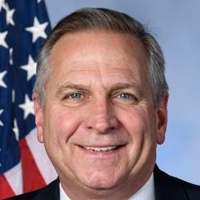
Mike Bost
Representative
IL
Mike Bost
Representative
IL
The "Fighting Trade Cheats Act of 2025" increases penalties for fraudulent and grossly negligent violations of U.S. customs laws, including banning violators and their affiliates from importing goods. It also allows private parties harmed by customs fraud to sue for damages and injunctive relief. The Act excludes those who commit fraud from participating in the importer of record program.
This Act allows schools participating in the National School Lunch Program to offer organic or non-organic whole milk alongside other options, while clarifying saturated fat accounting and restricting milk sourcing from China state-owned enterprises.
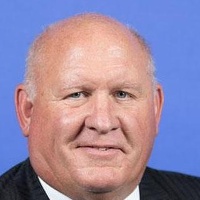
Glenn Thompson
Representative
PA
Glenn Thompson
Representative
PA
The Whole Milk for Healthy Kids Act of 2025 expands milk options available to students in the National School Lunch Program by allowing schools to offer organic or non-organic whole milk. This legislation provides greater flexibility for schools in providing fluid milk choices while maintaining accommodations for students with special dietary needs. Importantly, the saturated fat content of these offered milk options will not count toward the meal's overall saturated fat limits.
The United Nations Voting Accountability Act of 2025 prohibits U.S. assistance to countries that vote against the U.S. position in the UN, with an exemption for countries that have fundamentally changed leadership and policies.
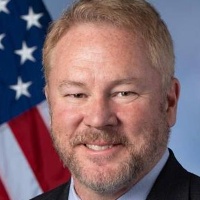
Warren Davidson
Representative
OH
Warren Davidson
Representative
OH
The United Nations Voting Accountability Act of 2025 prohibits the United States from providing assistance to countries that vote against the U.S. position in the UN General Assembly or Security Council. The Secretary of State can grant exemptions if a country's leadership and policies fundamentally change, with notification to Congress required. This act defines "opposed the position of the United States" as voting with the U.S. less than 50% of the time and specifies which types of assistance are restricted. The Act will take effect upon submission of the report due to Congress by March 31, 2026.
The "National Right-to-Work Act" prohibits mandatory union membership as a condition of employment, protecting employees' rights to choose whether or not to join or support a labor union.
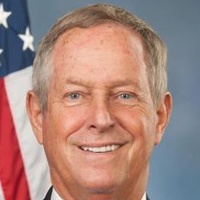
Joe Wilson
Representative
SC
Joe Wilson
Representative
SC
The "National Right-to-Work Act" amends both the National Labor Relations Act and the Railway Labor Act to protect an employee's right to choose whether or not to join or support a labor union. It eliminates the possibility of mandatory union membership or dues payments as a condition of employment, ensuring that employees cannot be forced to join or support a union against their will.