Legislative Activity
Track Randy's sponsored bills, co-sponsored legislation, and voting record
This bill restricts the Palestine Liberation Organization's status in UN agencies to less than full membership and limits the U.S. status in UN organizations to above observer status, while excluding Taiwan from these provisions.
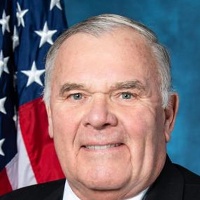
James Baird
Representative
IN
James Baird
Representative
IN
The No Official Palestine Entry Act of 2025 aims to restrict the Palestine Liberation Organization's status within United Nations agencies to observer status or less. It also modifies existing law to limit the United States' status in UN organizations to something beyond mere observer status, but short of full membership. This Act explicitly states that its provisions do not apply to Taiwan.
This Act establishes U.S. policy to cease cooperation with China on organ transplantation, imposes sanctions on individuals involved in forced organ harvesting, and mandates a comprehensive report on China's transplant practices and the persecution of Falun Gong.
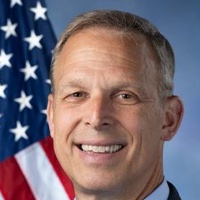
Scott Perry
Representative
PA
Scott Perry
Representative
PA
The Falun Gong Protection Act establishes a firm U.S. policy to cease cooperation with China on organ transplantation until the practice of state-sponsored organ harvesting ends. The bill mandates sanctions, including asset freezes and travel bans, against foreign individuals knowingly involved in forced organ harvesting in China. Furthermore, it requires a comprehensive report assessing China's transplant practices and directs the U.S. to coordinate international pressure against these abuses.
The LOCOMOTIVES Act centralizes federal authority over emission standards for existing locomotives and engines, limiting the ability of states to impose their own regulations on this equipment.

John Moolenaar
Representative
MI
John Moolenaar
Representative
MI
The Lifting Overburdensome Commerce Obstructions and Motives (LOCOMOTIVES) Act clarifies and strengthens federal authority over emission standards for existing locomotives and engines. This legislation limits the ability of states to set their own pollution control standards for certain railroad equipment. Specifically, it expands federal preemption to cover more nonroad engines and locomotives engaged in commerce.
The Emergency Care Improvement Act establishes Medicare and Medicaid coverage for specified emergency services provided by qualifying freestanding emergency centers, treating them similarly to hospital emergency departments under EMTALA.
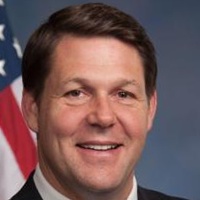
Jodey Arrington
Representative
TX
Jodey Arrington
Representative
TX
The Emergency Care Improvement Act officially brings qualifying Freestanding Emergency Centers (FECs) into the standard Medicare and Medicaid coverage systems. This legislation ensures that these state-licensed facilities, which operate as full emergency departments, are reimbursed for providing specified emergency services. Furthermore, the Act explicitly includes FECs under the requirements of the Emergency Medical Treatment and Labor Act (EMTALA).
This resolution expresses support for designating May as "Fallen Heroes Memorial Month" to honor the more than 1.3 million service members who died protecting American liberty and requests a Presidential proclamation to encourage national remembrance.
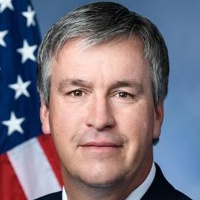
Barry Moore
Representative
AL
Barry Moore
Representative
AL
This resolution expresses strong support for designating the month of May as "Fallen Heroes Memorial Month." It honors the more than 1.3 million service members who have died protecting American liberty throughout history. Furthermore, the bill urges the President to issue a proclamation encouraging all Americans to reflect upon and honor the ultimate sacrifice made by these heroes.
This bill mandates that Medicare will only cover specific electrodiagnostic services performed at HHS-approved accredited facilities, with exceptions for intraoperative neuromonitoring, to improve quality and combat fraud.
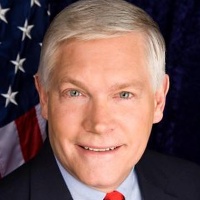
Pete Sessions
Representative
TX
Pete Sessions
Representative
TX
The Electrodiagnostic Medicine Patient Protection and Fraud Elimination Act of 2025 establishes new quality standards for Medicare reimbursement of certain diagnostic tests like nerve conduction studies and electromyography. After a three-to-four-year transition period, these services will only be covered if performed at a facility accredited by an HHS-approved organization that meets strict operational and personnel requirements. The bill also creates an advisory committee to help the Secretary of HHS develop and oversee this new accreditation and quality assurance system.
The Prove It Act establishes a formal process for small businesses to challenge agency claims about the economic impact of proposed rules and strengthens requirements for agencies to consider indirect costs on small entities.
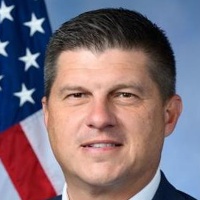
Brad Finstad
Representative
MN
Brad Finstad
Representative
MN
The Prove It Act aims to strengthen protections for small businesses against burdensome federal regulations. It establishes a formal process for small entities to challenge agency claims that a proposed rule will not significantly impact them. The bill also expands the required analysis of indirect costs and imposes consequences if agencies fail to periodically review existing rules on time.
The BRIDGE Production Act of 2025 mandates accelerated and streamlined offshore oil and gas lease sales in the Gulf of America and Cook Inlet while limiting environmental review requirements for Gulf operations.
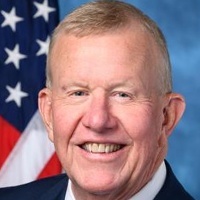
Mike Ezell
Representative
MS
Mike Ezell
Representative
MS
The BRIDGE Production Act of 2025 mandates an aggressive schedule for offshore oil and gas lease sales in the Gulf of America and Cook Inlet, requiring at least 26 new sales over the next decade. It streamlines environmental reviews and judicial processes to accelerate lease issuance and speed up production approvals. Furthermore, the bill establishes automatic backup leasing schedules if future five-year plans fail to meet minimum sale requirements.
The NFA SBS Act redefines short-barreled shotguns, removes specific federal restrictions on them, preempts certain state taxes and registration requirements, and mandates the destruction of related government records.
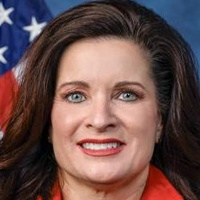
Sheri Biggs
Representative
SC
Sheri Biggs
Representative
SC
The NFA SBS Act redefines short-barreled shotguns under federal tax law, removing specific restrictions and ensuring they are not treated as destructive devices. This legislation eliminates disparate federal restrictions on these shotguns and preempts state or local laws that attempt to impose special taxes or registration requirements referencing the National Firearms Act. Furthermore, the Act mandates the destruction of specific government records related to the registration and transfer of these shotguns.
This Act repeals the federal ban on mailing concealable firearms and prohibits the U.S. Postal Service from creating rules that restrict the mailing of firearms or require the disclosure of customer records as a condition of mailing.
Sheri Biggs
Representative
SC
Sheri Biggs
Representative
SC
The Protecting the Mailing of Firearms Act repeals the federal ban on mailing certain concealable firearms. This legislation also prohibits the U.S. Postal Service from enacting rules that would block or unduly restrict the mailing of firearms, ammunition, or their components. Furthermore, the USPS cannot require sellers to disclose customer records or firearm serial numbers as a condition for mailing these items.
This resolution officially recognizes and supports the goals of San Jacinto Day, commemorating the anniversary of the decisive 1836 battle that secured Texas independence.
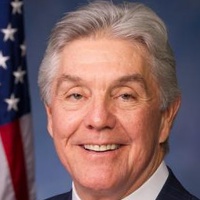
Roger Williams
Representative
TX
Roger Williams
Representative
TX
This resolution officially recognizes and supports the goals of San Jacinto Day, commemorating the anniversary of the pivotal Battle of San Jacinto on April 21, 1836. It honors General Sam Houston and the Texan Army for their decisive victory that secured Texas independence from Mexico. The bill emphasizes the enduring legacy of courage and sacrifice from that battle, which continues to inspire pride.
This bill prohibits landlords of federally assisted rental housing from banning tenants from lawfully possessing firearms within their private dwelling units.
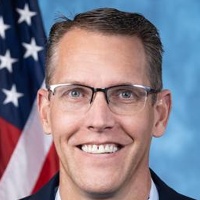
Randy Feenstra
Representative
IA
Randy Feenstra
Representative
IA
This bill, the PROTECT the Second Amendment Act, prevents landlords of federally assisted rental housing from banning tenants who lawfully possess firearms within their private dwelling units. It ensures residents in subsidized housing can legally keep their firearms inside their apartments. The legislation also permits the transportation of firearms through common areas only when moving directly to or from the unit.
This resolution strongly supports the Second Amendment right to keep and bear arms while commending President Trump for working to reverse recent Biden administration infringements on those freedoms.
Roger Williams
Representative
TX
Roger Williams
Representative
TX
This resolution strongly affirms the constitutional right to keep and bear arms under the Second Amendment. It criticizes recent actions by the Biden administration and federal agencies, such as the ATF, for implementing what are viewed as infringements on these freedoms. The resolution commends former President Trump for his past efforts to protect Second Amendment rights against such measures.
The Safeguard American Voter Eligibility (SAVE) Act mandates that individuals registering to vote in federal elections must present documentary proof of U.S. citizenship.

Chip Roy
Representative
TX
Chip Roy
Representative
TX
The Safeguard American Voter Eligibility Act (SAVE Act) significantly amends federal law to require individuals registering to vote in federal elections to present documentary proof of U.S. citizenship. This legislation mandates that states actively clean their voter rolls and cooperate with federal agencies to verify citizenship status. It establishes new criminal penalties for officials who fail to enforce these documentation requirements.
The No Rogue Rulings Act of 2025 severely limits federal district courts from issuing injunctions that affect non-parties, with an exception for multi-state lawsuits against the executive branch heard by a randomly selected three-judge panel.
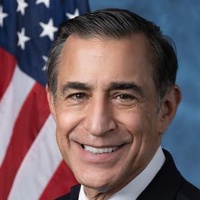
Darrell Issa
Representative
CA
Darrell Issa
Representative
CA
The No Rogue Rulings Act of 2025 significantly restricts federal district courts from issuing injunctions that affect parties not directly involved in a lawsuit. An exception allows a specially convened, randomly selected three-judge panel to issue broad injunctions in multi-state lawsuits against the executive branch. Decisions made by this panel regarding injunctions can be appealed directly to the Supreme Court or the relevant circuit court at the losing party's discretion.
This Act mandates a comprehensive external review and staffing plan for the Bureau of Prisons to address critical understaffing issues that endanger inmates and staff.
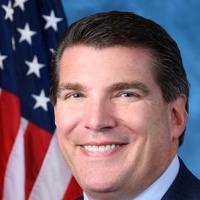
Jay Obernolte
Representative
CA
Jay Obernolte
Representative
CA
The Prison Staffing Reform Act of 2025 mandates a comprehensive, external review of staffing shortages across the Bureau of Prisons (BOP) to address risks to inmates and staff. Following this review, the BOP Director must submit a detailed plan to Congress and the union outlining strategies for recruitment, reducing overtime, and establishing specific staffing ratios for all roles. The goal is to implement these new staffing standards within three years to improve safety, inmate care, and overall prison security.
The Housing Supply Frameworks Act directs the federal government to create guidelines and best practices for state and local governments to reform restrictive zoning and land-use regulations to increase housing supply across all income levels.
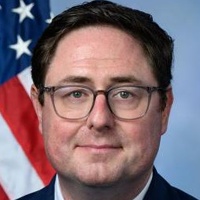
Mike Flood
Representative
NE
Mike Flood
Representative
NE
The Housing Supply Frameworks Act aims to address the national housing shortage by encouraging state and local governments to reform restrictive zoning and land use regulations. It directs the Department of Housing and Urban Development (HUD) to develop and publish comprehensive guidelines and best practices for these reforms. The Act also establishes reporting requirements to track the adoption of these new frameworks and authorizes funding to support these efforts.
The Transportation Freedom Act incentivizes domestic auto manufacturing with tax breaks, repeals recent EPA emissions rules, eliminates state authority to set stricter emission standards, and mandates a feasibility-based process for setting future national fuel economy and greenhouse gas standards.
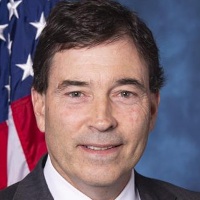
Troy Balderson
Representative
OH
Troy Balderson
Representative
OH
The Transportation Freedom Act seeks to bolster domestic auto manufacturing through significant tax incentives tied to high-wage American jobs and strong worker benefits. Simultaneously, the bill repeals recent EPA and NHTSA rules regarding multipollutant emissions and fuel economy standards for light, medium, and heavy-duty vehicles. Furthermore, it centralizes emission control by eliminating the authority of individual states to set standards stricter than the federal level. Finally, it mandates the establishment of new, feasibility-based fuel economy and greenhouse gas standards for future model years, explicitly prohibiting mandates for electric-only vehicle sales.
This Act terminates the transferability of certain non-renewable portions of clean electricity credits and phases out the production and investment tax credits for solar and wind energy over four years.

Julie Fedorchak
Representative
ND
Julie Fedorchak
Representative
ND
The Ending Intermittent Energy Subsidies Act of 2025 aims to significantly reduce federal support for wind and solar energy production. This bill terminates the transferability of certain non-renewable portions of clean electricity tax credits. Furthermore, it institutes a four-year phase-out, ultimately eliminating both the clean electricity production and investment tax credits specifically for solar and wind power generation.
This bill mandates that tax-exempt organizations receiving any federal funding must publicly disclose their full contributor lists from IRS Form 990 Schedule B, or risk losing their tax-exempt status.

Paul Gosar
Representative
AZ
Paul Gosar
Representative
AZ
The Putting Trust in Transparency Act mandates that any tax-exempt organization receiving federal funding must publicly disclose the names, zip codes, and donation amounts of its major contributors listed on IRS Form 990 Schedule B. This is intended to increase oversight of organizations acting as government agents using taxpayer money. Failure to comply with this new public disclosure requirement can result in the revocation of the organization's tax-exempt status.