Legislative Activity
Track Eugene's sponsored bills, co-sponsored legislation, and voting record
This Act mandates the VA to create a centralized system for collecting and cross-referencing data to identify and locate next-of-kin for unclaimed veteran remains.
David Valadao
Representative
CA
David Valadao
Representative
CA
The Locating Our Unclaimed Veterans Act mandates the Department of Veterans Affairs to establish a centralized system for storing information on unclaimed veteran remains. This system will coordinate data from various sources, including coroners and federal agencies like the FBI and DoD, to help identify these veterans. The VA must report on the system's progress and the number of remains successfully identified for three years following enactment.
This act establishes a pilot grant program through the EPA to fund infrastructure projects that specifically improve recycling access in underserved communities.
Mariannette Miller-Meeks
Representative
IA
Mariannette Miller-Meeks
Representative
IA
The Recycling Infrastructure and Accessibility Act of 2025 establishes a new EPA pilot grant program to improve recycling access, focusing specifically on underserved communities. These competitive grants will fund infrastructure projects, such as building transfer stations or expanding curbside service, using a "hub-and-spoke" model. Priority is given to projects located far from existing materials recovery facilities, with grants ranging from $\$500,000$ to $\$15$ million.
This bill expands Medicare Part B coverage to reimburse for specific pharmacist services related to testing and treatment for certain public health threats, effective January 1, 2026.
Adrian Smith
Representative
NE
Adrian Smith
Representative
NE
The Ensuring Community Access to Pharmacist Services Act expands Medicare Part B coverage to include services provided by pharmacists starting January 1, 2026. This coverage is specifically for testing or treatment related to COVID-19, the flu, RSV, strep throat, or during a declared public health emergency. The bill outlines payment structures, generally covering 80% of the cost, and prohibits pharmacists from balance billing Medicare patients for these covered services.
This Act amends the Foreign Service Act to extend post-employment benefits and streamline reappointment opportunities for Foreign Service members who separate from service, not just those who retire.
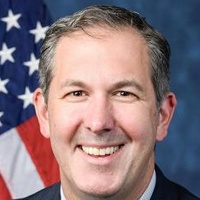
Johnny Olszewski
Representative
MD
Johnny Olszewski
Representative
MD
The Foreign Service Workforce Retention Act amends the Foreign Service Act of 1980 to extend reappointment opportunities and certain post-employment benefits to Foreign Service members who separate from service, not just those who retire. This legislation streamlines the process for former career members to return to service within five years of separation. Additionally, the bill mandates annual reporting to Congress on all recalls and reappointments made under these provisions.
This bill authorizes the minting and sale of commemorative gold and silver coins to honor the 25th anniversary of the September 11, 2001, terrorist attacks, with surcharges supporting the National September 11 Memorial and Museum.

Dan Goldman
Representative
NY
Dan Goldman
Representative
NY
This bill authorizes the Secretary of the Treasury to mint and issue commemorative gold and silver coins marking the 25th anniversary of the September 11, 2001, terrorist attacks. The coins will honor the victims, first responders, and survivors, with designs selected in consultation with the National September 11 Memorial and Museum. All surcharges from the sale of these coins will be paid directly to the Memorial and Museum to support its operations and maintenance.
This act directs the National Science Foundation to align federal biotechnology research investments with workforce development to address high-demand career areas and strengthen the U.S. biotechnology workforce.
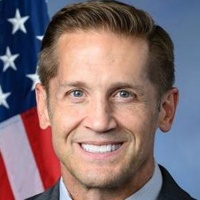
Rich McCormick
Representative
GA
Rich McCormick
Representative
GA
The Biotechnology Workforce Alignment Act of 2026 directs the National Science Foundation (NSF) to align federal biotechnology research investments with workforce development. This involves identifying high-demand job areas, building clear career pathways, and fostering partnerships between academia and industry. The NSF will track workforce shortages and report to Congress on the effectiveness of these efforts to ensure the U.S. maintains global leadership in biotechnology.
This bill expands the Job Corps program to train disadvantaged youth, veterans, and dislocated workers in skilled trades critical to strengthening the national defense industrial base.
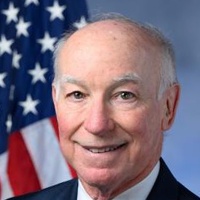
Joe Courtney
Representative
CT
Joe Courtney
Representative
CT
This act strengthens national defense by expanding the Job Corps program to train disadvantaged youth and veterans for critical roles in the defense industrial base. It establishes a Defense Skilled Trades Pipeline Program to provide vocational training in areas like welding, machining, and cybersecurity. The legislation authorizes significant funding to develop these specialized programs in coordination with defense contractors and the Department of Defense.
This Act expands eligibility for temporary lodging at VA facilities, including Fisher Houses, to active-duty service members and certain veterans and their families traveling for care, while also adjusting a deadline for pension payment limits.
Mariannette Miller-Meeks
Representative
IA
Mariannette Miller-Meeks
Representative
IA
The Fisher House Availability Act of 2026 expands access to temporary lodging at VA facilities, known as Fisher Houses, for active-duty service members, veterans, and their families who must travel significant distances for medical care. This legislation codifies the definition of a Fisher House and ensures lodging is provided on a space-available basis. Additionally, the bill extends the deadline for certain pension payment limitations.
This act revises the leverage limits and calculation methods for Small Business Investment Companies (SBICs) while expanding exclusions for investments in targeted small businesses.
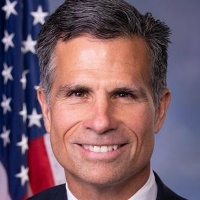
Daniel Meuser
Representative
PA
Daniel Meuser
Representative
PA
The Investing in All of America Act of 2025 revises the rules governing Small Business Investment Companies (SBICs) by updating how they calculate their maximum allowable government leverage. This bill lowers the overall leverage limits for SBICs while creating new exclusions for investments made in small businesses located in low-income or rural areas, or those operating in covered technology sectors. These changes aim to incentivize targeted investment by allowing certain qualifying loans to be excluded from the leverage calculation.
This bill establishes a demonstration project for states to test alternative payment models in Medicaid and CHIP to improve maternal health outcomes for pregnant and postpartum individuals.

Janice Schakowsky
Representative
IL
Janice Schakowsky
Representative
IL
The IMPACT to Save Moms Act establishes a demonstration project for states to test alternative payment models for maternity care within Medicaid and CHIP programs. This project aims to improve maternal health outcomes, particularly for high-risk groups, by considering factors like risk stratification and social determinants of health. The Secretary of HHS must evaluate the project's impact and report recommendations to Congress on potential national expansion.
This bill establishes a VA Task Force to research, improve healthcare, and set baselines for veterans and service members affected by blast overpressure exposure.
Ronny Jackson
Representative
TX
Ronny Jackson
Representative
TX
This Act establishes the Blast Overpressure Research and Mitigation Task Force within the Department of Veterans Affairs. The Task Force will improve healthcare, align research, and establish baselines for service members and veterans affected by blast overpressure exposure. It is charged with prioritizing research on related conditions and submitting annual reports with recommendations for evaluating service-connected neurological injuries.
This act establishes a \$100,000 cap, subject to annual inflation adjustments, on the Post-9/11 GI Bill educational assistance payable for flight training at public colleges and universities for veterans starting training on or after August 1, 2026.
Thomas Kean
Representative
NJ
Thomas Kean
Representative
NJ
The Veterans Flight Training Responsibility Act of 2025 establishes a \$100,000 cap on the total educational assistance the VA will pay for flight training under the Post-9/11 GI Bill at public colleges and universities. This maximum benefit amount will automatically increase annually based on the Consumer Price Index to keep pace with inflation. This new limitation applies only to veterans beginning flight training programs on or after August 1, 2026.
This resolution designates specific dates to honor law enforcement officers killed in the line of duty and expresses support for all officers.
Michael Guest
Representative
MS
Michael Guest
Representative
MS
This resolution officially designates May 15, 2026, as Peace Officers Memorial Day and the week of May 10-16, 2026, as National Police Week. It honors the service and sacrifice of law enforcement officers killed in the line of duty, specifically recognizing 363 officers lost in 2025. The bill expresses unwavering support for law enforcement and acknowledges the need for proper resources to ensure officer safety.
This Act establishes a fund administered by a Special Master to compensate law enforcement officers injured or killed while defending the U.S. Capitol on January 6, 2021.
Jamie Raskin
Representative
MD
Jamie Raskin
Representative
MD
This Act establishes the January 6th Law Enforcement Heroes Compensation Fund to provide financial compensation for injuries and deaths sustained by law enforcement officers defending the U.S. Capitol on January 6, 2021. The program will be administered by a Special Master appointed by the Attorney General, who will review claims for economic and noneconomic losses. The bill also mandates an additional, guaranteed payment for all eligible officers, funded in part by certain government settlement amounts related to the attack. Determinations made by the Special Master regarding compensation are final and not subject to judicial review.
This bill directs key federal agencies to report annually on strategies to defend U.S. interests against financial crimes facilitated by adversarial actors using artificial intelligence.
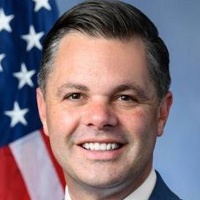
Zachary (Zach) Nunn
Representative
IA
Zachary (Zach) Nunn
Representative
IA
The AI PLAN Act directs key federal agencies to develop a strategy to counter the national and economic security risks posed by adversarial actors using artificial intelligence for financial crimes. This involves submitting annual reports detailing current and needed resources, interagency coordination, and public-private partnerships. The bill also mandates follow-up recommendations for legislative action and best practices to mitigate these evolving AI-driven threats.
This bill establishes the Combating Organized Retail Crime Act of 2025 to enhance federal prosecution tools against organized retail and supply chain crime and create a DHS-led coordination center to align law enforcement efforts.
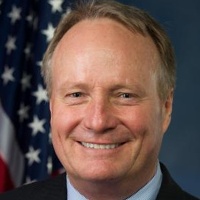
David Joyce
Representative
OH
David Joyce
Representative
OH
The Combating Organized Retail Crime Act of 2025 aims to combat sophisticated, cross-jurisdictional organized retail and supply chain theft. It achieves this by strengthening federal laws regarding money laundering and stolen property offenses, including lowering monetary thresholds for prosecution. Furthermore, the bill establishes a dedicated Center within the Department of Homeland Security to coordinate federal, state, and local enforcement efforts against these criminal organizations.
This bill reauthorizes the COPS ON THE BEAT grant program through fiscal year 2031 and establishes the Office of Community Oriented Policing Services as a distinct office within the Department of Justice.
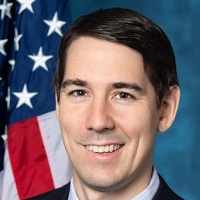
Josh Harder
Representative
CA
Josh Harder
Representative
CA
The COPS Reauthorization Act of 2026 updates and extends the funding for the COPS ON THE BEAT grant program through fiscal year 2031. It also formally establishes the Office of Community Oriented Policing Services (COPS Office) as a distinct entity within the Department of Justice, headed by a Presidentially-appointed Director. This legislation ensures continued support for community policing initiatives.
This resolution reaffirms the foundational U.S. commitment to the Taiwan Relations Act, the three Joint Communiqués, and the Six Assurances, supporting Taiwan's self-defense and opposing any non-peaceful resolution of its future.
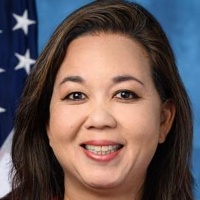
Jill Tokuda
Representative
HI
Jill Tokuda
Representative
HI
This resolution reaffirms the foundational U.S. commitment to the Taiwan Relations Act and longstanding bipartisan policy toward Taiwan. It underscores that peace and stability in the region are vital to U.S. interests and opposes any non-peaceful efforts to determine Taiwan's future. The bill affirms the U.S. commitment to providing Taiwan with defensive arms and maintaining the capacity to resist coercion.
This Act prohibits the sale or importation of connected vehicles and components containing hardware or software from covered adversarial countries like China, Russia, Iran, and North Korea, starting in 2027.
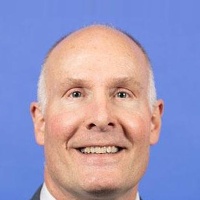
John Moolenaar
Representative
MI
John Moolenaar
Representative
MI
The Connected Vehicle Security Act of 2026 prohibits the sale or importation of connected vehicles, hardware, or software originating from or controlled by designated "covered countries" (North Korea, China, Russia, or Iran). This measure aims to safeguard U.S. economic and national security against risks like espionage and cyber intrusion posed by foreign adversaries exploiting vehicle connectivity technology. The Secretary of Commerce is tasked with issuing regulations to enforce these bans, which begin phasing in starting in 2027, though waivers may be granted under specific national security conditions.
This act prohibits the use of federal funds for military action in or against Iran through 2026 unless Congress formally declares war or authorizes such force.
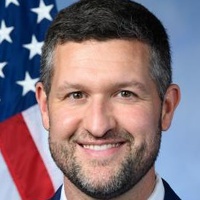
Patrick Ryan
Representative
NY
Patrick Ryan
Representative
NY
The No Funds for Iran War Act prohibits the use of federal funds for military action in or against Iran through the end of 2026. This ban remains in effect unless Congress formally declares war or passes a specific authorization for military force. Exceptions are made only for actions consistent with the War Powers Resolution or necessary self-defense against an imminent attack.