This bill reauthorizes key programs under the North Korean Human Rights Act of 2004, strengthens efforts to promote human rights and freedom of information in North Korea, and addresses the urgent need for family reunions for divided Korean Americans.
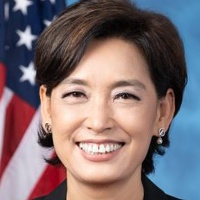
Young Kim
Representative
CA-40
The North Korean Human Rights Reauthorization Act of 2025 seeks to continue and strengthen U.S. efforts to promote human rights and democracy in North Korea. The bill reauthorizes key programs and emphasizes the need to increase the flow of outside information into the isolated nation. It also urges China to cease forcibly repatriating North Korean refugees and calls for prioritizing family reunions for divided Korean Americans. Finally, the Act establishes new reporting requirements concerning U.S. human rights activities related to North Korea.
North Korean Human Rights Act Reauthorized Through 2030, Prioritizing Divided Korean American Families and Refugee Protection
If you’re the friend who always ends up explaining global politics to your neighbors, this one’s for you. The North Korean Human Rights Reauthorization Act of 2025 is essentially the five-year service extension on a critical piece of U.S. foreign policy. It takes the original 2004 Act and its subsequent reauthorizations and pushes the expiration date out to 2030, ensuring that U.S. efforts to promote human rights, support refugees, and get information into North Korea don't lapse. The big takeaway is that the U.S. is doubling down on documenting and challenging the severe human rights violations in North Korea, which the bill notes include political prisons holding up to 200,000 people, torture, and enforced disappearances.
The Information War and the Digital Firewall
One of the most interesting parts of this reauthorization is the focus on information access. The bill states that the U.S. must increase support for communication platforms that can actually reach the North Korean people and boost the content sent by U.S. Government mediums (like Voice of America or Radio Free Asia) beyond current levels. This is a direct response to the North Korean regime’s use of propaganda and information control, including the infamous “Reactionary Thought and Culture Denunciation Law.” For the average person, this means the U.S. is investing more in getting uncensored news, movies, and music past the digital firewall, hoping to give North Koreans a window to the outside world. The bill even updates the terminology, ditching the old “Broadcasting Board of Governors” for the more modern-sounding “United States Government mediums intended to communicate directly with relevant international audiences.”
Putting Pressure on China’s Refugee Policy
This reauthorization takes a hard line on the issue of North Korean refugees who manage to cross into China. The bill explicitly states that the U.S. should urge China to immediately stop forcibly repatriating these individuals. Why? Because when these refugees are sent back, they face imprisonment, torture, or even execution, violating the international principle of non-refoulement (not forcing refugees back to a place where they face persecution). The bill urges China to grant the U.N. High Commissioner for Refugees (UNHCR) unrestricted access to determine refugee status and to grant legal status to North Korean women and their children who marry Chinese citizens. This is a clear diplomatic signal that the U.S. is not letting Beijing off the hook for its role in the humanitarian crisis.
New Accountability and the Vacant Envoy
Accountability is getting an upgrade. The law now mandates a new annual report from the Assistant Secretary for the Bureau of East Asia and Pacific Affairs. This report, due starting 180 days after enactment and continuing annually through 2030, must detail all U.S. activities, discussions with North Korean officials, and strategies aimed at improving human rights. In short, Congress wants to see the receipts on what the State Department is actually doing. Furthermore, addressing the historical problem of the position often sitting empty, the bill adds a new rule for the Special Envoy on North Korean Human Rights Issues. If the position is vacant for one year, the Secretary of State must submit a report 90 days before the one-year mark detailing efforts to find a replacement. This ensures the State Department can’t just let this crucial role gather dust.
A Humanitarian Priority: Divided Families
Finally, the legislation includes a strong Sense of Congress that the reunification of Korean American divided families must be treated as an urgent humanitarian priority. These are American citizens separated from immediate family members since the Korean War, many of whom are aging. The bill calls for a pilot program to identify willing families in both the U.S. and North Korea, find matches through organizations like the Red Cross, and work with South Korea to allow American citizens to participate in existing inter-Korean video reunions. This provision directly addresses a deeply personal issue for thousands of Korean Americans, shifting the focus from purely political pressure to a concrete, human-centered goal.