Legislative Activity
Track Eugene's sponsored bills, co-sponsored legislation, and voting record
The Credit Access and Inclusion Act of 2026 permits utility, telecommunications, and residential rental providers to report consumer payment data to credit reporting agencies to help build credit history.
Young Kim
Representative
CA
Young Kim
Representative
CA
The Credit Access and Inclusion Act of 2026 allows utility, telecommunications, and residential rental providers to report consumer payment history to credit reporting agencies. This initiative aims to help individuals build credit scores by incorporating consistent, on-time payment data into their credit profiles. The bill also includes protections for consumers on active payment plans and mandates a GAO study to evaluate the impact of this reporting on credit outcomes.
This bill prohibits high-level federal officials, their families, and key staff from owning or trading individual stocks and participating in political prediction markets to prevent conflicts of interest.
Kristen McDonald Rivet
Representative
MI
Kristen McDonald Rivet
Representative
MI
The "No Profiting from Public Service Act" prohibits high-level federal officials, their spouses, and dependent children from owning or trading individual stocks, commodities, and other financial derivatives. The bill mandates the divestiture of these assets into qualified blind trusts and bans participation in political prediction markets to prevent conflicts of interest. Violations of these restrictions are subject to significant financial penalties and mandatory public disclosure.
The Strategic Unmanned Systems Partnership Act establishes a working group to accelerate the co-development, co-production, and acquisition of cost-effective unmanned systems through a strategic defense partnership between the United States and Ukraine.

Marcy Kaptur
Representative
OH
Marcy Kaptur
Representative
OH
The Strategic Unmanned Systems Partnership Act establishes a joint working group between the U.S. and Ukraine to accelerate the co-development, production, and acquisition of cost-effective, expendable unmanned systems. By leveraging lessons from the battlefield in Ukraine, the initiative aims to integrate proven drone and counter-drone technologies into U.S. defense capabilities. The Act also mandates the creation of frameworks for secure technology transfer, reciprocal procurement, and the scaling of production to enhance national security.
The UNLOCK AUKUS Act streamlines defense trade and technology transfers by amending the Arms Export Control Act to facilitate deeper collaboration within the AUKUS partnership.
Bill Huizenga
Representative
MI
Bill Huizenga
Representative
MI
The UNLOCK AUKUS Act streamlines the defense trade process by amending the Arms Export Control Act to remove specific regulatory hurdles. This legislation facilitates more efficient exports and transfers of defense articles and services among AUKUS partners, strengthening collaborative security efforts.
The Financial Exploitation Prevention Act of 2025 empowers mutual funds to delay redemption requests and contact trusted individuals when they suspect the financial exploitation of older or vulnerable investors.
Ann Wagner
Representative
MO
Ann Wagner
Representative
MO
The Financial Exploitation Prevention Act of 2025 empowers mutual funds and transfer agents to protect vulnerable investors by delaying suspicious redemption requests. The bill requires participating firms to maintain trusted contact information and establishes formal internal procedures to identify and report potential financial exploitation. Additionally, it mandates that the SEC report to Congress with recommendations for further regulatory improvements to safeguard older and impaired adults.
This bill directs NIST to develop technical standards and guidelines for identifying content created or substantially modified by generative artificial intelligence through multi-stakeholder task forces.
Valerie Foushee
Representative
NC
Valerie Foushee
Representative
NC
This Act directs the National Institute of Standards and Technology (NIST) to establish task forces to develop technical standards for identifying content generated by artificial intelligence. These standards will focus on provenance metadata, watermarking, and digital fingerprinting for various forms of digital content. The goal is to create technical measures that help platforms and users distinguish between human-created and AI-generated content.
This bill extends the window for military survivors to contribute death benefits to a Roth IRA or Coverdell ESA from one year to three years.
Mike Thompson
Representative
CA
Mike Thompson
Representative
CA
The GRACE for Military Survivors Act extends the window for military survivors to contribute death benefits to a Roth IRA or Coverdell education savings account from one year to three years. This change applies to benefits received on or after the date of enactment, and retroactively covers benefits received since October 7, 2001. This provides survivors with more time to utilize these tax-advantaged savings options.
The SHARE Act of 2025 establishes federal requirements for the FBI to share criminal history record information with states participating in interstate professional licensing compacts, while strictly limiting how those states can use and further disseminate that data.
Tracey Mann
Representative
KS
Tracey Mann
Representative
KS
The SHARE Act of 2025 establishes new federal requirements for the FBI to share criminal history record information with states participating in professional licensing interstate compacts. This information sharing is strictly for the purpose of conducting background checks on applicants seeking to practice a profession in another compact state. States receiving this data are severely restricted on how they can use or further disseminate the detailed criminal history, generally only being permitted to report a binary "satisfactory" or "unsatisfactory" determination back to the compact's Commission.
The CREATE AI Act of 2025 establishes the National Artificial Intelligence Research Resource (NAIRR) to democratize access to essential AI computing power and data for diverse U.S. researchers, students, and small businesses.
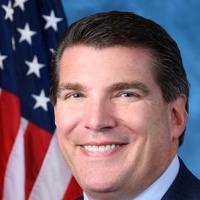
Jay Obernolte
Representative
CA
Jay Obernolte
Representative
CA
The CREATE AI Act of 2025 establishes the National Artificial Intelligence Research Resource (NAIRR) to democratize access to the high-powered computing and data necessary for advanced AI research. This resource will be managed by a non-governmental Operating Entity overseen by a new Steering Subcommittee. The goal is to broaden participation in AI development beyond large tech companies to maintain U.S. leadership and ensure AI benefits all Americans. Access will be prioritized for U.S.-affiliated researchers, educators, and students, with specific provisions for ethics, security, and privacy reviews.
The LIFT AI Act establishes a program, managed by the NSF Director, to fund the development of K-12 curricula and teacher training to ensure students are literate in the responsible use and critical understanding of Artificial Intelligence.
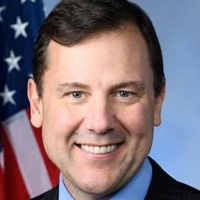
Thomas Kean
Representative
NJ
Thomas Kean
Representative
NJ
The LIFT AI Act aims to prepare K-12 educators and students for an AI-literate future by fostering national understanding of Artificial Intelligence. It authorizes the National Science Foundation Director to award grants for developing K-12 AI literacy curricula, teacher training, and responsible use guidelines. The goal is to ensure students gain the necessary skills to critically use, understand, and contribute to the evolving world of AI technology.
The NSF AI Education Act of 2025 expands National Science Foundation support for AI education through new scholarships, industry fellowships, community college centers of excellence, and research awards for K-12 AI integration.
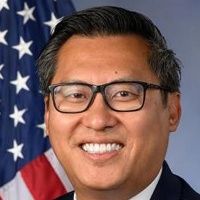
Vince Fong
Representative
CA
Vince Fong
Representative
CA
The NSF AI Education Act of 2025 significantly expands the National Science Foundation's role in bolstering the AI workforce through education and training. It establishes new scholarships and fellowships for students and professionals in AI-related fields, while also creating Centers of AI Excellence at community colleges and technical schools. Furthermore, the bill funds research awards to develop effective AI teaching methods and materials for K-12 education. Overall, this legislation aims to build a robust, skilled, and diverse AI talent pipeline across all educational levels.
This bill mandates a one-time corrective increase and subsequent annual inflation-based adjustments for certain military special and incentive pays, while also clarifying pay authorities for reserve component members.
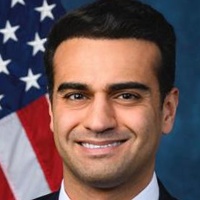
Abraham Hamadeh
Representative
AZ
Abraham Hamadeh
Representative
AZ
The Combat Pay Protection Act mandates a one-time corrective increase and subsequent annual adjustments for certain special and incentive pays for members of the Armed Forces to keep pace with inflation and basic pay growth. These required increases will override any existing statutory caps that would otherwise limit the pay adjustments. Additionally, the bill clarifies and streamlines the authority for providing bonuses and special pays to members of the Reserve components.
The Home Internet Accessibility Act mandates a comprehensive federal assessment and strategic plan to expand broadband infrastructure and connectivity within federally assisted housing.
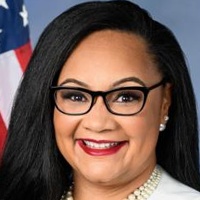
Nikema Williams
Representative
GA
Nikema Williams
Representative
GA
The Home Internet Accessibility Act mandates a comprehensive assessment of broadband infrastructure within federally assisted housing to identify gaps in connectivity and physical capacity. Following this report, the Department of Housing and Urban Development is required to develop a strategic plan to retrofit these properties for modern internet access. This legislation aims to bridge the digital divide by providing Congress with the data and actionable recommendations necessary to ensure all federally assisted housing can support reliable broadband service.
This bill authorizes a single Congressional Gold Medal to honor the individuals who defended Bataan, Corregidor, and other Pacific locations during World War II.
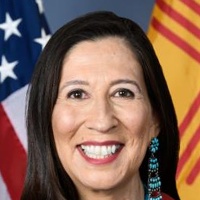
Teresa Leger Fernandez
Representative
NM
Teresa Leger Fernandez
Representative
NM
This bill authorizes the award of a single Congressional Gold Medal to recognize the collective heroism of the individuals who defended Bataan, Corregidor, and other locations in the Pacific theater during World War II. The medal honors the extraordinary sacrifice of U.S. service members and Filipino forces who fought and endured imprisonment by Imperial Japan. Following the presentation, the medal will be permanently displayed at the Smithsonian's National Museum of American History. The legislation also allows for the production and sale of bronze duplicate medals.
This bill renames and revises the Great American Outdoors Act's maintenance fund, increases dedicated funding through new, higher fees for foreign visitors, and sets spending priorities for deferred maintenance across public lands agencies.
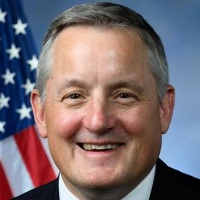
Bruce Westerman
Representative
AR
Bruce Westerman
Representative
AR
This bill, the Great American Outdoors Act 250, significantly reforms and renames the existing public lands restoration fund to the America’s Legacy Restoration Fund. It secures dedicated funding streams, primarily from energy revenues and new fees on foreign visitors, to address critical deferred maintenance across the National Park Service, Forest Service, and other public land agencies. The legislation establishes strict spending priorities for infrastructure repair while also creating pilot programs for enhancing outdoor recreation and sportsmen's access. Finally, it mandates increased transparency and accountability through standardized metrics and public reporting on all funded projects.
This bill restricts federal agencies from relocating to states with restrictive abortion laws, provides travel allowances and administrative leave for employees seeking out-of-state reproductive care, and protects employees' privacy regarding such care in security clearance and personnel decisions.
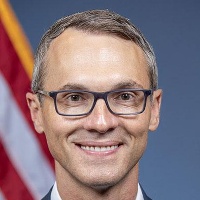
James Walkinshaw
Representative
VA
James Walkinshaw
Representative
VA
The Federal Workforce Reproductive Rights Protection Act restricts federal agencies from relocating operations to states with restrictive abortion laws. It also provides federal employees with travel allowances and administrative leave to access out-of-state reproductive healthcare services. Furthermore, the bill prohibits using reproductive health decisions as a factor in security clearance determinations or other personnel actions.
This bill establishes a free, voluntary program to provide veteran borrowers with expert support services to help them understand and navigate their VA home loan benefits.
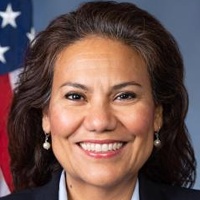
Veronica Escobar
Representative
TX
Veronica Escobar
Representative
TX
The VA Home Loan Navigator Act establishes a new, free program to provide comprehensive housing loan support services to veteran borrowers. This program will offer education, guidance, and assistance navigating all aspects of their VA home loan benefits, from eligibility to foreclosure prevention. Services will be delivered by independent, neutral third-party organizations approved by the VA and HUD. Participation is entirely voluntary for the borrower.
This act authorizes the State Department to train diplomatic staff on identifying and responding to foreign online scam operations targeting Americans.
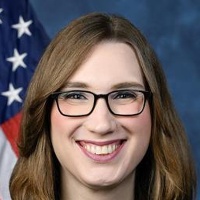
Sarah McBride
Representative
DE
Sarah McBride
Representative
DE
The Stop Scamming Americans Act mandates the State Department to develop specialized training for diplomatic staff stationed in countries with high levels of online scams targeting Americans. This training will focus on understanding transnational scam syndicates, associated human trafficking, and foreign government involvement. The goal is to equip diplomats with the tools to identify, prevent, and respond to these criminal activities.
This act doubles the maximum Pell Grant award, makes funding mandatory, extends eligibility to Dreamer students, restores previous eligibility limits, and reforms Satisfactory Academic Progress rules.
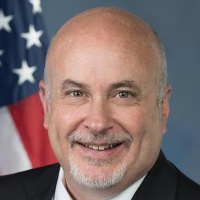
Mark Pocan
Representative
WI
Mark Pocan
Representative
WI
The Pell Grant Preservation and Expansion Act of 2026 aims to significantly strengthen federal student aid by doubling the maximum Pell Grant award and funding it through mandatory appropriations. This bill also expands eligibility to include Dreamer students, restores Pell Grant eligibility for students with certain scholarships, and reforms Satisfactory Academic Progress (SAP) rules to make regaining aid easier after academic setbacks. These changes are designed to stabilize and expand access to postsecondary education for millions of students.
This Act establishes federal oversight, notification requirements, and criminal penalties concerning the seizure of state and local election materials by federal agencies.

Dan Goldman
Representative
NY
Dan Goldman
Representative
NY
The Voting Systems Protection Act establishes strict federal oversight for the seizure of election materials, requiring state officials to monitor the handling of any federally seized voting equipment or records under a court warrant. It imposes severe criminal penalties on federal officials who tamper with or destroy these materials and prohibits federal seizure of election materials during a restricted 240-day window surrounding federal elections, except in narrowly defined emergency circumstances. Furthermore, the bill mandates that federal agencies provide 48 hours advance notice to state and congressional officials before conducting any seizure.